
The Growing Visibility Challenge in Modern Enterprises
Today’s organisations work in situations that are ever more complicated. Hundreds of stores are run by retail chains, several production sites are managed by manufacturers, extensive distribution networks are coordinated by logistics firms, and healthcare systems are spread among multiple places. It gets harder to keep a clear picture of what’s going on throughout the company as operations grow.
Many businesses still rely on periodic reports, manual inspections, and delayed communication channels to understand operational performance. While these methods provide useful information, they often fail to reveal issues when immediate action is required.
In a business landscape where customer expectations, compliance requirements, and operational complexity continue to increase, visibility is no longer a convenience—it is a necessity.
Why Limited Visibility Creates Business Risks
Without real-time operational visibility, organizations often struggle to identify issues before they impact performance.
Common challenges include:
- Delayed detection of operational disruptions
- Inconsistent execution across locations
- Compliance violations going unnoticed
- Slow incident response
- Limited accountability and oversight
- Reduced operational efficiency
- Difficulty identifying performance trends
When decision-makers lack timely information, even small operational issues can develop into larger business problems that affect productivity, customer experience, and profitability.
What Is Real-Time Operational Visibility?
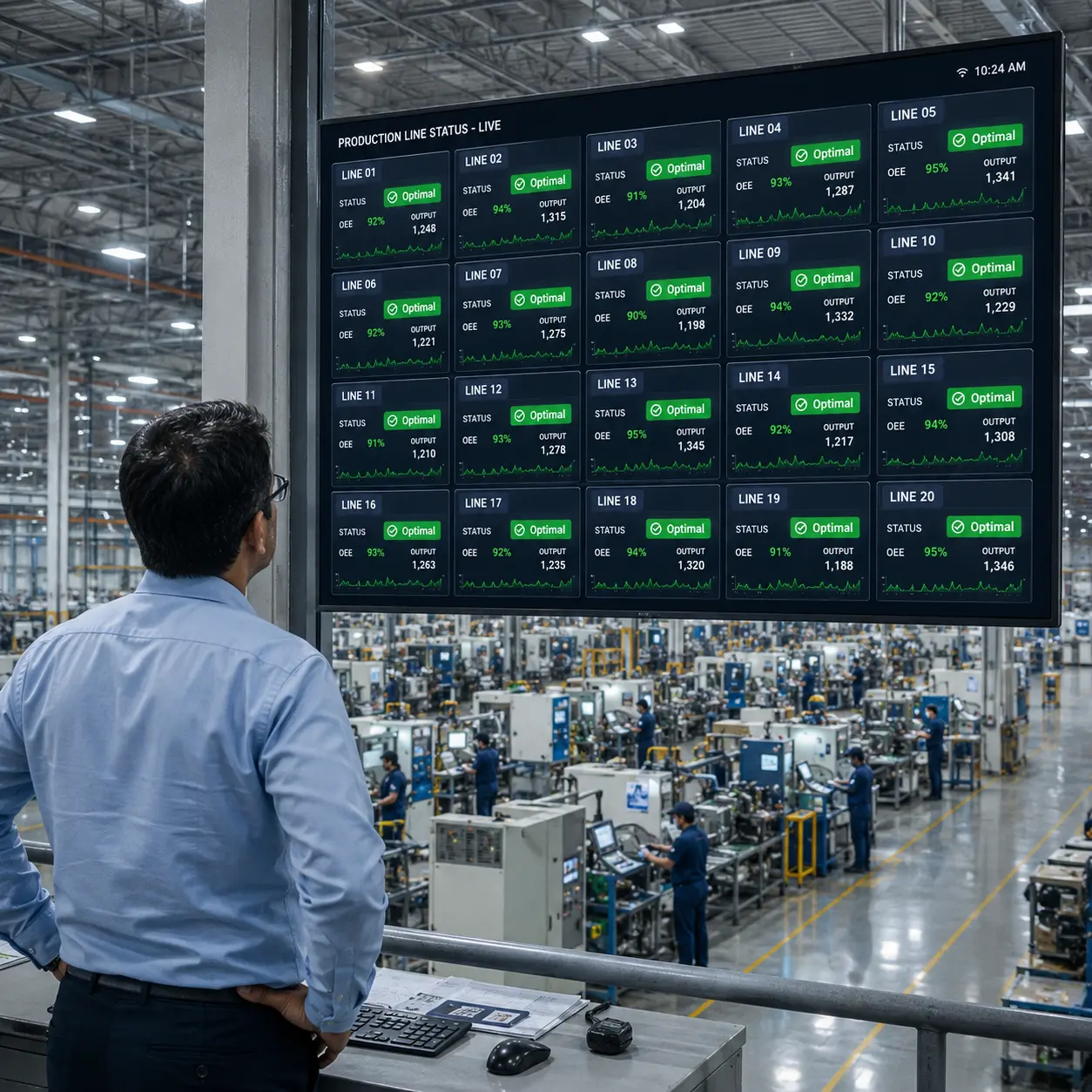
Real-time operational visibility is the ability to continuously monitor activities, processes, assets, and performance indicators across an organization as events occur.
Businesses obtain instant insight into operational conditions instead of waiting for end-of-day reports or planned audits, facilitating quicker decision-making and more efficient management.
Real-time visibility helps organizations:
- Monitor operational performance continuously
- Identify issues as they emerge
- Improve compliance oversight
- Strengthen operational consistency
- Enhance workforce productivity
- Support data-driven decision-making
For enterprises operating across multiple locations, this level of visibility can significantly improve operational control.
Compare Traditional Visibility and Real-Time Operational Visibility
Operational Area | Traditional Visibility | Real-Time Visibility |
Information Access | Delayed reporting | Continuous monitoring |
Issue Detection | After incidents occur | Immediate identification |
Decision-Making | Historical data | Current operational insights |
Compliance Monitoring | Periodic audits | Continuous oversight |
Operational Control | Limited visibility | Enterprise-wide awareness |
Response Time | Reactive | Proactive |
As organizations compare operational strategies, real-time visibility is increasingly viewed as a critical business capability.
The Reasons Real-Time Visibility Is Turning Into a Competitive Advantage
Organizations that can see operational issues earlier often resolve them faster. Real-time visibility enables leaders to move beyond reactive management and adopt a more proactive approach to performance improvement.
Key advantages include:
Faster Response to Operational Issues
Early awareness allows organizations to address problems before they escalate into major disruptions.
Improved Decision-Making
Leaders gain access to current operational information rather than relying solely on historical reports.
Enhanced Compliance Management
Continuous visibility helps organizations maintain operational standards and identify deviations quickly.
Greater Operational Consistency
Multi-site enterprises can compare performance across locations and ensure processes are being followed consistently.
Better Customer Experience
Efficient operations often lead to improved service quality, reduced delays, and higher customer satisfaction.

The Role of AI in Operational Visibility
The volume of operational data generated by modern businesses continues to grow. Reviewing all available information manually is often impractical, especially across multiple facilities and departments.
Artificial Intelligence helps organizations transform raw operational data into meaningful insights by:
- Detecting anomalies automatically
- Identifying emerging operational trends
- Generating intelligent alerts
- Highlighting potential risks
- Supporting predictive decision-making
AI enables businesses to focus attention on the most important events rather than manually searching for issues.
How CAPASai Helps Deliver Real-Time Operational Visibility
Through AI-powered video analytics, remote monitoring, and real-time alerting capabilities, CAPASai assists businesses in achieving increased operational visibility.
By leveraging existing CCTV infrastructure, CAPASai enables businesses to monitor operational activities, identify compliance concerns, detect process deviations, and gain actionable insights across multiple locations.
Rather than relying solely on retrospective reviews, organizations can respond to operational events as they happen and improve overall operational control.
Industries Benefiting From Real-Time Visibility
Real-time operational visibility is becoming increasingly valuable across industries such as:
- Retail chains
- Quick service restaurants
- Manufacturing facilities
- Pharmaceutical production
- Banking and financial services
- Healthcare and hospitals
- Logistics and warehousing
- Educational institutions
- Hospitality operations
- Smart city infrastructure
Regardless of industry, organizations are seeking faster access to operational information and greater enterprise-wide awareness.
The Future of Enterprise Operations
As businesses continue to expand and operations become more complex, real-time visibility will play an increasingly important role in maintaining performance, compliance, and operational efficiency.
Organizations that can monitor activities continuously, identify issues early, and respond quickly will be better positioned to adapt to changing conditions and maintain a competitive advantage.
Real-time operational visibility is no longer simply an operational improvement—it is becoming a fundamental requirement for modern enterprise management.