Industry 5.0 is rapidly becoming the next phase of enterprise transformation. While Industry 4.0 focused on connectivity, automation, and digitalization, Industry 5.0 introduces a broader vision centered on human-AI collaboration, operational resilience, intelligent governance, and sustainable growth.
For many organizations, the challenge is not understanding the concept of Industry 5.0—it is determining how to prepare for it. Achieving Industry 5.0 readiness requires more than adopting new technologies. It involves creating an operating environment where people, processes, and intelligent systems work together to drive continuous improvement.
Organizations that approach Industry 5.0 as a structured journey are often better positioned to unlock long-term value from their transformation investments.
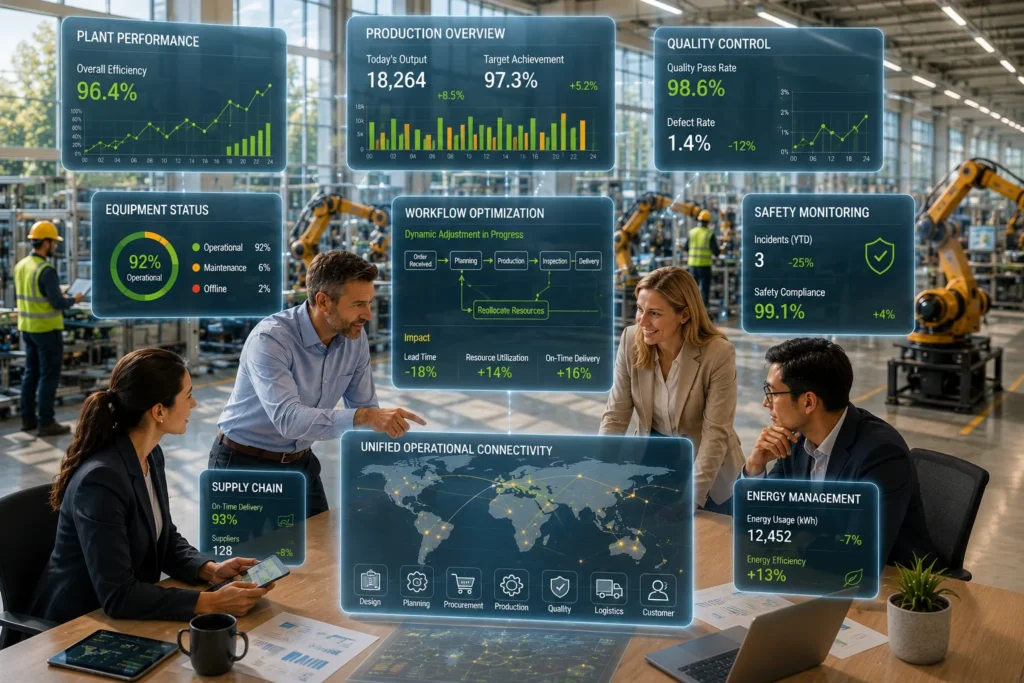
Stage 1: Establish Operational Visibility
Every transformation initiative begins with visibility.
Organizations cannot improve processes, strengthen compliance, or optimize performance without understanding what is happening across their operations. Unfortunately, many enterprises still rely on fragmented reporting systems, manual observations, and periodic audits.
Industry 5.0 readiness starts with creating real-time visibility into operational activities.
Key priorities include:
- Monitoring critical processes
- Improving workflow transparency
- Enhancing compliance awareness
- Eliminating operational blind spots
The objective is to build a reliable foundation of operational intelligence that supports informed decision-making.
Stage 2: Create A Connected Operational Environment
Once visibility is established, organizations must ensure information flows across departments, facilities, and business functions.
Disconnected systems often create delays, inconsistencies, and communication challenges. Industry 5.0 requires a more connected operational model where information is accessible when and where it is needed.
Focus areas include:
- Cross-functional collaboration
- Unified operational reporting
- Improved information sharing
- Integrated performance monitoring
A connected environment enables leaders to view operations holistically rather than through isolated systems.
Stage 3: Enable Human-AI Collaboration
One of the defining characteristics of Industry 5.0 is the partnership between human expertise and intelligent technologies.
AI excels at processing information, identifying patterns, and generating recommendations. Humans contribute judgment, creativity, experience, and strategic thinking.
Organizations preparing for Industry 5.0 should focus on creating workflows where technology augments people rather than replacing them.
Examples include:
- AI-assisted decision support
- Intelligent operational monitoring
- Automated reporting and analysis
- Real-time risk identification
The goal is to empower employees with better information and stronger decision-making capabilities.

Stage 4: Build Intelligent Governance
As organizations become more digitally connected, governance becomes increasingly important.
Industry 5.0 readiness requires moving beyond periodic audits and reactive oversight toward continuous governance models.
Organizations should focus on:
- Compliance monitoring
- Operational risk management
- Policy adherence tracking
- Accountability frameworks
- Evidence-based decision-making
Intelligent governance helps organizations maintain consistency while adapting to changing operational conditions.
Stage 5: Develop Adaptive Operations
Traditional operating models are often designed around fixed processes and predictable conditions. Modern business environments demand greater flexibility.
Adaptive operations allow organizations to respond more effectively to disruptions, changing market demands, and emerging risks.
Key capabilities include:
- Real-time operational awareness
- Faster issue identification
- Intelligent workflow adjustments
- Predictive operational insights
- Continuous improvement initiatives
Adaptive organizations are better equipped to maintain performance in dynamic environments.
Stage 6: Achieve Industry 5.0 Readiness
Organizations that successfully progress through these stages begin to demonstrate the characteristics of Industry 5.0 readiness.
These characteristics include:
- Human-centric operations
- Data-driven decision-making
- Intelligent governance
- AI-enabled collaboration
- Operational resilience
- Continuous innovation
At this stage, technology becomes an integrated enabler of business performance rather than a standalone initiative.
Industry 5.0 Readiness Assessment
Organizations can evaluate their progress by asking a few important questions:
Readiness Area | Key Question |
Operational Visibility | Do we have real-time insight into critical activities? |
Connected Operations | Can information flow seamlessly across teams and locations? |
Human-AI Collaboration | Are intelligent systems supporting employee decision-making? |
Governance | Can we continuously monitor compliance and operational risks? |
Adaptability | Can we respond quickly to changing operational conditions? |
Resilience | Are we prepared to manage disruptions effectively? |
The more positive answers an organization can provide, the closer it is to Industry 5.0 readiness.
Preparing For The Future
Industry 5.0 is not a single technology project or a one-time transformation initiative. It is an ongoing evolution of how organizations operate, govern, and innovate.
The most successful enterprises will be those that invest not only in intelligent technologies but also in the people, processes, and operational frameworks needed to maximize their value. By following a structured roadmap, organizations can build the visibility, collaboration, resilience, and intelligence required to thrive in the next generation of enterprise operations.
How CAPASai Supports Industry 5.0 Readiness
CAPASai helps organizations accelerate their Industry 5.0 journey through AI-powered video analytics, remote monitoring, real-time alerts, and operational intelligence capabilities. By improving visibility, supporting governance initiatives, enabling human-AI collaboration, and strengthening operational resilience, CAPASai provides the foundation for more intelligent and adaptive operations