Why Self-Checkout Fraud Is a Growing Retail Challenge
Self-checkout systems have transformed the retail industry by improving customer convenience, reducing checkout queues, and optimizing store operations. However, while self-checkout technology offers significant operational benefits, it also introduces new challenges related to inventory loss, transaction accuracy, and fraud prevention.
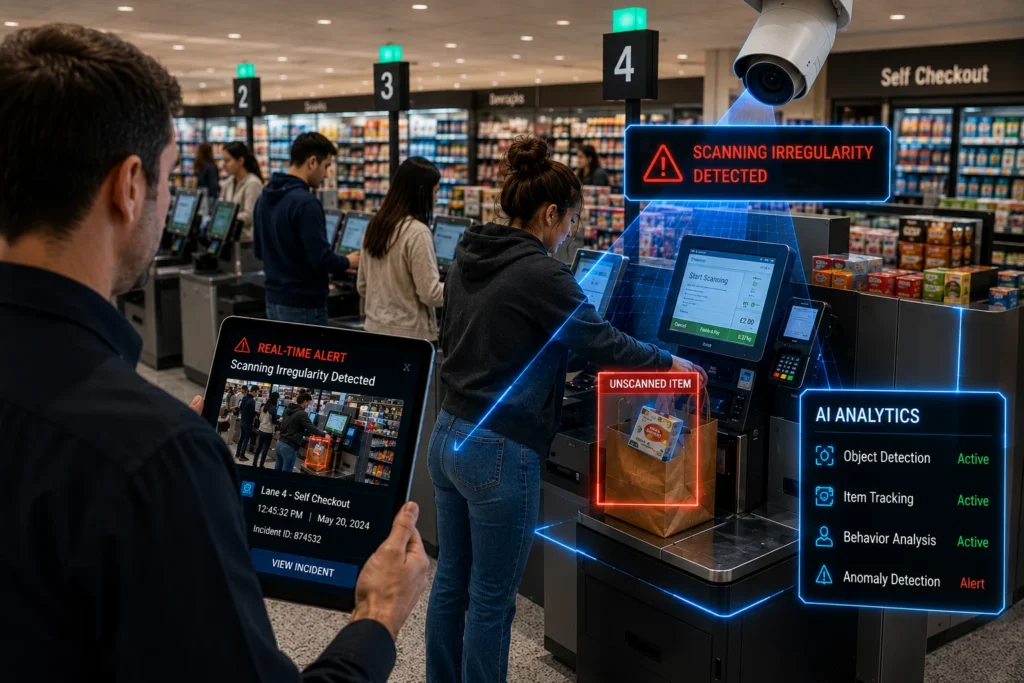
Retailers worldwide are reporting increasing concerns around missed scans, barcode switching, product substitution, intentional non-scanning, and other checkout irregularities that contribute to retail shrinkage. Traditional CCTV systems often capture these incidents, but reviewing footage after a loss occurs can be time-consuming and ineffective.
As self-checkout adoption continues to grow, retailers are seeking proactive solutions that can identify suspicious activities in real time and support faster intervention.
Common Types of Self-Checkout Fraud
Self-checkout fraud can occur in several ways, including:
- Items placed in bags without scanning
- Barcode switching on products
- Product substitution with lower-priced items
- Multiple items scanned as a single item
- Deliberate scan avoidance
- Unscanned items left in shopping carts
- Refund and transaction manipulation
- Sweethearting and assisted checkout fraud
These activities can significantly impact profitability, especially across high-volume retail environments.
How CAPASai Helps Detect Self-Checkout Fraud
CAPASai combines AI-powered video analytics, remote store monitoring, and real-time alerts to help retailers monitor self-checkout areas more effectively.
Using existing CCTV infrastructure, CAPASai continuously analyzes customer activity, item movement, transaction behavior, and checkout processes to identify anomalies that may indicate fraud or operational non-compliance.
CAPASai helps retailers:
- Detect scanning irregularities in real time
- Monitor self-checkout compliance
- Reduce retail shrinkage
- Improve loss prevention efforts
- Generate instant alerts
- Accelerate investigations
- Support multi-store monitoring
The platform is designed for supermarkets, hypermarkets, convenience stores, pharmacies, department stores, and retail chains operating self-service checkout systems.
How AI Video Analytics Detects Self-Checkout Fraud
AI-powered monitoring focuses on identifying activities that differ from normal checkout behavior.
Missed Scan Detection
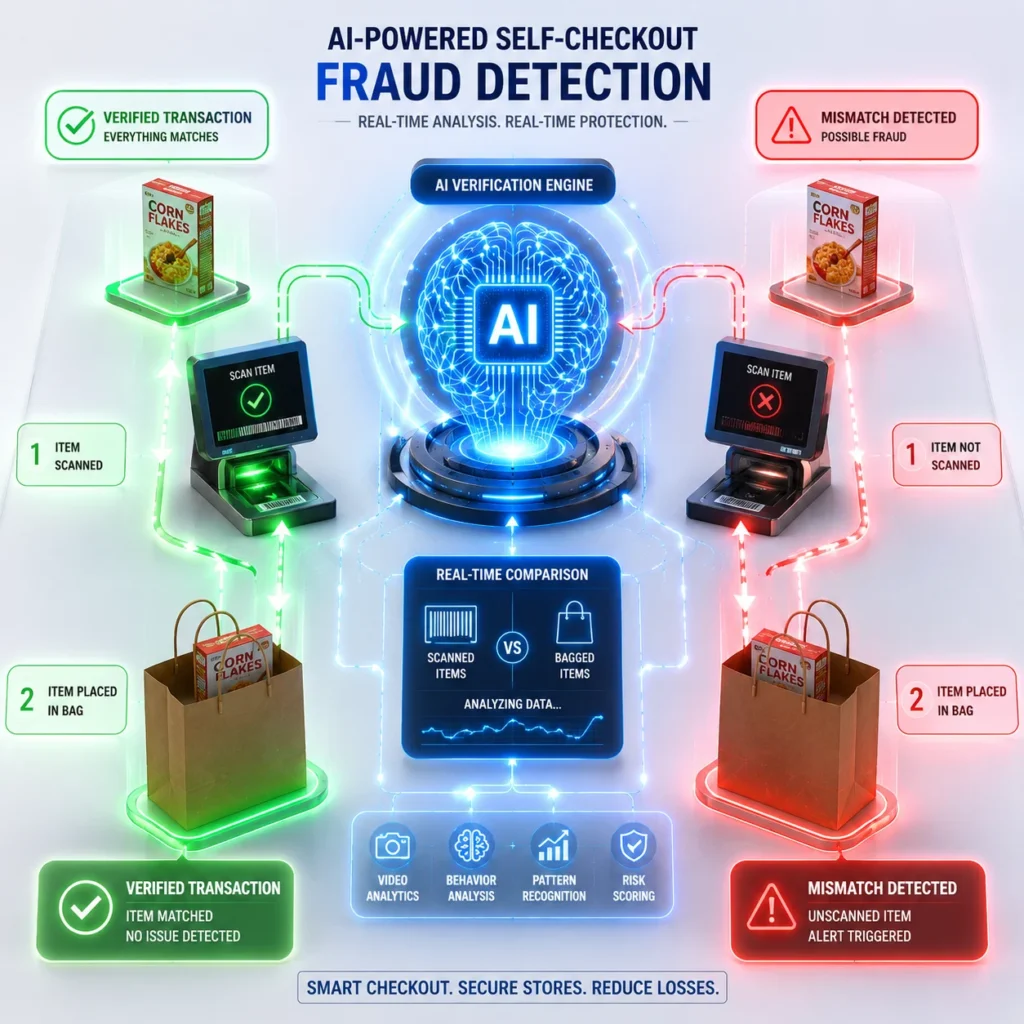
AI can identify situations where merchandise moves into a shopping bag or cart without being scanned.
Product Substitution Monitoring
The system can detect discrepancies between scanned products and actual item characteristics.
Barcode Manipulation Detection
AI can identify unusual scanning behaviors associated with barcode switching attempts.
Multiple Item Verification
Monitor situations where multiple items pass through the checkout process but only a portion are scanned.
Checkout Process Compliance
Verify whether customers follow expected self-checkout procedures.
Real-Time Alert Generation
Store personnel can receive immediate notifications when suspicious checkout activity is detected.
Traditional CCTV vs AI-Powered Self-Checkout Monitoring
Traditional CCTV | AI Video Analytics |
Records transactions | Analyzes transactions in real time |
Manual footage review | Automated anomaly detection |
Reactive investigations | Immediate alerts |
Limited monitoring capability | Continuous analysis |
Delayed incident discovery | Faster intervention |
Evidence collection only | Prevention and evidence collection |
This allows retailers to address potential losses before transactions are completed.
Key Benefits of AI-Powered Self-Checkout Monitoring
Reduce Retail Shrinkage
Identify transaction anomalies before losses accumulate.
Improve Operational Visibility
Gain deeper insight into customer interactions and checkout processes.
Faster Incident Response
Managers can respond while events are occurring.
Increase Employee Efficiency
Reduce the need for constant manual observation.
Enhance Customer Experience
Maintain efficient self-checkout operations while improving security.
Support Multi-Store Governance
Monitor self-checkout performance across multiple retail locations.
High-Risk Areas Commonly Monitored
Self-Checkout Lanes
Monitor scanning activity, item movement, and transaction behavior.
Bagging Areas
Verify scanned items match bagged merchandise.
Shopping Cart Verification Zones
Monitor unscanned items remaining in carts.
Customer Service Counters
Review refund and transaction exception processes.
How AI Supports Retail CAPA Programs
Effective fraud prevention requires more than detecting incidents. It requires understanding why they occur and implementing corrective actions.
AI video analytics helps retailers:
Capture Objective Evidence
Automatically associate video evidence with detected events.
Accelerate Investigations
Quickly locate relevant incidents without reviewing hours of footage.
Identify Recurring Patterns
Discover operational vulnerabilities contributing to losses.
Improve Store Processes
Use insights to strengthen checkout procedures and employee training.
Support Corrective Actions
Enable data-driven improvements to loss prevention programs.
Why Retailers Are Investing in AI Self-Checkout Monitoring
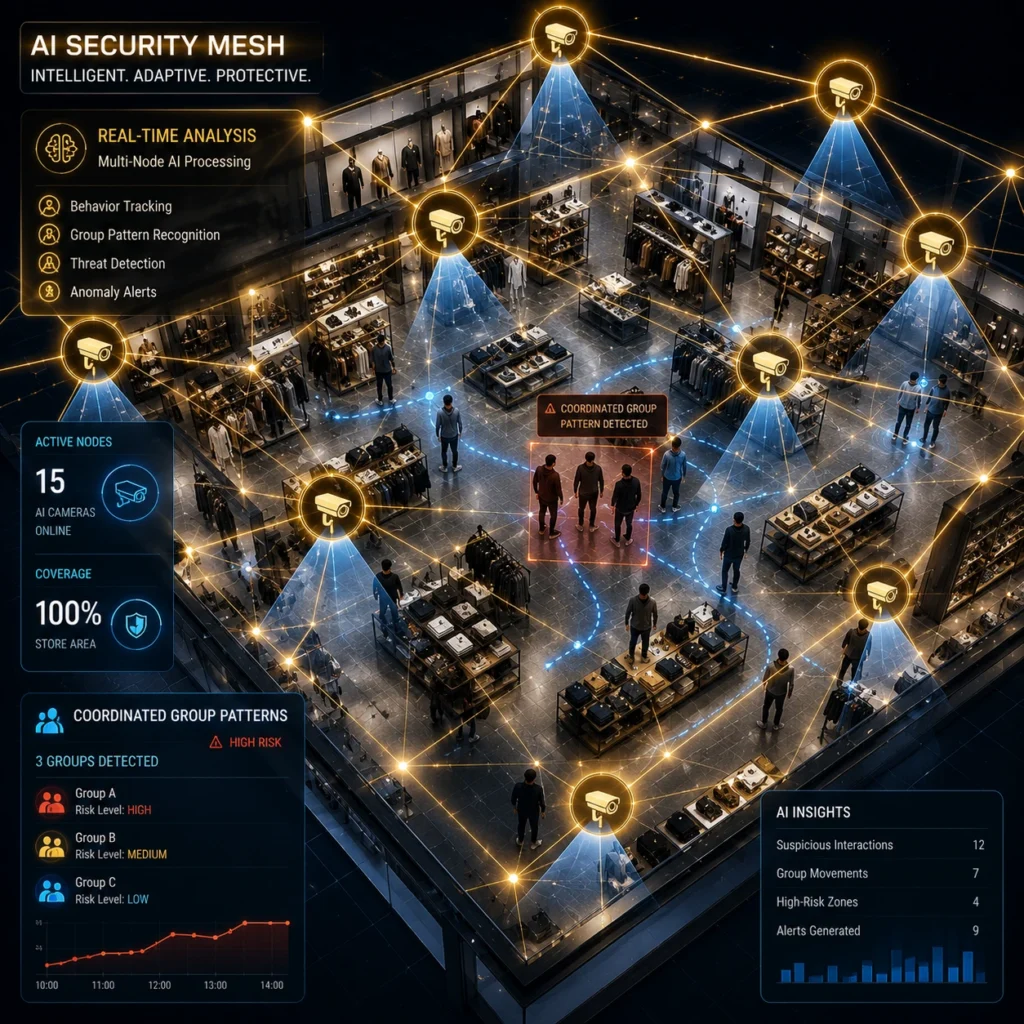
Retailers increasingly require solutions that move beyond passive surveillance and provide actionable operational intelligence.
AI-powered video analytics helps organizations:
- Reduce self-checkout fraud
- Improve transaction accuracy
- Strengthen loss prevention programs
- Enhance operational visibility
- Accelerate investigations
- Improve multi-store governance
- Protect profitability
By transforming existing CCTV cameras into intelligent monitoring systems, retailers can gain greater visibility into self-checkout activities while reducing shrinkage and improving operational control.