Why Brand Consistency Is A Growing Retail Challenge
Customers expect the same experience every time they interact with a brand. Whether they visit a flagship store in a major city or a smaller outlet in a regional market, they expect consistent service, product presentation, store standards, and operational execution.
For retailers managing hundreds of locations, maintaining that consistency becomes increasingly difficult. Differences in staffing, store management, regional practices, and daily execution can create variations that affect customer perception and brand trust.
Even when detailed standards exist, ensuring they are followed consistently across every location remains a significant operational challenge.
What Brand Consistency Really Means
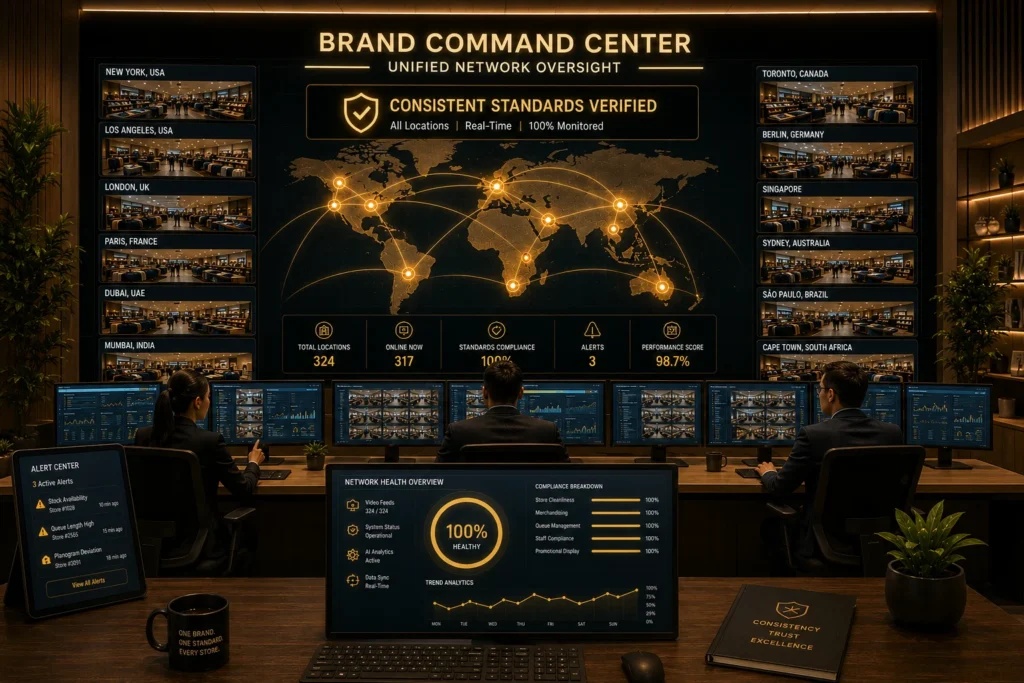
Brand consistency extends far beyond logos, signage, and marketing materials.
In retail environments, consistency often includes:
- Store appearance and cleanliness
- Product placement standards
- Promotional execution
- Customer service quality
- Queue management practices
- Shelf availability
- Store opening and closing procedures
- Employee adherence to SOPs
When these elements vary significantly between locations, customers may experience the brand differently from one store to another.
Business Benefits Of Consistent Brand Execution
Improved Customer Trust
Customers develop stronger confidence in brands that deliver predictable experiences.
Stronger Brand Reputation
Consistent execution helps reinforce brand standards across every location.
Better Operational Accountability
Store teams gain greater clarity around performance expectations.
Enhanced Compliance Monitoring
Organizations can verify adherence to operational standards more effectively.
Increased Operational Efficiency
Reducing discrepancies before they become serious problems is made possible by early detection of execution gaps.
Why Traditional Oversight Struggles At Scale
Retail organizations commonly rely on:
- Regional manager visits
- Compliance audits
- Mystery shopping programs
- Performance reviews
- Store inspections
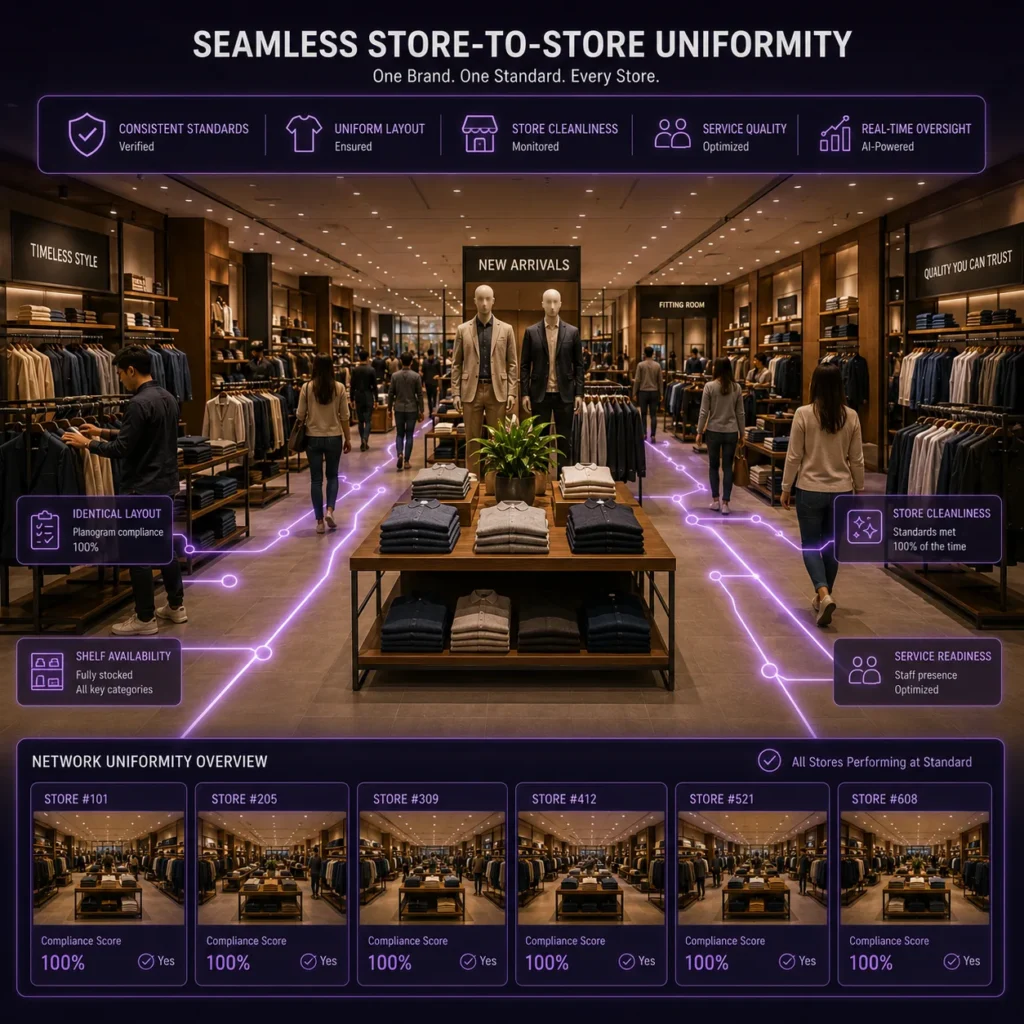
While these methods provide valuable feedback, they often face limitations when applied across large store networks.
Common challenges include:
- Limited visibility between audits
- Inconsistent reporting methods
- Delayed identification of issues
- Resource-intensive inspections
- Difficulty monitoring hundreds of locations simultaneously
As store networks expand, maintaining operational consistency becomes increasingly difficult using manual oversight alone.
Compare Traditional Store Audits With AI-Powered Operational Monitoring
Traditional Oversight | AI-Powered Monitoring |
Periodic inspections | Continuous visibility |
Manual observations | Automated operational insights |
Store-by-store reviews | Network-wide oversight |
Delayed issue discovery | Faster issue identification |
Resource-intensive audits | Scalable monitoring |
Limited trend analysis | Ongoing performance tracking |
When retailers compare these approaches, AI provides a more scalable method for maintaining consistency across large store networks.
Common Industries Where Brand Consistency Is Critical
Maintaining consistency is particularly important for:
- Retail Chains
- Quick Service Restaurants
- Pharmacy Networks
- Convenience Store Groups
- Fashion Retailers
- Electronics Retailers
- Grocery Chains
- Department Stores
- Hospitality Brands
- Franchise Operations
In each of these sectors, customer expectations are closely tied to consistent execution.
How AI Helps Standardize Store Execution
AI-powered video analytics enables retailers to monitor operational activities continuously across multiple locations.
Instead of relying solely on periodic inspections, organizations can gain ongoing visibility into how stores are operating every day.
Store Standards Monitoring
AI can help verify whether established operational standards are being followed consistently.
Planogram Compliance Verification
Retailers can keep an eye on merchandising execution and product positioning in relation to predetermined standards.
Queue Management Oversight
AI helps identify customer service bottlenecks and checkout inefficiencies before they affect the shopping experience.
Store Readiness Monitoring
To make sure stores uphold expected standards throughout the day, operational conditions can be evaluated.
Employee Process Adherence
Organizations can gain visibility into whether operational procedures are being executed consistently across locations.
Multi-Site Performance Visibility
Leadership teams can compare operational performance across stores using standardized metrics and insights.
How CAPASai Supports Multi-Location Brand Consistency
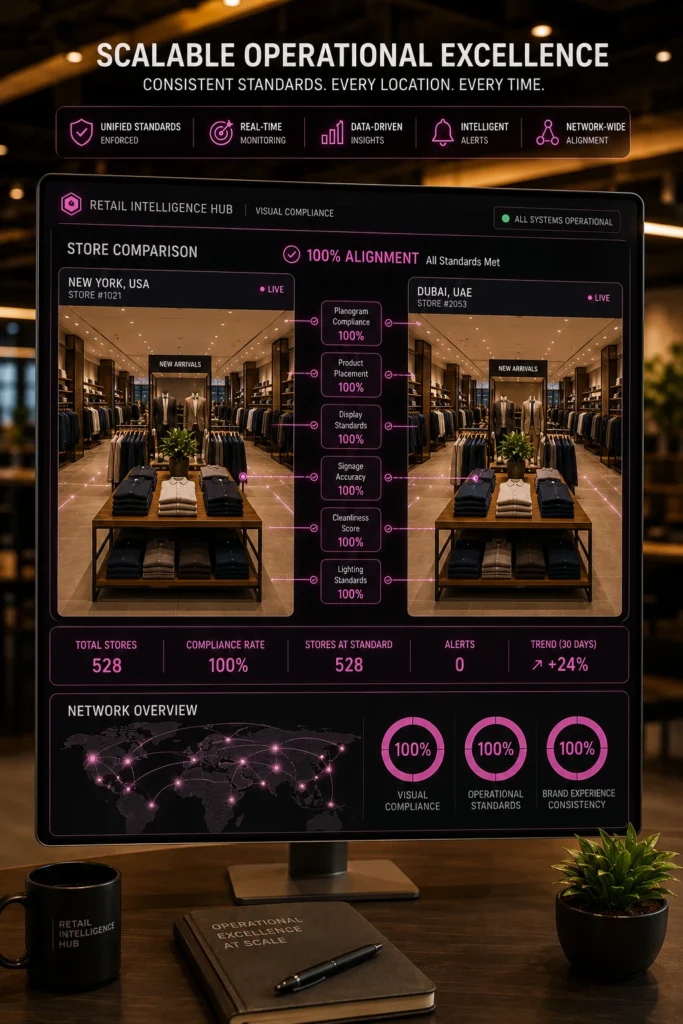
CAPASai helps retailers strengthen operational consistency through AI-powered video analytics and intelligent monitoring.
By providing visibility into store execution, customer service conditions, merchandising compliance, workflow adherence, and operational standards, CAPASai helps organizations identify variations between locations. Real-time alerts and centralized oversight enable leadership teams to monitor performance across large store networks and address issues more efficiently.
This helps retailers create a more predictable customer experience while supporting compliance, accountability, and operational excellence.
Turning Brand Standards Into Daily Operational Reality
Brand consistency is not achieved through documentation alone. It requires continuous execution across every store, every shift, and every customer interaction.
As retail organizations continue to grow, AI-powered operational intelligence provides a practical way to monitor standards, identify deviations, and maintain consistency at scale. Organizations that combine strong operational processes with continuous visibility are better positioned to deliver reliable customer experiences across hundreds of locations.