Introduction
Managing multiple stores sounds great—until you try to control them.
As businesses expand across cities or regions, a critical challenge emerges:
👉 How do you maintain visibility, control, and consistency across every location—without increasing costs?
Most businesses rely on:
- Store managers
- Periodic audits
- Manual CCTV checks
But these methods are:
- Slow
- Inconsistent
- Impossible to scale
The result?
- Losses go unnoticed
- SOPs are ignored
- Decisions are delayed
The solution is simple—and powerful:
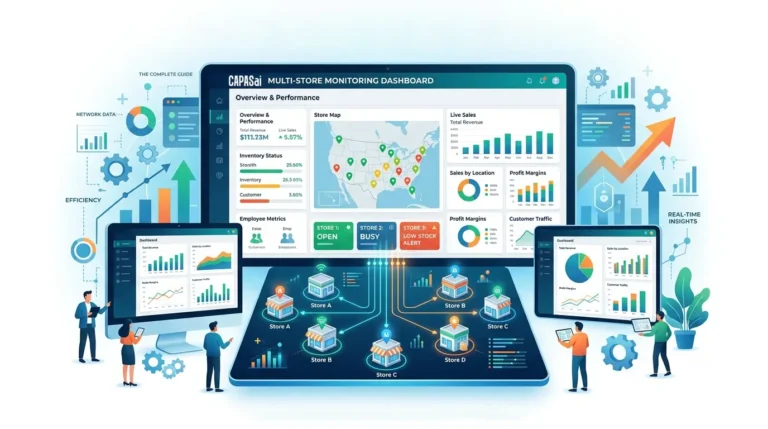
👉 A centralized dashboard that lets you monitor every store in real time from one screen
In this blog, we’ll explore:
- Why traditional monitoring fails
- What a centralized dashboard actually does
- How to set it up
- Real-world use cases and ROI
The Problem with Managing Multiple Stores
When you operate 10, 50, or 100+ locations, problems multiply fast.
- Lack of Real-Time Visibility
Most business owners:
- Don’t know what’s happening inside stores right now
- Depend on reports or calls
👉 By the time issues are reported, the damage is already done
- Inconsistent Store Performance
Each store runs differently:
- SOPs are followed in some, ignored in others
- Staff behavior varies widely
👉 This leads to inconsistent customer experience
- High Monitoring Costs
To maintain control, businesses hire:
- Supervisors
- Auditors
- Security staff
👉 Costs increase with every new store
- Delayed Decision-Making
Without real-time data:
- Problems are identified late
- Action is delayed
👉 Slow decisions = higher losses
What is a Centralized Monitoring Dashboard?
A centralized dashboard is a platform that connects all your stores into a single system—giving you:
- Live video feeds from every location
- Real-time alerts
- Store-wise performance insights
- Incident tracking and reports
Think of it as a command center for your entire business.
With AI-powered platforms like CAPASai, this goes beyond viewing cameras.
👉 It becomes an intelligent system that detects, alerts, and analyzes automatically
Key Features of a Multi-Store Monitoring Dashboard
- Live Multi-Location View
Monitor:
- All stores simultaneously
- Multiple camera feeds in one screen
👉 No need to switch between systems
- Real-Time Alerts
Get notified instantly when:
- Theft occurs
- SOP violations happen
- Suspicious activity is detected
👉 Act before losses escalate
- Store-Wise Performance Tracking
Compare:
- Store efficiency
- Staff productivity
- Compliance levels
👉 Identify top and underperforming stores
- Drill-Down Capabilities
From a high-level view, you can:
- Select a region
- Zoom into a specific store
- View a specific incident
👉 From overview → detail in seconds
- Video Evidence Reports
Every incident includes:
- Time-stamped video
- Shareable reports
👉 No guesswork—only proof
How to Set Up Multi-Store Monitoring
Step 1: Connect Existing CCTV Systems
- Integrate cameras from all stores
- Use DVR/NVR or IP feeds
👉 No need for new hardware
Step 2: Integrate with AI Platform
- Enable AI detection modules
- Configure monitoring use cases
Step 3: Create Store Hierarchy
Organize locations by:
👉 Makes navigation easy
Step 4: Configure Alerts
Define triggers such as:
- Shoplifting detection
- Queue buildup
- Staff inactivity
Step 5: Launch Central Dashboard
- Give access to management teams
- Monitor all locations in real time
👉 You’re now fully centralized
Real-World Use Cases
Retail Chains
Challenges:
- Shoplifting
- Billing fraud
- Poor staff behavior
Dashboard Impact:
- Live store monitoring
- Instant alerts
- Improved accountability
👉 Result: Reduced shrinkage + better customer experience
Dark Stores & Warehouses
Challenges:
- Inventory mishandling
- Delays in order processing
- Unauthorized access
Dashboard Impact:
- Monitor picking and packing
- Detect inefficiencies
- Track incidents
👉 Result: Faster operations + reduced damage
QSR & Food Chains
Challenges:
- Hygiene compliance
- Service delays
- SOP violations
Dashboard Impact:
- Monitor kitchen operations
- Track service time
- Enforce SOPs
👉 Result: Consistent quality across outlets
Pharma & Manufacturing
Challenges:
- Compliance monitoring
- Safety violations
- Process deviations
Dashboard Impact:
- Track GMP compliance
- Monitor PPE usage
- Detect anomalies
👉 Result: Improved safety + audit readiness
Before vs After Centralized Monitoring
Before
- No real-time visibility
- Manual reporting
- High manpower costs
- Delayed incident response
- Inconsistent store performance
After
- Live monitoring across all stores
- AI-driven alerts
- Reduced monitoring costs
- Instant response to issues
- Standardized operations
ROI: What Businesses Gain
- Reduced Losses
- Theft detection
- Error prevention
👉 30%–50% reduction in shrinkage
- Lower Operational Costs
- Reduced dependency on supervisors
- Centralized monitoring teams
👉 Up to 40% cost savings
- Improved Efficiency
- Better staff utilization
- Faster processes
- Scalable Growth
- Add new stores without increasing costs proportionally
👉 Grow without chaos
Common Mistakes to Avoid
❌ Monitoring Without verified Alerts
Viewing cameras isn’t enough—AI alerts are critical
❌ Ignoring Data Insights
Dashboards provide insights—use them for decisions
❌ Partial Deployment
Implementing in only a few stores limits impact
❌ Overcomplicating Setup
Modern systems are simple—don’t delay adoption
Best Practices for Maximum Impact
✔ Start with High-Risk Stores
Focus on locations with:
✔ Standardize SOPs
Ensure:
- Clear processes
- Measurable compliance
✔ Train Your Team
Make sure:
- Managers act on alerts
- Teams understand expectations
✔ Review Dashboard Daily
Use insights to:
- Identify trends
- Take proactive action
The Future of Multi-Store Management
Centralized dashboards are becoming the backbone of modern operations.
With advancements in:
Businesses will move toward:
- Fully automated monitoring
- Predictive analytics
- Minimal human intervention
👉 The goal: complete operational control with minimal effort
Key takeaway
Managing multiple stores doesn’t have to mean losing control.
With a centralized monitoring dashboard, you can:
- See everything in real time
- Act instantly
- Reduce costs
- Scale efficiently
The difference is simple:
👉 From reactive management to proactive control
High-Conversion CTA
Monitor all your stores from one dashboard—starting today
- No hardware changes
- Real-time alerts
- Full operational visibility
👉 Book a Free Demo Now