The Problem Isn't Creating SOPs—It's Enforcing Them
Every organization relies on Standard Operating Procedures (SOPs) to create consistency. Whether it’s a manufacturing plant following equipment handling protocols, a retail chain enforcing customer service standards, or a warehouse managing inventory workflows, SOPs are designed to ensure that critical tasks are performed correctly every time.
However, creating procedures is often the easiest part.
The real challenge begins once those procedures move from paper into daily operations. Supervisors cannot be everywhere at once. Audits happen periodically rather than continuously. Manual inspections provide only snapshots of performance. As operations expand across multiple facilities and shifts, verifying SOP adherence becomes increasingly difficult.
This gap between documented procedures and actual execution is driving interest in a new approach: automating SOP compliance through computer vision.

Why Traditional Compliance Verification Struggles to Scale
Most organizations rely on a combination of audits, observations, checklists, and reporting mechanisms to evaluate compliance.
While effective in many situations, these methods face practical limitations.
Common Challenges of Manual Verification
Challenge | Operational Impact |
Periodic audits | Issues may remain unnoticed between inspections |
Manual observations | Limited coverage across large facilities |
Paper-based reporting | Delayed visibility into deviations |
Multi-site operations | Difficult to maintain consistent oversight |
Human error | Inconsistent verification outcomes |
As operational complexity increases, organizations often discover that verifying compliance requires significant time and resources.
What Is Computer Vision in SOP Compliance?
Computer vision enables software systems to interpret and analyze visual information from cameras in a way that resembles human observation.
Instead of simply recording activities, computer vision can continuously evaluate operational environments and determine whether specific actions, behaviors, or procedures are occurring as expected.
For SOP compliance, this means organizations can automatically verify whether critical operational steps are being followed.
Examples include:
- PPE usage verification
- Safety procedure adherence
- Equipment operation checks
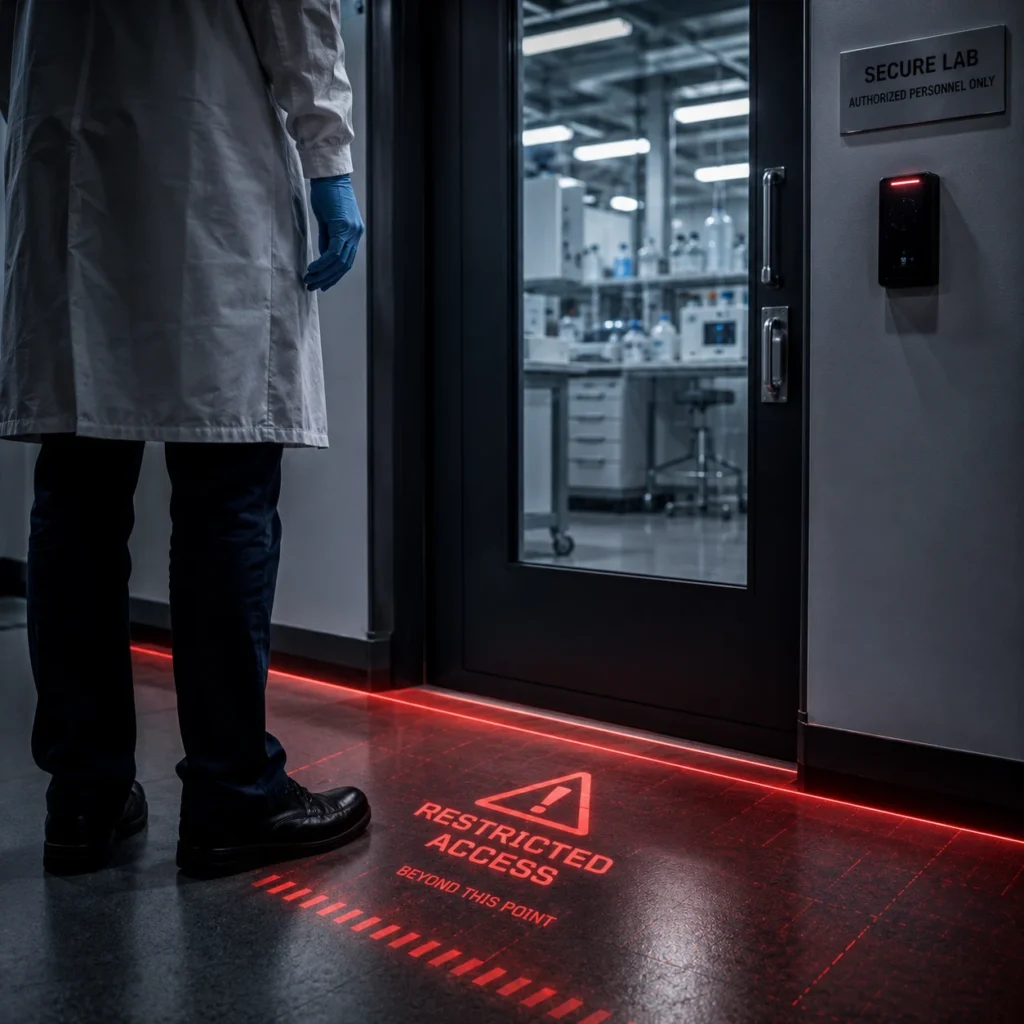
- Restricted-area monitoring
- Production workflow validation
- Warehouse process compliance
The objective is not to replace operational teams but to provide continuous verification that would otherwise require extensive manual supervision.
From Spot Checks to Continuous Verification
One of the biggest advantages of computer vision is its ability to shift organizations away from sample-based inspections.
Traditionally, a supervisor might observe a process several times a day or review selected footage during an audit.
Computer vision changes this model by allowing organizations to monitor operational activities continuously.
Traditional Verification vs Computer Vision-Based Verification
Traditional Approach | Computer Vision Approach |
Periodic inspections | Continuous observation |
Manual reviews | Automated verification |
Sample-based checks | Broader process coverage |
Reactive issue discovery | Early deviation detection |
Labor-intensive monitoring | Scalable oversight |
This transition allows organizations to identify process deviations closer to the moment they occur rather than after the fact.
Where Computer Vision Delivers the Greatest Value
The impact of automated compliance monitoring extends beyond audits and inspections.
Improved Operational Consistency
Organizations can maintain more uniform execution of procedures across teams, shifts, and locations.
Faster Detection of Deviations
Process exceptions can be identified sooner, reducing the likelihood of small issues developing into larger operational problems.
Enhanced Safety Oversight
Computer vision can help verify adherence to workplace safety procedures and operational protocols.
Reduced Supervisory Burden
Managers spend less time performing routine observations and more time addressing exceptions and improvement opportunities.
Building a Foundation for Continuous Compliance
As organizations pursue higher levels of operational excellence, compliance is increasingly becoming an ongoing process rather than a periodic event.
Computer vision supports this shift by creating a continuous layer of operational verification.
Instead of waiting for audits to reveal gaps, businesses gain the ability to observe, validate, and improve operational execution on a daily basis.
This capability is particularly valuable for organizations operating multiple facilities, where maintaining consistent standards can be challenging through manual oversight alone.
How CAPASai Supports Automated SOP Compliance
CAPASai helps organizations automate SOP compliance through AI-powered video analytics, computer vision, remote monitoring, and real-time alerting capabilities.
By leveraging existing CCTV infrastructure, CAPASai can help verify operational procedures, identify process deviations, and provide actionable visibility into activities occurring across multiple locations.
This enables organizations to strengthen compliance programs while reducing dependence on manual monitoring and repetitive inspection activities.