Why Retail Theft Is Becoming More Difficult to Prevent
Retail theft continues to challenge retailers of all sizes, from supermarkets and convenience stores to pharmacies, fashion outlets, electronics retailers, and large retail chains. Beyond direct inventory losses, theft can impact profitability, operational efficiency, customer experience, and employee productivity.
Traditional CCTV systems have long been used to record store activities, but reviewing footage after an incident occurs often means the opportunity to prevent losses has already passed. Security teams frequently face the challenge of monitoring multiple cameras simultaneously while managing busy retail environments.
As theft techniques become increasingly sophisticated, retailers are looking for solutions that can identify suspicious activities in real time rather than simply providing evidence after an event.
The Limitations of Traditional CCTV Monitoring
Conventional surveillance systems typically function as passive recording tools.
Common challenges include:
- Continuous manual monitoring requirements
- Delayed theft detection
- Limited staff visibility across large stores
- Time-consuming footage reviews
- Missed suspicious behaviors
- Difficulty monitoring multiple locations
- Reactive investigations after losses occur
- Limited operational intelligence
As a result, many incidents remain unnoticed until inventory discrepancies or customer reports trigger investigations.
Real-Time Detection Using Existing CCTV Infrastructure
Retailers may frequently make use of their current camera equipment, which is one of the main benefits of contemporary AI video analytics.
Instead of replacing surveillance systems, organizations can enhance current CCTV deployments by adding intelligent analytics capabilities.
Benefits include:
- Faster deployment
- Lower infrastructure costs
- Minimal operational disruption
- Improved return on existing investments
- Centralized monitoring capabilities
This approach allows retailers to modernize loss prevention strategies without extensive hardware replacement projects.
How CAPASai Enables Real-Time Retail Theft Detection
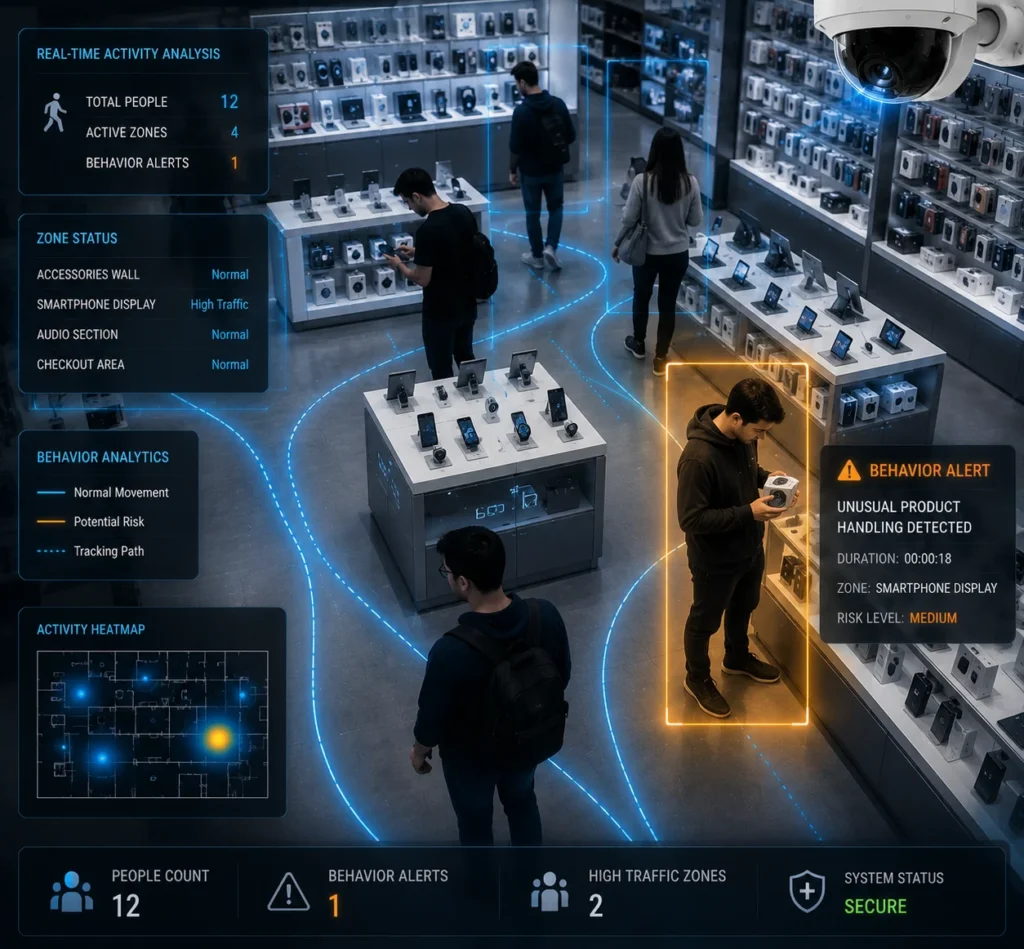
CAPASai turns current CCTV systems into proactive loss prevention solutions by combining AI-powered video analytics, remote store monitoring, and real-time alerting.
Rather than simply recording video, CAPASai continuously analyzes live camera feeds to identify suspicious behaviors, transaction anomalies, unusual customer activity, and operational risks that may contribute to retail shrinkage.
CAPASai helps retailers:
- Detect potential theft in real time
- Monitor high-risk merchandise zones
- Identify suspicious behavioral patterns
- Improve store governance
- Reduce investigation times
- Strengthen loss prevention programs
- Monitor multiple stores centrally
The platform supports supermarkets, retail chains, pharmacies, department stores, electronics retailers, convenience stores, specialty stores, and quick service restaurant operations.
How AI Video Analytics Detects Potential Theft
AI-powered monitoring focuses on identifying behaviors and patterns that may indicate elevated risk.
Suspicious Product Handling
AI can identify repeated interaction with merchandise, unusual product movement, or extended examination of high-value items.
Loitering Detection
Customers spending unusual amounts of time in high-risk areas may be flagged for additional monitoring.
Concealment Behavior Recognition
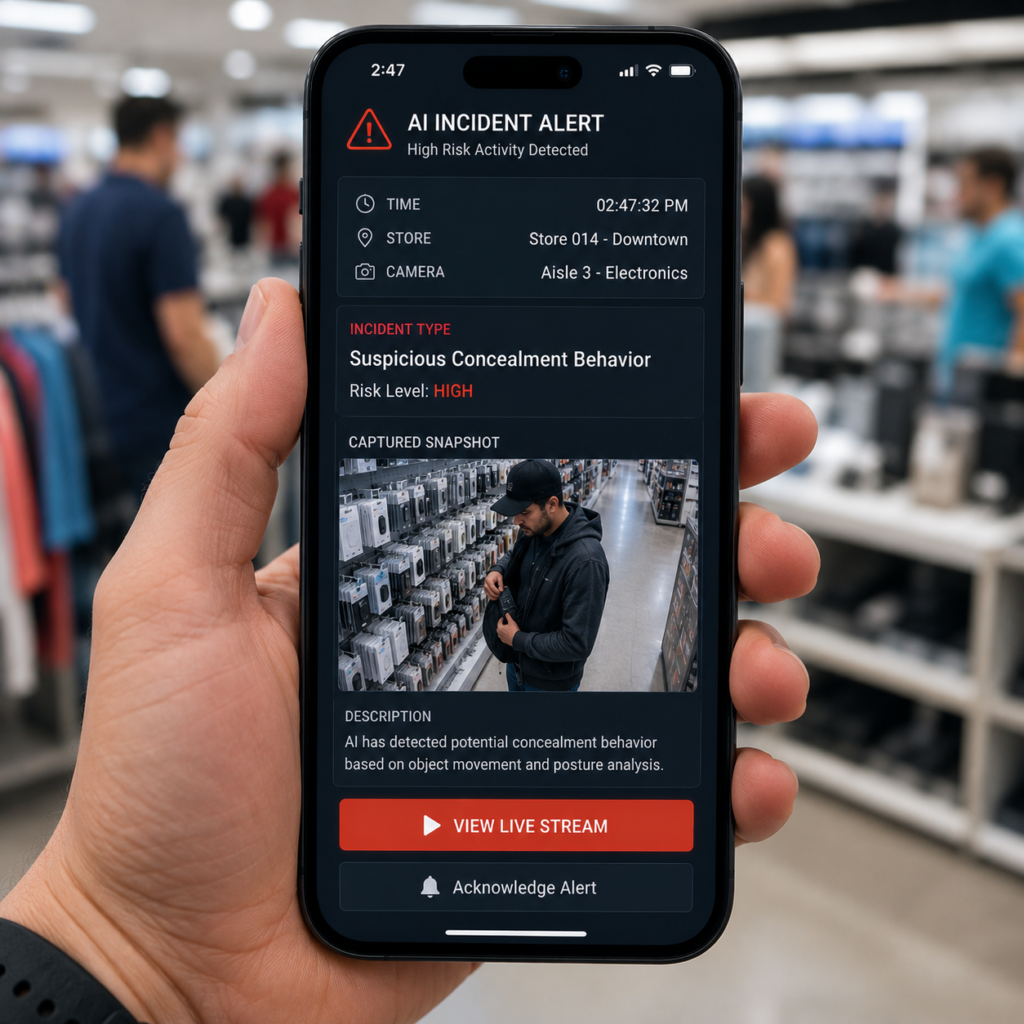
Alerts for review may be triggered by actions related to concealing goods inside clothing, luggage, or personal items.
Coordinated Group Activity Detection
AI can identify movement patterns suggesting organized retail theft involving multiple individuals acting together.
Restricted Area Monitoring
Unauthorized access to stockrooms, employee-only areas, or inventory storage locations can be detected immediately.
Self-Checkout Anomaly Detection
AI is able to detect anomalous transaction behaviour, missing scans, scanning anomalies, and possible checkout fraud.
Traditional CCTV vs AI-Powered Theft Detection
Traditional CCTV | AI Video Analytics |
Passive recording | Active monitoring |
Manual observation | Automated detection |
Post-incident investigations | Real-time alerts |
Limited staff coverage | Continuous monitoring |
Hours of footage review | Automated event identification |
Reactive security | Proactive loss prevention |
This transition enables retailers to move from evidence collection to active risk prevention.
High-Risk Retail Areas AI Commonly Monitors
Electronics Departments
Monitor smartphones, accessories, gaming products, and other premium merchandise.
Cosmetics & Personal Care
Detect suspicious behavior involving small, high-value products.
Pharmacy Sections
Monitor over-the-counter medications and controlled product displays.
Self-Checkout Areas
Identify transaction anomalies and scanning irregularities.
Stockrooms and Receiving Areas
Monitor inventory movement and access control compliance.
How AI Supports Retail Loss Prevention Teams
Immediate Alerting
Store managers can receive notifications while suspicious activity is occurring.
Faster Investigations
Relevant footage is automatically identified and organized.
Behavioral Analysis
AI helps uncover patterns that may not be obvious through manual observation.
Multi-Store Visibility
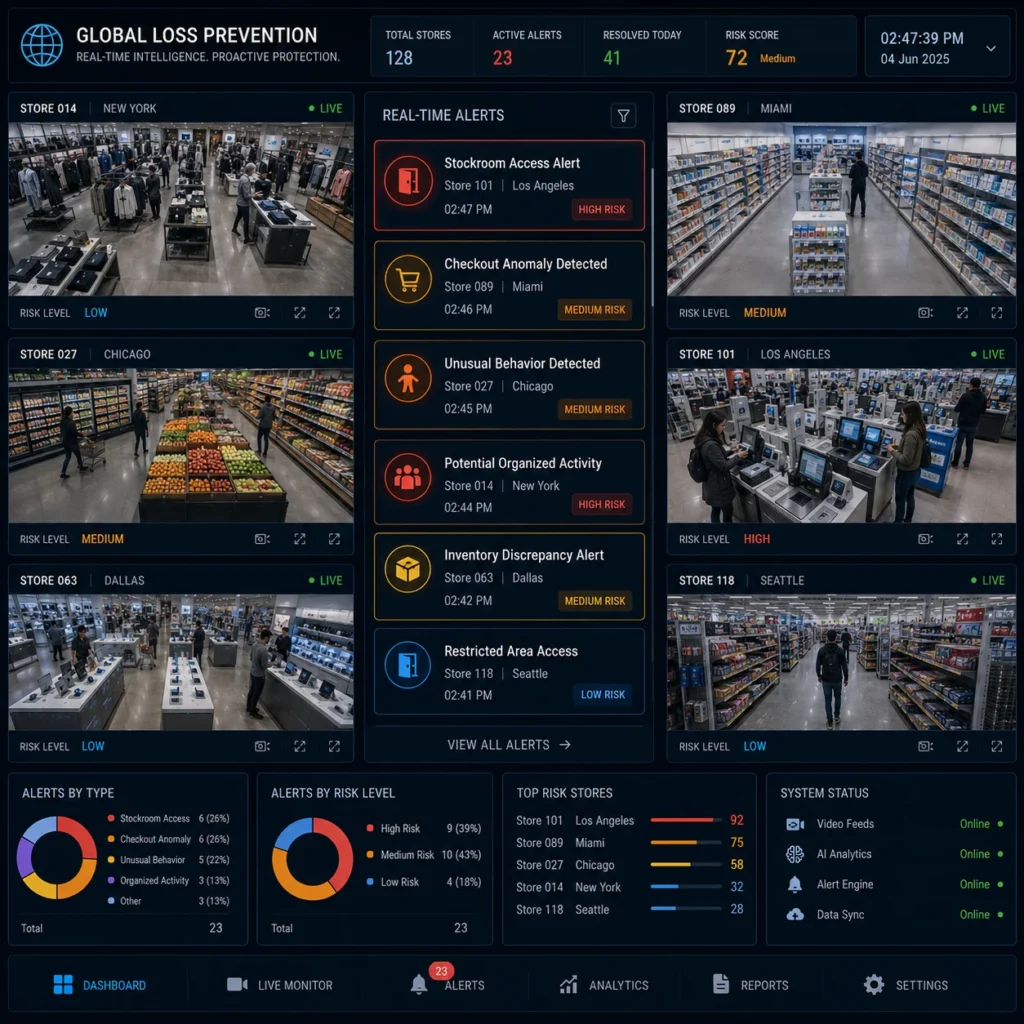
Security personnel can simultaneously monitor several locations thanks to centralised dashboards.
Evidence Collection
Video evidence is automatically associated with detected events and alerts.
Supporting CAPA and Continuous Improvement
Retail theft prevention is not only about responding to incidents—it is also about identifying operational weaknesses.
AI video analytics helps organizations:
Identify Recurring Loss Patterns
Understand where, when, and how losses occur.
Improve Operational Procedures
Refine store layouts, staffing strategies, and monitoring protocols.
Accelerate Root Cause Analysis
Locate incidents quickly without reviewing hours of footage.
Strengthen Corrective Actions
Use objective video evidence to support loss prevention improvements.
Why Retailers Are Investing in AI-Powered Theft Detection
Modern retailers need solutions that provide visibility, intelligence, and proactive intervention.
AI-powered video analytics helps organizations:
- Reduce retail shrinkage
- Improve theft detection capabilities
- Enhance operational visibility
- Strengthen store governance
- Improve employee accountability
- Accelerate investigations
- Increase profitability
By transforming existing CCTV cameras into intelligent monitoring systems, retailers can detect potential theft risks earlier and take action before losses escalate.