Why Hazards Often Go Unnoticed Until It’s Too Late
Every workplace contains potential hazards. In manufacturing facilities, a misplaced object on a production line can disrupt operations. In warehouses, pedestrian and forklift interactions can create unsafe situations. On construction sites, changing work environments can introduce new risks throughout the day.
The challenge is not simply identifying hazards—it is identifying them quickly enough to prevent incidents from occurring.
Many organizations discover safety concerns only after an inspection, audit, near miss, or workplace incident. By that point, the opportunity for prevention may already have been lost. As operational environments become more dynamic, enterprises are looking for better ways to identify risks as they emerge rather than after the consequences become visible.
The Growing Complexity Of Workplace Risk Management
Modern facilities generate thousands of daily interactions involving people, equipment, vehicles, materials, and operational processes.
Examples of workplace hazards include:
- Obstructed walkways
- Unauthorized access to restricted areas
- Unsafe equipment operation
- Material handling risks
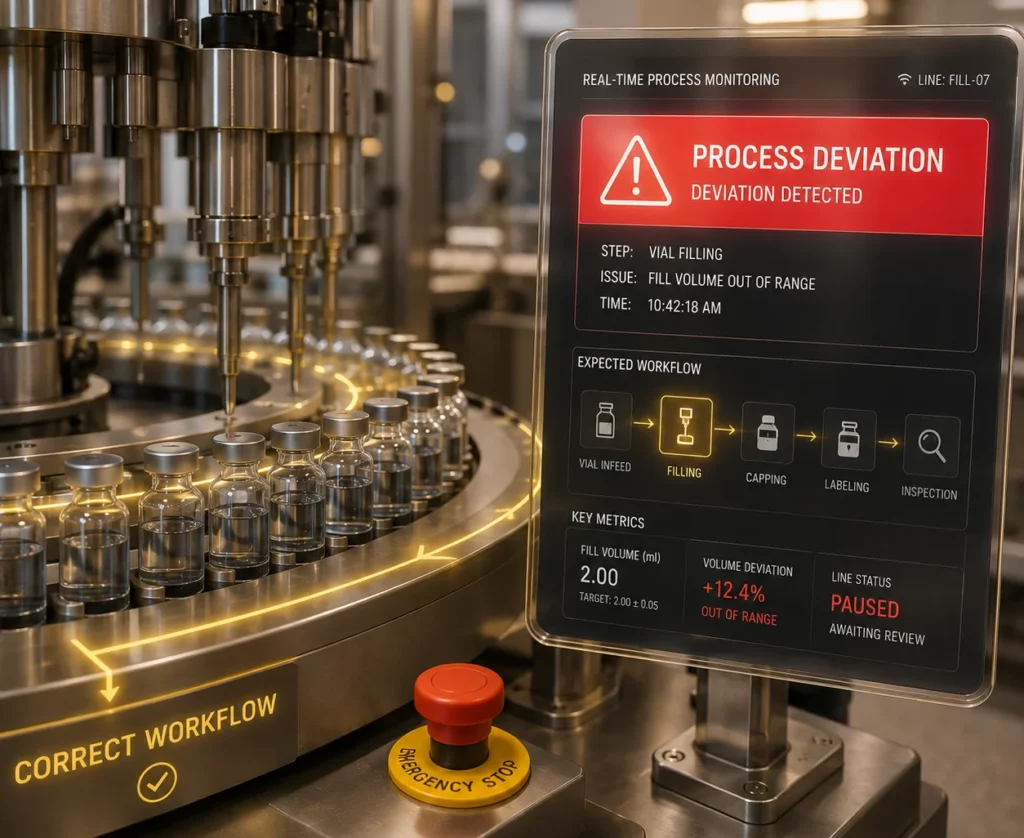
- Process deviations
- Congested operational zones
- PPE non-compliance
- Unsafe worker-machine interactions
As businesses expand their operations over several shifts and locations, it becomes more challenging to manually manage these risks.
Why Traditional Hazard Detection Has Limitations
Most organizations rely on a combination of safety inspections, supervisor observations, incident reporting, and employee feedback.
While these practices remain essential, they face several challenges:
- Hazards can emerge between inspections
- Large facilities create visibility gaps
- Human observation is naturally limited
- Reporting frequently happens following the identification of a problem.
- Multi-site oversight requires significant resources
As a result, organizations frequently operate with incomplete visibility into evolving workplace conditions.
What Is Real-Time Hazard Detection?
Real-time hazard detection uses AI-powered video analytics and computer vision to identify potential risks as workplace activities occur.
Instead of simply recording events, intelligent systems continuously analyze operational environments and detect conditions that may require immediate attention.
This enables organizations to move from periodic safety reviews toward continuous risk awareness.
How AI Detects Workplace Hazards
AI-driven systems can monitor workplace activity and identify patterns that may indicate operational risk.
Obstruction Detection
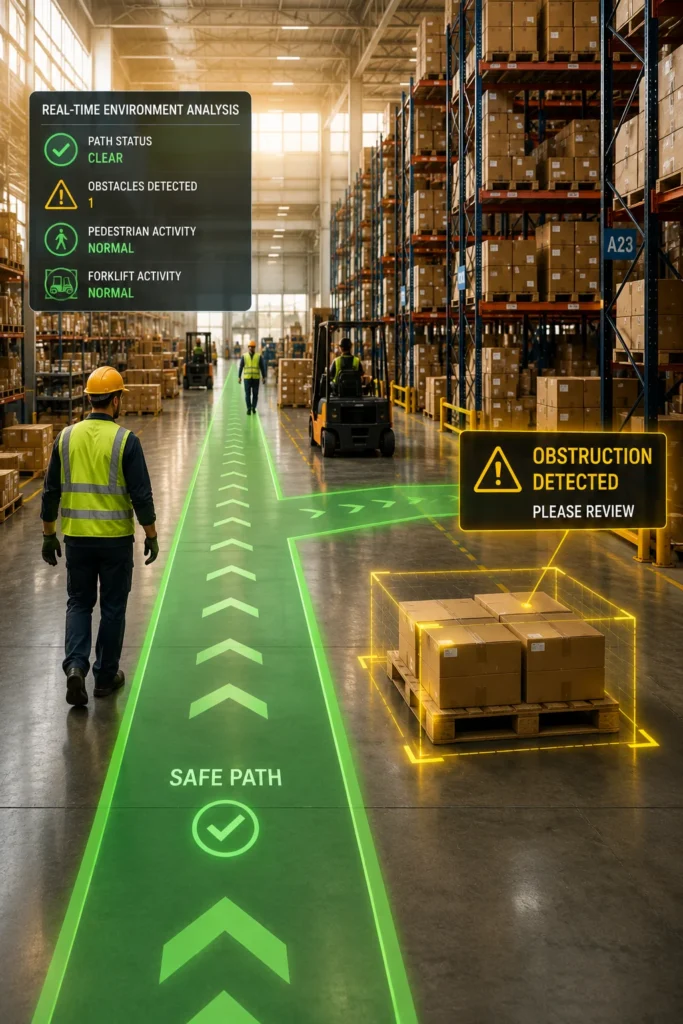
Objects blocking production lines, aisles, exits, or operational pathways can be identified before they affect safety or productivity.
Restricted Area Monitoring
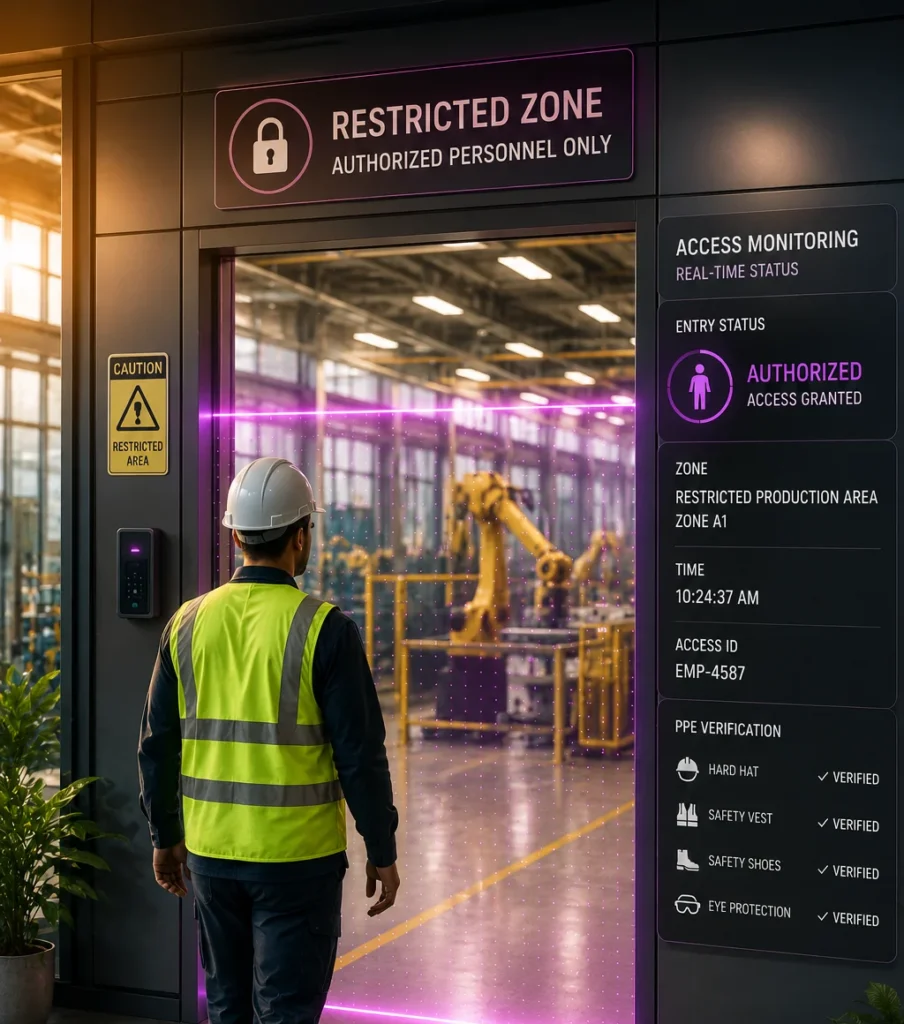
Unauthorized access to hazardous locations can be detected automatically, helping organizations maintain operational controls.
Worker And Equipment Proximity Monitoring
AI can identify situations where personnel and moving equipment are operating in close proximity, allowing corrective action before incidents occur.
Process Deviation Detection
When workflows differ from established operational procedures, potential hazards can be highlighted for review.
PPE Compliance Verification
Monitoring protective equipment usage helps organizations maintain workplace safety standards across facilities.
Environmental Risk Awareness
Operational conditions that may increase risk exposure can be identified and escalated to relevant personnel.
Compare Traditional Hazard Identification With Real-Time Detection
Traditional Hazard Management | Real-Time Hazard Detection |
Scheduled inspections | Continuous observation |
Manual reporting | Automated event recognition |
Reactive response | Early hazard awareness |
Limited operational coverage | Facility-wide visibility |
Human-dependent oversight | Consistent AI analysis |
Delayed issue discovery | Immediate notification |
When organizations compare these approaches, the advantage lies in reducing the time between hazard emergence and corrective action.
Business Benefits Beyond Workplace Safety
Real-time hazard detection supports more than accident prevention.
Reduced Operational Disruptions
Identifying issues early can help prevent downtime caused by unsafe conditions or process interruptions.
Improved Process Reliability
Monitoring operational environments helps maintain consistency across shifts and facilities.
Stronger Compliance Performance
Companies have documented access to operational controls and workplace safety protocols.
Better Resource Prioritization
Safety teams can focus attention on areas where risk exposure is highest.
Increased Management Visibility
Operational leaders gain a clearer understanding of recurring risks and improvement opportunities.
How CAPASai Supports Real-Time Hazard Detection
CAPASai helps organizations identify workplace hazards through AI-powered video analytics and intelligent operational monitoring.
By analyzing activities across production areas, warehouses, logistics facilities, construction sites, and other operational environments, CAPASai can help detect obstructions, monitor restricted zones, verify compliance requirements, and identify conditions that may require immediate attention.
This enables organizations to improve workplace awareness, support compliance objectives, and address potential risks before they contribute to larger operational challenges.
From Incident Response To Continuous Risk Awareness
The future of workplace safety is not simply about responding faster after an incident occurs. It is about recognizing hazards sooner and reducing the likelihood of incidents altogether.
Real-time hazard detection represents an important step toward safer, more efficient operations by providing organizations with the visibility needed to identify risks as they develop. As businesses continue to prioritize safety, productivity, and operational reliability, AI-powered hazard detection is becoming an increasingly valuable part of modern workplace management strategies.