Why Compliance Consistency Is A Growing Retail Challenge
Retail chains operate in highly dynamic environments where thousands of operational activities occur daily across multiple locations. From store opening procedures and merchandising standards to safety requirements and customer service protocols, maintaining compliance across every store can be difficult.
As retail networks expand, regional managers and operations teams often struggle to verify whether standards are being followed consistently. Periodic audits and store visits provide valuable insights, but they cannot continuously monitor day-to-day operations.
This has created a growing demand for real-time compliance visibility across retail environments.
The Cost Of Compliance Gaps In Retail Operations
Compliance issues are not always regulatory in nature. Many operational challenges originate from inconsistent execution of internal standards.
Common examples include:
- Incomplete store opening procedures
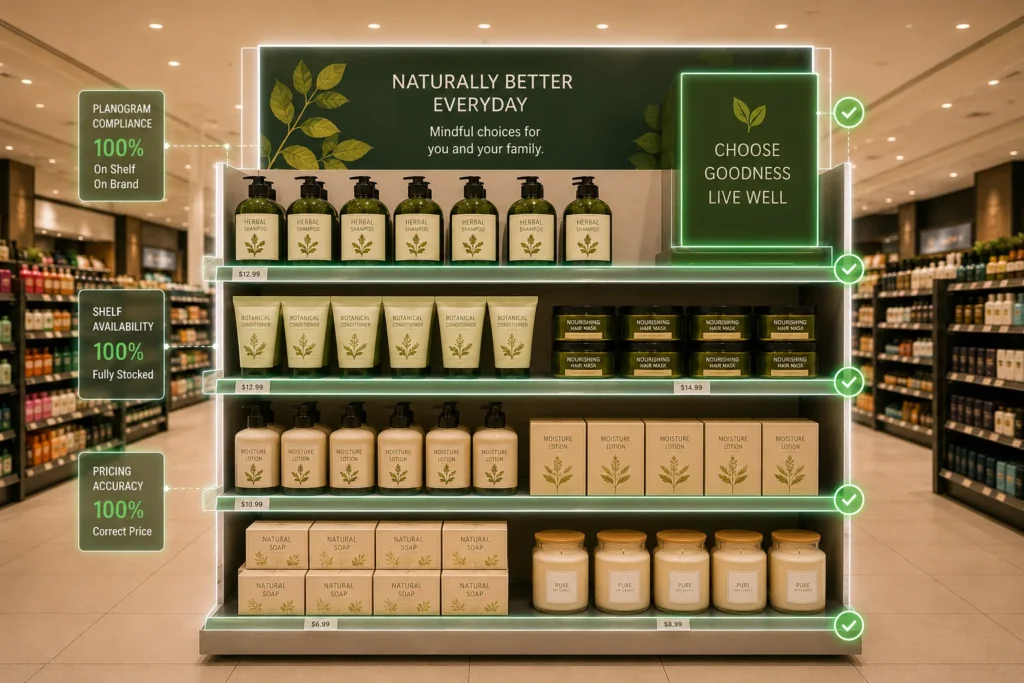
- Planogram deviations
- Promotional display inconsistencies
- Housekeeping deficiencies
- Safety violations
- Unauthorized access to restricted areas
- Queue management failures
- SOP non-compliance
When these issues occur repeatedly across multiple locations, they can affect customer experience, brand consistency, operational efficiency, and profitability.
Why Traditional Compliance Monitoring Falls Short
Most retail organizations rely on:
- Store inspections
- Regional audits
- Compliance checklists
- Mystery shopping programs
- Manager observations
- Employee reporting
Although these methods remain important, they often provide only periodic snapshots of operational performance.
Challenges include:
- Limited visibility between inspections
- Delayed issue identification
- Manual verification processes
- Inconsistent reporting
- Difficulty monitoring large store networks
As retail chains grow, maintaining consistent compliance through manual processes alone becomes increasingly difficult.
How Real-Time Compliance Management Works
AI-powered monitoring enables retailers to move from periodic compliance reviews to continuous operational visibility.
By analyzing activities throughout the store, organizations can identify deviations as they occur rather than after an audit cycle.
Operational Standards Verification
Store procedures can be monitored to ensure daily activities align with established operational requirements.
Merchandising Compliance Monitoring
Retailers can verify whether displays, promotions, and product placement standards are being maintained.
Store Readiness Assessment
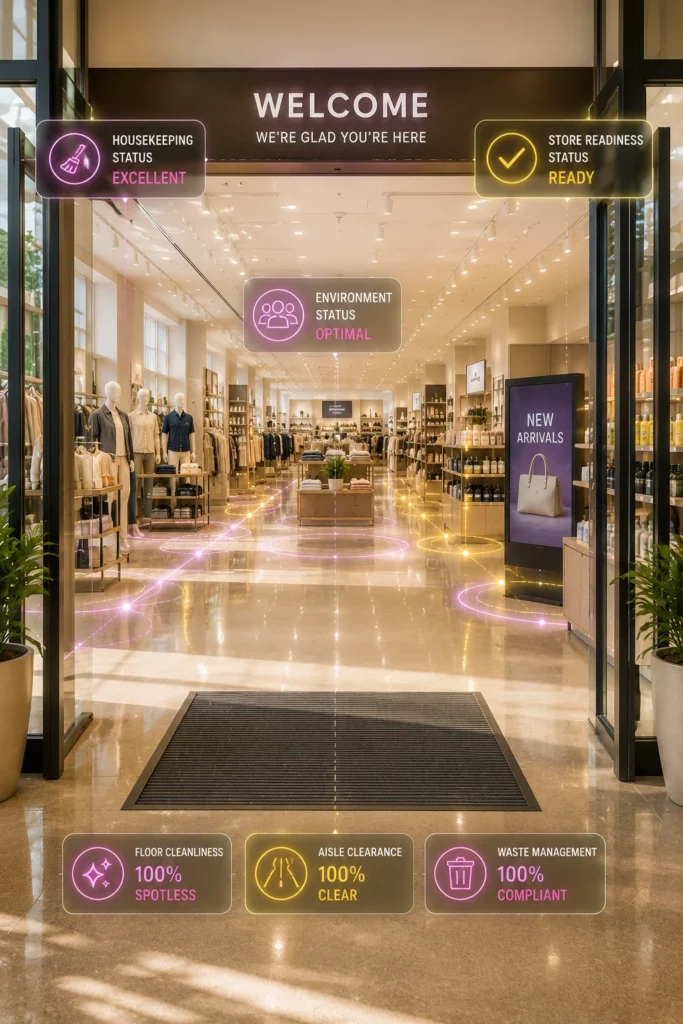
AI can help identify operational conditions that may impact store presentation and customer experience.
Safety And Housekeeping Visibility
Potential issues with compliance can be identified and reported faster.
Multi-Location Compliance Oversight
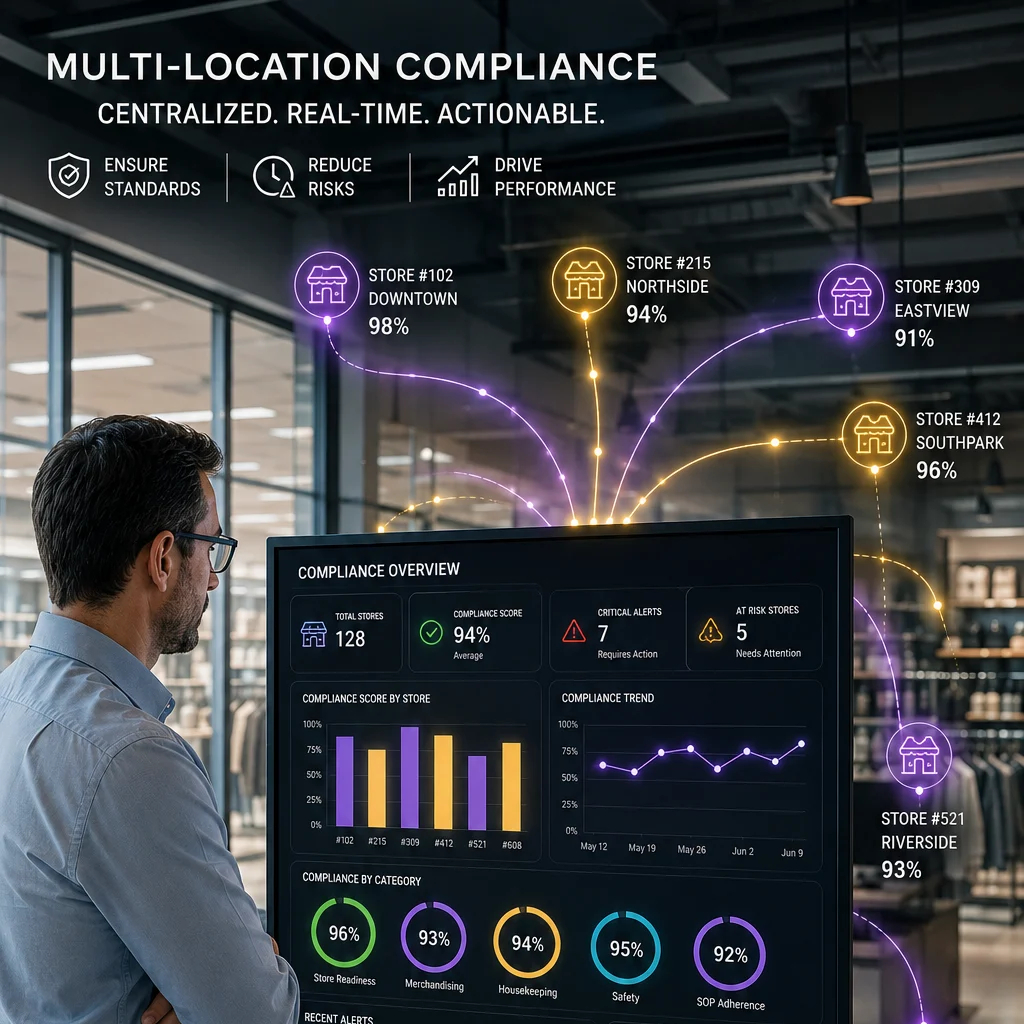
Operations teams gain centralized visibility into compliance performance across all stores.
Real-Time Alerts And Escalation
Store teams can address issues sooner, reducing the duration and impact of compliance gaps.
Compare Traditional Compliance Audits With Real-Time Compliance Monitoring
Traditional Compliance Audits | Real-Time Compliance Monitoring |
Scheduled reviews | Continuous oversight |
Manual verification | Automated monitoring |
Reactive issue discovery | Early issue identification |
Limited audit coverage | Ongoing operational visibility |
Store-specific inspections | Enterprise-wide monitoring |
Delayed corrective action | Faster response opportunities |
When retailers compare these approaches, real-time monitoring provides a more scalable method for maintaining compliance across large store networks.
Business Benefits Of Real-Time Compliance Management
Improved Brand Consistency
Stores are more likely to maintain operational standards consistently.
Faster Issue Resolution
Compliance gaps can be addressed before they affect customers or store performance.
Better Operational Accountability
Managers gain objective visibility into operational execution.
Reduced Audit Burden
Continuous monitoring helps support compliance verification efforts.
Enhanced Customer Experience
Consistent execution creates a more predictable shopping environment.
Retail Areas That Benefit Most From Continuous Compliance Monitoring
Real-time compliance management can support:
- Store Operations
- Merchandising Execution
- Promotional Compliance
- Queue Management
- Store Readiness
- Safety Monitoring
- Housekeeping Standards
- Workforce Process Adherence
Together, these areas contribute significantly to operational consistency and retail performance.
How CAPASai Supports Retail Compliance Management
CAPASai helps retail organizations strengthen compliance management through AI-powered video analytics and operational intelligence.
By monitoring store activities, operational procedures, merchandising standards, safety requirements, and workforce adherence to established processes, CAPASai provides real-time visibility into compliance performance. Intelligent alerts help teams respond quickly to deviations, while centralized monitoring supports consistent execution across multiple locations.
This aids retailers in upholding higher standards throughout their networks of stores, strengthening operational discipline, and increasing responsibility.
Turning Compliance Into A Continuous Operational Practice
The most successful retail organizations view compliance as an ongoing operational discipline rather than a periodic audit activity.
Real-time monitoring enables retailers to identify issues earlier, maintain consistent standards, and improve operational visibility across every location. As retail networks continue to expand, continuous compliance management is becoming an important component of operational excellence and brand consistency.