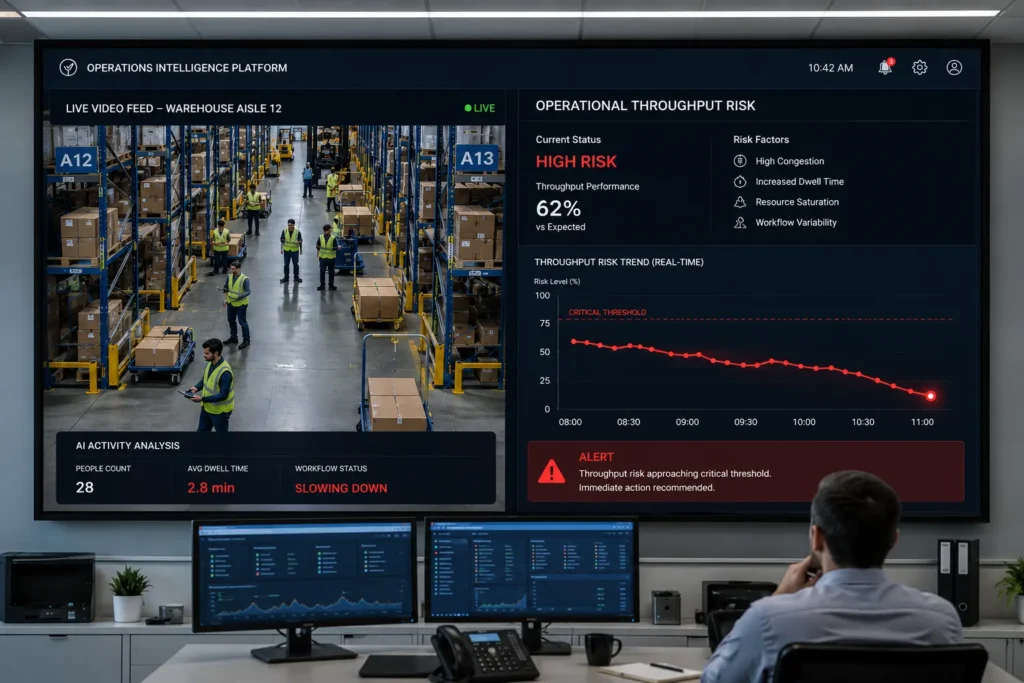
The Problem With Invisible Risk
Every organization manages risk.
Some risks are obvious and immediately visible. Equipment failures disrupt production. Safety incidents trigger investigations. Supply chain disruptions affect delivery schedules. Customer service failures impact brand reputation.
However, many operational risks develop long before they become visible problems.
Small process deviations, workflow bottlenecks, inefficient resource utilization, recurring delays, and inconsistent operational practices often remain unnoticed until they begin affecting performance metrics. By the time leadership teams recognize the issue, the business may have already experienced financial, operational, or reputational consequences.
The challenge is not simply identifying risk. The challenge is measuring it before it escalates.
Why Operational Risks Are Difficult To Quantify
Unlike financial risks, operational risks are often hidden within daily activities.
They emerge gradually through thousands of routine actions occurring across facilities, teams, and business functions.
The Gap Between Activity And Outcome
Most organizations measure outcomes exceptionally well.
They track production targets, sales performance, service levels, profitability, and customer satisfaction. What is often harder to measure are the operational activities that influence those outcomes.
For example:
- A recurring workflow delay may reduce productivity.
- Improper equipment usage may increase maintenance costs.
- Inefficient staffing patterns may affect customer experience.
- Process variations may contribute to quality issues.
The business sees the result but not always the cause.
Why Traditional Reporting Has Limitations
Conventional reporting systems are typically designed to summarize what has already happened.
While these reports provide valuable performance indicators, they may not always reveal the operational behaviors and conditions responsible for those results.
As a result, organizations often find themselves reacting to performance problems rather than understanding their root causes early.
Moving From Risk Identification To Risk Measurement
Modern organizations are increasingly seeking ways to transform operational uncertainty into measurable indicators.
Understanding Risk As A Business Variable
Risk is often treated as a qualitative concept.
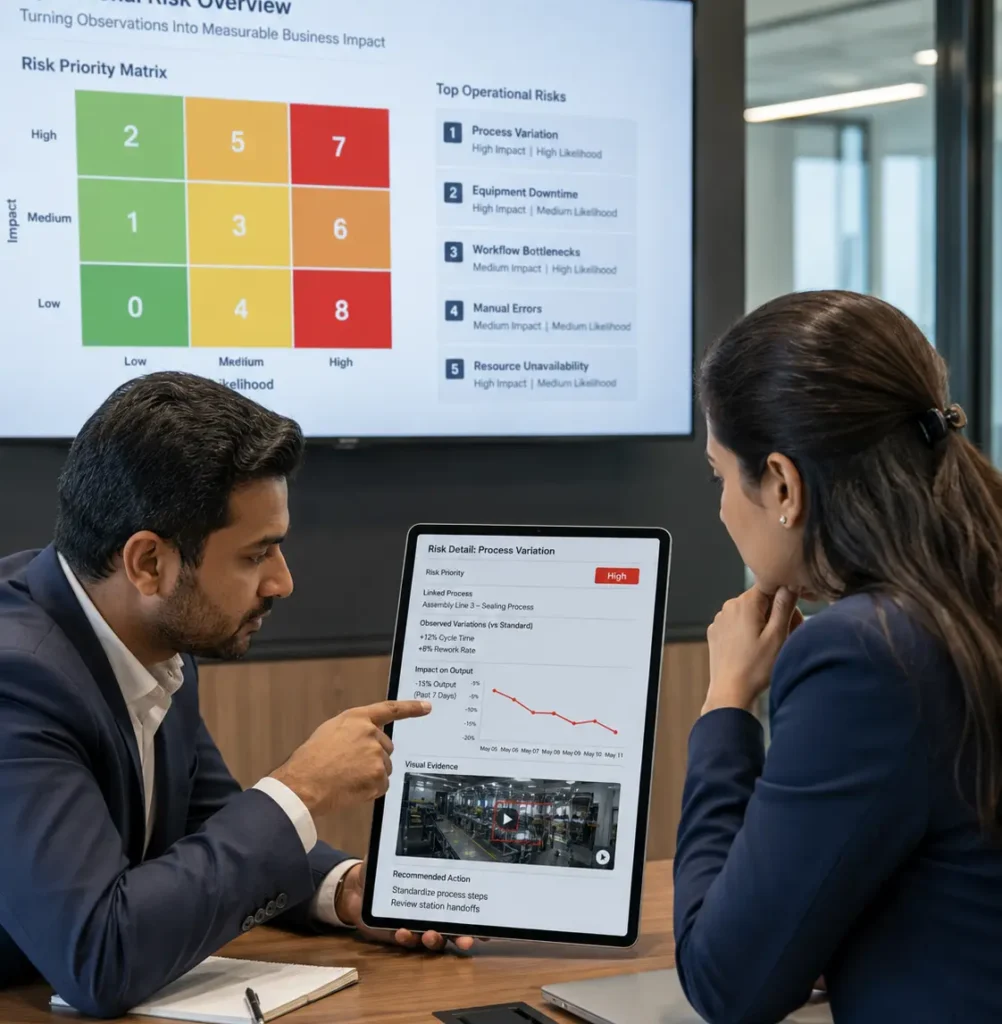
Teams describe risks as high, medium, or low. Managers rely on experience and observation to evaluate potential concerns. While these assessments remain important, they can be difficult to compare consistently across locations and departments.
A more effective approach is to establish measurable indicators that reveal how operational conditions are changing over time.
Creating Operational Visibility
When organizations gain better visibility into operational environments, risk becomes easier to understand and evaluate.
Patterns that once appeared isolated can begin to reveal broader trends.
Operational Observation | Potential Business Insight |
Recurring workflow delays | Productivity impact |
Equipment usage patterns | Maintenance risk |
Facility congestion | Efficiency concerns |
Process inconsistencies | Quality variation risk |
Resource allocation trends | Cost optimization opportunities |
This strategy aids businesses in overcoming presumptions and gaining a better comprehension of operational performance.
From Data To Decision-Making
The value of operational insight is not simply knowing where risks exist. It is understanding how those risks influence business outcomes.
Connecting Risk To Performance
When risks can be measured, they can also be prioritized.
Leadership teams can focus attention on the issues most likely to affect productivity, efficiency, quality, safety, or customer experience. Instead of responding to every operational concern equally, organizations can allocate resources based on measurable impact.
This improves both decision-making and operational planning.
Supporting Continuous Improvement
Operational improvement programs are often most successful when supported by objective information.
By measuring operational conditions consistently, organizations can evaluate whether corrective actions are producing meaningful results and whether performance improvements are sustainable over time.
The ability to track change creates a stronger foundation for long-term operational excellence.
Building A More Insight-Driven Organization
As business environments become increasingly complex, organizations need better ways to understand the risks hidden within daily operations.
The goal is no longer simply identifying issues after they occur. The goal is understanding operational patterns early enough to support informed action.
CAPASai helps organizations transform operational observations into actionable business insights through AI-powered video analytics and intelligent monitoring capabilities. By providing greater visibility into operational activities, CAPASai enables enterprises to identify trends, evaluate risks, and make decisions based on measurable evidence rather than assumptions.
Operational risks will always exist. The organizations that gain a competitive advantage will be those that can measure them, understand them, and respond before they become business problems.