Digital Transformation Has Reached a New Challenge
For years, digital transformation was measured by technology adoption. Organizations moved workloads to the cloud, digitized workflows, implemented enterprise software, and connected physical assets through sensors and smart devices. These initiatives delivered important benefits, helping businesses modernize infrastructure and improve efficiency.
Yet many leadership teams are beginning to encounter a different challenge.
Despite significant investments in digital technologies, operational decisions often remain slower than expected. Information exists across the organization, but understanding how that information connects remains difficult. Teams have access to more data than ever before, while simultaneously struggling to gain a complete picture of what is happening across the business.
This has led many organizations to recognize that digitization alone does not automatically create operational intelligence.

When Data Growth Outpaces Decision-Making
Every new technology deployment generates additional information. Machines produce performance data. Enterprise systems capture transactions. Cameras record activities. IoT devices continuously report environmental and operational conditions.
While these systems provide valuable insights individually, leadership teams frequently find themselves navigating dozens of disconnected sources of information. As data volumes increase, understanding relationships between events becomes more challenging.
The result is a situation where information is abundant, but operational clarity remains limited.
Why Many Transformation Initiatives Plateau.
Digital transformation projects often succeed in modernizing individual functions. However, challenges emerge when organizations attempt to connect these improvements into a broader operating model.
Technology Solves Individual Problems
Most technology investments are designed to address specific business requirements.
A warehouse management system improves inventory operations. A facility management platform monitors building performance. Video systems provide visibility into physical environments. Business applications support planning and execution.
Each solution performs its intended role effectively.
The difficulty arises when leaders need to understand how activities across these systems influence one another.
Fragmented Visibility Creates Operational Gaps
Departments frequently operate with different datasets, different reporting structures, and different performance indicators.
Although every team may have access to valuable information, decision-makers often lack a unified view of operational reality.
Transformation Achievement | Remaining Challenge |
Cloud Adoption | Understanding business impact |
IoT Deployment | Interpreting thousands of signals |
Enterprise Software | Connecting cross-functional insights |
CCTV Modernization | Converting observations into intelligence |
Process Digitization | Coordinating decisions across teams |
This is one of the reasons many transformation programs reach a plateau after initial implementation success.
The Emergence of the Operational Context Layer
As organizations mature digitally, attention is shifting from data collection to data interpretation.
From Signals to Meaning
Business operations generate countless signals every day. On their own, these signals often provide only partial understanding.
A production delay, increased facility activity, changing equipment conditions, and workforce movements may appear unrelated when viewed independently. However, together they may reveal a broader operational trend.
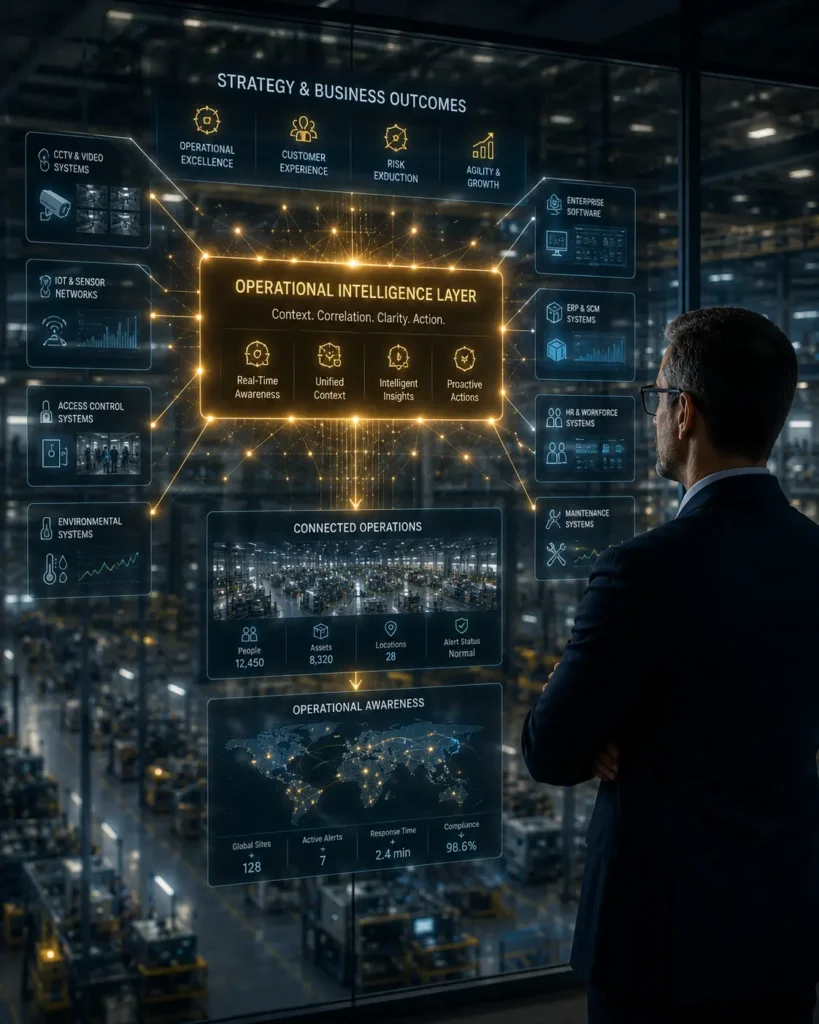
Operational Intelligence Platforms help organizations connect these signals and establish context around what is happening across the enterprise.
The goal is not simply to display more information. The goal is to improve understanding.
Why Context Matters More Than Volume
Many organizations assume that more data automatically leads to better decisions. In practice, decision quality depends far more on context than volume.
Leaders rarely need every available data point. What they need is a clear understanding of relationships, dependencies, and operational impact.
By creating these connections, operational intelligence platforms help transform isolated information into actionable business knowledge.
Rethinking the Purpose of Digital Transformation
The next phase of digital transformation is likely to focus less on technology deployment and more on operational awareness.
Organizations have already built substantial digital infrastructure. The greater opportunity now lies in helping people understand what that infrastructure is revealing about the business.
Building a More Connected Operating Model
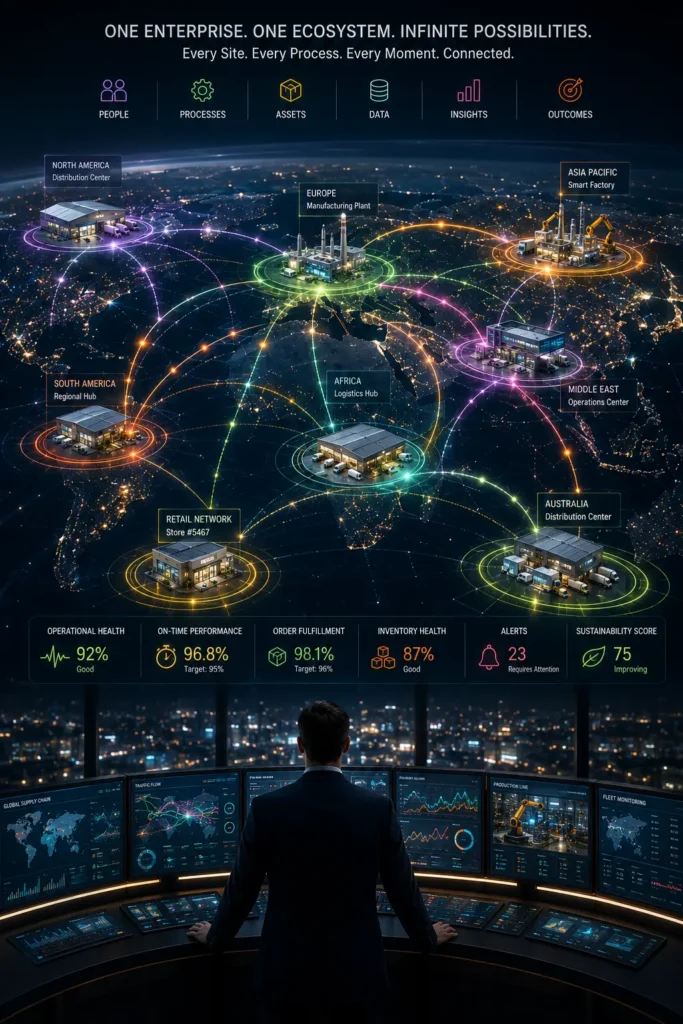
Operational intelligence enables organizations to move beyond viewing individual systems as separate sources of information. Instead, they can begin viewing operations as interconnected environments where activities, assets, people, and processes influence one another continuously.
This broader perspective supports better alignment between strategic goals and day-to-day execution.
CAPASai contributes to this approach through AI-powered video analytics, operational visibility, and intelligent insight generation. By transforming existing CCTV infrastructure into a source of operational intelligence, CAPASai helps organizations bridge the gap between technology investments and business understanding.
Digital transformation changes how organizations collect information. Operational intelligence changes how they interpret it.