Why Enterprise Management Needs a New Operating Model
More operational data is produced by modern businesses than in the past. Manufacturing plants produce machine data every second, retail stores generate customer activity information throughout the day, logistics networks track the movement of goods across multiple locations, and corporate systems continuously collect performance metrics from business operations.
Even with this wealth of information, many organisations still face a basic problem: converting operational data into decisions that can be put into action.
Most business leaders receive information through reports, dashboards, spreadsheets, and periodic reviews. While these tools provide valuable insights, they often present a fragmented view of the organization. Because data is dispersed over several departments, systems, and locations, it is challenging to get a comprehensive picture of what is going on throughout the company at any given time.
Operational intelligence platforms, which are technological solutions intended to convert massive amounts of operational data into significant business insights that facilitate quicker and more informed decision-making, are becoming more and more popular as a result of this difficulty.
The Shift from Data Collection to Operational Understanding
For years, organizations focused on collecting data. Today, the focus is shifting toward understanding it.
The ability to gather information is no longer the competitive advantage. The real advantage comes from connecting data sources, identifying patterns, and delivering insights that help leaders improve operational performance.
What Is an Operational Intelligence Platform?
An operational intelligence platform is a technological framework that collects data from many operational sources, analyses it almost instantly, and turns it into insights that business executives may use.
Unlike traditional reporting systems that primarily focus on historical performance, operational intelligence platforms help organizations understand current operational conditions and emerging trends.
Core Components of an Operational Intelligence Platform
Most platforms combine several technologies to create a unified operational view:
Component | Purpose |
Data Collection | Captures information from operational sources |
AI & Analytics | Identifies patterns, trends, and anomalies |
Video Intelligence | Extracts insights from visual data streams |
IoT Integration | Connects sensors, equipment, and devices |
Dashboards & Alerts | Delivers actionable information to users |
Reporting & Insights | Supports operational and strategic decisions |
The value of the platform comes not from any single technology, but from the ability to connect multiple sources of information into a single operational picture.
Moving Beyond Departmental Silos
In many organizations, operational data remains isolated within individual systems.
Manufacturing teams monitor production data. Security teams monitor surveillance systems. Facility managers track asset performance. Operations leaders review performance metrics.
Operational Intelligence Platforms help bridge these silos by bringing information together and creating a shared view of enterprise performance.
How AI Is Transforming Operational Intelligence
Because it allows businesses to handle data at a scale that would be challenging to accomplish manually, artificial intelligence is essential to contemporary operational intelligence platforms.
Converting Raw Data into Actionable Insights
Traditional systems often require users to search through reports to identify trends and issues.
AI modifies this strategy by automatically evaluating vast amounts of data and emphasising the most important findings. Rather than asking managers to interpret thousands of data points, the platform helps surface patterns that support faster decisions.
This enables leadership teams to concentrate more on responding to information and less on obtaining it.
Unlocking the Value of Visual Data
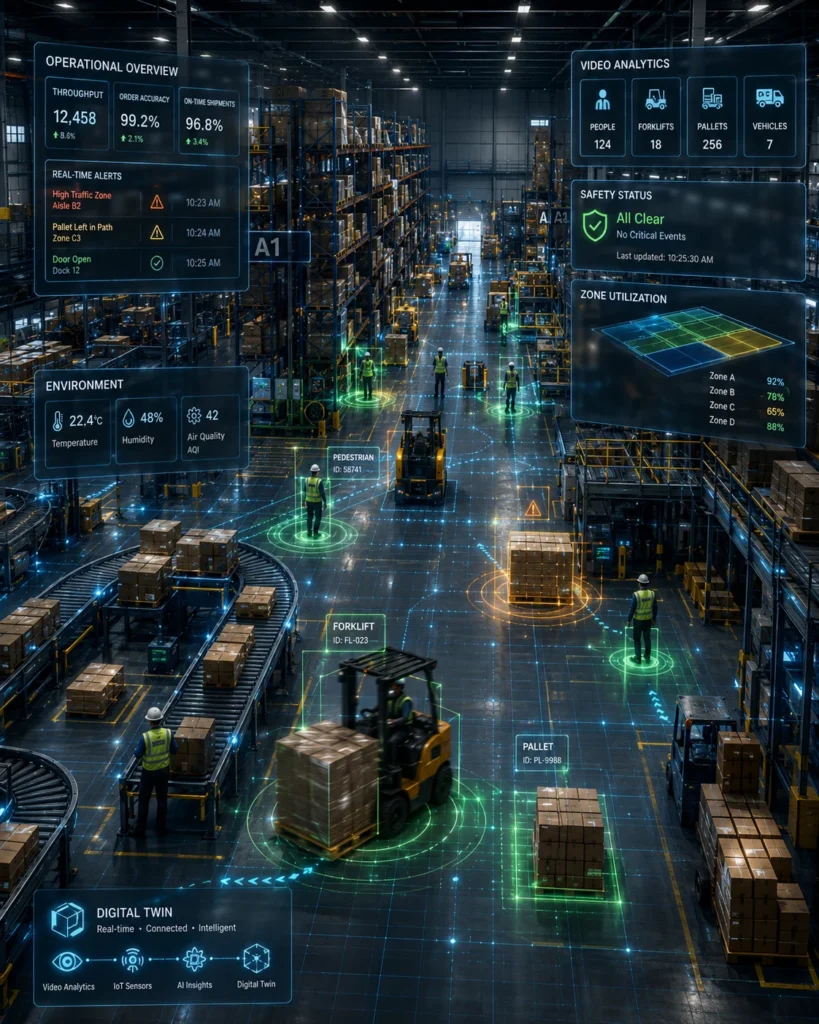
One of the most significant developments in operational intelligence is the ability to analyze visual information.
For many years, CCTV systems were primarily used for security and incident investigation. Today, AI-powered video analytics can transform visual data into operational intelligence that contributes to broader business objectives.
Activities, workflows, asset utilization, occupancy trends, operational events, and facility conditions can all contribute to a richer understanding of enterprise performance.
Supporting Faster and More Informed Decisions
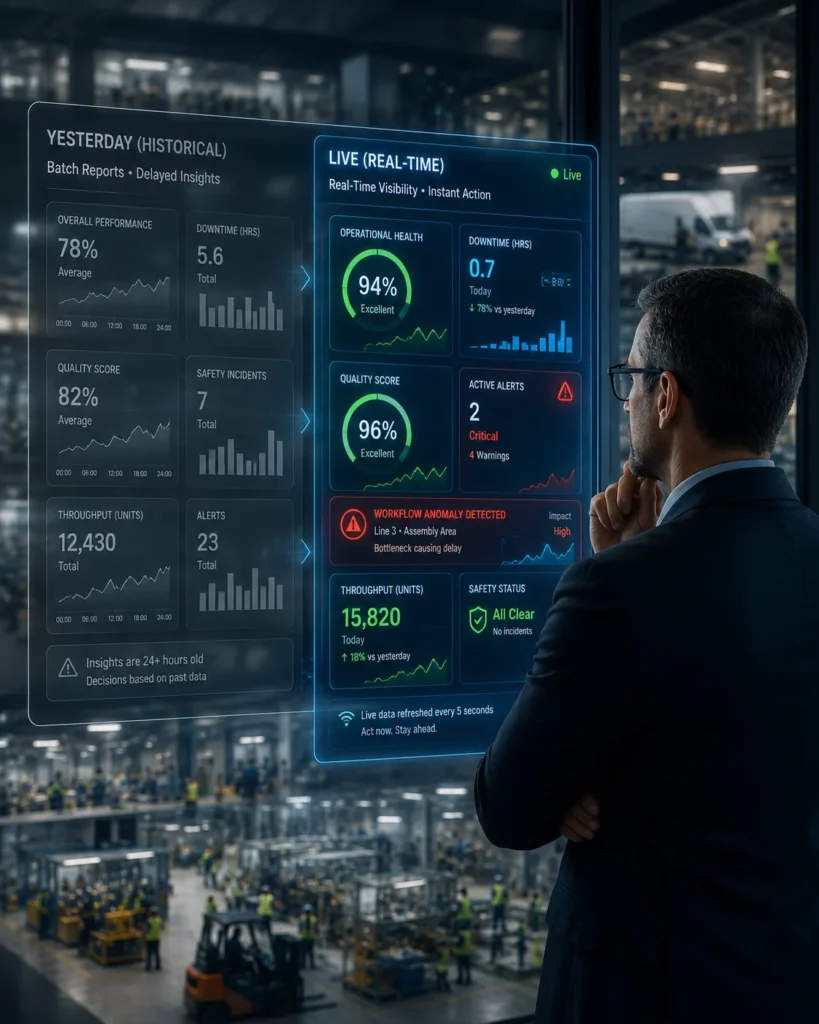
Operational intelligence platforms help reduce the delay between an event occurring and leadership becoming aware of it.
This improved responsiveness enables organizations to adapt more quickly to changing operational conditions and make decisions based on current realities rather than historical reports alone.
How Operational Intelligence Is Reshaping Enterprise Management
The rise of operational intelligence platforms is changing how organizations manage operations across multiple locations, departments, and business functions.
Creating a Single Source of Operational Awareness
Instead of relying on disconnected systems, leaders gain access to a unified view of operational performance.
This facilitates better alignment between daily execution and strategic goals.
Improving Cross-Functional Collaboration
When departments operate from the same operational insights, communication improves and decision-making becomes more consistent.
Teams can respond more effectively because they are working from shared information rather than isolated data sources.
Enabling More Proactive Management
Traditional management models often rely on reviewing past performance and reacting to completed events.
By assisting organisations in spotting trends, opportunities, and operational changes as they emerge, operational intelligence systems promote a more proactive approach.
With its AI-powered video analytics, operational visibility, remote monitoring, and intelligent alerting features, CAPASai facilitates this transition. CAPASai assists companies in transforming operational data into useful company insights by utilising their current CCTV infrastructure and incorporating visual intelligence into business processes.
How Operational Intelligence Is Reshaping Enterprise Management
The rise of operational intelligence platforms is changing how organizations manage operations across multiple locations, departments, and business functions.
Creating a Single Source of Operational Awareness
Instead of relying on disconnected systems, leaders gain access to a unified view of operational performance.
This facilitates better alignment between daily execution and strategic goals.
Improving Cross-Functional Collaboration
When departments operate from the same operational insights, communication improves and decision-making becomes more consistent.
Teams can respond more effectively because they are working from shared information rather than isolated data sources.
Enabling More Proactive Management
Traditional management models often rely on reviewing past performance and reacting to completed events.
By assisting organisations in spotting trends, opportunities, and operational changes as they emerge, operational intelligence systems promote a more proactive approach.
With its AI-powered video analytics, operational visibility, remote monitoring, and intelligent alerting features, CAPASai facilitates this transition. CAPASai assists companies in transforming operational data into useful company insights by utilising their current CCTV infrastructure and incorporating visual intelligence into business processes.