Organizations invest significant resources in improving operational efficiency, standardizing workflows, and optimizing performance. Yet many inefficiencies remain hidden beneath the surface of everyday operations. Small delays, workflow interruptions, process deviations, and resource utilization gaps often go unnoticed until they begin affecting productivity, customer experience, or profitability.
Traditional performance management approaches typically rely on reports, audits, manual observations, and periodic reviews. While these methods provide valuable insights, they often reveal problems only after inefficiencies have already impacted operations.
Artificial Intelligence (AI) is changing this dynamic by helping organizations identify hidden inefficiencies in real time, enabling faster corrective action and continuous operational improvement.
Why Hidden Inefficiencies Are Difficult To Detect
Many business processes involve numerous people, systems, locations, and activities working together simultaneously.
While major operational issues are usually visible, smaller inefficiencies often remain concealed because they occur across multiple touchpoints and accumulate gradually over time.
Examples include:
- Delayed task completion
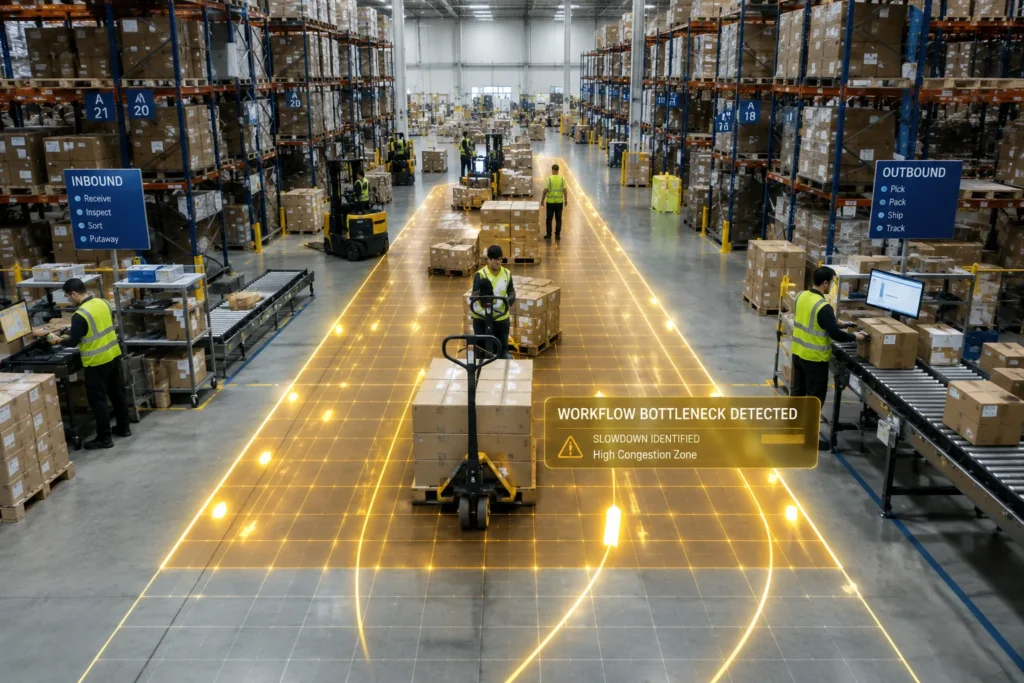
- Workflow bottlenecks
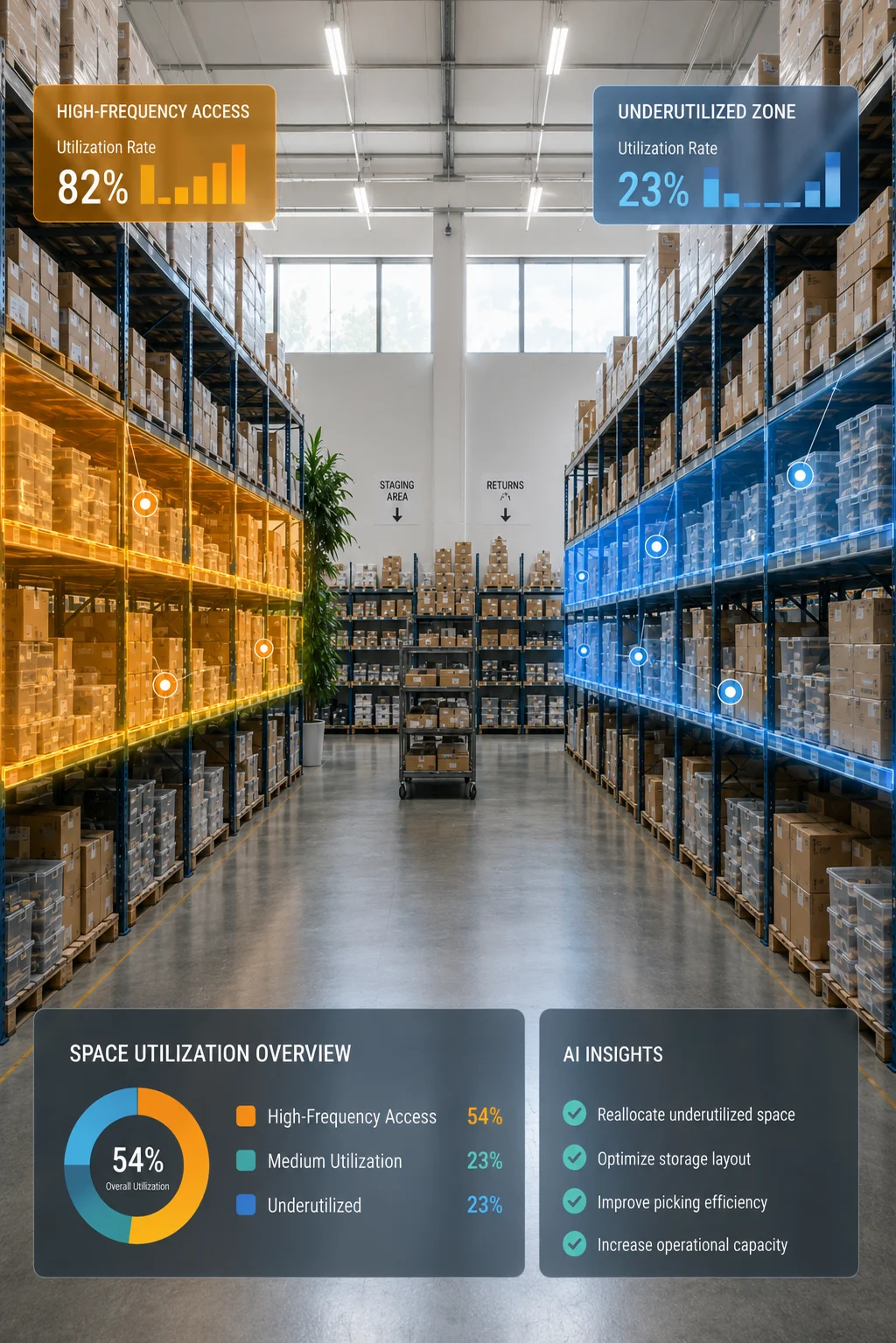
- Resource underutilization
- Process deviations
- Communication gaps
- Waiting time between activities
- Inconsistent execution of procedures
Individually, these issues may appear minor. Collectively, however, they can significantly impact operational performance.
The Limitations Of Traditional Monitoring
Most organizations monitor performance using:
- Historical reports
- Key performance indicators (KPIs)
- Manual audits
- Employee feedback
- Periodic process reviews
While these tools remain important, they often provide a retrospective view of operations.
As a result, organizations may struggle to answer questions such as:
- Where are delays occurring?
- Which workflows are creating bottlenecks?
- Are processes being followed consistently?
- Which resources are underutilized?
- What factors are causing recurring inefficiencies?
AI helps provide answers through continuous operational analysis.
How AI Detects Hidden Inefficiencies
AI can analyze large volumes of operational data and identify patterns that are difficult for humans to detect manually.
Rather than waiting for performance reviews, organizations gain continuous visibility into how processes are functioning in real time.
Identifying Workflow Bottlenecks
Bottlenecks often emerge gradually as workloads increase or process conditions change.
AI can continuously monitor operational activities and identify areas where tasks slow down, queues build up, or throughput declines.
This allows organizations to intervene before bottlenecks create larger disruptions.
Detecting Process Deviations
Business processes are designed to ensure consistency and efficiency.
However, employees, teams, or locations may unintentionally deviate from established procedures.
AI can identify unusual patterns and process variations that may indicate:
- Non-compliant workflows
- Inconsistent execution
- Increased operational risk
- Quality concerns
Early detection helps organizations maintain operational discipline and consistency.
Improving Resource Utilization
Many organizations struggle to fully understand how resources are being used across their operations.
AI can provide visibility into:
- Workforce allocation
- Equipment utilization
- Facility usage
- Operational capacity
This helps leaders identify opportunities to improve efficiency and maximize productivity.
Reducing Waiting Time
Waiting is one of the most common sources of operational inefficiency.
AI can identify delays caused by:
- Process handoffs
- Material shortages
- Staffing imbalances
- Workflow interruptions
Reducing waiting time often produces immediate improvements in operational performance.
The Role Of Computer Vision
Many business processes occur in physical environments where traditional software systems have limited visibility.
Computer vision extends AI’s capabilities by analyzing operational activities through video and visual data.
Organizations can use computer vision to:
- Monitor workflows
- Verify process adherence
- Identify congestion areas
- Analyze movement patterns
- Detect operational bottlenecks
- Improve compliance oversight
This creates a richer understanding of operational performance beyond traditional reporting systems.
From Reactive To Proactive Operations
One of the most significant advantages of AI is its ability to help organizations move from reactive management to proactive optimization.
Traditional Approach | AI-Driven Approach |
Periodic Reviews | Continuous Monitoring |
Historical Analysis | Real-Time Intelligence |
Manual Investigations | Automated Detection |
Reactive Improvements | Proactive Optimization |
Limited Visibility | Continuous Operational Awareness |
This shift enables organizations to address inefficiencies before they escalate into larger operational problems.
Building A Culture Of Continuous Improvement
AI is not simply a technology tool—it can become an important enabler of continuous improvement.
By providing ongoing operational intelligence, AI helps organizations:
- Prioritize improvement initiatives
- Measure performance consistently
- Monitor process health
- Validate corrective actions
- Support data-driven decision-making
This creates a stronger foundation for operational excellence and long-term business performance.
Conclusion
Hidden inefficiencies exist in virtually every organization. While many remain unnoticed through traditional monitoring methods, their cumulative impact can significantly affect productivity, quality, and operational performance.
AI provides organizations with the ability to continuously analyze operations, identify inefficiencies, detect process deviations, and uncover optimization opportunities. Combined with technologies such as computer vision, AI delivers the visibility needed to understand how work is actually performed across complex operational environments.
As organizations continue to pursue operational excellence, AI will play an increasingly important role in helping leaders identify hidden inefficiencies and drive continuous improvement across the enterprise.
How CAPASai Supports Operational Efficiency
CAPASai helps organizations uncover hidden inefficiencies through AI-powered video analytics, real-time monitoring, operational intelligence, and automated alerts. By providing continuous visibility into workflows, process adherence, resource utilization, and operational performance, CAPASai enables enterprises to identify bottlenecks, improve consistency, and support data-driven operational improvement initiatives.