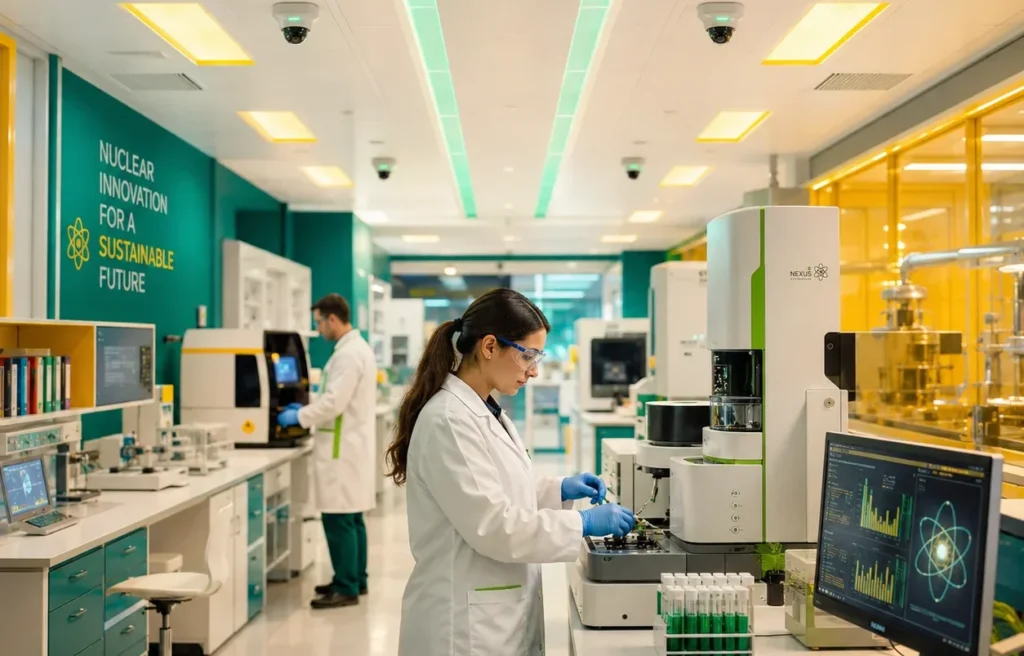
The Department of Atomic Energy (DAE) operates across a highly specialised ecosystem involving nuclear research, power generation, fuel-cycle activities, radiation applications, advanced engineering, laboratories, and strategic infrastructure. In such environments, safety procedures are not simply operational guidelines; they form part of a tightly controlled system designed to protect personnel, facilities, equipment, and the surrounding environment.
AI-based SOP analytics and video analytics can strengthen this framework by adding continuous monitoring to selected activities. Instead of relying only on periodic inspections or manual CCTV observation, AI can identify predefined visual conditions and bring potential deviations to the attention of authorised personnel.
A Safety Model Built Around Exceptions
The most useful role for AI within DAE would be to identify exceptions rather than attempt to automate safety decisions.
A video analytics platform can continuously examine selected areas and recognise conditions such as:
- Entry into controlled areas
- Missing required protective equipment
- Personnel inside predefined exclusion zones
- Unsafe movement around equipment
- Unauthorised vehicle activity
- Obstructed emergency routes
- Unusual activity near critical infrastructure
- Camera obstruction or tampering
The system can then classify the event according to predefined rules and send it to the appropriate safety, security, or operations team.
This approach allows personnel to concentrate on events requiring attention instead of continuously reviewing routine footage.
Where SOP Analytics Can Add Value
DAE facilities can contain laboratories, plants, workshops, testing areas, material-handling zones, controlled-access locations, and other specialised environments. Each location can have different procedures.
AI-based SOP analytics can be applied where a procedure contains a condition that can be reliably observed.
Operational Setting | Possible AI Monitoring | Potential Purpose |
Laboratories | PPE and access compliance | Personnel safety |
Nuclear Facilities | Controlled-zone entry | Procedural discipline |
Workshops | Worker-equipment interaction | Hazard identification |
Material Areas | Movement and access | Operational control |
Restricted Facilities | Personnel and vehicle activity | Security support |
Emergency Routes | Obstruction detection | Emergency preparedness |
The system should be based on approved DAE procedures and site-specific risk assessments. It should not attempt to determine complex technical or nuclear-safety decisions from video alone.
Monitoring Controlled Areas More Intelligently
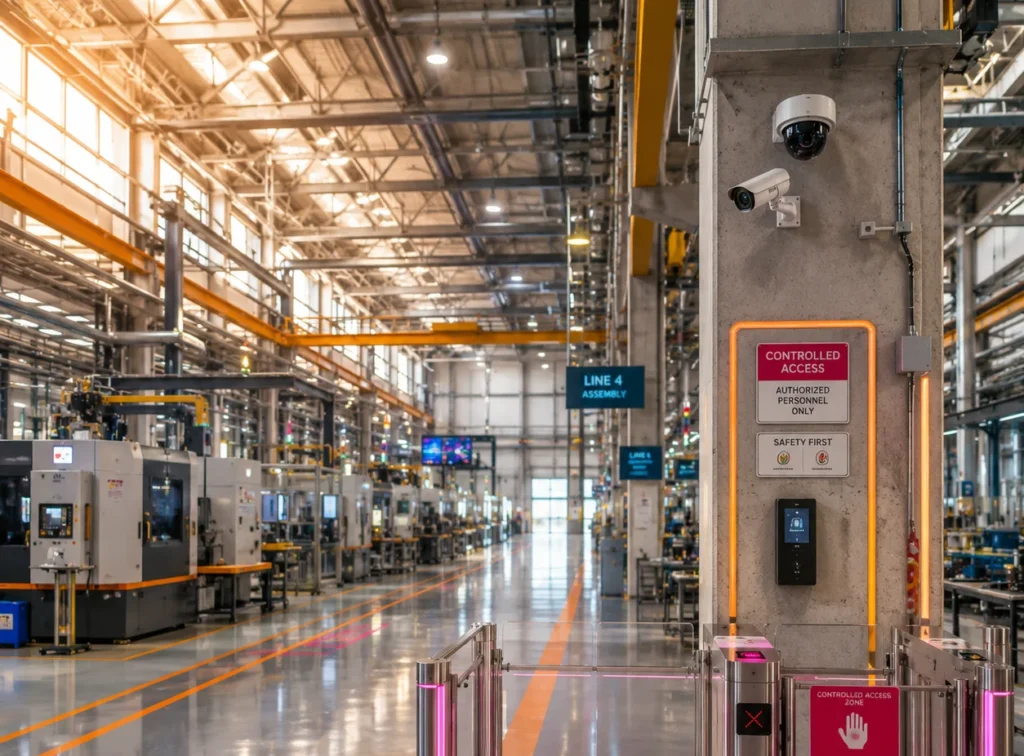
Controlled-area monitoring is a particularly relevant application.
A camera can detect a person entering a predefined zone, but the real value comes from understanding the context. Access-control information can establish whether the individual is authorised. Equipment or plant-status information can indicate whether an operation is underway.
This allows the system to distinguish between routine authorised activity and an event that requires immediate review.
For example, a maintenance worker entering an approved area during a scheduled shutdown may be expected. The same movement during a controlled operation may require escalation.
Supporting Nuclear And Industrial Safety
DAE’s facilities involve activities where human safety, equipment protection, and procedural compliance are closely connected. AI can support selected visible requirements without replacing established engineering controls, alarms, interlocks, radiation-monitoring systems, or safety personnel.
Potential applications include monitoring access around equipment, observing designated work zones, checking visible PPE requirements, and identifying personnel or objects in areas that should remain clear.
Video analytics can also assist during incident investigation by helping authorised personnel locate relevant footage according to time, location, or event type.
Combining Video With Other Information
A major opportunity lies in combining visual information with existing operational data.
A future analytics environment could potentially incorporate:
- Access-control information
- Equipment status
- Plant alarms
- Maintenance schedules
- Environmental sensors
- Safety-management systems
- Vehicle information
- Facility-management systems
This creates a richer understanding of an event.
A person detected near a restricted piece of equipment is one data point. If the equipment is operating, the area is under a specific permit, and the person’s access status is unknown, the same event can be prioritised more appropriately.
Using AI To Identify Repeated Weaknesses
SOP analytics should not be limited to finding individual violations. Aggregated information can reveal recurring weaknesses in the working environment.
For example, repeated access deviations at one location could indicate an ineffective physical barrier, unclear signage, or an inconvenient workflow. Recurring PPE-related alerts could indicate training, availability, or supervision issues.
This gives safety teams an additional source of evidence when reviewing procedures and workplace conditions.
The objective is to understand not only where deviations occur, but also why they continue to occur.
Security And Governance Are Essential
DAE operates in a sensitive strategic environment, so an AI video analytics deployment would require strong controls around information security and system access.
Important considerations include:
- Segmented and secure networks
- Role-based access to video data
- Strong authentication
- Controlled data retention
- Audit trails
- Secure system integration
- Protection of sensitive facility imagery
- Cybersecurity testing
- Human validation of important alerts
AI models should also be evaluated carefully for false positives and false negatives. An alerting system that generates excessive unnecessary notifications can reduce the effectiveness of human monitoring.
A Targeted Implementation Strategy
DAE can begin with narrowly defined applications rather than attempting to introduce AI surveillance across every facility.
Priority should be given to areas where the safety requirement is important, the condition is visually detectable, and there is a clearly defined response.
Pilot projects can then assess camera suitability, lighting, environmental conditions, detection accuracy, response times, cybersecurity, and operational acceptance.
Successful applications can be expanded only after their performance has been validated under actual site conditions.

How DAE Can Evaluate Results
The value of AI-based SOP and video analytics can be assessed using measurable indicators such as:
- Recurring SOP deviations
- PPE compliance
- Restricted-area events
- Safety-alert response time
- False-positive rate
- Incident investigation time
- Corrective-action closure
- Manual surveillance workload
For the Department of Atomic Energy, AI should therefore function as an additional layer of safety and security intelligence. Its greatest value lies in helping authorised professionals identify important exceptions, investigate recurring patterns, and strengthen procedural discipline while keeping technical and safety decisions under human control.
Frequently Asked Questions
Yes, for selected visual and procedural requirements. It should complement, rather than replace, engineered safety systems, plant controls, radiation monitoring, and qualified safety personnel.
Potential applications include controlled-area access, PPE compliance, personnel-equipment proximity, vehicle movement, emergency-route obstructions, and unusual activity around designated infrastructure.
Yes. Combining video detections with access permissions can provide additional context and help distinguish authorised activity from potential access violations.
It can be, provided deployment includes appropriate cybersecurity, network segmentation, access controls, data governance, and protection of sensitive visual information.
Yes. Analysing recurring deviations can reveal weaknesses in workplace layout, access arrangements, training, supervision, or procedure design and support targeted corrective measures.