Hindustan Zinc Limited (HZL) has already moved beyond evaluating artificial intelligence as a future technology. Its recent digital initiatives include AI/ML, computer vision, video analytics, sensor fusion, proximity warning systems, PPE detection, machine-zone protection, and intelligent interlocking. Its FY2024–25 reporting also documents the use of AI-based cameras for crane-path safety and computer vision for ladle operations.
This existing foundation makes HZL a strong environment for expanding AI-based SOP analytics. The opportunity is to connect what cameras and sensors observe with the procedures employees are expected to follow, creating a more responsive approach to safety and operational compliance.
What AI-Based SOP Analytics Can Add
SOP analytics can create a digital connection between written procedures and observable workplace behaviour.
Instead of asking only whether an incident occurred, HZL can configure AI systems to monitor specific conditions associated with critical procedures. The system can identify a deviation, classify its severity, and direct an alert to the appropriate team.
Potential applications include:
- PPE compliance in defined work areas
- Entry into equipment exclusion zones
- Worker presence around moving machinery
- Compliance with selected work-at-height requirements
- Safe positioning during lifting and material-handling activities
- Restricted-area access
- Vehicle and pedestrian interaction
- Selected maintenance and isolation procedures
From Detection To Immediate Intervention
The most valuable feature of video analytics is its ability to support intervention while an activity is taking place.
Consider a worker approaching a machine operating within a protected zone. A conventional CCTV system records the event. An AI-based system can detect the person, identify the protected area, determine that the machine is active, and generate an alert.
The response can then follow a predefined workflow:
Stage | AI-Enabled Function |
Observe | Analyse live camera or sensor data |
Detect | Identify a predefined condition |
Interpret | Compare the event with a safety rule |
Prioritise | Classify the risk or severity |
Alert | Notify the responsible team |
Respond | Human supervisor takes corrective action |
Learn | Record the event for trend analysis |
Applications Across Mining And Smelting
HZL’s diverse operations require different forms of video analytics.
Underground Mining
AI can support monitoring of worker-equipment interactions, restricted zones, PPE compliance, and selected access conditions. HZL has also deployed tele-remote and guidance-enabled loaders at Rampura Agucha, allowing surface operators to control underground loaders during shift changeovers.
Video analytics can complement such automation by providing another layer of situational awareness around people and machinery.
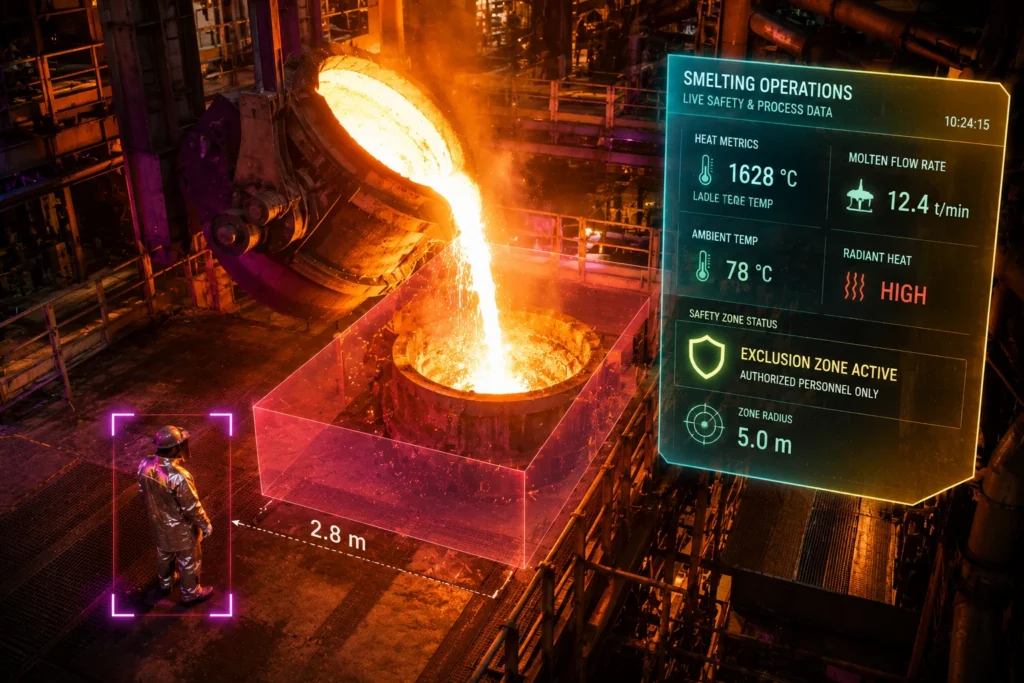
Smelting Operations
Smelters contain cranes, ladles, molten-material handling, restricted pathways, and other high-risk activities. HZL’s existing AI camera and computer-vision applications demonstrate how visual detection can be connected directly with safety interlocks and operational controls.
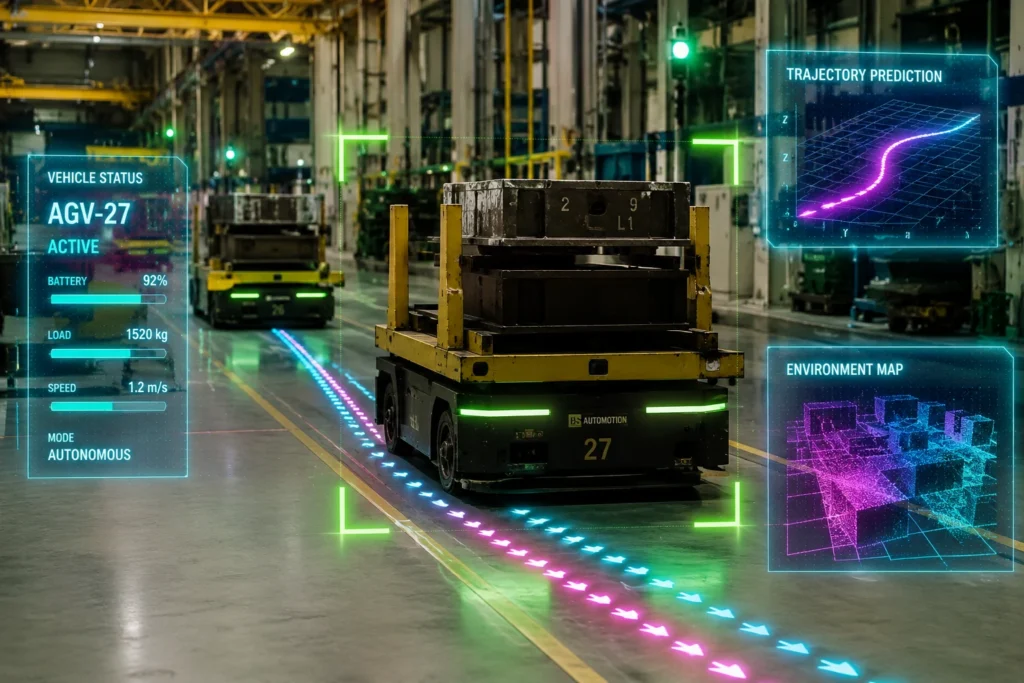
Material Handling And Logistics
Computer vision can monitor vehicle movement, pedestrian access, loading areas, and predefined exclusion zones. Proximity warning and machine-zone protection are already identified among HZL’s digital technology applications.
Using AI To Understand Recurring SOP Deviations
An isolated safety alert is useful, but repeated deviations can reveal a deeper operational problem.
If the same SOP violation occurs repeatedly at a particular location, HZL can analyse the pattern rather than treating every event independently. The underlying cause could be inadequate signage, equipment layout, work sequencing, training, supervision, or a procedure that is difficult to follow in practice.
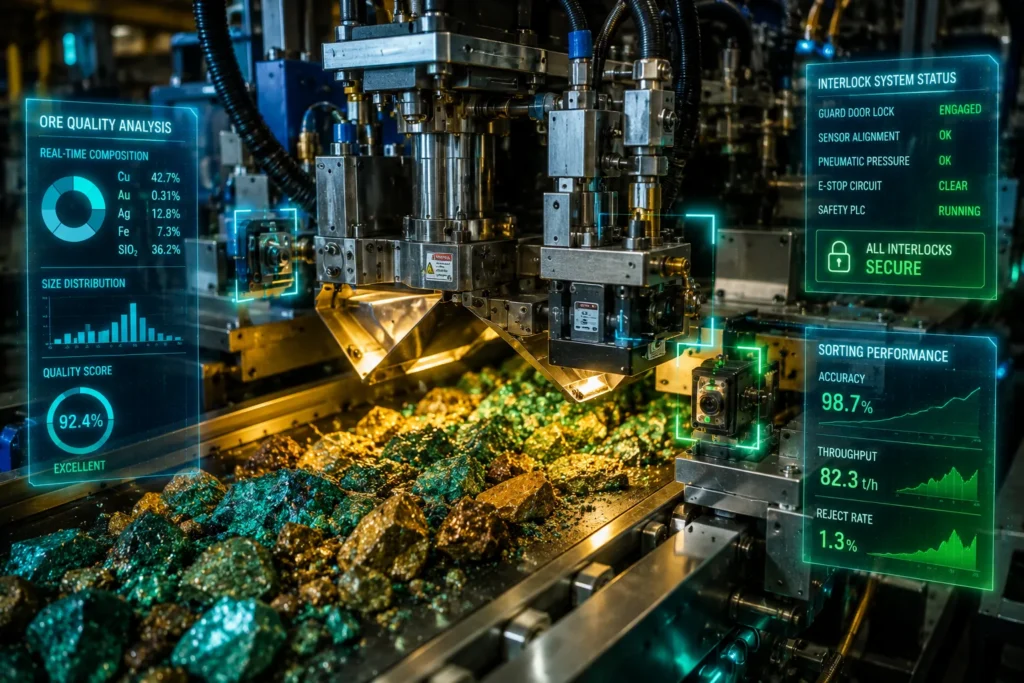
Integrating Video, Sensors And Operational Systems
HZL is already centralising operational data through IT-OT integration and sensorisation of critical assets. Its digital programme uses this information for condition-based monitoring, predictive maintenance, statistical process control, and AI/ML models.
The same architecture can support richer safety analytics.
For example, a video system could detect a person approaching a machine while equipment telemetry confirms that the machine is operating. Combining those signals can provide more context than either source alone.
Sensor fusion can also help reduce false alerts and prioritise events that require immediate human attention.
A Practical Expansion Strategy
Because HZL already has multiple AI and computer-vision applications, future expansion can focus on connecting individual solutions into a consistent safety analytics framework.
The priority should be critical activities where:
- The SOP is clearly defined.
- The relevant condition is observable.
- The camera or sensor coverage is reliable.
- An alert can lead to a specific action.
- Results can be measured.
Testing should account for actual mining and metallurgical conditions, including dust, low illumination, glare, vibration, equipment obstruction, and changing work environments
Measuring The Impact
HZL can assess AI-based SOP analytics through operational indicators rather than technology deployment numbers.
Relevant measures include:
- Reduction in repeated SOP deviations
- Response time to critical alerts
- False-positive rate
- PPE compliance
- Restricted-zone violations
- Unsafe worker-equipment interactions
- Corrective-action closure time
- Reduction in manual monitoring effort
HZL’s current digital strategy already links AI, computer vision, automation, and connected assets with safer operating environments and process discipline. Expanding SOP analytics within this framework can help convert safety observations into measurable, continuous improvement.
Frequently Asked Questions
It is the use of AI to compare observable workplace activities with defined safety or operating procedures and identify potential deviations.
Yes. HZL has publicly reported AI-camera and computer-vision applications for crane-path safety, ladle operations, PPE detection, access monitoring, and other safety applications.
Yes. HZL's reported crane safety application demonstrates that computer vision can be connected with an alarm and operational control to stop crane movement when human presence is detected in the pathway
Yes. Combining video with equipment, IoT, or process data can provide additional context and help improve alert prioritisation.
The strongest candidates are critical SOPs where a deviation can be reliably detected and where the resulting alert has a clearly defined response. High-risk worker-equipment interactions, PPE compliance, restricted zones, crane operations, and material handling are suitable areas for evaluation.