Workforce productivity has always been a key driver of operational success. Whether in manufacturing facilities, warehouses, retail stores, logistics hubs, healthcare environments, or service operations, organizations continuously seek ways to improve efficiency, optimize resource utilization, and maximize performance.
However, accurately measuring workforce productivity remains a challenge. Traditional methods often rely on manual observations, supervisor assessments, periodic audits, and productivity reports that provide only a partial view of day-to-day operations. These approaches can make it difficult to identify inefficiencies, understand workflow patterns, and uncover opportunities for improvement.
As organizations pursue data-driven operations, AI-based observation is emerging as a powerful solution for measuring workforce productivity with greater accuracy, consistency, and real-time visibility.
What Is Workforce Productivity?
Workforce productivity refers to the effectiveness with which employees complete tasks, utilize resources, and contribute to organizational objectives.
High workforce productivity often results in:
- Improved operational efficiency
- Higher output levels
- Better customer experiences
- Reduced operational costs
- Greater process consistency
- Stronger business performance
Understanding productivity accurately is essential for continuous improvement initiatives.
Challenges With Traditional Productivity Measurement
Many organizations still depend on conventional methods to evaluate workforce performance.
While useful, these approaches often present several limitations.
Limited Observation Coverage
Supervisors cannot continuously monitor every employee, process, and operational activity.
Subjective Assessments
Productivity evaluations may vary between managers and departments.
Delayed Reporting
Performance data is often reviewed after activities have already occurred.
Hidden Operational Inefficiencies
Small workflow disruptions and process delays can remain unnoticed for extended periods.
These challenges can make productivity improvement efforts less effective.
Challenges With Traditional Productivity Measurement
Many organizations still depend on conventional methods to evaluate workforce performance.
While useful, these approaches often present several limitations.
Limited Observation Coverage
Supervisors cannot continuously monitor every employee, process, and operational activity.
Subjective Assessments
Productivity evaluations may vary between managers and departments.
Delayed Reporting
Performance data is often reviewed after activities have already occurred.
Hidden Operational Inefficiencies
Small workflow disruptions and process delays can remain unnoticed for extended periods.
These challenges can make productivity improvement efforts less effective.
What Is AI-Based Observation?
AI-based observation uses artificial intelligence, computer vision, and video analytics to continuously analyze operational activities within physical environments.
Rather than relying solely on manual supervision, AI systems can observe workflows, identify patterns, and generate objective productivity insights in real time.
This approach helps organizations understand how work is performed while supporting more informed operational decisions.
How AI Measures Workforce Productivity
AI-based observation provides visibility into operational activities that are often difficult to measure consistently through traditional methods.
Workflow Analysis
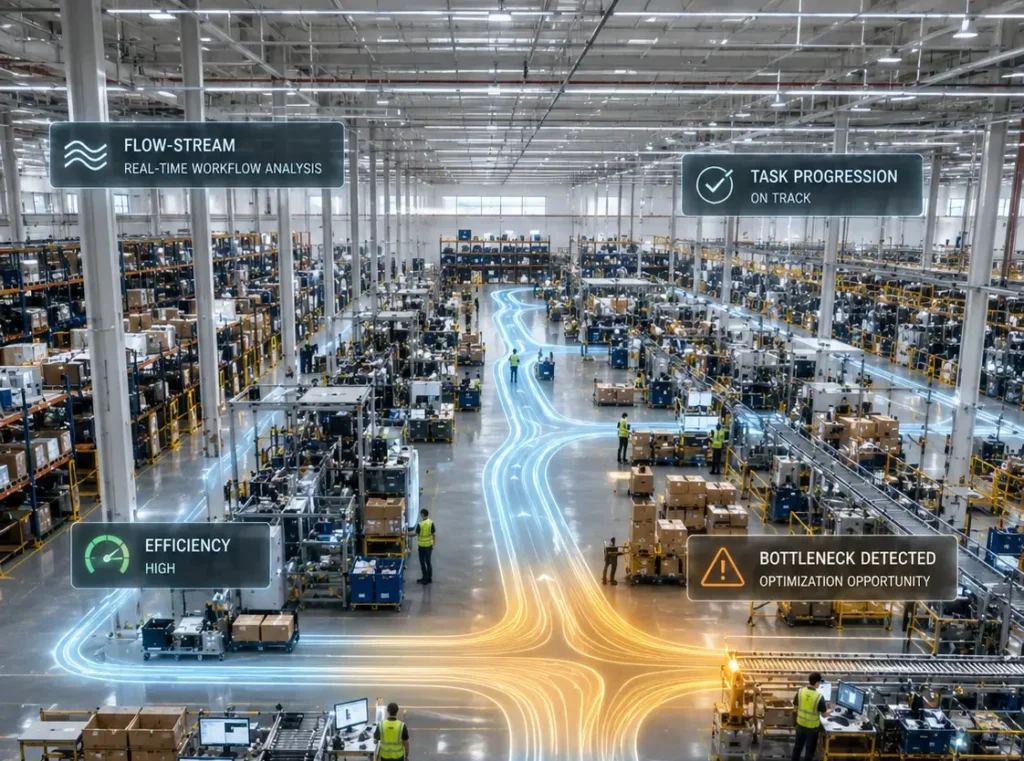
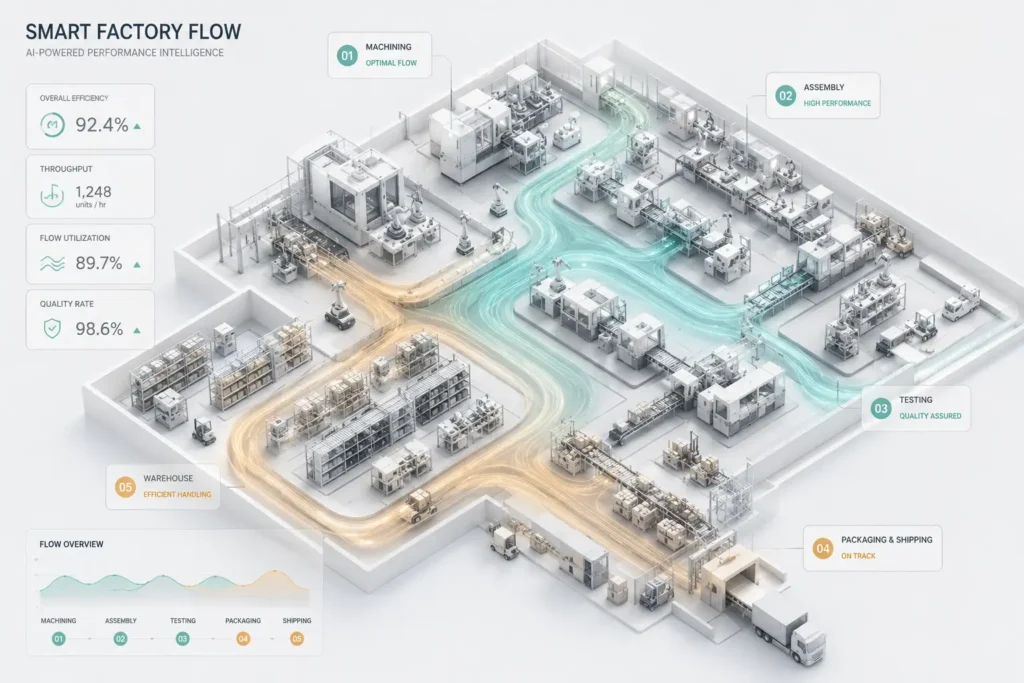
AI can analyze how tasks move through operational processes and identify opportunities to improve efficiency.
Process Adherence Monitoring
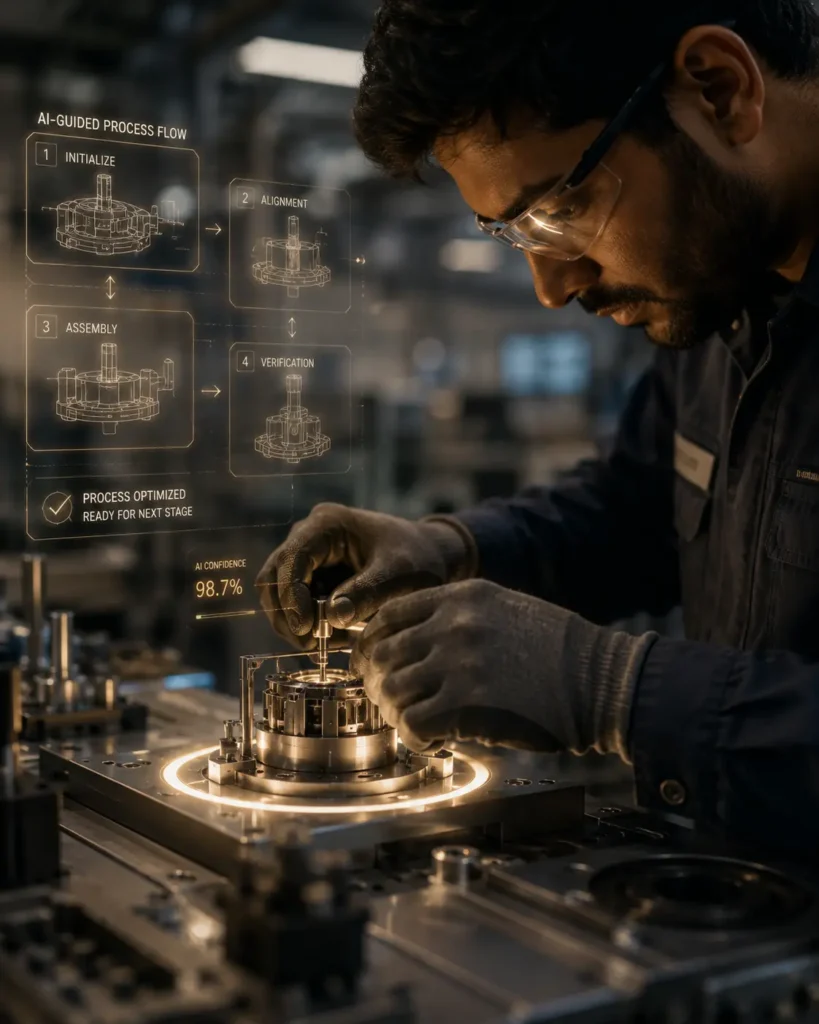
Organizations can evaluate whether employees are following established procedures and workflows.
Activity Pattern Recognition
AI identifies operational patterns that may impact productivity, consistency, and performance.
Resource Utilization Visibility
Organizations gain a better understanding of how workspaces, equipment, and operational resources are being used.
Real-Time Operational Insights
Managers receive immediate visibility into emerging trends and performance indicators.
Compare Traditional Productivity Measurement And AI-Based Observation
Traditional Productivity Measurement | AI-Based Observation |
Periodic evaluations | Continuous observation |
Manual supervision | Automated monitoring |
Limited visibility | Real-time operational awareness |
Subjective assessments | Data-driven insights |
Reactive analysis | Proactive improvement opportunities |
Sample-based observations | Comprehensive operational visibility |
This comparison highlights why organizations are increasingly adopting AI-driven productivity measurement solutions.
The Role Of Computer Vision In Productivity Analysis
Computer vision enables AI systems to interpret visual information from operational environments.
Using computer vision, organizations can:
- Monitor workflow execution
- Identify operational bottlenecks
- Analyze movement patterns
- Verify process adherence
- Improve resource allocation
- Detect productivity obstacles
These capabilities help transform visual activities into measurable operational intelligence.
Benefits Of AI-Based Productivity Measurement
Organizations that leverage AI-powered observation can achieve several operational benefits.
Improved Productivity Visibility
Gain a clearer understanding of how work is performed across locations and shifts.
Faster Identification Of Inefficiencies
Detect workflow disruptions before they impact operational performance.
Better Decision-Making
Access objective operational insights rather than relying solely on assumptions.
Enhanced Operational Consistency
Promote standardized processes and improved execution across teams.
Continuous Improvement Support
Identify opportunities to optimize workflows and improve workforce performance over time.
Creating A More Productive And Data-Driven Workforce
The future of workforce management depends on visibility, objectivity, and continuous improvement. AI-based observation provides organizations with the ability to understand operational performance at a level that traditional productivity measurement methods often cannot achieve.
By combining AI, computer vision, and real-time operational intelligence, organizations can move beyond reactive performance management and build more efficient, productive, and consistent operations. As businesses continue to embrace digital transformation, AI-powered workforce productivity measurement will become an increasingly important component of operational excellence.
How CAPASai Helps Measure Workforce Productivity
CAPASai enables organizations to measure workforce productivity through AI-powered video analytics, operational intelligence, real-time monitoring, and intelligent alerts. By continuously observing workflows, process adherence, operational activities, and workforce interactions, CAPASai helps organizations identify inefficiencies, improve productivity, strengthen accountability, and support data-driven performance improvement initiatives.