For years, discussions about industrial transformation focused heavily on automation, efficiency, and technological advancement. Organizations invested in connected systems, data analytics, robotics, and artificial intelligence to improve productivity and streamline operations. While these initiatives delivered significant benefits, they also raised an important question: what role should people play in increasingly automated enterprises?
This question sits at the heart of Industry 5.0.
Rather than viewing technology as a replacement for human involvement, Industry 5.0 promotes a different vision—one where intelligent systems and human expertise work together to create more resilient, adaptive, and sustainable operations. The focus shifts from technology-led transformation to people-centered operational excellence.
As enterprises navigate evolving workforce expectations, operational complexity, and increasing compliance demands, Industry 5.0 is emerging as a framework for balancing technological innovation with human value.
Why Operational Excellence Requires More Than Automation
Automation has transformed industries ranging from manufacturing and logistics to healthcare, retail, and public infrastructure. Yet many operational challenges remain difficult to solve through automation alone.
Organizations continue to face issues such as:
- Process variability across teams
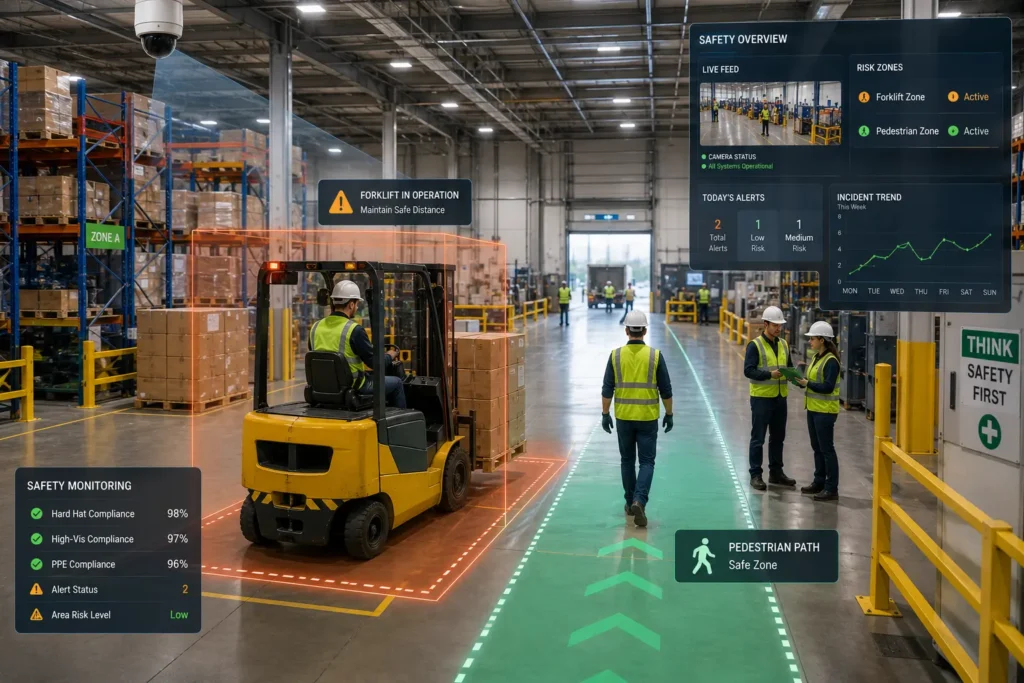
- Workforce safety concerns
- Compliance management challenges
- Operational decision-making under uncertainty
- Knowledge transfer between experienced and new employees
- Managing distributed operations at scale
These challenges often require judgment, contextual understanding, collaboration, and problem-solving capabilities that remain uniquely human.
Industry 5.0 recognizes that sustainable operational success depends on combining technological intelligence with human intelligence.
The Evolution From Industry 4.0 To Industry 5.0
Industry 4.0 introduced concepts such as connected devices, smart factories, predictive analytics, and automation-driven operations.
Industry 5.0 builds upon these foundations but introduces a broader objective.
Human-Centered Operations
Technology supports employees rather than replacing them.
Operational Resilience
Organizations become better equipped to adapt to disruptions and changing conditions.
Sustainable Growth
Business performance is balanced with long-term social and operational objectives.
This evolution reflects a growing understanding that the future of operations depends on both technological capability and human contribution.
What Human-Centric Operations Look Like
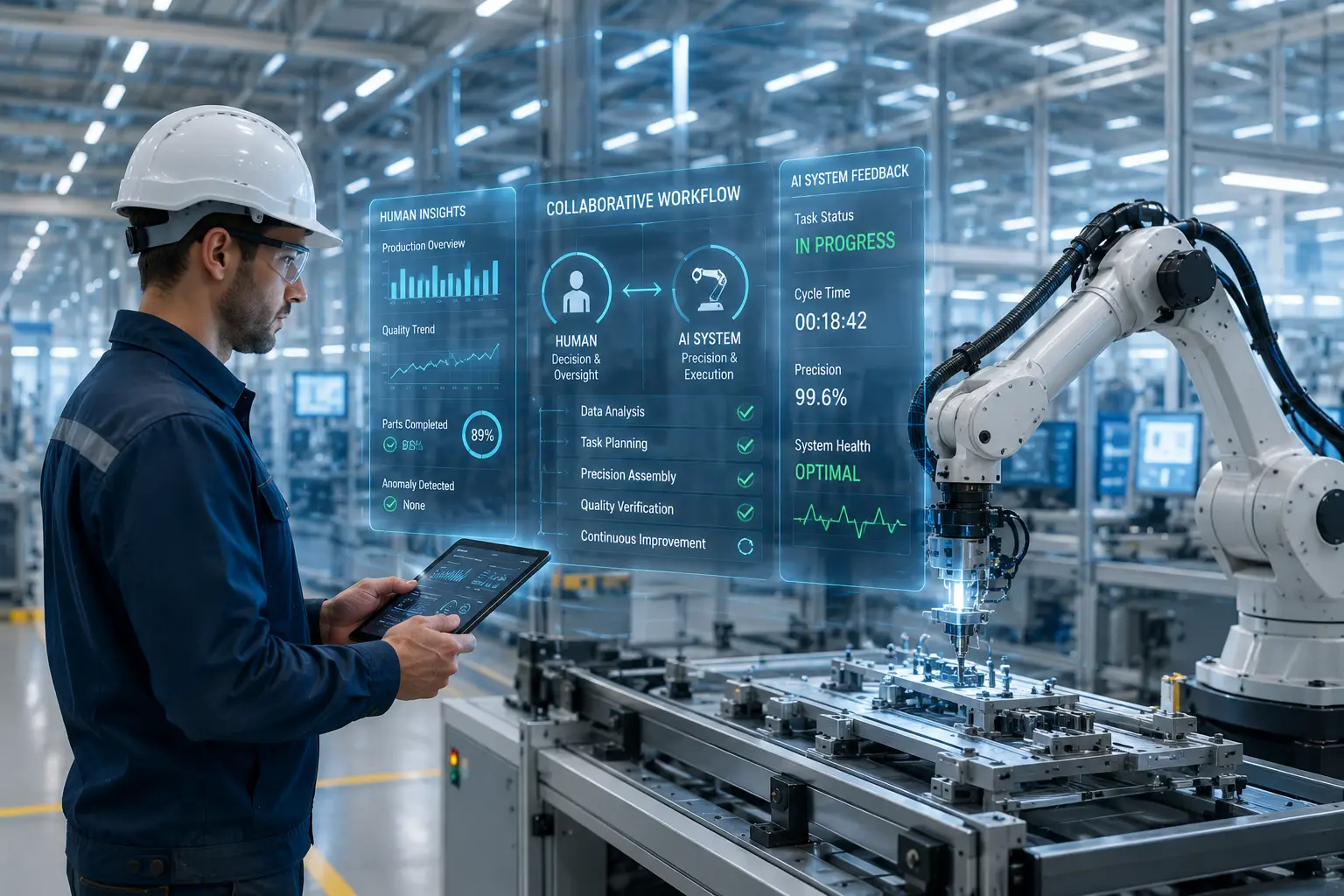
Human-centric operations do not reject automation. Instead, they use technology to enhance human performance, decision-making, and workplace experiences.
Examples include:
Intelligent Decision Support
AI systems provide insights and recommendations while allowing leaders and frontline teams to retain decision-making authority.
Enhanced Safety Management
Technology helps identify risks, monitor compliance, and support safer working environments.
Real-Time Operational Visibility
Employees gain access to timely information that helps them respond more effectively to operational conditions.
Continuous Learning
Data-driven insights help organizations improve training, coaching, and workforce development initiatives.
The objective is to create an environment where technology amplifies human capabilities rather than competing with them.
Compare Industry 4.0 And Industry 5.0
Focus Area | Industry 4.0 | Industry 5.0 |
Primary Goal | Automation And Efficiency | Human-Centric Value Creation |
Workforce Role | Process Participant | Strategic Collaborator |
Technology Purpose | Process Optimization | Human Augmentation |
Decision-Making | Data-Driven | Data + Human Judgment |
Operational Success | Productivity Focus | Productivity + Resilience + Sustainability |
Organizations increasingly compare these approaches not as competing models but as successive stages of industrial evolution.
The Growing Importance Of Human-AI Collaboration
One of the defining characteristics of Industry 5.0 is collaboration between people and intelligent systems.
AI can process large volumes of information, identify patterns, and detect anomalies at a scale that would be difficult for humans alone. However, interpreting complex situations, understanding context, and making strategic decisions often require human expertise.
Manufacturing
Operators use AI-powered insights to improve quality, safety, and production performance.
Logistics
Teams gain greater visibility into workflows, bottlenecks, and operational efficiency.
Retail
Managers use operational intelligence to improve customer experiences and store execution.
Healthcare
Clinical and administrative teams leverage intelligent technologies to support decision-making and operational coordination.
Building More Resilient Enterprises
Recent global disruptions have highlighted the importance of resilience in modern operations.
Organizations require systems that can respond quickly to changing conditions while maintaining operational continuity.
Industry 5.0 addresses this need by combining human adaptability with technological intelligence. Employees remain central to decision-making while intelligent systems provide visibility, monitoring, and analytical support.
This combination helps organizations respond more effectively to uncertainty while maintaining operational performance.
Why Intelligent Operations Must Remain Human-Centered
The most successful organizations of the future are unlikely to be those that automate the most activities. Instead, they may be the organizations that create the strongest collaboration between people and technology.
Human-centric operations encourage innovation, strengthen workforce engagement, improve safety, and support more sustainable business outcomes. By ensuring that technology serves people rather than replacing them, organizations can achieve operational excellence while preserving the human expertise that drives long-term success.
Industry 5.0 represents an important step toward this balanced approach to enterprise transformation.
How CAPASai Supports Human-Centric Intelligent Operations
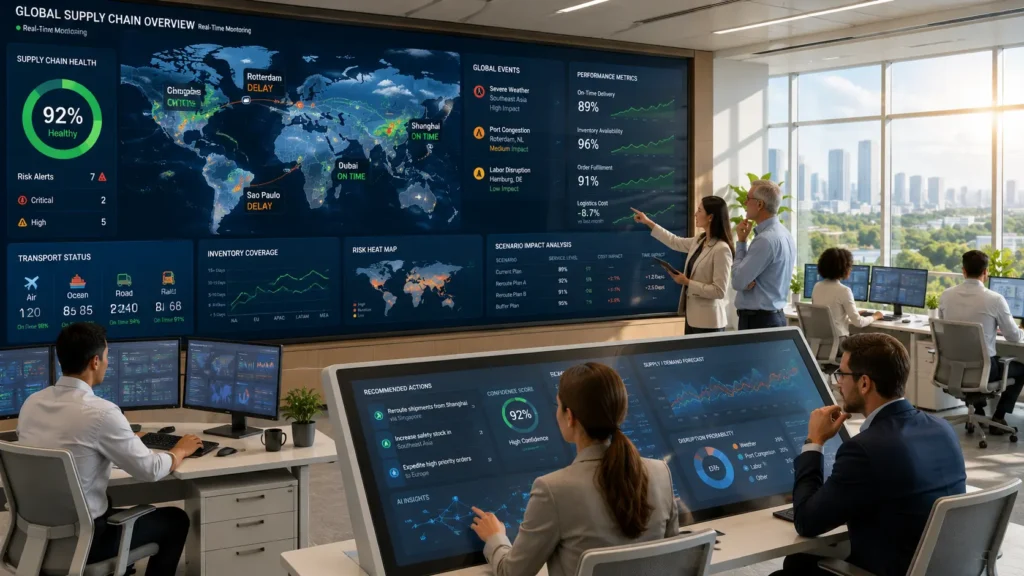
As organizations embrace Industry 5.0 principles, operational visibility becomes increasingly important. CAPASai supports human-centric intelligent operations through AI-powered video analytics, remote monitoring, real-time alerts, and compliance-focused operational intelligence. By providing actionable insights while enabling people to remain at the center of decision-making, CAPASai helps organizations strengthen safety, improve operational awareness, and support more effective collaboration between human expertise and intelligent technologies.
Frequently Asked Questions
.