
Manufacturers today face increasing pressure to improve productivity, maintain quality standards, reduce operational costs, and ensure consistent process execution. While automation has transformed many aspects of production, gaining real-time visibility into what is happening on the factory floor remains a challenge for many organizations.
Traditional monitoring methods often rely on manual inspections, periodic audits, and supervisor observations. These approaches can make it difficult to identify operational issues quickly, especially in complex manufacturing environments where thousands of activities occur simultaneously.
As smart manufacturing continues to evolve, computer vision is emerging as a critical technology that helps organizations improve operational visibility, detect issues earlier, and make more informed decisions.
What Is Computer Vision In Manufacturing?
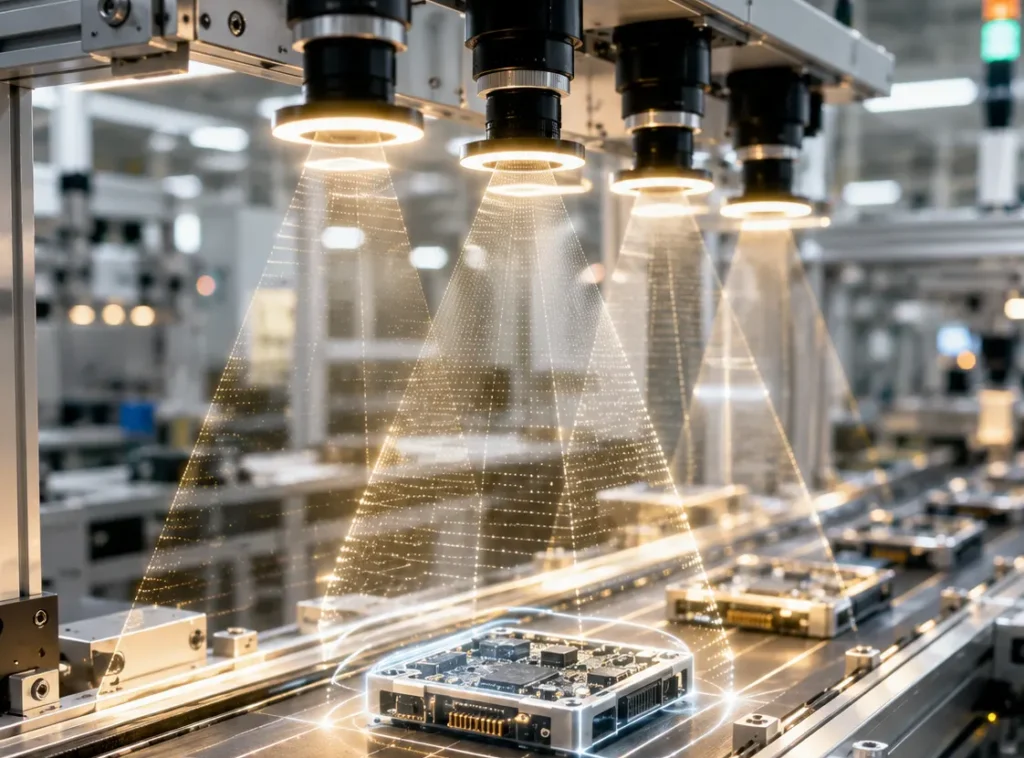
Computer vision is a form of Artificial Intelligence (AI) that enables systems to analyze and interpret visual information from cameras and video feeds.
In manufacturing environments, computer vision can continuously observe production activities and convert visual data into actionable operational intelligence.
This allows organizations to monitor processes, identify deviations, and improve decision-making without relying solely on manual supervision.
Key Applications Of Computer Vision In Smart Manufacturing
Process Adherence Monitoring
Manufacturing processes are designed to follow specific procedures and standards.
Computer vision can continuously verify whether activities are being performed according to defined workflows.
This helps organizations:
- Improve process consistency
- Reduce deviations
- Strengthen operational discipline
- Support compliance initiatives
Quality Inspection And Defect Detection
Product quality remains one of the most important priorities for manufacturers.
Computer vision can inspect products in real time and identify visual defects that may affect quality standards.
Benefits include:
- Faster defect detection
- Reduced rework
- Improved product consistency
- Better customer satisfaction
Safety Monitoring
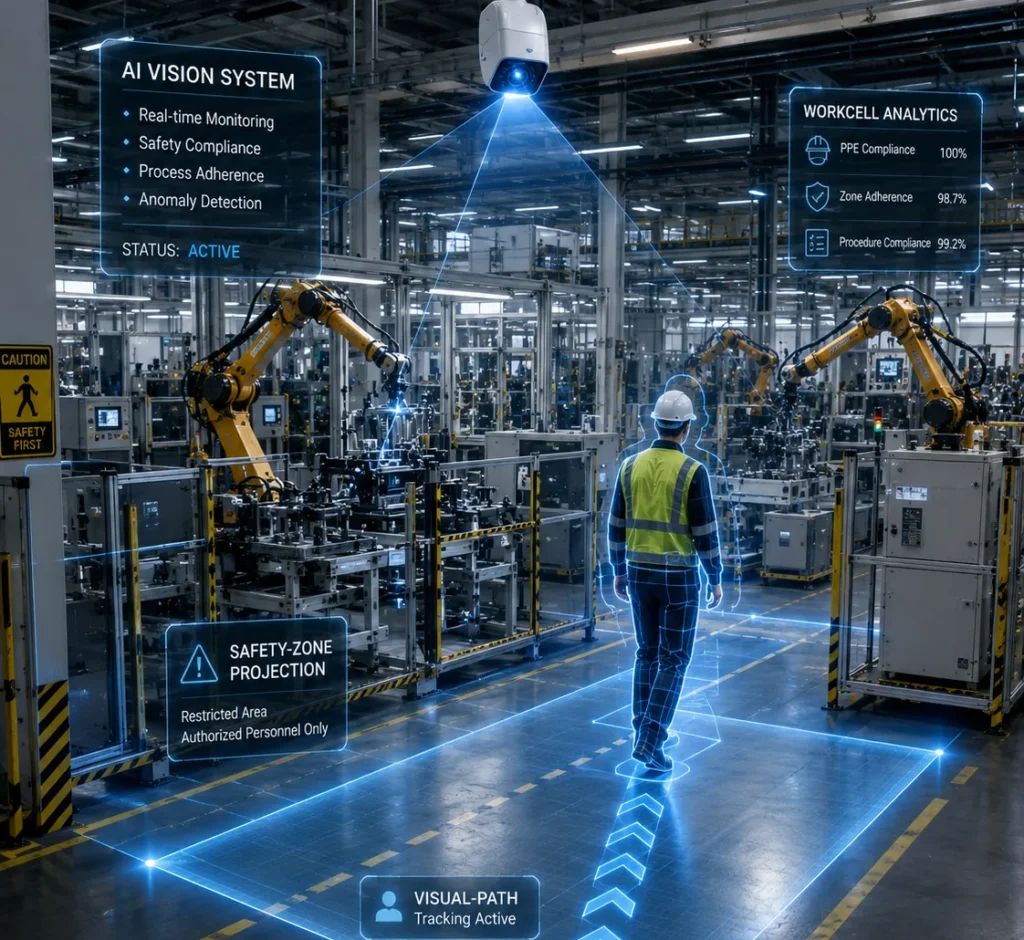
Manufacturing facilities often contain complex operational environments where safety compliance is critical.
Computer vision can help organizations monitor:
- Restricted areas
- Safety procedure adherence
- Workplace hazards
- Unsafe operational conditions
This supports safer and more compliant workplaces.
Bottleneck Identification
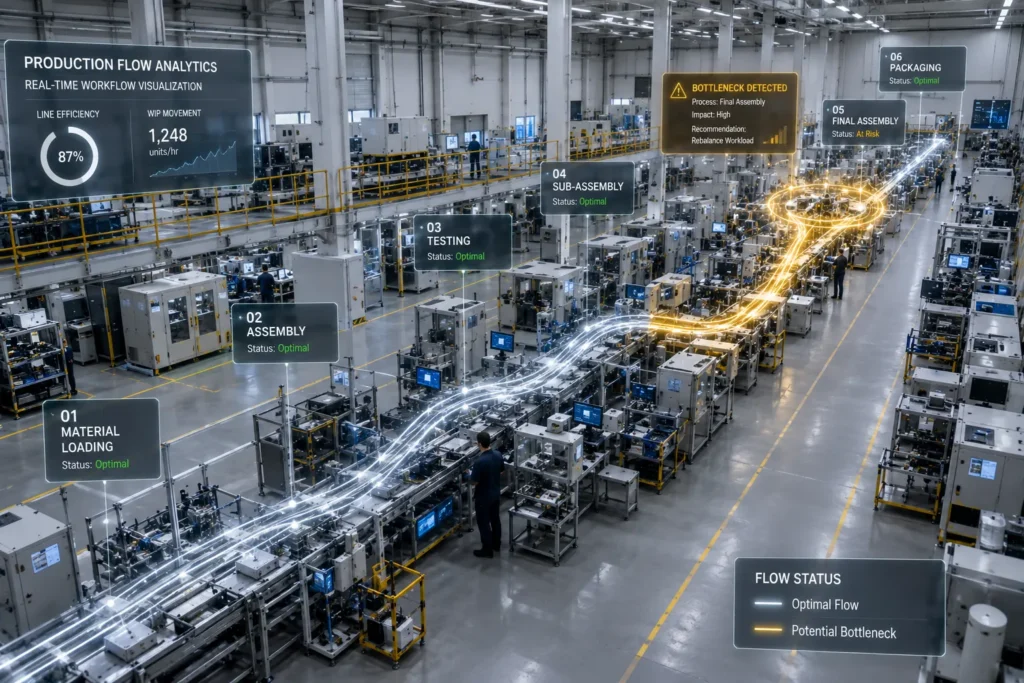
Production delays often occur because of workflow inefficiencies that are difficult to identify through manual observation.
Computer vision can analyze operational activities and detect areas where:
- Material flow slows down
- Queues develop
- Resources are underutilized
- Production capacity is constrained
Early visibility enables faster corrective action.
Equipment And Asset Monitoring
Computer vision can help organizations monitor equipment activity and operational behavior.
This provides additional insight into:
- Equipment utilization
- Production flow
- Process interruptions
- Operational anomalies
Improved visibility supports more efficient operations.
Why Manufacturers Need Better Operational Visibility
Many manufacturing challenges begin with limited visibility into day-to-day operations.
Common issues include:
- Process deviations
- Quality defects
- Production bottlenecks
- Safety concerns
- Equipment inefficiencies
- Compliance violations
- Workflow inconsistencies
When these issues go undetected, they can lead to increased costs, production delays, and reduced operational performance.
Computer vision helps address these challenges through continuous monitoring and real-time analysis.
Compare Traditional Monitoring And Computer Vision Monitoring
Traditional Monitoring | Computer Vision Monitoring |
Periodic inspections | Continuous monitoring |
Manual observations | Automated visual analysis |
Reactive issue detection | Early anomaly detection |
Limited visibility | Real-time operational awareness |
Human-dependent oversight | Scalable enterprise monitoring |
Delayed response | Immediate alerts and insights |
This comparison highlights why computer vision is becoming a foundational component of smart manufacturing strategies.
How Computer Vision Supports Smart Factory Initiatives
Smart factories depend on accurate, real-time information to optimize operations.
Computer vision contributes by providing:
- Continuous operational visibility
- Faster decision-making
- Improved quality control
- Better compliance monitoring
- Reduced operational risk
- Enhanced productivity
These capabilities help manufacturers move closer to data-driven and intelligent operations.
Creating More Intelligent Manufacturing Environments
The future of manufacturing depends on the ability to understand what is happening across production environments in real time. Computer vision provides the visual intelligence needed to transform factory operations from reactive management to proactive operational control.
By continuously monitoring workflows, identifying anomalies, supporting quality initiatives, and improving safety oversight, computer vision enables manufacturers to build smarter, more efficient, and more resilient operations.
As smart manufacturing adoption continues to grow, organizations that leverage visual intelligence will be better positioned to improve performance, reduce risk, and maintain a competitive advantage.
How CAPASai Supports Smart Manufacturing
CAPASai helps manufacturers improve operational visibility through AI-powered video analytics, remote monitoring, intelligent alerts, and real-time operational intelligence. By transforming visual activities into actionable insights, CAPASai enables organizations to strengthen process adherence, improve quality control, monitor safety compliance, and optimize manufacturing performance across facilities