Why Workplace Risk Remains A Challenge Across Industries
Workplace risk is a persistent concern for organizations across manufacturing plants, retail chains, warehouses, healthcare facilities, construction sites, logistics hubs, and other operational environments. Despite established safety protocols and standard operating procedures (SOPs), organizations continue to face challenges related to unsafe behaviors, process deviations, compliance gaps, and operational oversights.
As businesses expand across multiple locations and manage larger workforces, maintaining consistent oversight becomes increasingly difficult. Supervisors cannot be present everywhere at all times, creating visibility gaps that may allow risks to go unnoticed until an incident occurs.
Reducing workplace risk requires more than periodic inspections and manual supervision. Organizations need continuous visibility into operational activities to identify potential issues before they affect safety, compliance, or productivity.
Why Traditional Workplace Monitoring Has Limitations
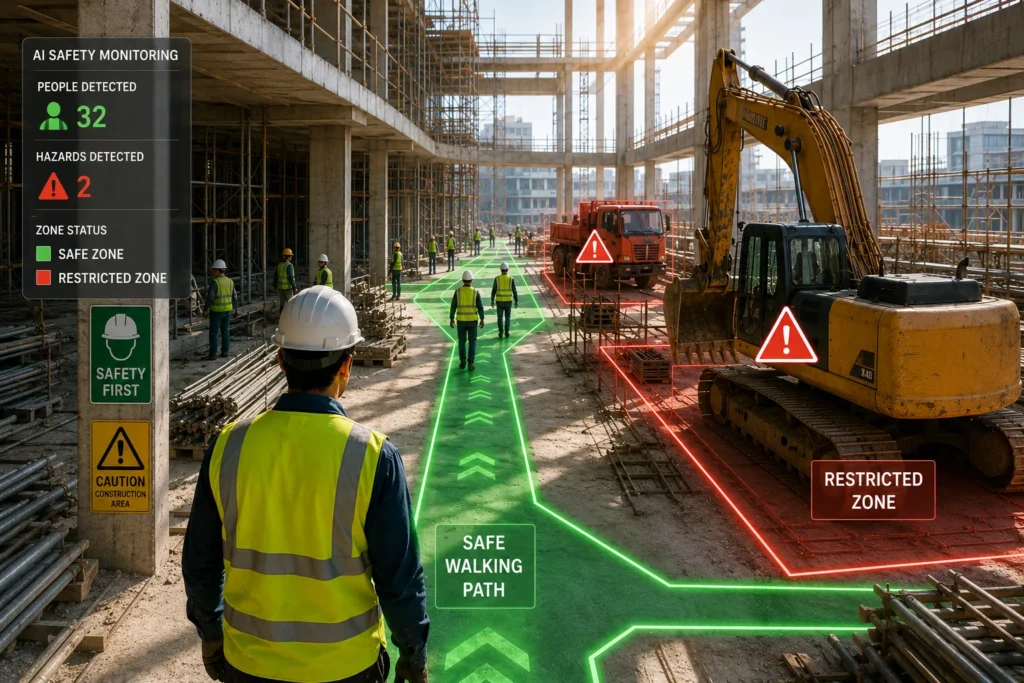
Most organizations rely on a combination of manual observations, safety audits, incident reporting, and supervisory oversight to manage workplace risk.
While these approaches remain important, they often face several limitations:
- Risks may go unnoticed between inspections
- Human observation can be inconsistent
- Large facilities are difficult to monitor continuously
- Incident reporting is often reactive
- Multi-site operations require significant oversight resources
As operational complexity increases, organizations need more scalable methods for monitoring workplace conditions and identifying risks in real time.
What Is Computer Vision?
Computer vision is a branch of artificial intelligence that enables systems to interpret and analyze visual information from cameras and video feeds.
By recognizing activities, objects, movement patterns, and operational behaviors, computer vision can transform existing video infrastructure into a source of operational intelligence.
Rather than simply recording events, computer vision helps organizations understand what is happening across their facilities and identify conditions that may require attention.
Common Factors That Contribute To Workplace Risk
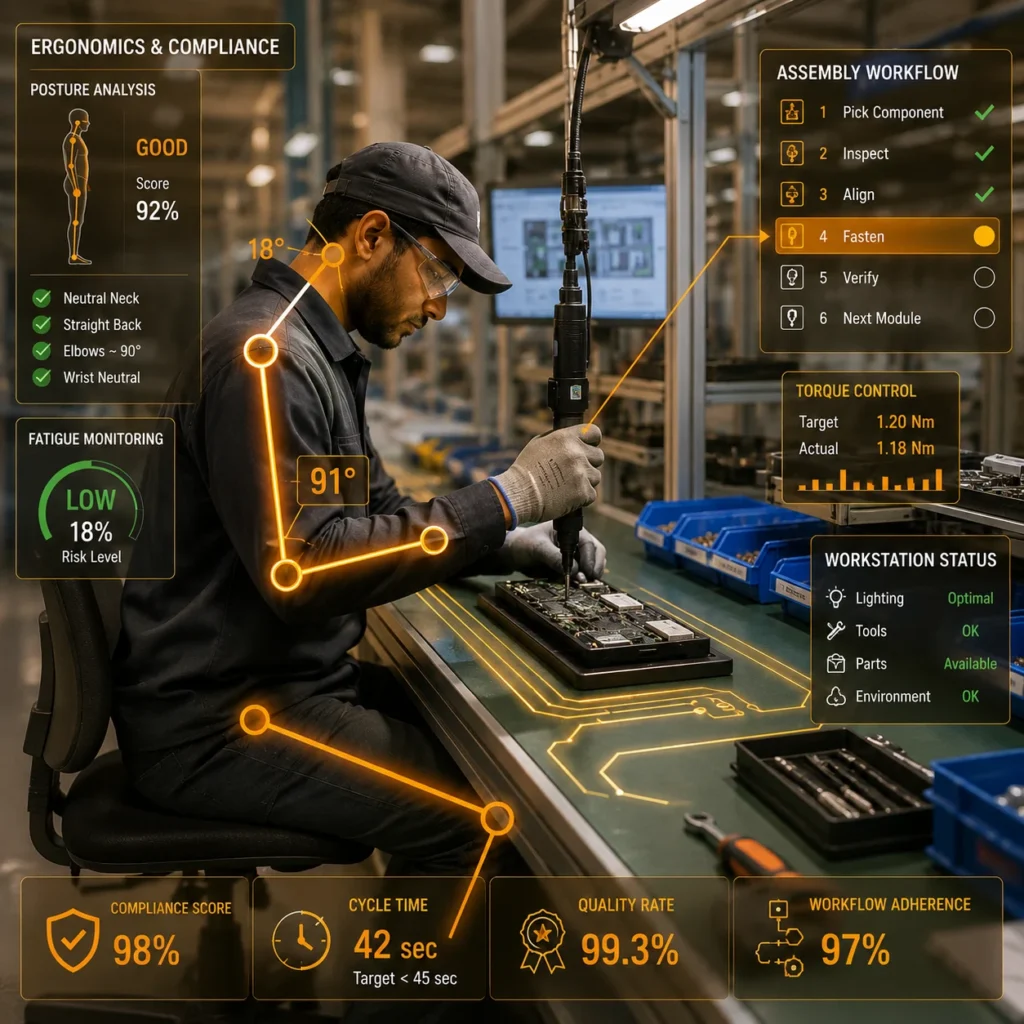
Many workplace incidents originate from routine operational activities that appear minor at first but can have significant consequences if left unaddressed.
Common risk factors include:
- Failure to follow SOPs
- Unsafe employee behaviors
- Restricted area violations
- Improper equipment usage
- Incomplete operational processes
- Lack of compliance monitoring
- Delayed identification of hazards
- Inconsistent safety practices across locations
These challenges can result in operational disruptions, compliance concerns, productivity losses, and increased costs associated with incident investigations and corrective actions.
How Computer Vision Helps Reduce Workplace Risk
Computer vision supports workplace risk reduction by providing continuous visibility into operational environments and identifying activities that may increase risk exposure.
Monitoring SOP Adherence
Many workplace incidents occur when employees deviate from established procedures. Computer vision can help verify that critical operational steps are being followed consistently.
Identifying Unsafe Behaviors
AI-powered monitoring can detect behaviors that may create safety concerns, enabling organizations to take corrective action before incidents occur.
Supporting Compliance Monitoring
Organizations often need to demonstrate adherence to internal policies and regulatory requirements. Computer vision provides continuous monitoring that supports compliance objectives.
Detecting Operational Deviations
Process deviations can affect both safety and operational performance. Computer vision helps identify inconsistencies in workflows, enabling faster intervention.
Providing Real-Time Alerts
When predefined risk conditions are detected, alerts can be generated immediately, allowing supervisors to respond before problems escalate.
Enhancing Multi-Site Visibility
Organizations operating across multiple facilities can gain centralized visibility into workplace conditions and risk indicators, helping maintain consistent standards throughout the enterprise.
Compare Manual Risk Monitoring With Computer Vision
Traditional Monitoring | Computer Vision-Based Monitoring |
Periodic inspections | Continuous monitoring |
Manual observations | Automated analysis |
Reactive issue detection | Proactive risk identification |
Limited operational visibility | Real-time visibility |
Location-specific oversight | Multi-site monitoring |
Delayed response | Instant alerts |
This comparison highlights how computer vision enables a more proactive approach to workplace risk management.
Business Benefits Of Computer Vision For Workplace Safety And Compliance
Organizations implementing computer vision solutions can achieve several operational benefits.
Improved Risk Awareness
Continuous monitoring provides better visibility into workplace activities and potential risk factors.
Stronger Compliance
Automated oversight supports adherence to safety policies, SOPs, and operational standards.
Reduced Operational Disruptions
Early detection of unsafe conditions helps organizations address issues before they impact operations.
Greater Accountability
Objective operational data helps establish transparency and supports continuous improvement initiatives.
Better Resource Utilization
Supervisors can focus attention on areas that require intervention instead of relying solely on manual observation.
How CAPASai Helps Organizations Reduce Workplace Risk
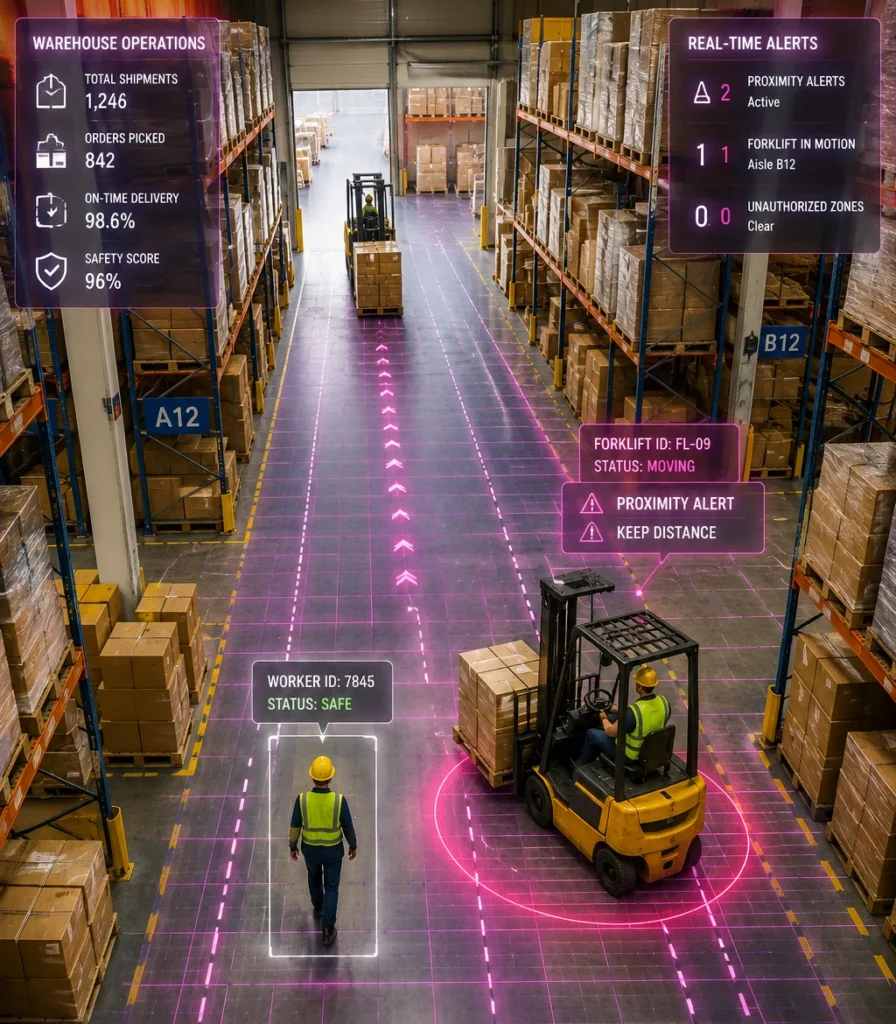
CAPASai uses AI-powered video analytics and computer vision to help organizations improve workplace visibility, strengthen compliance monitoring, and reduce operational risk.
By continuously analyzing workplace activities, process adherence, and operational behaviors, CAPASai provides actionable insights that support safer and more consistent operations. Real-time alerts enable faster response to potential issues, while centralized monitoring helps maintain operational standards across multiple facilities.
Whether deployed in manufacturing, retail, healthcare, logistics, education, hospitality, or other operational environments, CAPASai helps organizations enhance accountability, improve compliance, and support operational excellence.
Creating Safer And More Consistent Operations
Workplace risk management is becoming increasingly important as organizations seek to improve operational consistency, compliance, and productivity. Computer vision provides a practical way to gain continuous visibility into workplace activities and identify potential risks before they lead to incidents.
By combining real-time monitoring with operational intelligence, organizations can create safer environments, strengthen governance, and support long-term operational performance.