Why High-Risk Environments Demand A Different Safety Approach
Environmental, Health, and Safety (EHS) teams play a critical role in protecting employees, maintaining compliance, and reducing operational risks. However, managing safety in high-risk environments is becoming increasingly complex as facilities expand, production volumes increase, and operations become more interconnected.
Industries such as manufacturing, pharmaceuticals, construction, energy, mining, logistics, and chemical processing involve daily exposure to potential hazards. From heavy equipment and hazardous materials to restricted zones and high-traffic operational areas, EHS teams must continuously identify, assess, and mitigate risks.
The challenge is that many workplace hazards develop between inspections, making early detection difficult through traditional safety practices alone.
The Daily Challenges Faced By EHS Teams
EHS professionals are responsible for balancing safety objectives with operational demands.
Common challenges include:
- Monitoring large operational facilities
- Identifying unsafe behaviors
- Tracking PPE compliance
- Managing contractor safety
- Investigating near misses and incidents
- Ensuring SOP adherence
- Maintaining regulatory compliance
- Overseeing multiple sites simultaneously
As facilities become larger and more dynamic, maintaining visibility into every operational activity becomes increasingly difficult.
Why Traditional Safety Oversight Has Gaps
Many EHS programs rely on:
- Scheduled inspections
- Safety audits
- Manual reporting
- Supervisor observations
- Employee feedback
While these activities remain essential, they often provide only periodic snapshots of workplace conditions.
Challenges include:
- Hazards may emerge between inspections
- Safety violations can go unnoticed
- Reporting delays may slow corrective action
- Multi-site monitoring requires significant resources
- Human observation is naturally limited
As a result, EHS teams are increasingly exploring technologies that provide broader operational awareness.
How AI Helps EHS Teams Improve Workplace Safety
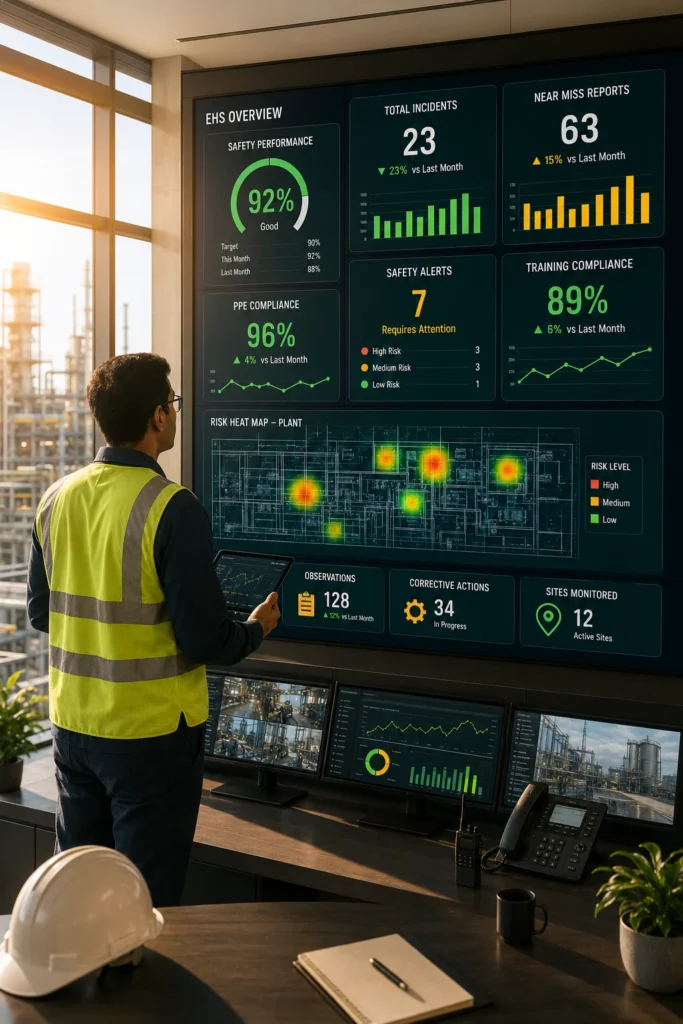
AI-powered video analytics enables organizations to identify safety concerns, compliance issues, and operational risks as workplace activities occur.
Instead of relying solely on manual observations, EHS teams can access continuous insights into workplace conditions.
PPE Compliance Monitoring
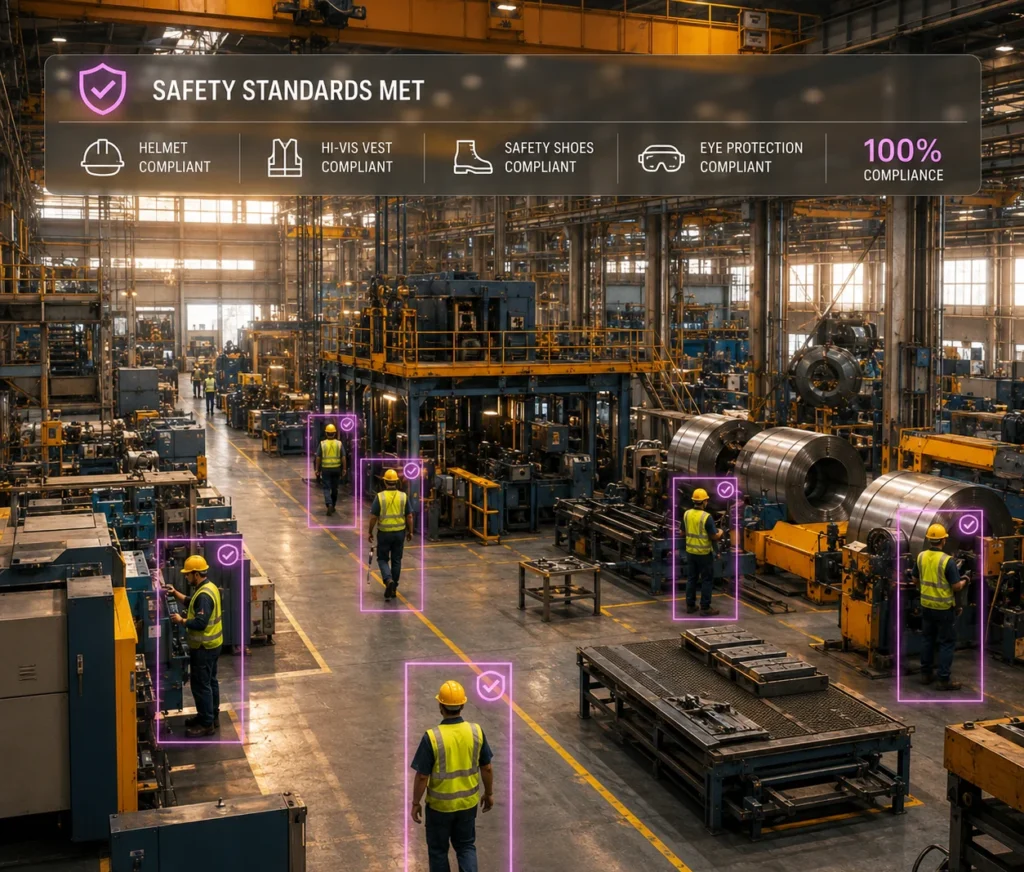
AI can verify whether workers entering designated operational areas are wearing required protective equipment.
Restricted Area Management
Unauthorized access to hazardous zones can be detected automatically, helping organizations maintain safety controls.
Unsafe Behavior Detection
AI can identify predefined risk conditions and activities that may require intervention.
Process Compliance Verification
Organizations can monitor whether critical safety procedures and operational workflows are being followed consistently.
Hazard Identification
Obstacles, dangerous equipment interactions, and operational irregularities are examples of potential risks that can be identified for evaluation.
Incident Investigation Support
Historical video analytics can help EHS teams better understand the sequence of events surrounding safety incidents and near misses.
Compare Traditional EHS Monitoring With AI-Assisted Monitoring
Traditional EHS Oversight | AI-Assisted Safety Monitoring |
Periodic inspections | Continuous observation |
Manual reporting | Automated event detection |
Reactive investigations | Early risk identification |
Limited operational coverage | Facility-wide visibility |
Human-dependent monitoring | Consistent rule-based analysis |
Resource-intensive oversight | Scalable monitoring support |
This comparison demonstrates how AI can complement existing EHS programs by providing additional operational awareness.
Business Benefits For EHS Teams
Faster Risk Identification
Potential hazards can be recognized earlier, allowing teams to take corrective action before incidents occur.
Improved Compliance Performance
Organizations can better track adherence to safety procedures and workplace requirements.
Enhanced Safety Culture
Increased visibility helps reinforce safe behaviors and operational discipline across the workforce.
Better Use Of EHS Resources
Teams can prioritize attention toward higher-risk areas rather than relying solely on routine inspections.
Increased Operational Reliability
Safer workplaces often contribute to more consistent operational performance and reduced disruptions.
Industry Applications Of AI For EHS Programs
AI-powered safety monitoring can support EHS teams across various sectors, including:
- Manufacturing Plants
- Pharmaceutical Facilities
- Construction Projects
- Warehousing And Logistics Centers
- Energy And Utilities
- Chemical Processing Operations
- Transportation Hubs
- Food Processing Facilities
- Mining Operations
- Heavy Industrial Environments
Each environment presents unique safety challenges that can benefit from improved visibility and faster risk recognition.
How CAPASai Supports EHS Teams
CAPASai helps EHS professionals gain deeper insight into workplace activities through AI-powered video analytics and intelligent operational monitoring.
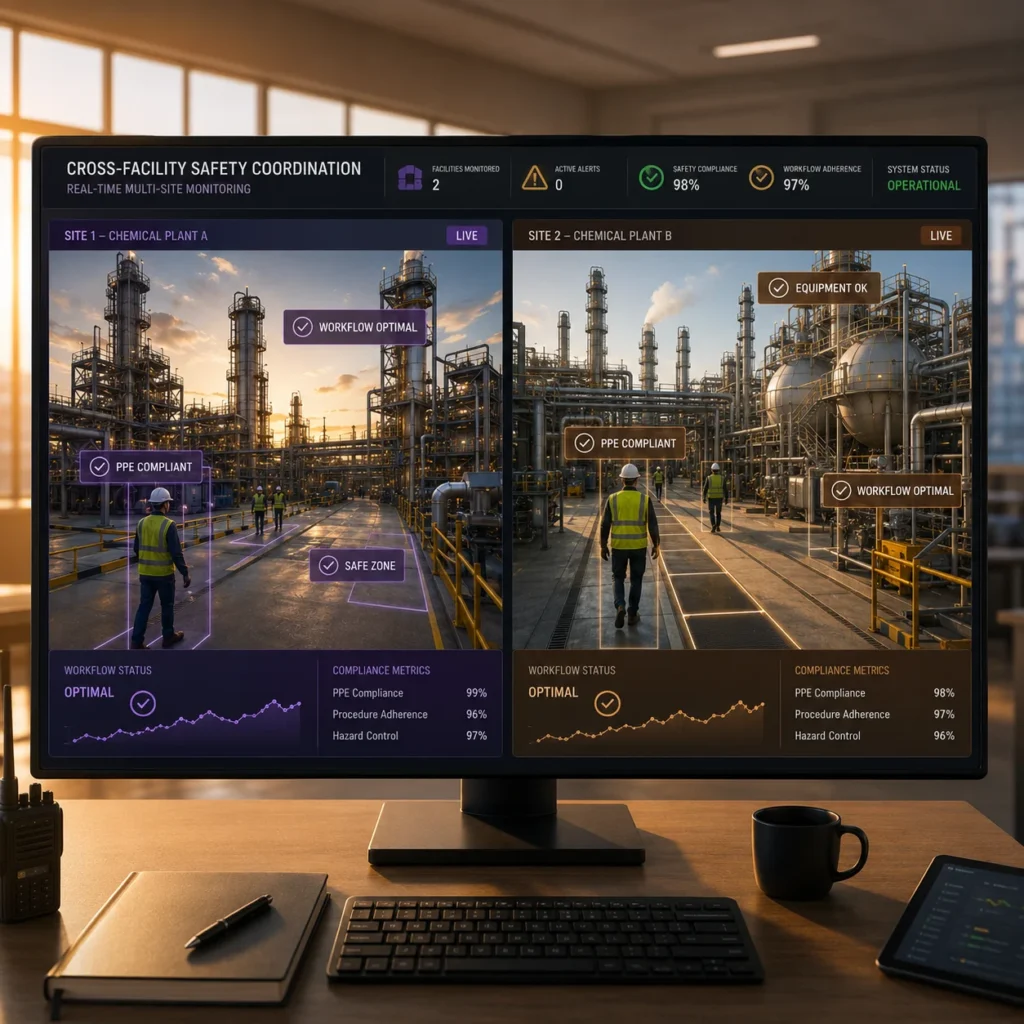
By analyzing workplace behaviors, PPE compliance, restricted-area access, workflow execution, and potential safety risks, CAPASai helps organizations identify concerns earlier and improve workplace awareness. Intelligent alerts and centralized visibility support EHS teams in managing safety performance across single or multiple locations.
Rather than replacing existing safety programs, CAPASai provides additional operational insight that helps teams make faster and more informed decisions.
Strengthening Safety Performance In High-Risk Operations
As operational environments become more complex, EHS teams need tools that help them identify risks sooner and manage safety performance more effectively. AI-powered monitoring provides an additional layer of awareness that supports workplace safety, compliance, and operational continuity.
Organizations that combine strong safety programs with intelligent monitoring capabilities are better positioned to reduce risk exposure, improve compliance outcomes, and create safer working environments for employees and contractors.