Why Governance Has Become A Strategic Business Priority
Enterprise governance is no longer limited to policies, audits, and compliance reviews. Modern organizations operate across multiple facilities, departments, suppliers, and operational processes, making governance increasingly complex.
Executives, compliance teams, operational leaders, and risk managers must ensure that policies are consistently followed, procedures are properly executed, and accountability is maintained across the organization.
However, as businesses scale, maintaining visibility into day-to-day operational activities becomes more challenging. Gaps between documented policies and actual workplace practices can create compliance risks, operational inefficiencies, and governance concerns that may not become visible until an audit, investigation, or operational disruption occurs.
This is why many enterprises are exploring AI-powered technologies that provide greater insight into operational execution.
The Operational Challenges That Impact Governance
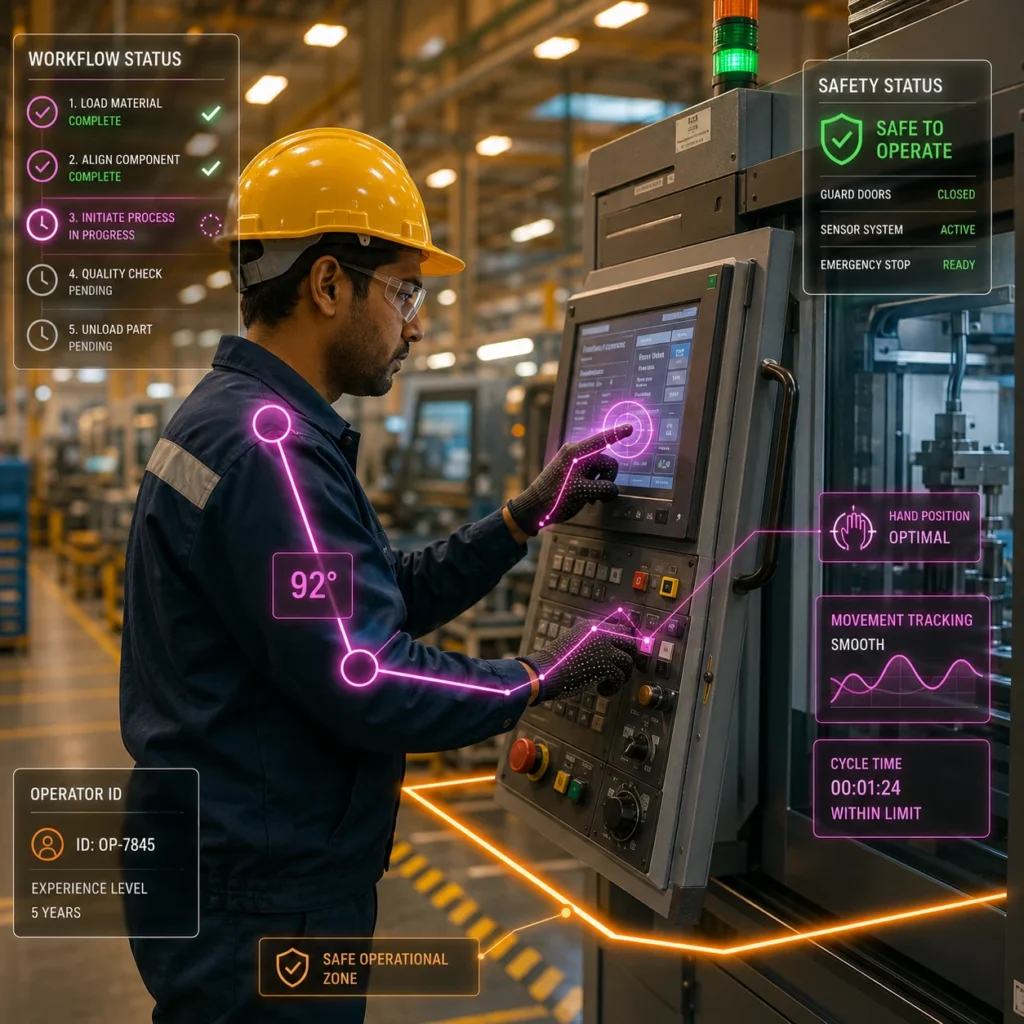
Strong governance depends on consistent execution. Even well-designed governance frameworks can struggle when organizations face:
- Multiple operating locations
- Large workforces
- Contractor and third-party activities
- Inconsistent process execution
- Limited operational oversight
- Delayed reporting of compliance issues
- Manual audit processes
- Difficulty verifying policy adherence
Leaders frequently rely on recurring evaluations rather than ongoing awareness of what is going on throughout the company in the absence of trustworthy operational visibility.
Why Traditional Governance Approaches Have Limitations
Most governance frameworks rely on a combination of:
- Internal audits
- Compliance reviews
- Management reporting
- Site inspections
- Incident investigations
- Employee reporting systems
These processes remain important, but they typically provide retrospective information rather than real-time operational insight.
Challenges include:
- Audit findings often occur after non-compliance events
- Limited visibility between review cycles
- Resource-intensive monitoring processes
- Difficulty maintaining consistency across locations
- Delayed identification of process deviations
As organizations become more complex, governance leaders need more reliable ways to verify that operational standards are being followed consistently.
How AI Supports Enterprise Governance
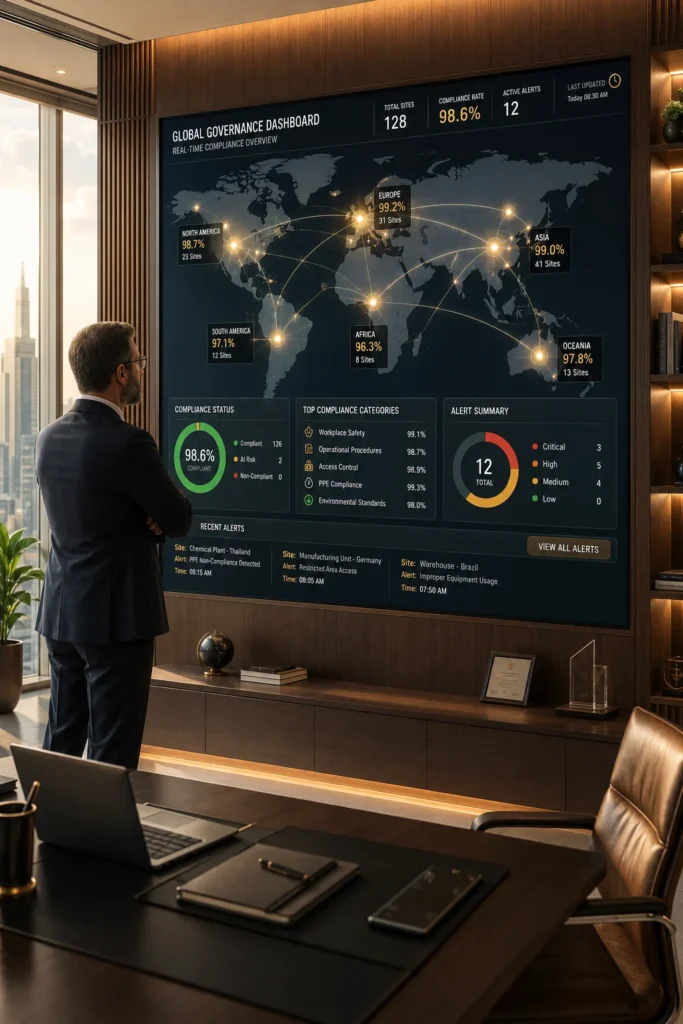
AI-powered video analytics and operational intelligence tools help organizations monitor workplace activities and identify deviations from established policies and procedures.
Rather than relying solely on periodic reviews, enterprises can gain ongoing insight into operational execution.
Process Adherence Monitoring
AI can help verify whether operational procedures are being followed consistently across facilities and teams.
Compliance Verification
Organizations can monitor adherence to workplace requirements, operational controls, and predefined standards.
Operational Accountability
Objective operational data provides greater transparency into workplace activities and process execution.
Restricted Area Management
Access controls and operational boundaries can be monitored to support governance requirements.
Documentation And Audit Support
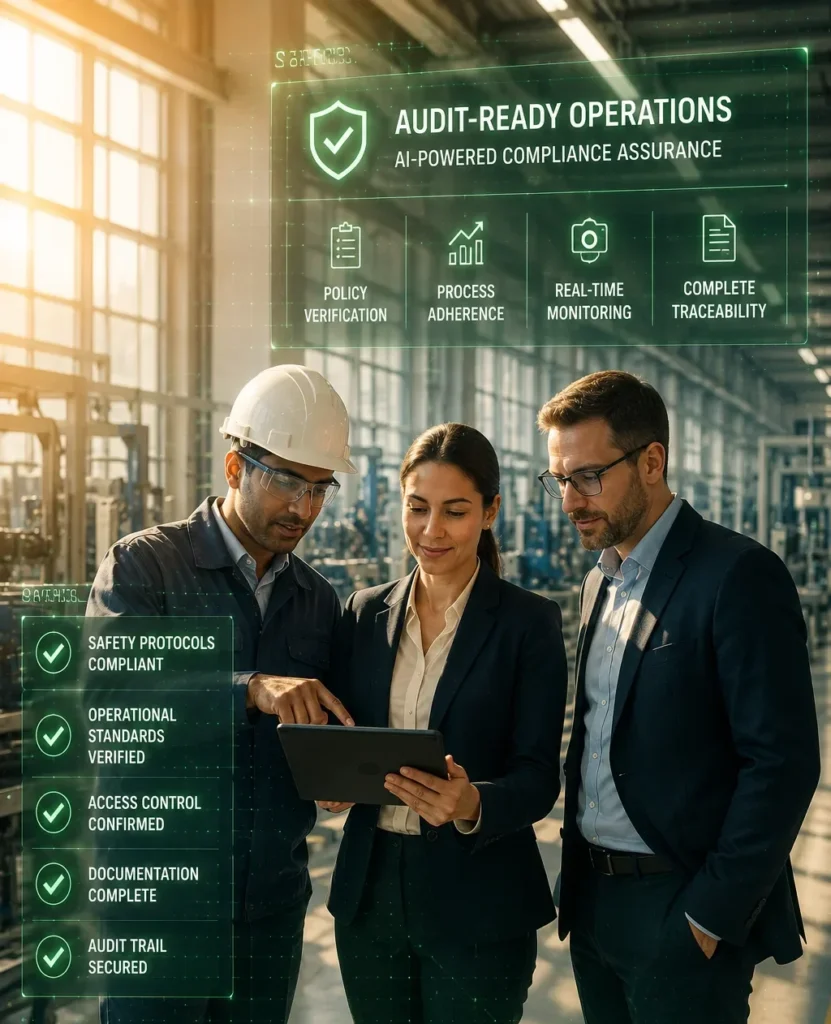
Organisations can use historical operating records to improve audit preparation, confirm compliance efforts, and look into incidents.
Multi-Site Governance Oversight
Enterprises can maintain greater consistency across geographically distributed facilities and operational environments.
Compare Traditional Governance Monitoring With AI-Assisted Governance
Traditional Governance Oversight | AI-Assisted Governance Monitoring |
Periodic audits | Ongoing operational observation |
Manual compliance reviews | Automated policy verification |
Retrospective reporting | Earlier issue identification |
Site-specific oversight | Multi-site visibility |
Human-dependent reviews | Consistent rule-based monitoring |
Limited operational insight | Broader process transparency |
When organizations compare these approaches, AI provides an additional layer of governance assurance that complements existing controls.
Governance Benefits Beyond Compliance
Strong governance frameworks contribute to broader business objectives.
Improved Operational Consistency
Organisations can encourage standardised practices across departments and facilities.
Better Risk Management
Earlier identification of deviations helps reduce operational and compliance exposure.
Enhanced Transparency
Leaders gain clearer insight into how policies and procedures are being executed.
Stronger Accountability
Operational activities can be verified against established standards and expectations.
Increased Audit Readiness
Documented operational evidence supports internal reviews, external audits, and regulatory requirements.
Industries Where Governance Visibility Is Critical
Enterprise governance plays a significant role across many sectors, including:
- Manufacturing
- Pharmaceutical Production
- Healthcare Facilities
- Banking And BFSI
- Retail Chains
- Quick Service Restaurants
- Logistics Operations
- Energy And Utilities
- Construction Projects
- Food Processing Facilities
In each of these industries, consistent execution of policies and procedures is essential for managing operational and compliance risks.
How CAPASai Supports Enterprise Governance
CAPASai helps organizations strengthen governance frameworks through AI-powered video analytics, compliance monitoring, and operational intelligence.
By analyzing workplace activities, process execution, SOP adherence, access controls, and operational workflows, CAPASai helps enterprises gain greater confidence that governance requirements are being followed consistently. Intelligent alerts and centralized oversight enable leaders to identify potential issues earlier and support more informed decision-making.
CAPASai assists companies that oversee several sites in developing a more uniform approach to operational governance, accountability, and compliance.
Creating Governance Frameworks That Extend Beyond Audits
Governance is most effective when organizations can continuously verify that policies are being translated into daily operational practices. While audits and reviews remain important, modern enterprises increasingly require greater visibility into operational execution.
AI-powered monitoring helps bridge the gap between governance objectives and workplace reality by providing ongoing insight into how work is performed. As organizations continue to focus on compliance, accountability, and operational excellence, AI is becoming an increasingly valuable tool for strengthening enterprise governance frameworks.