As organizations grow, maintaining process discipline becomes increasingly difficult. What works effectively in a single facility or department often becomes challenging to sustain across multiple locations, business units, and operational teams. Variations in execution, inconsistent adherence to procedures, and limited visibility into daily operations can gradually undermine efficiency, quality, compliance, and overall business performance.
For large enterprises, process discipline is not simply about enforcing rules. It is about ensuring that critical processes are executed consistently, efficiently, and in alignment with organizational objectives. In today’s complex operating environments, achieving this level of consistency requires more than policies and periodic audits. It requires continuous visibility, operational intelligence, and proactive oversight.
Why Process Discipline Matters At Enterprise Scale
Process discipline forms the foundation of operational excellence.
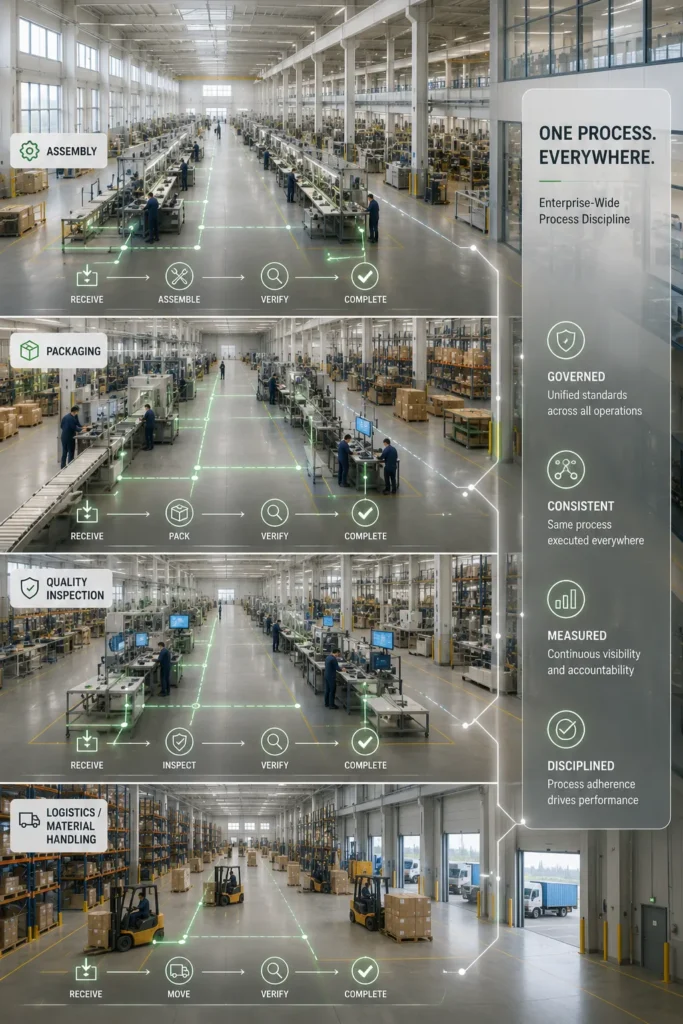
When employees, teams, and locations follow established procedures consistently, organizations can achieve:
- Higher operational efficiency
- Improved quality outcomes
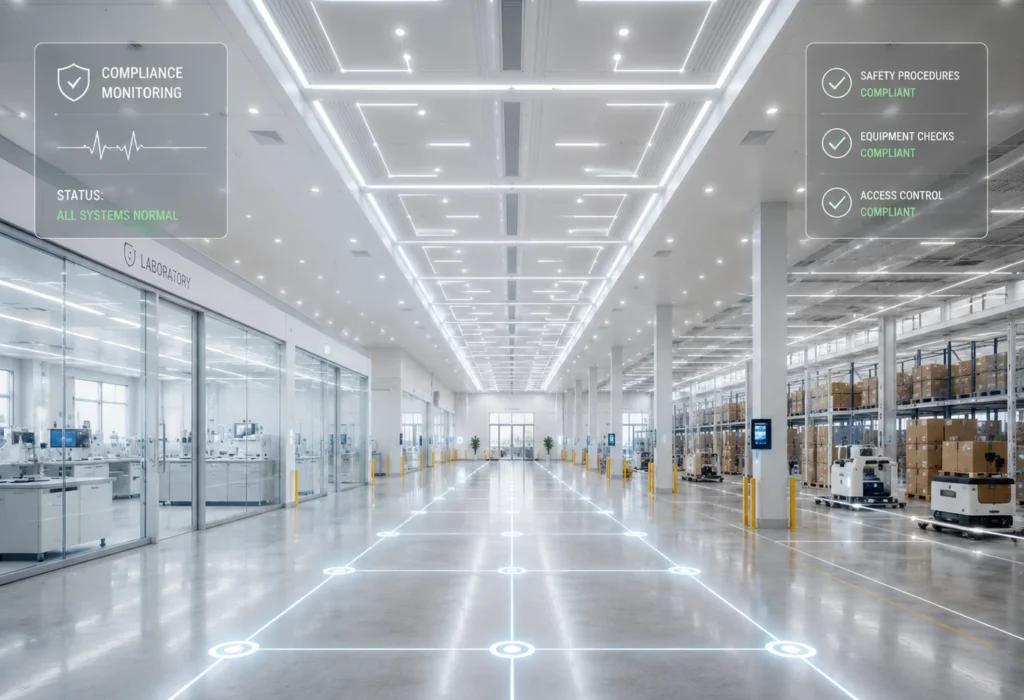
- Better compliance performance
- Reduced operational risk
- Greater predictability
- Stronger customer experiences
Conversely, inconsistent process execution often leads to delays, errors, rework, compliance violations, and increased operational costs.
As enterprises expand, maintaining discipline across diverse operational environments becomes a strategic priority.
Common Challenges Facing Large Enterprises
Many organizations establish well-defined procedures but struggle to ensure consistent execution across their operations.
Several factors contribute to this challenge.
Geographic Distribution
Large enterprises often operate across multiple facilities, regions, or countries.
Differences in local practices, management approaches, and workforce behaviors can create variations in process execution.
Without consistent oversight, these variations can gradually impact performance.
Limited Operational Visibility
Leaders cannot be physically present across every location.
As a result, organizations frequently rely on reports, audits, and management updates to assess compliance and process adherence.
This often creates visibility gaps between what should be happening and what is actually occurring on the operational floor.
Manual Monitoring Limitations
Traditional monitoring methods depend heavily on:
- Periodic inspections
- Supervisor observations
- Compliance audits
- Employee reporting
While valuable, these approaches provide only snapshots of operational performance rather than continuous visibility.
Workforce Turnover And Training Variability
Large organizations often experience ongoing workforce changes.
New employees, temporary staff, and varying levels of training can increase the likelihood of process deviations and inconsistent execution.
Maintaining discipline becomes increasingly difficult without effective monitoring and reinforcement mechanisms.
How AI Strengthens Process Discipline
Artificial Intelligence is helping organizations address many of the traditional challenges associated with process discipline.
Continuous Process Monitoring
AI can monitor operational activities in real time, helping organizations identify process deviations as they occur.
This allows leaders to address issues before they become systemic problems.
Early Detection Of Non-Compliance
Process deviations often begin as small inconsistencies.
AI-powered systems can identify unusual patterns, procedural variations, and emerging compliance risks earlier than traditional monitoring methods.
Improved Enterprise Visibility
AI provides leaders with greater visibility across distributed operations.
Instead of relying exclusively on historical reports, organizations gain access to real-time operational intelligence that supports faster decision-making.
Data-Driven Performance Improvement
Continuous monitoring generates valuable operational insights that help organizations:
- Identify recurring issues
- Prioritize corrective actions
- Measure process performance
- Support continuous improvement initiatives
The Cost Of Inconsistent Process Execution
Even small process deviations can create significant consequences when multiplied across large-scale operations.
Common impacts include:
- Quality inconsistencies
- Reduced productivity
- Increased waste
- Compliance risks
- Customer service issues
- Operational disruptions
Over time, these issues can erode the benefits of standardization and negatively affect business performance.
The Role Of Computer Vision In Process Discipline
Many enterprise processes occur in physical environments where traditional software systems have limited visibility.
Computer vision helps bridge this gap by transforming visual activity into operational intelligence.
Organizations can use computer vision to:
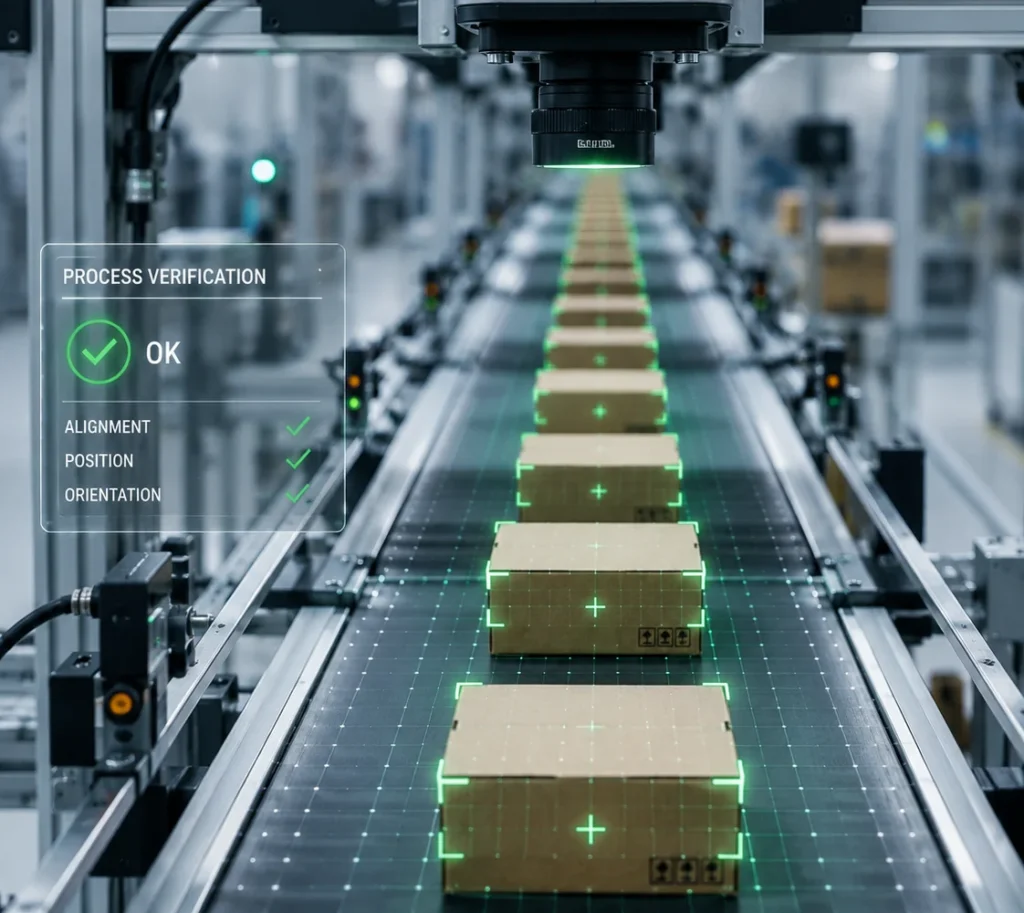
- Verify process adherence
- Monitor workflow execution
- Detect operational deviations
- Support compliance oversight
- Identify bottlenecks
- Improve consistency across locations
This enables organizations to move beyond periodic observation and toward continuous process verification.
Building A Culture Of Consistent Execution
Technology alone cannot create process discipline.
Successful organizations combine operational intelligence with strong leadership, employee engagement, and clear accountability.
Key success factors include:
- Clearly defined procedures
- Effective training programs
- Continuous visibility
- Performance measurement
- Timely corrective actions
- Leadership commitment
When these elements work together, process discipline becomes part of the organizational culture rather than a compliance exercise.
Creating Sustainable Operational Consistency Across The Enterprise
Process discipline remains one of the most important drivers of operational excellence in large enterprises. As organizations expand, maintaining consistent execution becomes increasingly complex, requiring greater visibility, oversight, and responsiveness than traditional approaches can provide.
AI and computer vision help organizations strengthen process discipline by providing continuous monitoring, real-time operational intelligence, and early detection of deviations. Combined with strong leadership and clearly defined processes, these technologies enable enterprises to maintain consistency, improve compliance, reduce risk, and support long-term operational performance.
Organizations that successfully embed process discipline into their daily operations are better positioned to achieve sustainable efficiency, quality, and operational excellence at scale.
How CAPASai Supports Process Discipline
CAPASai helps enterprises strengthen process discipline through AI-powered video analytics, continuous monitoring, operational intelligence, and real-time alerts. By providing visibility into process adherence, workflow execution, and compliance activities across multiple locations, CAPASai enables organizations to improve consistency, reduce operational risk, and support enterprise-wide operational excellence.