Why Compliance Blind Spots Continue to Challenge Modern Enterprises
Most organizations have no shortage of compliance policies. Procedures are documented, employees are trained, and audit programs are designed to ensure operational standards are maintained. Yet compliance issues continue to surface across industries, often in organizations that appear highly structured and well-governed.
The problem is not always the absence of rules. More often, it is the lack of visibility into how those rules are executed during daily operations.
A manufacturing facility may have a clearly defined safety procedure, but supervisors cannot observe every activity taking place across multiple production lines. A logistics company may establish standardized handling processes, yet individual teams may gradually introduce shortcuts to meet operational demands. A retail chain may publish identical operating standards across all locations while customer-facing processes vary significantly from one store to another.
These gaps create compliance blind spots—areas where operational activities continue without sufficient oversight. Because they often develop gradually, they can remain unnoticed until an incident, audit finding, customer complaint, or regulatory review exposes the issue.
Where Hidden Compliance Risks Typically Emerge
Process Variations Between Teams and Shifts
Even when procedures are clearly documented, different teams often develop their own interpretation of how work should be performed. Over time, these variations can create inconsistencies that affect compliance, safety, and operational performance.
What begins as a minor adjustment to improve efficiency can eventually become a routine practice that differs from the approved process.
Informal Workarounds and Operational Shortcuts
Operational environments are dynamic. Employees frequently encounter unexpected situations and may create workarounds to maintain productivity. While some adjustments may appear harmless, others can introduce compliance risks that remain invisible to management.
Without continuous visibility, these deviations can become normalized and spread across teams.
Multi-Site Operational Inconsistencies
Organizations operating across multiple facilities face an additional challenge. Standards may be defined centrally, but execution often varies based on local management practices, workforce experience, and operational pressures.
Operational Area | Common Compliance Blind Spot |
Manufacturing | Shift-based process variations |
Warehousing & Logistics | Workflow shortcuts and route deviations |
Retail Operations | Inconsistent service execution |
Healthcare | Procedure adherence during peak periods |
Banking & BFSI | Differences in branch-level practices |
Pharmaceuticals | Process and documentation inconsistencies |
As organizations scale, maintaining consistent visibility across locations becomes increasingly difficult.
How AI Helps Reveal What Traditional Oversight Misses

Identifying Patterns Across Large Operations
Many compliance issues do not appear as isolated events. Instead, they emerge through repeated behaviors that occur over days, weeks, or months.
AI can help organizations identify recurring deviations, operational trends, and emerging risks across large volumes of activity. This broader perspective allows compliance teams to recognize patterns that would be difficult to detect through manual observation alone.
Bringing Visibility to Everyday Activities
Traditional compliance programs often rely on periodic audits, inspections, and reviews. While valuable, these approaches provide only a snapshot of operational performance.
AI-powered systems can help organizations gain greater visibility into routine activities, allowing leaders to understand how procedures are being followed during normal operations rather than only during formal evaluations.
Prioritizing Risks That Require Attention
Modern enterprises generate enormous amounts of operational information. Reviewing every event manually is impractical.
AI assists in sifting through massive amounts of activity and identifying anomalies that could need further research. This allows compliance teams to focus on higher-risk areas instead of spending time reviewing routine activities that pose little concern.
Building a More Transparent Compliance Framework
Organizations cannot improve what they cannot see. Reducing compliance blind spots begins with improving visibility into how operations are executed across facilities, teams, and shifts.
When leaders have access to clearer operational insights, they can identify risks earlier, strengthen accountability, and improve consistency across the enterprise. More significantly, they are able to base their conclusions on facts rather than conjecture.
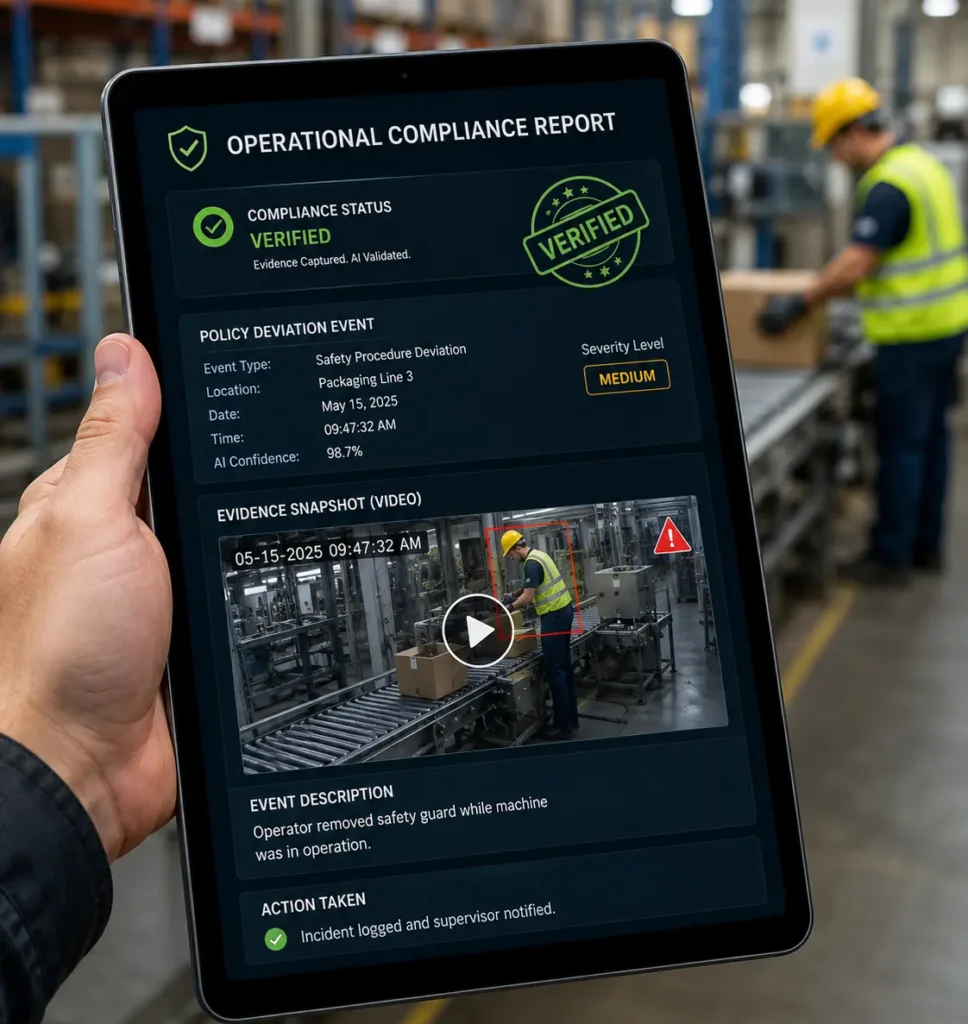
CAPASai supports this objective through AI-powered video analytics, intelligent monitoring, and remote operational visibility. By leveraging existing CCTV infrastructure, CAPASai helps organizations identify hidden compliance risks, improve process awareness, and strengthen oversight across multiple locations.
As compliance expectations continue to evolve, the most resilient organizations will be those that can clearly see how standards are being executed every day—not just during audits or inspections.