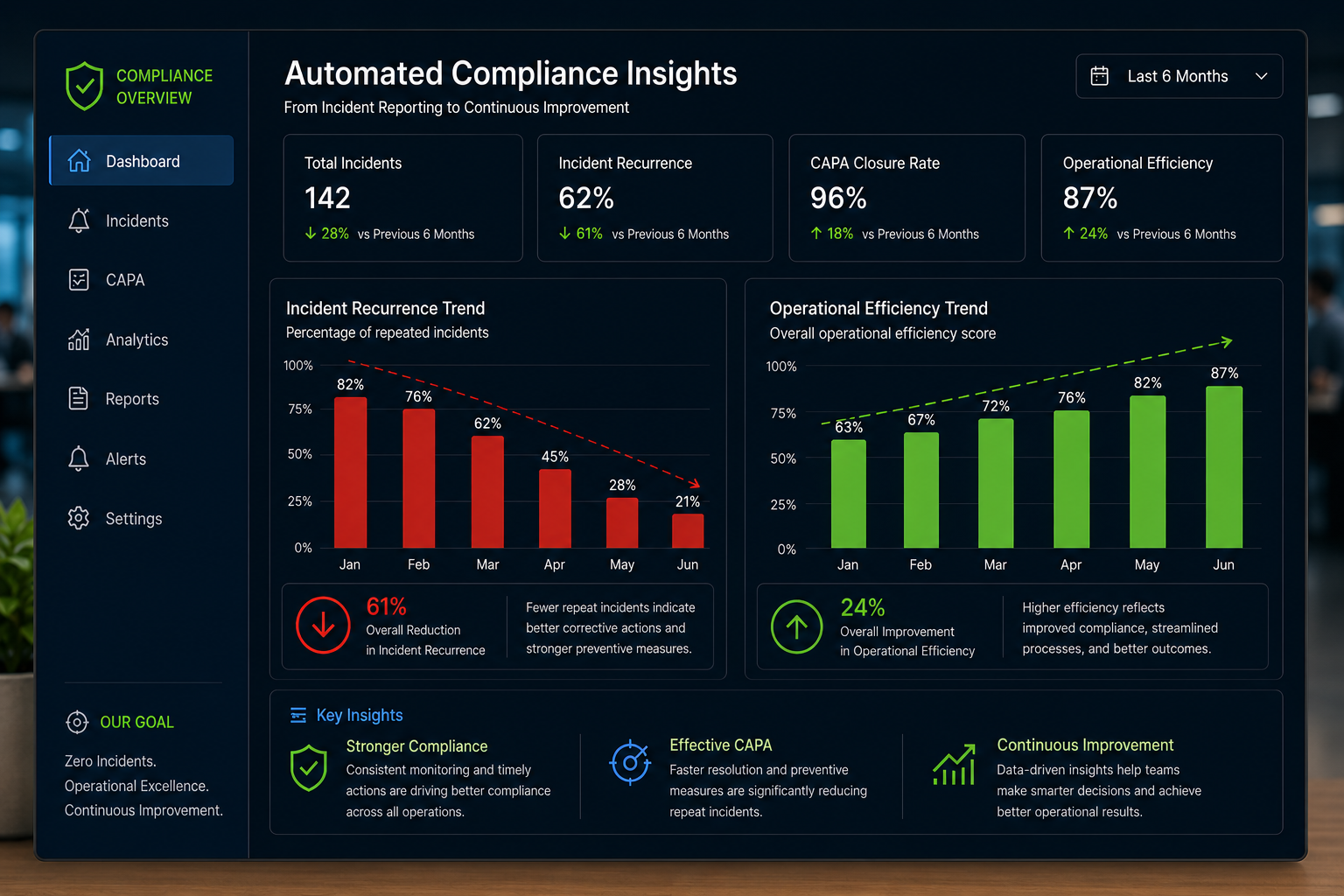
Why CAPA Effectiveness Matters More Than Ever
Corrective and Preventive Action (CAPA) processes play a critical role in helping organizations identify problems, investigate root causes, implement corrective measures, and prevent recurrence. Industries such as pharmaceuticals, manufacturing, healthcare, food processing, medical devices, and quality-driven operations depend on CAPA programs to maintain compliance, improve quality, and reduce operational risks.
However, as operations become more complex, organizations often struggle to detect issues early enough to prevent non-conformances, safety incidents, process deviations, and compliance failures. While CAPA systems are designed to resolve problems, their effectiveness often depends on how quickly issues are identified and how accurately evidence is collected.
This challenge has encouraged many organizations to explore technologies that can provide earlier visibility into operational events before they become larger business problems.
Common Challenges with Traditional CAPA Workflows
Traditional CAPA workflows typically begin after an issue has already been identified through audits, inspections, complaints, incident reports, or manual observations. While this approach remains widely used, it can create several operational limitations.
Common challenges include:
- Delayed issue identification
- Dependence on manual reporting
- Incomplete incident documentation
- Time-consuming investigations
- Limited visibility into recurring patterns
- Difficulty collecting objective evidence
- Delays in initiating corrective actions
In many cases, organizations spend significant time investigating what happened instead of preventing similar issues from occurring in the future
Understanding the Role of AI Video Analytics in CAPA Management
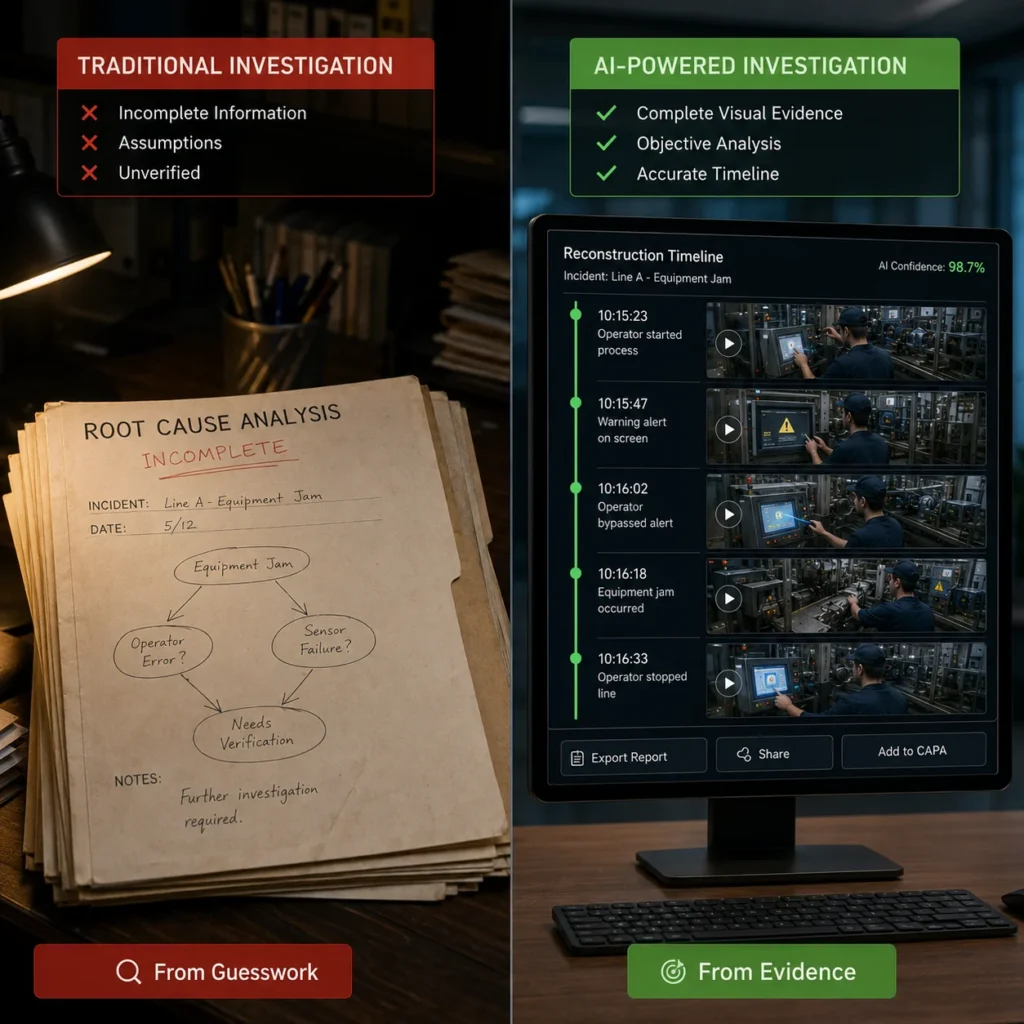
AI video analytics introduces a proactive layer of operational visibility by continuously analyzing activities captured through CCTV systems. Rather than waiting for an audit finding, incident report, or customer complaint, organizations can automatically identify operational deviations, safety violations, process failures, and compliance issues as they occur.
This enables teams to capture evidence earlier, investigate incidents faster, and initiate corrective actions with greater confidence.
As organizations modernize quality and compliance programs, many are evaluating how intelligent monitoring can strengthen traditional CAPA processes
Compare CAPA Management with AI Video Analytics vs Traditional CAPA Workflows
Both approaches aim to improve operational performance and reduce recurring issues, but the path to identifying and addressing problems differs significantly.
Feature | Traditional CAPA Workflow | CAPA Management with AI Video Analytics |
Issue Identification | Manual reporting and audits | Automated event detection |
Detection Timing | Often after occurrence | Real-time visibility |
Evidence Collection | Manual gathering | Video-based evidence |
Investigation Speed | Time intensive | Faster analysis |
Root Cause Support | Limited operational visibility | Enhanced event context |
Multi-Site Oversight | Challenging | Centralized monitoring |
Preventive Action Capability | Reactive approach | More proactive approach |
Operational Visibility | Periodic | Continuous |
The primary difference is that traditional workflows typically react to reported issues, while AI-enhanced CAPA processes can help identify operational deviations before they escalate into larger problems.
Compare How Issues Are Detected and Investigated
One of the biggest differences between these approaches lies in the availability of objective operational data.
Traditional investigations often depend on:
- Employee statements
- Audit observations
- Manual reports
- Inspection records
- Historical documentation
AI-powered monitoring adds another layer by providing visual evidence and automated event detection. This can improve investigation quality by helping teams understand exactly when, where, and how a deviation occurred.
Organizations frequently compare these approaches when seeking ways to reduce investigation time and improve root-cause analysis effectiveness.
How CAPASai Strengthens CAPA Programs
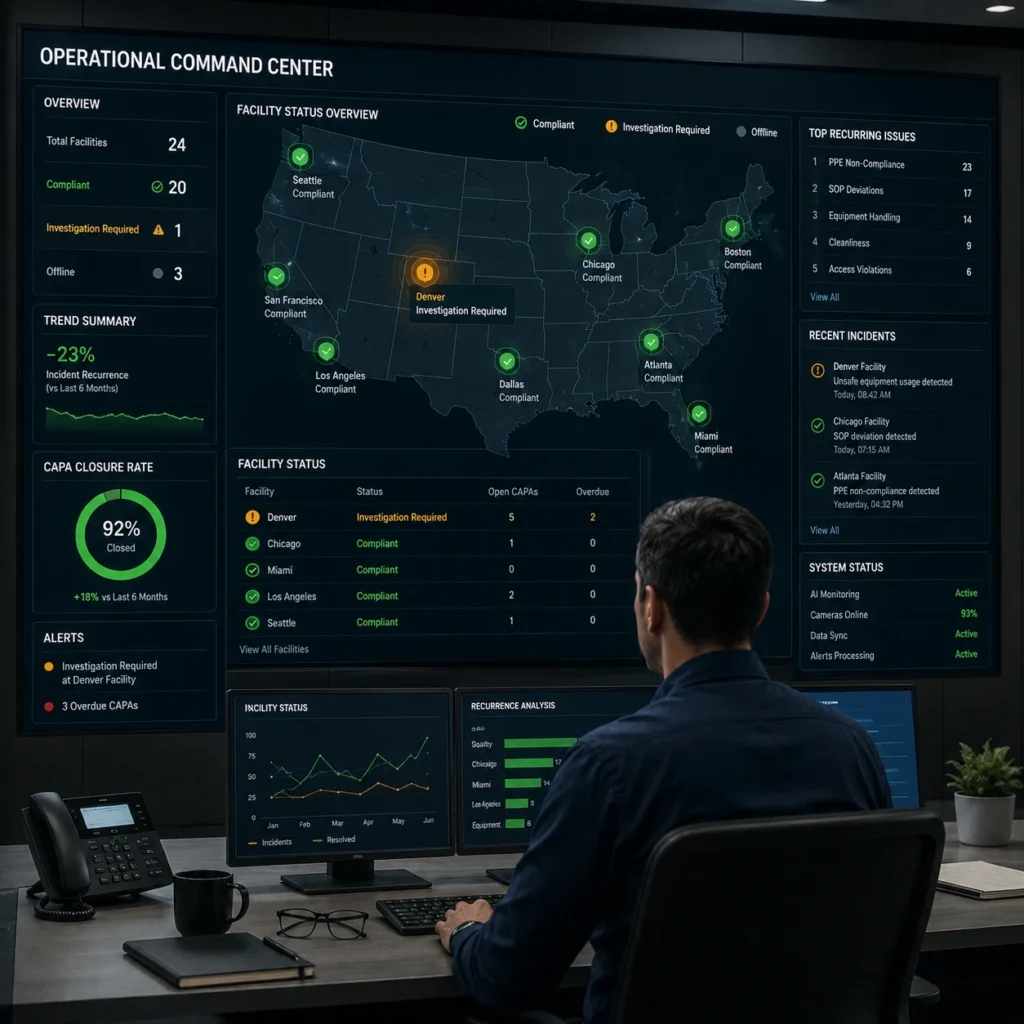
CAPASai combines AI-powered video analytics, remote monitoring, and real-time alerts to provide greater visibility into operational activities.
By continuously analyzing CCTV footage, CAPASai can help identify predefined events that may indicate safety violations, process deviations, compliance issues, or operational risks. Relevant teams can be notified immediately, enabling faster assessment and corrective action.
Key capabilities include:
- Real-time operational monitoring
- Automated event detection
- Video-supported investigations
- Instant alerts for critical incidents
- Multi-location visibility
- Compliance monitoring support
- Centralized operational oversight
Rather than replacing existing CAPA systems, CAPASai enhances them by providing earlier detection and richer operational insights.
Real-World Situations Where AI Can Support CAPA Effectiveness
Different organizations encounter different types of recurring operational issues.
A pharmaceutical facility may need faster visibility into procedural deviations within controlled environments. A manufacturing plant may seek better documentation of safety incidents or process violations. Food processing facilities may require stronger monitoring of hygiene-related procedures, while healthcare organizations may focus on patient safety and operational compliance.
In each case, earlier detection and better evidence collection can support more effective corrective and preventive actions.
Benefits of Integrating Video Analytics into CAPA Processes
Organizations that integrate intelligent monitoring into quality and compliance programs may achieve:
- Faster issue identification
- Improved investigation efficiency
- Better root-cause analysis
- Enhanced operational visibility
- Stronger compliance oversight
- Reduced recurrence of operational issues
- Faster corrective action implementation
- Improved accountability across teams
These benefits help organizations move toward a more proactive quality management culture.
Compare the Future of CAPA Management and Traditional Quality Workflows
As organizations continue to focus on operational excellence, compliance, and risk reduction, CAPA programs are evolving beyond manual investigations and periodic reviews. Traditional workflows remain important for governance and documentation, but they often depend on issues being reported after the fact. By incorporating intelligent video analytics into daily operations, organizations can gain earlier visibility into potential problems, improve investigative accuracy, and create a stronger foundation for continuous improvement. The result is a more proactive approach to quality management that helps prevent issues rather than simply responding to them.
Frequently Asked Questions
.