Every Organization Has Policies. Not Every Organization Has Consistent Execution.
Any business will have operational rules, safety procedures, quality standards, recorded procedures, and compliance needs. Years of experience, audits, and operational learning often shape these policies.
Yet despite having detailed documentation, many organizations continue to face recurring operational challenges.
A warehouse may have a clearly defined material handling procedure, but employees develop shortcuts during busy periods. A manufacturing facility may establish strict safety requirements, yet compliance varies between shifts. Although a retail chain may develop uniform customer service standards, each store will implement them differently.
The issue is the gap between what should happen and what actually happens.
As organizations grow, this execution gap becomes one of the biggest barriers to operational consistency, compliance, and performance.
Why Policy-to-Practice Gaps Exist
Most operational leaders understand that policies alone do not guarantee outcomes.
Even well-designed procedures face challenges during day-to-day execution.
Common Causes of Policy Drift
Operational Challenge | Impact on Execution |
Multiple locations | Inconsistent practices across sites |
Different work shifts | Variations in process adherence |
Manual supervision limitations | Reduced visibility into daily activities |
Staff turnover | Differences in training and execution |
Operational pressure | Shortcuts and workarounds emerge |
Over time, these small variations can create significant differences between documented standards and actual operational behavior.
As a result, anticipated processes and actual execution gradually diverge, a phenomenon known as “policy drift” in many organisations.
The Visibility Challenge in Traditional Operations
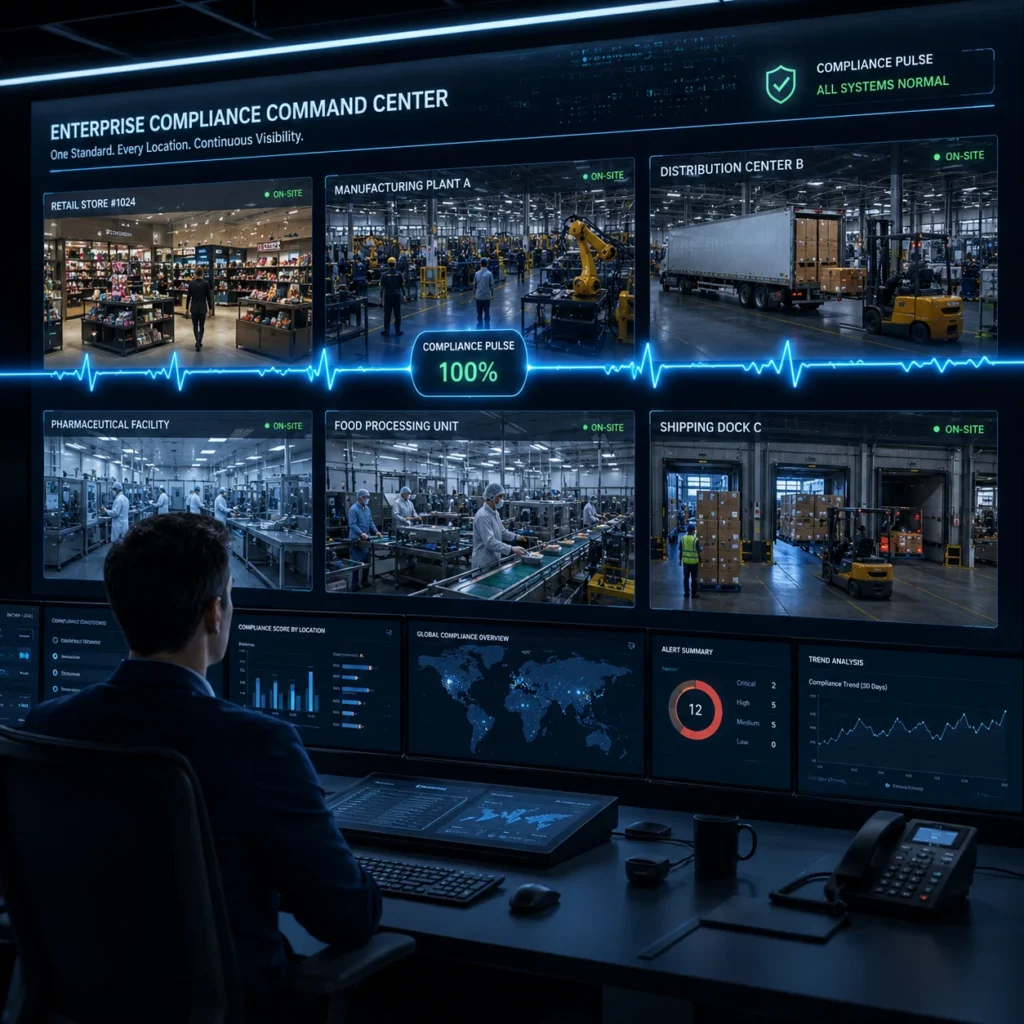
One reason policy drift persists is that most organizations struggle to observe operational activities consistently.
Managers cannot be present everywhere.
Supervisors can only observe a limited number of processes at a time.
Audits provide periodic reviews rather than continuous insight.
As a result, many deviations remain unnoticed until they create larger operational consequences.
Traditional Verification Methods
- Supervisor observations
- Periodic inspections
- Compliance audits
- Incident investigations
- Manual reporting
These approaches provide valuable information, but they often reveal problems after they have already occurred.
Organizations increasingly need a way to understand operational execution as it happens.
From Observation to Operational Alignment
Closing the gap between policy and practice requires more than identifying mistakes.
Organizations need the ability to understand where deviations occur, how frequently they happen, and whether corrective actions are improving performance over time.
Traditional Approach vs Video Analytics Approach
Traditional Approach | Video Analytics Approach |
Periodic reviews | Continuous observation |
Manual verification | Automated process validation |
Sample-based inspections | Broader operational coverage |
Delayed issue discovery | Earlier deviation detection |
Limited operational evidence | Automated evidence generation |
By creating greater visibility into execution, organizations can strengthen consistency, accountability, and operational alignment.
How Video Analytics Bridges the Gap
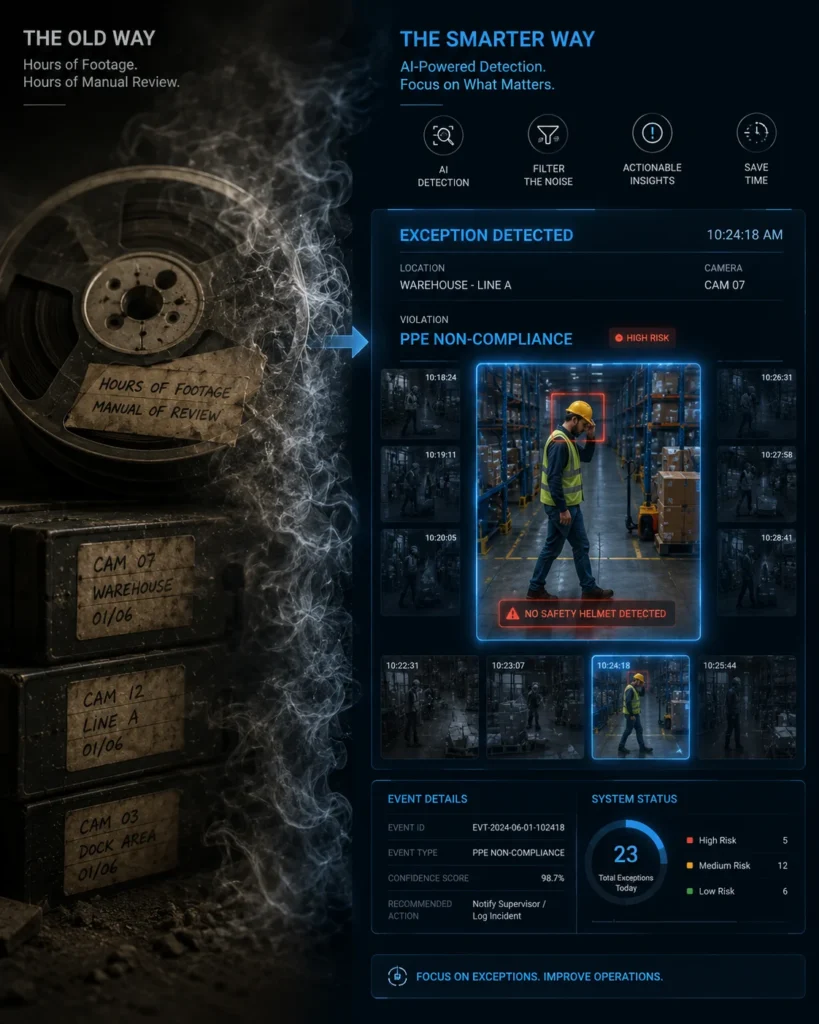
Video analytics transforms cameras from passive recording devices into active sources of operational intelligence.
Instead of simply storing footage for later review, intelligent systems can continuously analyze activities and identify whether operational practices align with established standards.
This enables organizations to move beyond documentation and gain visibility into actual execution.
Examples of Video Analytics Applications
Process Adherence Verification
Organizations can verify whether critical operational procedures are being followed consistently.
Safety Compliance Monitoring
Video analytics can help identify deviations from workplace safety protocols and operational guidelines.
Operational Standard Enforcement
Enterprises can monitor whether approved workflows are being executed consistently across locations.
Exception Identification
Rather than reviewing hours of footage, teams can focus on specific events that require attention.
The intention is not to take the place of human supervision.
The goal is to help organizations scale visibility beyond what manual supervision alone can provide.

How CAPASai Helps Bridge Policy and Practice
CAPASai helps organizations close the gap between policy and practice through AI-powered video analytics, remote monitoring, and real-time alerting capabilities.
By leveraging existing CCTV infrastructure, CAPASai can help verify operational procedures, identify process deviations, and provide visibility into execution across multiple facilities.
This enables organizations to strengthen operational consistency while reducing dependence on manual supervision and periodic inspections.