Retail theft does not always involve hurried movement, forced entry or obvious confrontation. Sometimes, the activity can look like an ordinary shopping trip until merchandise leaves the store without payment. The Clarenville Walmart Retail Theft is a useful example of why retailers can benefit from technology that helps identify suspicious activity without relying entirely on staff observation.
What Happened at the Clarenville Store?
The incident occurred on August 29, 2026, at Walmart on Shoal Harbour Drive in Clarenville, Newfoundland and Labrador. At approximately 12:15 p.m., surveillance cameras recorded a man and woman selecting more than $300 worth of merchandise. According to the RCMP, the items were placed into reusable bags before the two individuals left the store without paying. They later departed in a black Chrysler passenger vehicle.
Clarenville RCMP released surveillance images on September 22 and asked the public for help identifying the individuals. At the time of the police announcement, the investigation was still ongoing.
The Missed Moment Matters
A retail camera may capture an important event, but footage alone does not necessarily stop merchandise from leaving the building.
For store operators, the more useful question is whether surveillance can help bring attention to a potentially important sequence while it is happening. With large stores containing numerous aisles, entrances and checkout areas, expecting employees to continuously watch every camera is difficult.
That is where AI video analytics can complement conventional CCTV.
Creating Smarter Visibility With CAPASai
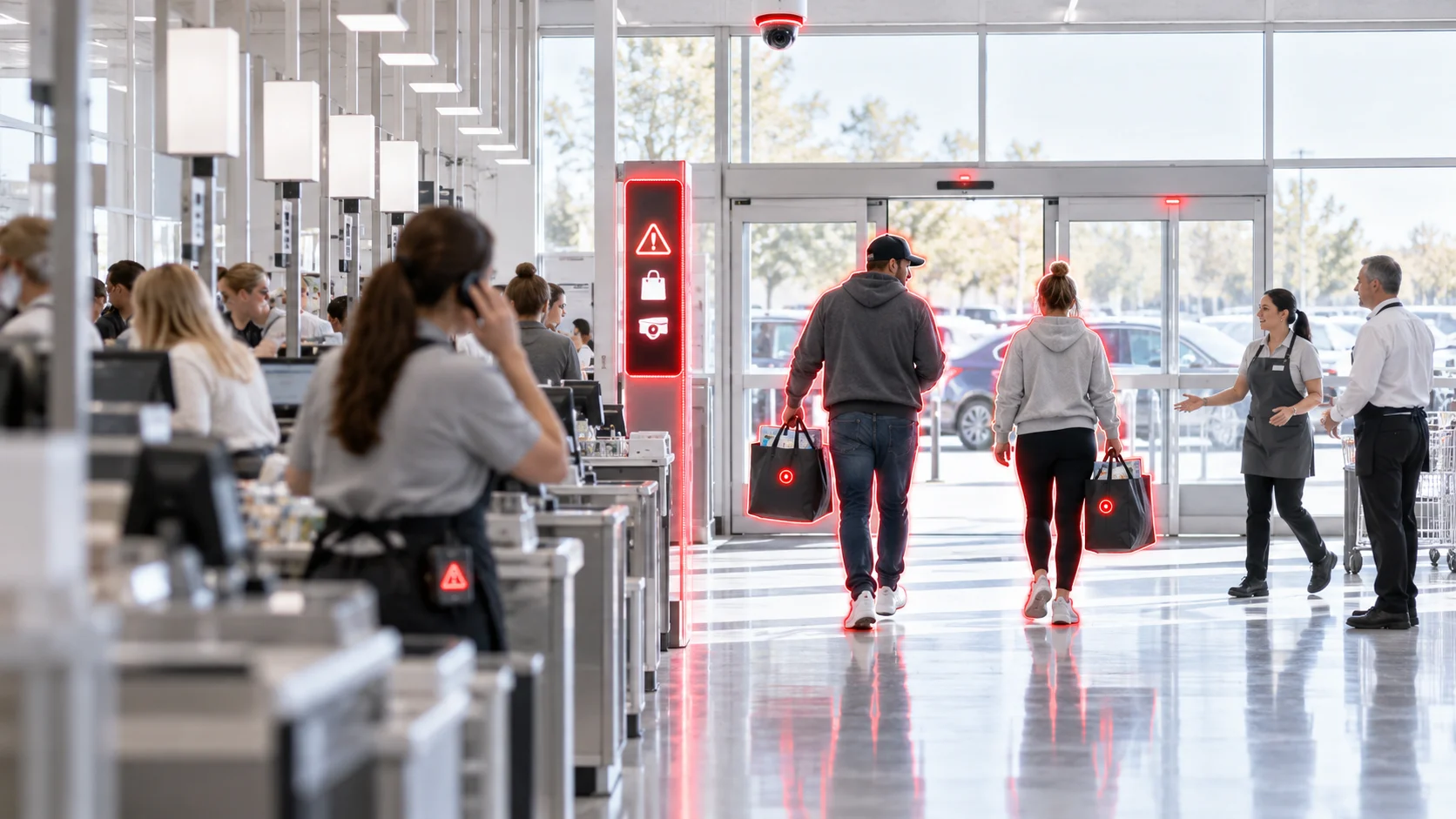
CAPASai can continuously analyze video feeds and IoT data, allowing retailers to configure AI monitoring around the events that are relevant to their individual locations.
For example, a retailer could establish security use cases around activity in particular areas of the store, movement involving merchandise or other behaviours that require attention. The system can assess video activity against those predefined events and surface situations that warrant review.
Importantly, CAPASai does not rely solely on automated detection for every critical notification. Its Human-in-the-Loop validation process adds human verification to important alerts, helping reduce false positives before the alert reaches the responsible personnel.
From a Camera Image to Useful Context
When an event is validated, CAPASai can provide an alert accompanied by video evidence and relevant IoT information. This gives security teams more context at the point of notification instead of requiring them to begin by searching through large volumes of recorded footage.
That additional context can support faster decisions and help store personnel determine the appropriate next step without unnecessarily confronting customers or escalating uncertain situations.
Building a Record That Retailers Can Use
The value of an AI-enabled security system also extends beyond one incident. Stored clips and associated information can help with evidence collection and subsequent investigation.
Across multiple stores, AI-powered reporting and analytics can provide a broader view of security activity. Retailers can use that information to understand where incidents occur, identify recurring concerns and assess whether particular locations or processes need additional attention.
The Clarenville Walmart Retail Theft shows that effective shoplifting prevention is not simply about having more cameras. It is about making surveillance more actionable. By combining continuous analysis, configured security events, human validation, contextual alerts and investigation support, CAPASai can help retailers move toward a more proactive approach to loss prevention.
#Clarenville #WalmartTheft #ClarenvilleWalmart #RetailTheft #WalmartShoplifting #ShopliftingDetection #RetailSecurity #LossPrevention #AIVideoAnalytics #CCTVMonitoring #VideoSurveillance #TheftPrevention #CAPASai