Why Risk Awareness Matters In Modern Operations
Every organization faces operational risks. Some risks are highly visible, while others develop gradually through small process deviations, inconsistent practices, or overlooked compliance gaps. In manufacturing plants, warehouses, pharmaceutical facilities, construction projects, and logistics operations, these risks can affect productivity, compliance performance, employee safety, and business continuity.
The challenge is not simply identifying risks after they occur. Organizations that consistently perform well are often those that recognize warning signs early and take action before issues escalate.
This is where building a risk-aware culture becomes increasingly important. Risk awareness enables employees, supervisors, and leadership teams to identify potential concerns and make informed decisions that support operational stability.
The Difference Between Reactive And Risk-Aware Organizations
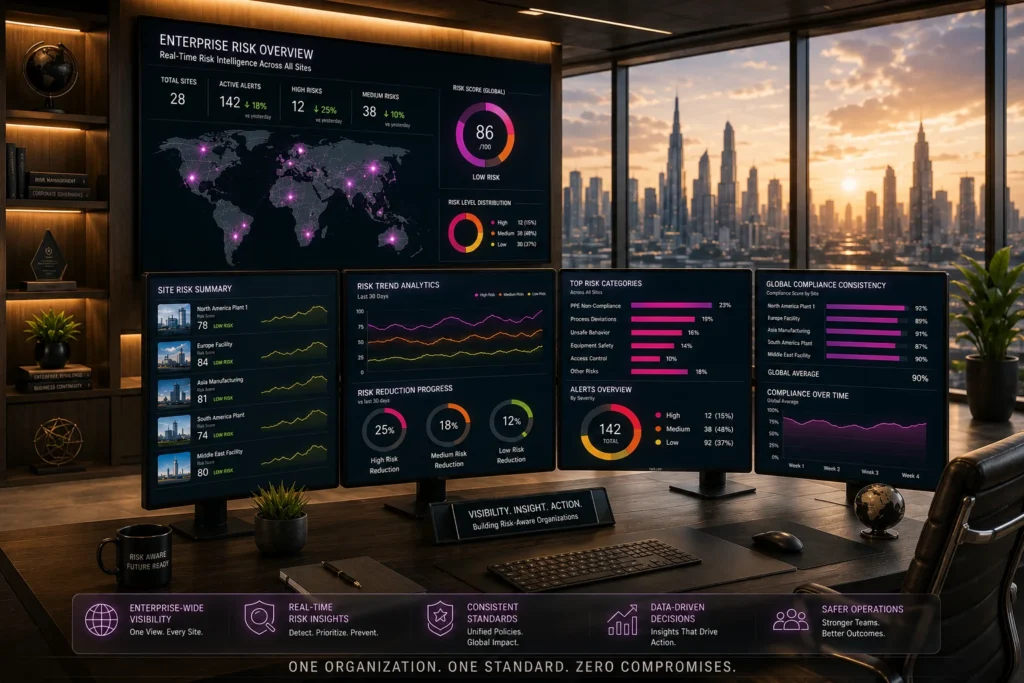
Numerous organisations use audits, inspections, investigations, and recurring reviews to manage risks. Although these activities are still beneficial, they frequently concentrate on past occurrences.
Risk-aware organizations take a different approach. They seek to understand:
- Where operational vulnerabilities exist
- Which activities create recurring risks
- How frequently process deviations occur
- Whether safety procedures are consistently followed
- Which areas require additional oversight
This shift allows organizations to focus on prevention rather than correction.
Common Risks That Affect Daily Operations
Across industries, operational risks often originate from routine activities.
Examples include:
- PPE non-compliance
- Unauthorized area access
- Unsafe equipment interactions
- Process deviations
- SOP violations
- Material handling errors
- Workflow bottlenecks
- Incomplete operational checks
Individually, these issues may appear minor. However, repeated occurrences can increase exposure to larger operational and compliance challenges.
Why Periodic Oversight Is No Longer Enough
Traditional monitoring methods typically include:
- Site inspections
- Safety audits
- Compliance reviews
- Supervisor observations
- Incident reporting
Although these methods provide valuable information, they often capture only a limited view of operational reality.
Challenges include:
- Activities occurring between inspections
- Limited visibility across large facilities
- Multiple shifts operating simultaneously
- Inconsistent reporting practices
- Delayed identification of recurring issues
As organizations expand across multiple locations, maintaining consistent oversight becomes increasingly difficult.
How Continuous Monitoring Improves Risk Awareness
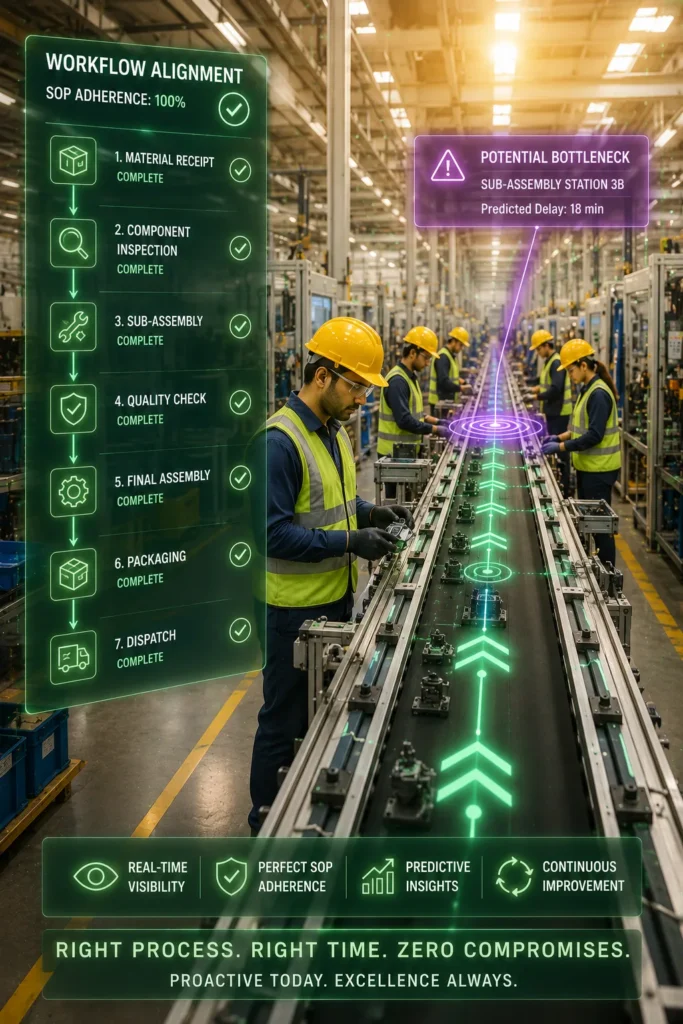
Continuous monitoring provides organizations with a more complete understanding of workplace activities and operational conditions.
Rather than relying solely on periodic reviews, organizations gain ongoing visibility into how processes are executed throughout the day.
Identifying Process Deviations Early
Continuous monitoring can help detect departures from established workflows before they become recurring problems.
Reinforcing Compliance Standards
Organizations can gain greater confidence that operational procedures are being followed consistently.
Highlighting Emerging Risk Patterns
Repeated events and operational trends become easier to identify when monitoring occurs continuously.
Improving Operational Accountability
Objective operational data helps support consistent decision-making and performance evaluation.
Supporting Faster Corrective Actions
Potential concerns can be addressed closer to the point of occurrence rather than after a formal review cycle.
Compare Periodic Reviews With Continuous Monitoring
Periodic Oversight | Continuous Monitoring |
Scheduled inspections | Ongoing operational awareness |
Point-in-time observations | Continuous activity visibility |
Reactive issue discovery | Earlier risk recognition |
Manual data collection | Automated event tracking |
Limited trend analysis | Ongoing pattern identification |
Delayed corrective action | Faster response opportunities |
When businesses contrast these strategies, continuous monitoring offers a more solid basis for operational governance and risk management.
Business Benefits Of A Risk-Aware Organization
Improved Operational Consistency
When expectations are consistently reaffirmed, teams are more likely to adhere to established protocols.
Reduced Risk Exposure
Earlier identification of operational concerns helps reduce the likelihood of larger disruptions.
Stronger Compliance Performance
Organizations can better align daily activities with regulatory and internal requirements.
Better Decision-Making
Leaders gain access to operational insights that support informed planning and resource allocation.
Enhanced Organizational Accountability
Objective visibility into workplace activities promotes transparency across departments and locations.
How CAPASai Supports Continuous Risk Monitoring
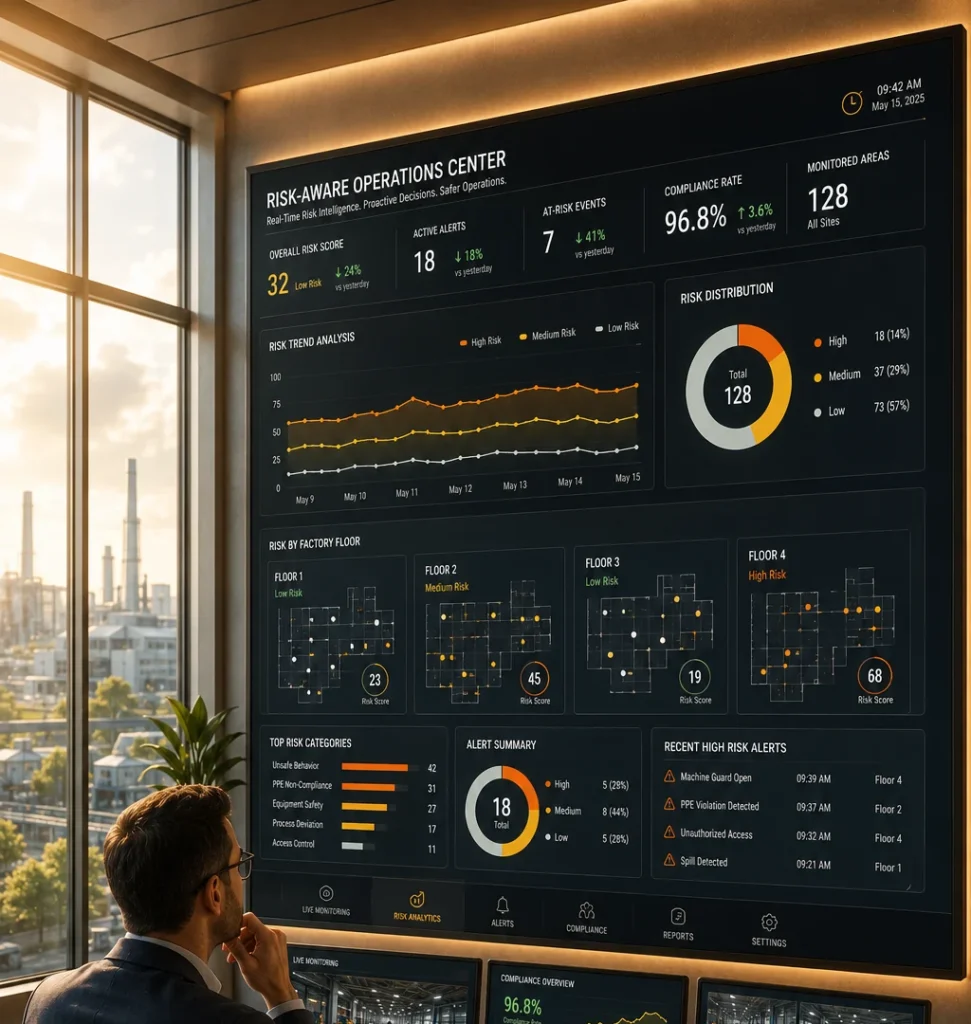
CAPASai helps organizations strengthen risk awareness through AI-powered video analytics and operational intelligence.
By analyzing workplace activities, compliance requirements, operational workflows, and process execution, CAPASai helps identify conditions that may require attention. Intelligent alerts, compliance monitoring, and operational insights enable organizations to detect patterns, improve process consistency, and maintain greater awareness of day-to-day operations.
Whether deployed in manufacturing plants, warehouses, pharmaceutical facilities, construction sites, retail operations, or logistics centers, CAPASai helps organizations build a more informed and proactive approach to risk management.
Creating A Culture That Recognizes Risks Early
Risk-aware organizations understand that operational excellence depends on more than responding effectively to problems. It necessitates identifying hazards before they have an impact on productivity, safety, compliance, or corporate performance.
Continuous monitoring provides the visibility needed to understand operational realities, identify emerging concerns, and support better decision-making across the enterprise. As organizations continue to prioritize resilience and operational reliability, continuous monitoring is becoming an essential component of modern risk management strategies.