National Aluminium Company Limited (NALCO) operates an integrated aluminium value chain covering bauxite mining, alumina refining, aluminium smelting, captive power generation, and related infrastructure. Such a diverse operating environment creates multiple points where safety procedures, equipment movement, worker behaviour, and process conditions need to be monitored consistently.
AI-based SOP analytics and video analytics can help NALCO add an intelligent monitoring layer to its existing safety and digital infrastructure. This is particularly relevant as NALCO has recently initiated the engagement of a consultant for preparing a roadmap and implementing digital transformation based on Industry 4.0.
Why NALCO Is Well Suited For AI-Based Visual Analytics
NALCO already uses several digital and safety-management practices. Its 2024–25 annual report identifies CCTV surveillance, traffic-management systems, digital safety reporting through the NALCO Surakhsha mobile application, safety audits, and audio-visual SOPs among its workplace safety initiatives.
Instead of relying only on employees or supervisors to identify unsafe conditions, computer vision can continuously analyse selected camera feeds and flag predefined events. The result is a shift from passive surveillance toward exception-based monitoring.
SOP Analytics Across The Aluminium Value Chain
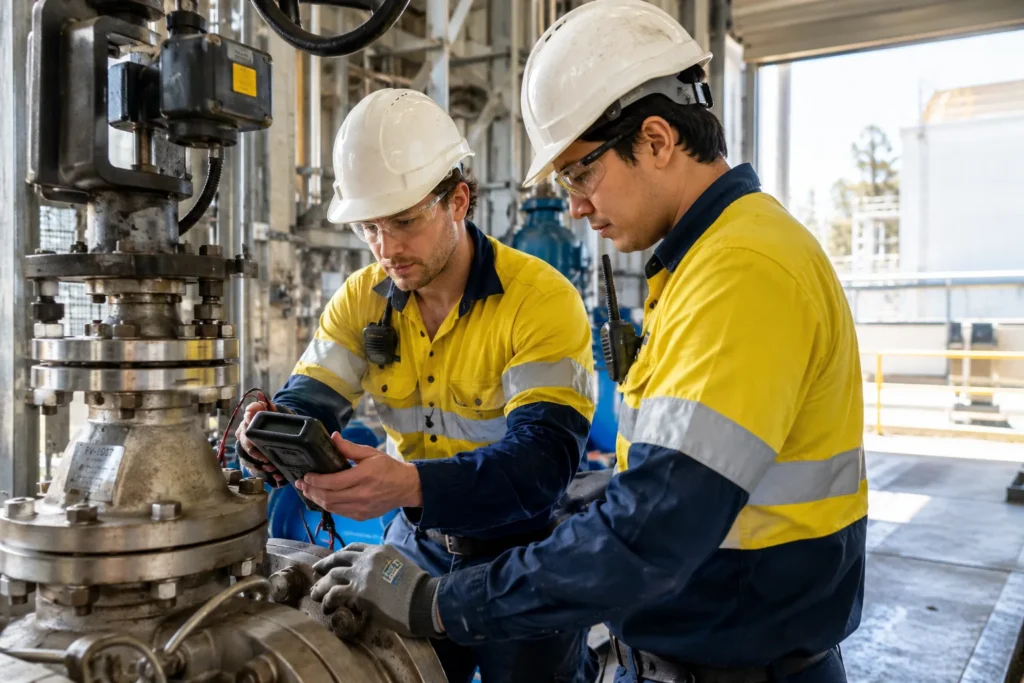
NALCO’s operations span different environments, so SOP analytics should be designed according to the risks associated with each location.
At bauxite mines, analytics can focus on heavy earth-moving machinery, haul roads, worker access, and restricted zones. At the alumina refinery and captive power plant, the emphasis can move toward equipment areas, maintenance activities, access controls, and process-related safety conditions. In the smelter, AI can support monitoring around high-temperature operations, material movement, PPE compliance, and designated exclusion zones.
The following applications illustrate how SOP analytics can be adapted:
NALCO Operation | Possible AI Monitoring | Potential Value |
Bauxite Mines | Worker-equipment proximity and haul-road activity | Support mine safety |
Alumina Refinery | Restricted access and PPE compliance | Strengthen process-area controls |
Smelter | PPE and exclusion-zone monitoring | Reduce exposure to hazards |
Captive Power Plant | Access and equipment-area observation | Improve safety visibility |
Material Handling | Person, vehicle and obstruction detection | Support safer movement |
Video Analytics For Real-Time Site Awareness
Video analytics can make NALCO’s CCTV infrastructure more responsive. An AI model can identify people, vehicles, objects, movement patterns, and other visual conditions and generate an alert when a defined rule is triggered.
Potential Detection Scenarios
- Helmet, safety vest, goggles, or other PPE compliance
- Person entering a restricted area
- Worker inside an equipment exclusion zone
- Vehicle movement in prohibited locations
- Unusual gathering around hazardous equipment
- Obstructions on defined access routes
- Unsafe positioning during selected operations
Using NALCO’s Digital Safety Practices As A Foundation
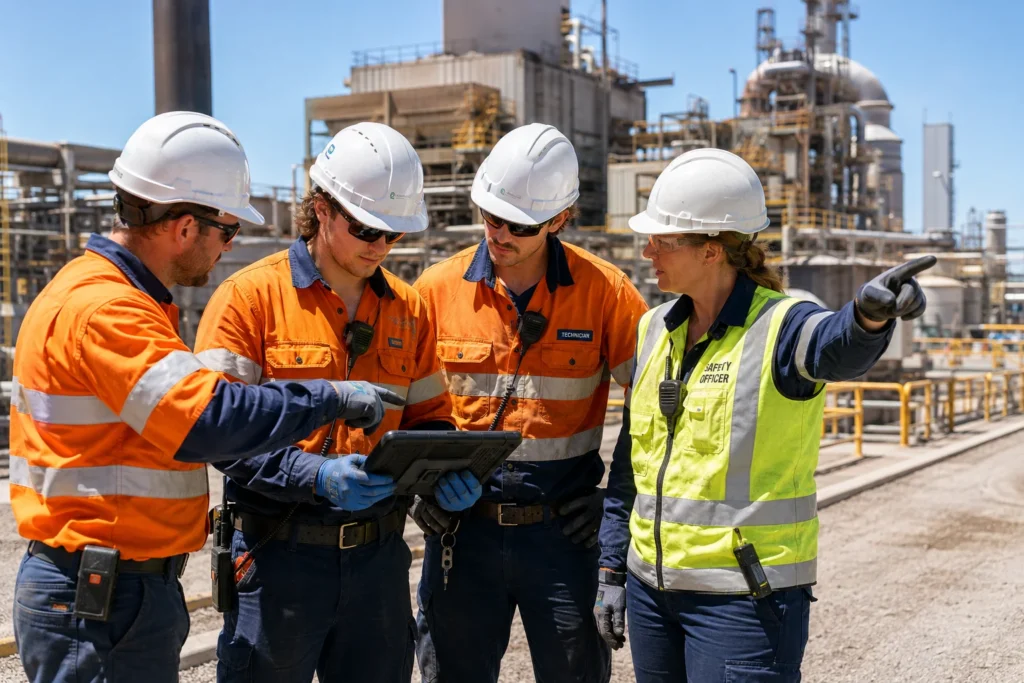
NALCO’s existing NALCO Surakhsha mobile application allows reporting of unsafe acts, near misses, fire hazards, and first-aid cases. Its annual report also notes monthly safety performance reviews, departmental rankings at the smelter, safety audits, surprise safety walks, and accident-prevention planning. AI analytics can complement these practices rather than create a parallel safety system.
Linking Video With Process And Equipment Data
Video analytics does not have to work alone. Its usefulness can increase when visual events are correlated with other plant information.
A possible architecture could connect:
- CCTV and IP cameras
- Access-control systems
- Equipment status
- PLC and SCADA data
- Maintenance systems
- Safety applications
- Sensor information
- Central dashboards
From Individual Alerts To Risk Patterns
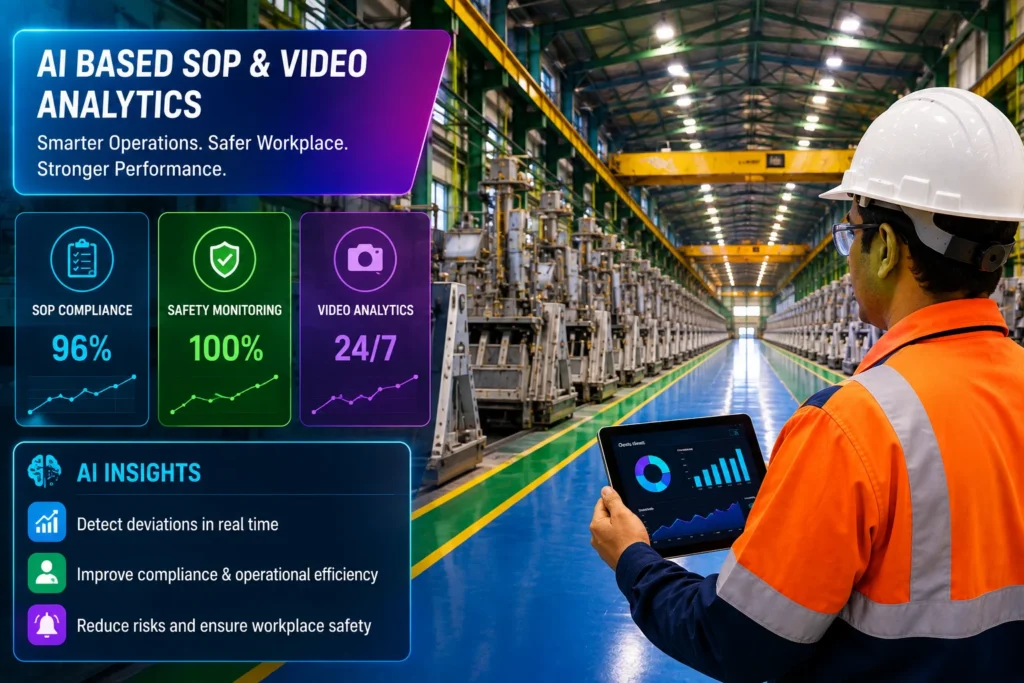
The real value of SOP analytics emerges when NALCO can analyse events over time. Suppose a particular work area produces repeated PPE violations. Instead of simply recording each violation, management can examine whether the cause is inadequate signage, PPE availability, work design, training, supervision, or another factor. Similarly, repeated vehicle-proximity alerts at a particular route could indicate a need to reconsider traffic flow, barriers, signage, or operating procedures.
A Phased Implementation Strategy
NALCO’s current Industry 4.0 roadmap provides a natural opportunity to assess where AI-based SOP and video analytics can deliver measurable value.
A practical rollout could begin with a few high-risk locations rather than attempting organisation-wide deployment immediately.
Step 1: Select Critical SOPs
Identify procedures where deviations can be clearly observed through cameras.
Step 2: Assess Infrastructure
Review camera coverage, network capacity, lighting, computing requirements, cybersecurity, and data-retention needs.
Step 3: Pilot And Validate
Test models using actual NALCO operating conditions. Industrial environments can involve glare, dust, smoke, heat, changing illumination, and obstructed views.
Step 4: Integrate With Safety Workflows
Connect verified alerts to supervisors, control rooms, incident-management systems, and existing safety applications.
Step 5: Scale Based On Results
Expand only those applications that demonstrate reliable detection and measurable operational or safety value.
How NALCO Can Measure Success
The success of AI analytics should be assessed through outcomes rather than the number of cameras or alerts generated.
Useful KPIs could include:
- Reduction in recurring SOP deviations
- Safety-alert response time
- False-positive rate
- Restricted-area violations
- Near-miss identification and closure
- Incident investigation time
- Corrective-action completion time
- Manual surveillance effort
Frequently Asked Questions
It is an AI-enabled approach that checks selected observable activities against predefined safety and operating procedures and identifies potential deviations.
It can continuously monitor selected areas for PPE violations, restricted access, unsafe worker-equipment proximity, vehicle movement, and other predefined safety conditions.
Potentially. Existing cameras may be suitable where resolution, positioning, lighting, connectivity, and field of view meet the requirements of the selected AI application. Some areas may need upgraded equipment.
Yes. The same underlying technology can support different use cases across bauxite mines, refineries, smelters, captive power facilities, and material-handling areas, although each location requires site-specific rules and model validation.