The Changing Role of CCTV in Modern Enterprises
For decades, CCTV systems have been a standard part of business operations across manufacturing facilities, retail chains, pharmaceutical plants, hospitals, warehouses, banks, and transportation hubs. Traditionally, these systems were deployed primarily for surveillance and incident recording, with DVRs storing footage that could be reviewed after an event occurred.
Today, enterprise priorities have evolved. Organizations are under increasing pressure to improve operational efficiency, strengthen compliance, enhance workplace safety, and reduce risks across multiple locations. As a result, businesses are looking beyond simple video recording and adopting technologies that can transform CCTV footage into actionable operational intelligence.
This shift is accelerating the adoption of AI-powered video analytics across industries.
Why Traditional DVR-Based Monitoring Is No Longer Enough
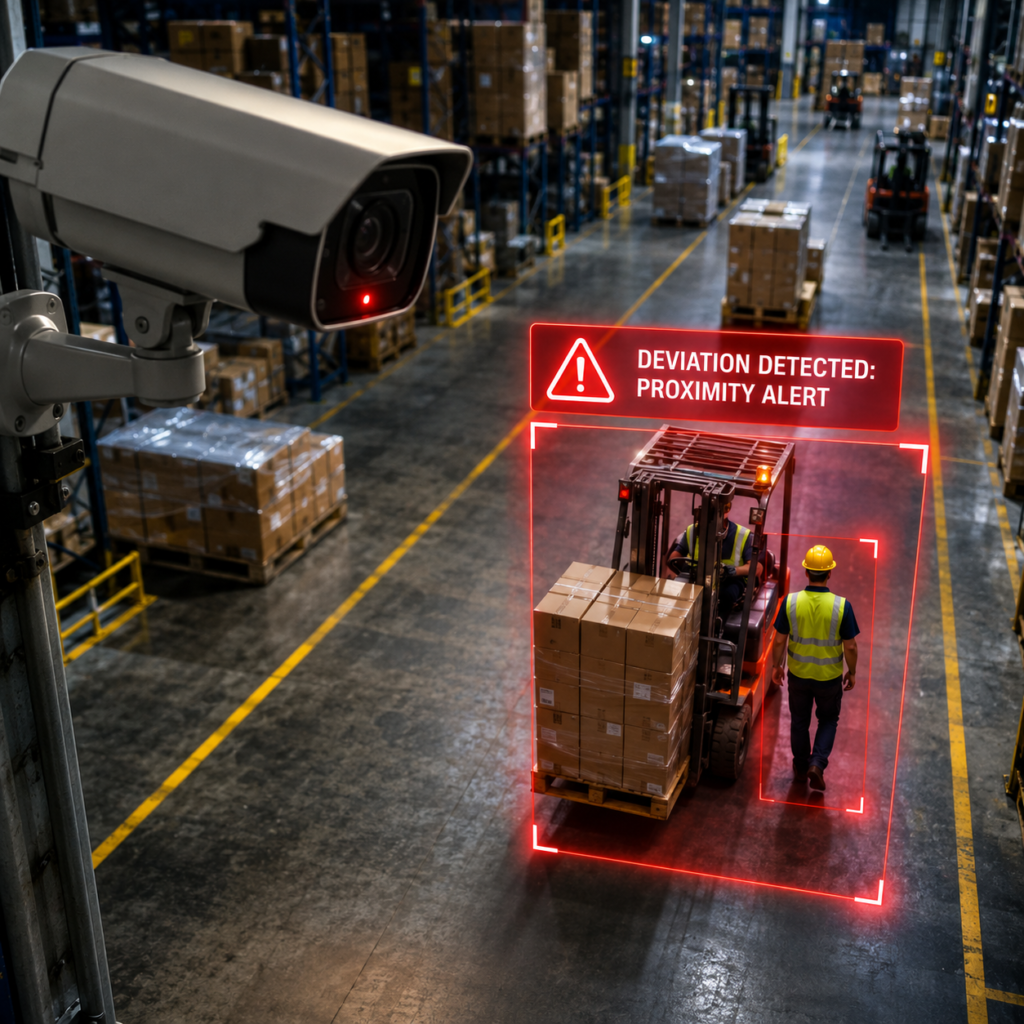
While DVR systems provide reliable video storage, they often offer limited value when organizations need immediate visibility into ongoing operations.
Common challenges include:
- Time-consuming manual footage reviews
- Delayed incident investigations
- Reactive rather than proactive monitoring
- Difficulty identifying operational deviations
- Limited compliance visibility
- Missed safety violations
- Inconsistent monitoring across multiple sites
- Growing workloads for security and operations teams
In many cases, important events are only discovered after significant time has passed, reducing opportunities for immediate corrective action.
How CAPASai Helps Organizations Modernize CCTV Monitoring
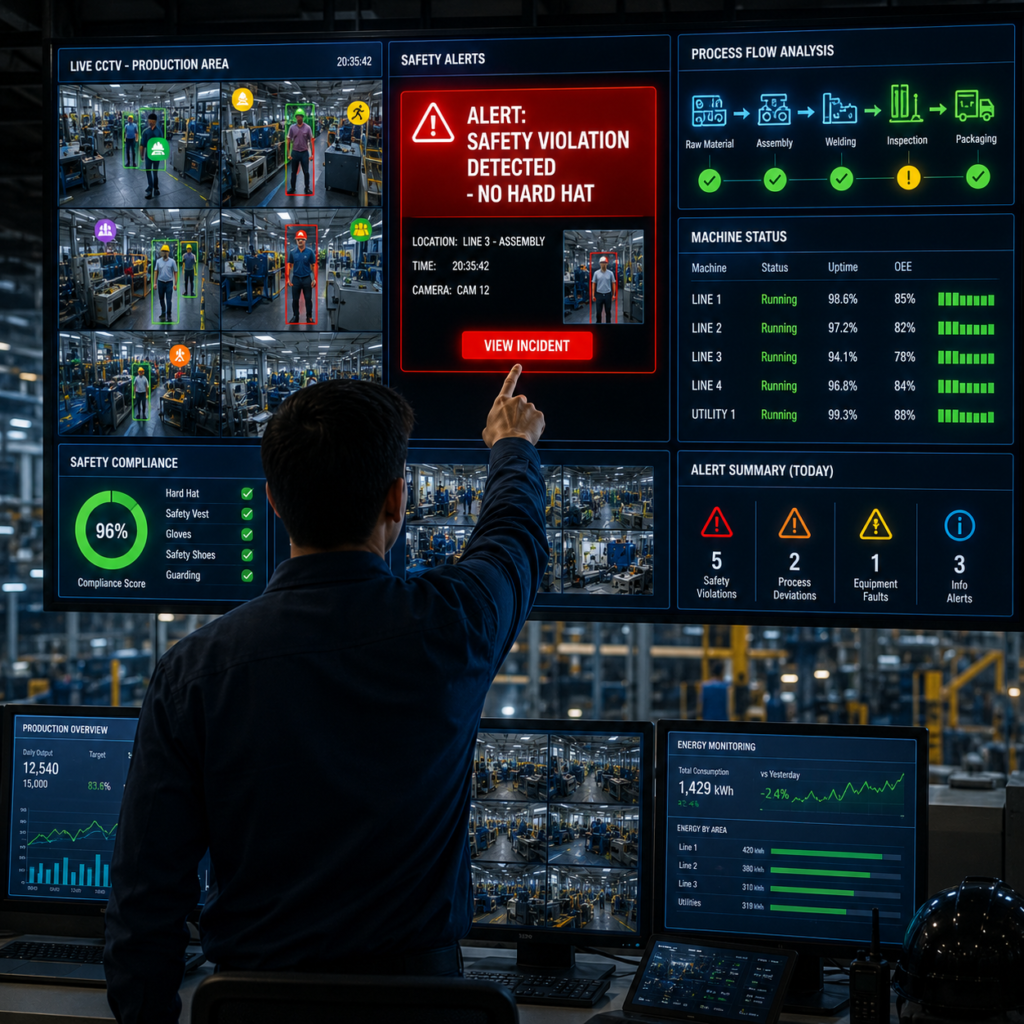
CAPASai enables organizations to move from passive video recording to intelligent operational monitoring through AI-powered video analytics, remote monitoring, and real-time alerts.
Instead of storing footage for later review, CAPASai continuously analyzes live video streams to detect operational issues, safety concerns, compliance violations, and security incidents as they happen.
CAPASai helps enterprises:
- Detect incidents in real time
- Improve operational visibility
- Strengthen compliance programs
- Support CAPA initiatives
- Reduce manual monitoring
- Accelerate investigations
- Monitor multiple facilities centrally
The platform supports retail chains, quick service restaurants, pharmaceutical manufacturing, manufacturing plants, healthcare facilities, banking & BFSI, transportation, logistics, hospitality, education, agriculture, dairy processing, meat processing, utilities, smart cities, and e-commerce fulfillment centers.
How AI Video Analytics Changes the Value of CCTV
The biggest difference between DVR recording and AI video analytics is the ability to generate insights rather than simply store footage.
Key Differences
Function | DVR Recording | AI Video Analytics |
Purpose | Store footage | Analyze activity |
Monitoring Style | Reactive | Proactive |
Event Detection | Manual review | Automated detection |
Alerts | Typically unavailable | Real-time notifications |
Compliance Monitoring | Limited | Continuous visibility |
Investigation Speed | Slow | Faster event retrieval |
AI video analytics transforms CCTV from a recording system into a decision-support tool.
Industry Applications
Manufacturing Plants
Monitor production activities, safety procedures, equipment usage, and process compliance.
Pharmaceutical Facilities
Support GMP compliance, hygiene monitoring, process verification, and deviation investigations.
Retail Chains & Quick Service Restaurants
Improve store visibility, employee accountability, customer service monitoring, and loss prevention.
Healthcare & Hospitals
Monitor patient safety areas, restricted zones, and operational workflows.
Banking & BFSI
Enhance branch oversight, operational monitoring, and incident investigations.
Logistics & Warehousing
Track warehouse operations, loading activities, inventory movement, and workplace safety.
Traditional DVR Monitoring vs Intelligent Video Analytics
Organizations are increasingly recognizing that storing video alone is no longer sufficient.
Traditional DVR Approach | AI Analytics Approach |
Records events | Detects events |
Requires manual review | Generates automatic alerts |
Supports reactive investigations | Enables proactive action |
Limited operational intelligence | Continuous insights |
Site-specific visibility | Multi-site visibility |
Historical evidence only | Real-time operational awareness |
This evolution helps businesses respond faster and manage operations more effectively.
Why Enterprises Are Investing in AI Video Analytics
As organizations expand, leaders need technologies that improve visibility without increasing operational complexity.
AI-powered video analytics helps enterprises:
- Improve workplace safety
- Strengthen compliance monitoring
- Enhance operational consistency
- Reduce investigation times
- Support audit readiness
- Improve risk management
- Enable faster decision-making
Businesses increasingly view AI video analytics as a strategic tool for operational excellence rather than simply a security enhancement.
FAQ
Frequently Asked Questions
AI video analytics uses artificial intelligence to automatically analyze CCTV footage and identify predefined events, behaviors, or operational conditions.
Organizations need faster detection of incidents, greater operational visibility, and proactive monitoring capabilities that traditional DVR systems cannot provide.
No. Most organizations continue storing video footage while adding AI analytics to gain real-time intelligence and automated alerts.
Manufacturing, pharmaceuticals, retail, healthcare, banking, logistics, hospitality, transportation, education, utilities, and infrastructure operations can all benefit.
AI systems can continuously monitor operations, identify deviations from procedures, generate alerts, and provide evidence that supports compliance and CAPA activities.