AI video analytics for public works departments can support safety monitoring, SOP compliance, and security across infrastructure projects and government facilities. AI-powered video analytics helps identify safety violations, monitor restricted areas, and improve operational visibility using CCTV infrastructure. .Roads, bridges, government buildings, drainage systems, public facilities, and other assets may involve contractors, workers, vehicles, equipment, and members of the public at the same location.
This creates a practical need for better field visibility. AI-based SOP analytics and video analytics can help PWDs monitor selected safety and operational conditions, particularly at sites where supervisors cannot continuously observe every activity.
The PWD Challenge Is Not Just Construction
A public works project can change considerably from one day to another. A road may move from normal traffic to partial closure, a bridge may enter a repair phase, or a building site may shift from structural work to finishing activities.
Consequently, the AI system should be capable of monitoring changing conditions rather than applying one fixed rule everywhere.
PWDs can consider analytics for:
- Road and bridge work zones
- Government construction projects
- Maintenance activities
- Heavy-equipment areas
- Public-facing facilities
- Traffic diversions
- Material storage areas
- Contractor work sites
Using SOP Analytics To Strengthen Contractor Compliance
Many PWD projects involve contractors and subcontractors working according to defined safety and work procedures. Maintaining consistent compliance across multiple sites can be difficult through periodic inspections alone.
AI-based SOP analytics can provide additional visibility into selected requirements.
Worksite Requirement | Potential AI Detection | Possible Response |
PPE compliance | Missing visible protective equipment | Supervisor notification |
Work-zone boundary | Worker outside designated area | Safety alert |
Equipment operation | Person near active machinery | Intervention |
Traffic diversion | Vehicle entering restricted section | Traffic review |
Site access | Unauthorised entry | Security alert |
Emergency route | Obstruction detected | Site inspection |
Where Video Analytics Can Deliver Immediate Value
Road And Bridge Maintenance
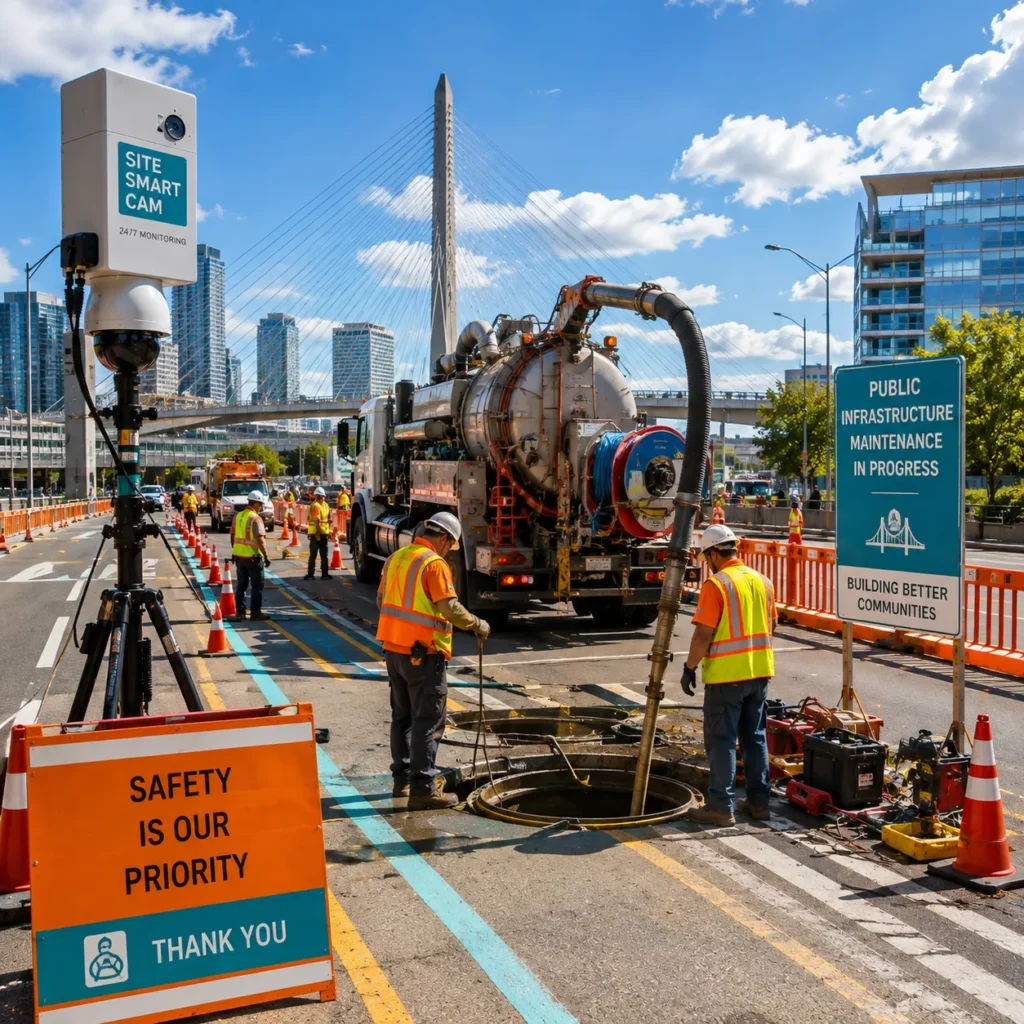
Road repair, resurfacing, bridge maintenance, and similar activities often take place alongside public traffic. Video analytics can monitor work zones for vehicles, workers, congestion, and predefined access conditions.
Government Construction Sites
At building and infrastructure projects, AI can monitor PPE, restricted areas, equipment movement, and selected housekeeping conditions.
Public Facilities
Hospitals, administrative buildings, transport facilities, and other government properties can use video analytics for access monitoring, crowd conditions, unusual movement, and selected safety requirements.
Drainage And Utility Work
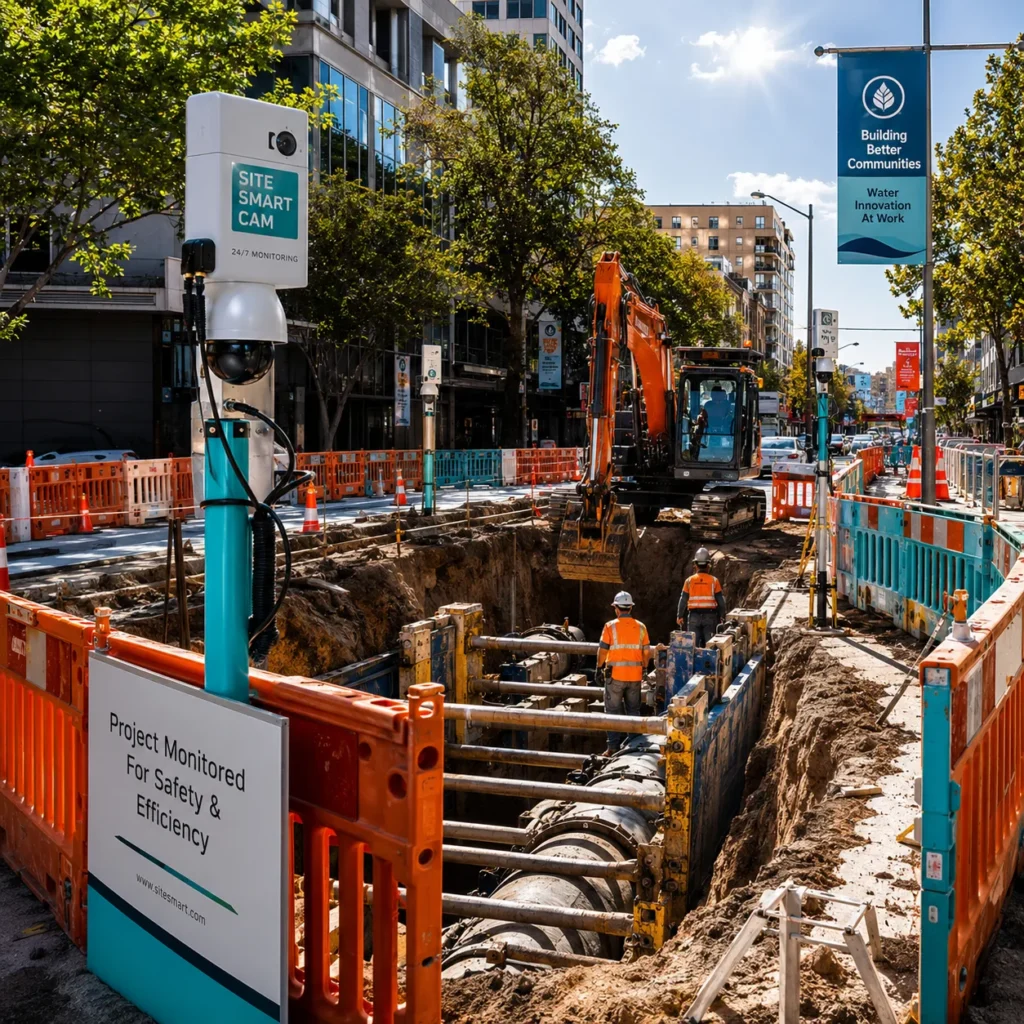
Excavation and utility maintenance can create temporary hazards for both workers and the public. AI can monitor designated excavation areas and identify people or vehicles entering controlled zones.
AI Can Help Connect Site Plans With Reality
One useful application is comparing planned work conditions with what is actually happening at the site.
Suppose a contractor has established a temporary work zone with defined boundaries. Video analytics can monitor whether workers and equipment remain within those boundaries.
Similarly, a planned traffic diversion can be associated with cameras covering the affected section. Unexpected vehicle movement into the restricted area can then be highlighted for review.
This creates a stronger connection between project planning, site supervision, and actual field conditions.
Supporting Public Safety Around Construction
PWD projects are unusual because construction activity often occurs around people who are not part of the project team.
Pedestrians may approach a construction area, vehicles may enter temporary routes, and members of the public may inadvertently cross a work zone.
Video analytics can provide an additional layer of monitoring for:
- Pedestrian entry into restricted areas
- Vehicle movement near workers
- Crowding around temporary facilities
- Obstructions on public pathways
- Unauthorised access
- Unsafe interaction with construction equipment
Using AI For Better Inspection Planning
AI analytics can also help PWDs decide where human attention is needed most.
If one project repeatedly produces safety deviations while another shows consistently low levels of detected non-compliance, inspection resources can be prioritised accordingly.
Repeated events can also reveal broader problems. A pattern of workers entering the same restricted area may indicate poor site layout rather than simply poor discipline. Frequent vehicle conflicts may suggest that traffic arrangements need to be redesigned.
This makes AI-generated data useful for management reviews and corrective planning.
Connecting Video With PWD Systems
A video analytics platform can provide more meaningful information when connected with other digital systems used for public works.
Potential integrations include:
- Project-management systems
- Contractor records
- Traffic-management systems
- Access-control platforms
- Equipment information
- Maintenance schedules
- Complaint-management systems
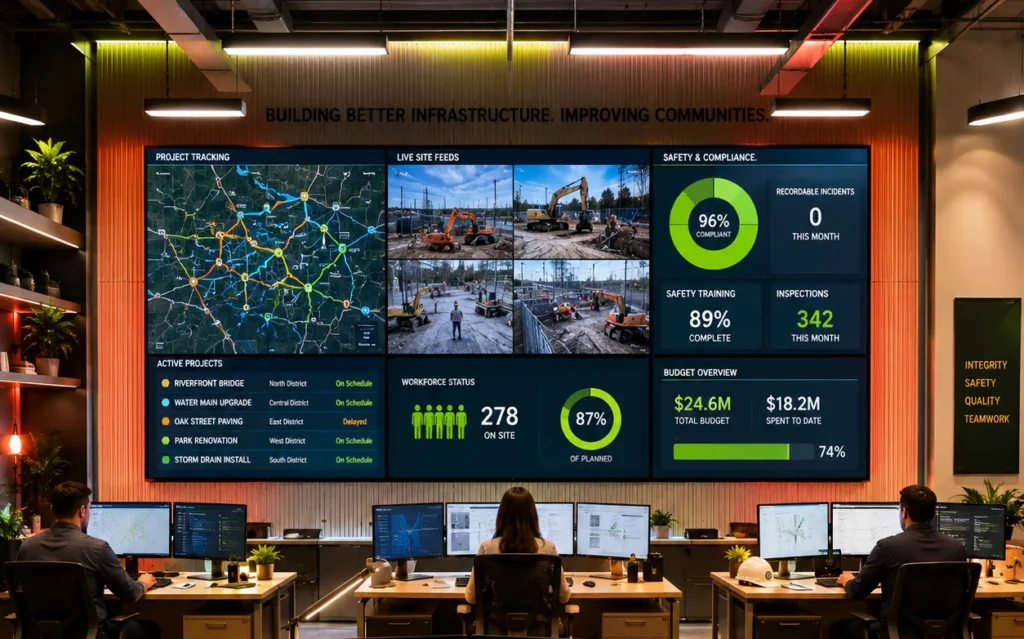
- Central monitoring dashboards
What PWDs Should Check Before Deployment
AI performance depends heavily on the quality and placement of cameras. Construction sites can involve dust, changing lighting, temporary structures, large vehicles, rain, glare, and frequent changes to the work environment.
Before deployment, PWDs should evaluate:
- Camera positioning
- Image quality
- Network connectivity
- Night-time visibility
- Changing site layouts
- False-alert rates
- Data-storage requirements
- Cybersecurity
- Responsibility for responding to alerts
Measuring The Practical Outcome
PWDs can judge the value of AI analytics using indicators linked to actual project performance.
Useful measures include:
- Reduction in recurring safety deviations
- PPE compliance
- Work-zone violations
- Worker-vehicle proximity events
- Incident detection time
- Response time to alerts
- Contractor corrective-action closure
- False-positive percentage
- Time spent reviewing CCTV footage
Frequently Asked Questions
Yes, but the monitoring rules should be adapted to the type of project. Road works, bridges, buildings, drainage projects, and public facilities have different safety requirements.
It can provide continuous monitoring of selected safety conditions and generate objective information that can support inspections, contractor reviews, and corrective actions.
Yes. Suitable video analytics can monitor work-zone boundaries, worker presence, vehicle movement, and selected traffic-related conditions, subject to camera coverage and model validation.
It can help identify pedestrians or vehicles entering restricted areas and detect selected unsafe interactions. It should complement barriers, signage, traffic controls, and on-site supervision.
No. AI should provide additional visibility and prioritise events for review. Engineers, supervisors, and safety personnel should continue to assess site conditions and decide on corrective action.