Lucknow Metro Rail Corporation (LMRC) operates an urban rail system where passenger movement, station management, train operations, maintenance, security, and infrastructure work have to remain coordinated. In such an environment, CCTV can do more than preserve recordings. With AI-based video analytics, selected visual events can be identified automatically and presented to the teams responsible for safety, operations, maintenance, or security.
For LMRC, the strongest opportunity is not to automate metro decisions. It is to make specific safety and procedural requirements continuously observable across stations, depots, maintenance areas, and project sites.
Turning Maintenance SOPs Into Visual Checks
Metro maintenance covers rolling stock, electrical systems, civil assets, signalling, communications, and station facilities. Some associated safety procedures contain requirements that can be monitored visually.
AI-based SOP analytics can support:
- Required visible PPE
- Entry into controlled maintenance areas
- Personnel-equipment proximity
- Defined work-zone boundaries
- Vehicle-person interaction
- Obstructed access routes
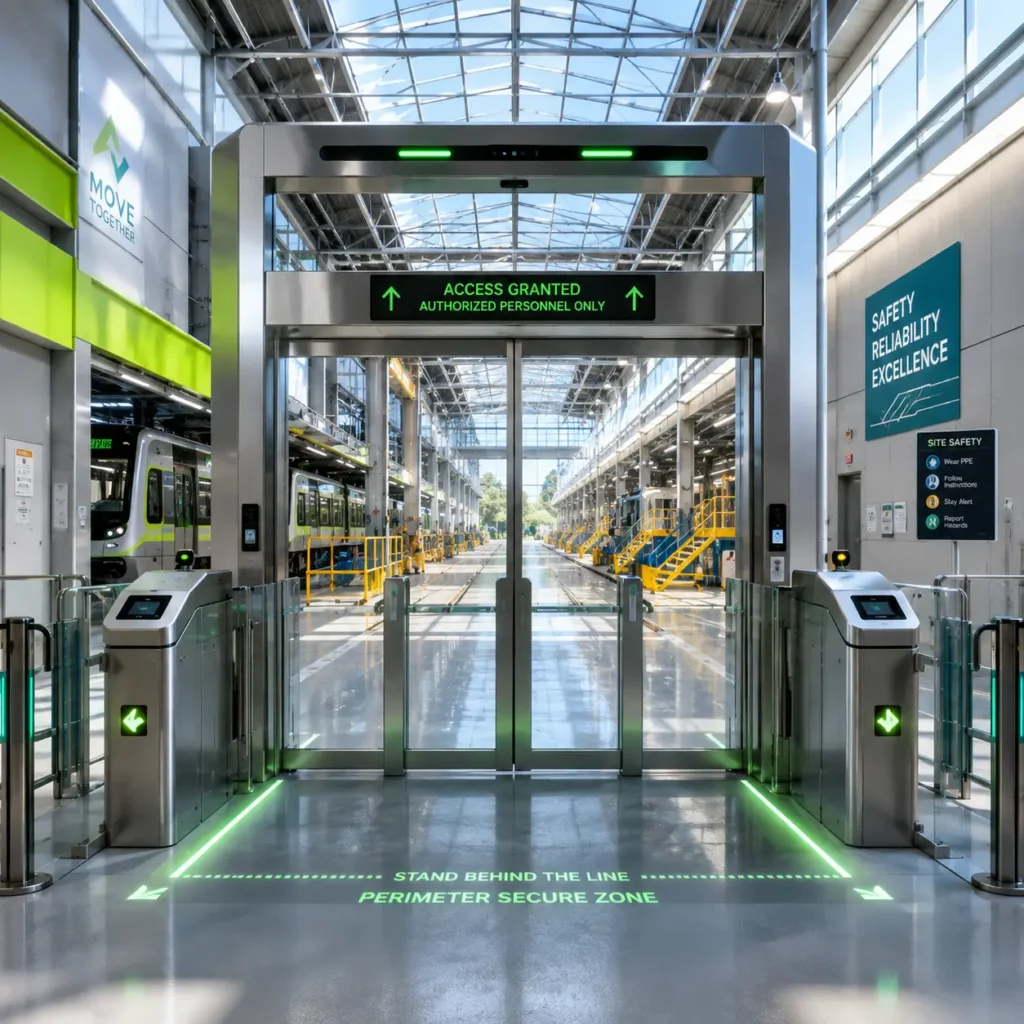
For example, where an SOP requires an exclusion zone around operating equipment, computer vision can detect personnel entering that area and notify the responsible supervisor.
AI should monitor observable requirements, not judge whether specialised engineering work has been technically completed.
Passenger Safety Through Exception Detection
Most activity captured by station cameras is routine. The challenge is identifying the relatively small number of situations that may need intervention.
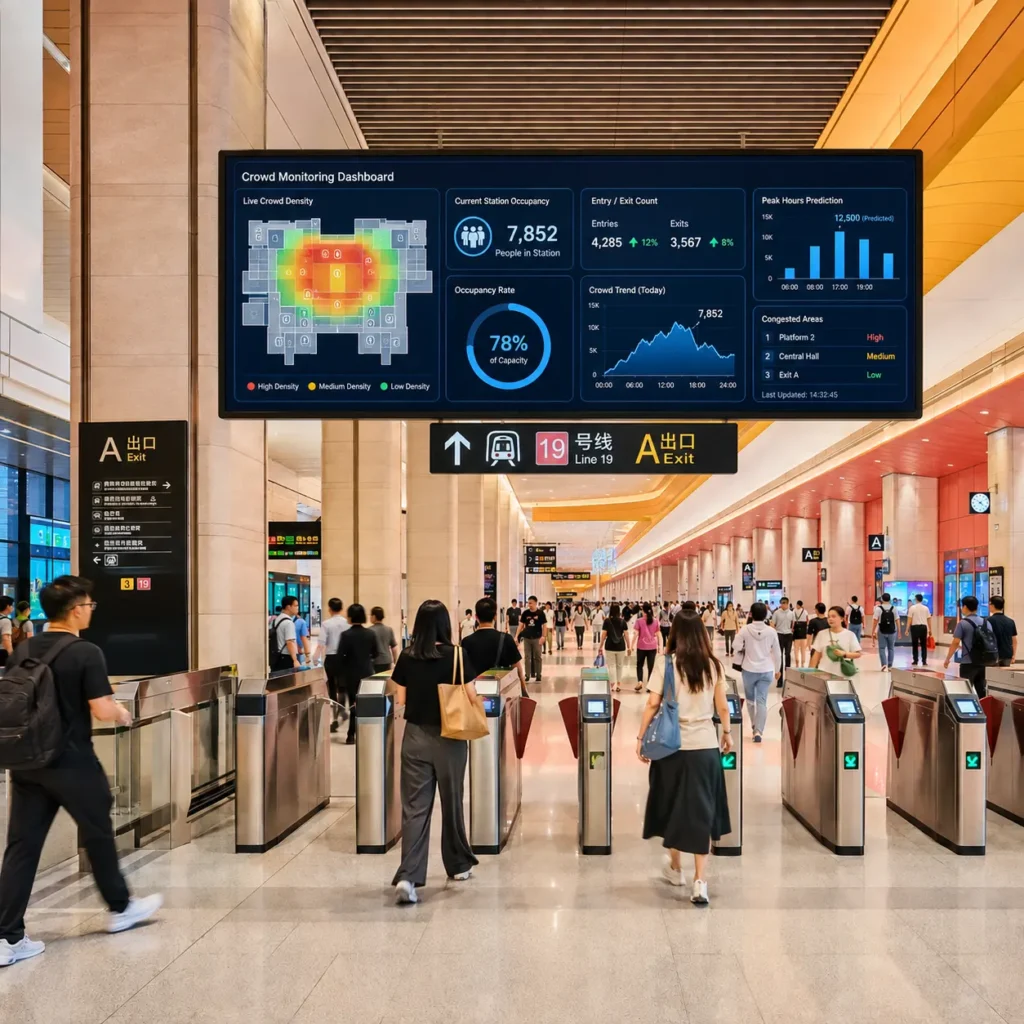
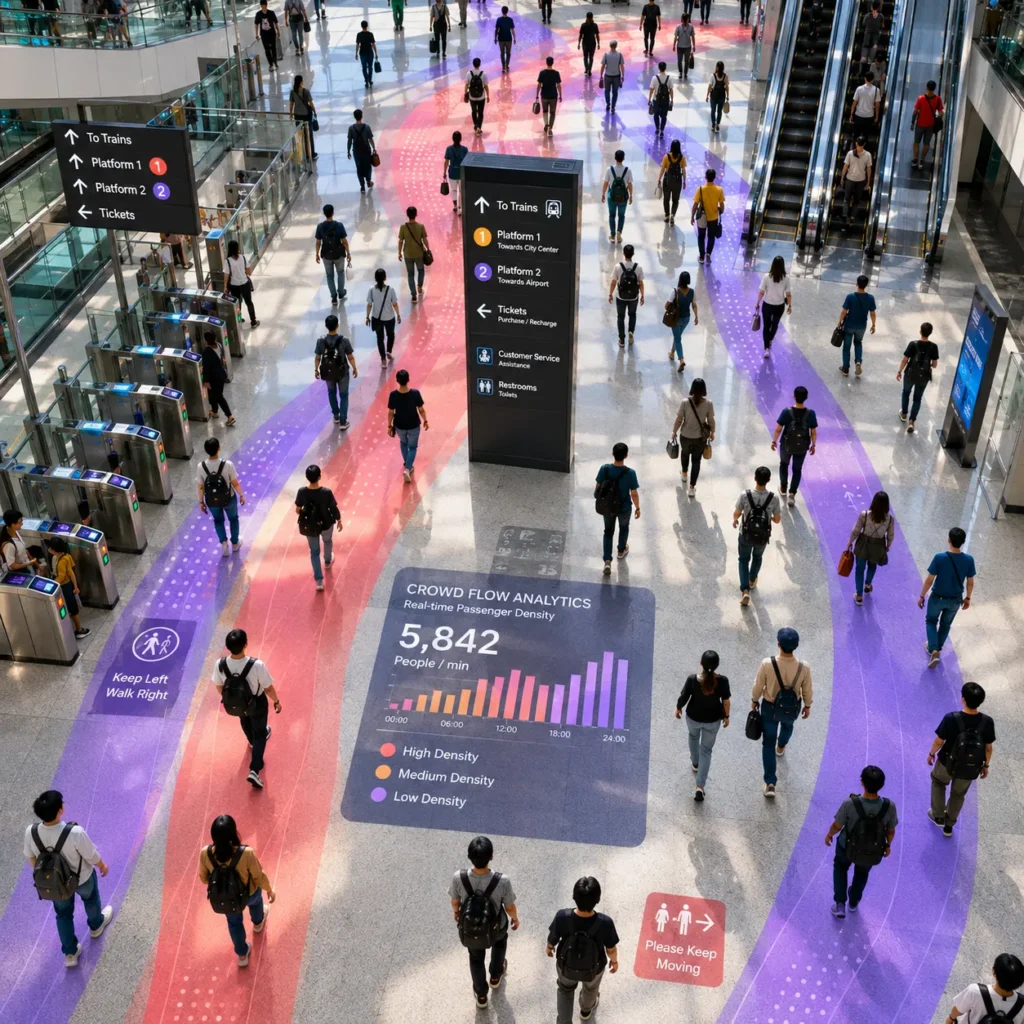
Video analytics can monitor selected areas for unusual crowd concentration, entry into restricted sections, unattended objects, or movement in locations that should remain clear. During peak periods, service disruptions, or special events, such alerts can direct station personnel towards specific locations instead of requiring continuous manual observation of every feed.
Where AI Can Add Value
LMRC can prioritise analytics according to location and risk:
- Stations: crowd and restricted-area monitoring
- Platforms: unusual movement and object detection
- Depots: PPE and equipment-zone monitoring
- Construction sites: worker and work-zone monitoring
- Restricted facilities: access and unusual-activity detection
This targeted approach avoids applying identical rules throughout the network and focuses AI on conditions that have a defined response.
Depots As A Controlled Starting Point
Depots can provide a practical environment for piloting AI because train movements, maintenance activities, vehicles, equipment, and personnel generally operate within defined spaces.
LMRC could initially evaluate worker-equipment proximity, PPE compliance, restricted maintenance zones, vehicle movement, and selected housekeeping conditions
Monitoring Construction And Infrastructure Work
Metro projects introduce changing environments involving contractors, excavation, heavy machinery, elevated structures, temporary barriers, materials, and changing access routes.
Video analytics can support selected construction requirements such as:
- PPE monitoring
- Worker entry into restricted zones
- Personnel near heavy machinery
- Vehicle movement
- Temporary work-zone access
- Obstruction detection
Because construction layouts change, camera positions and detection rules should be reviewed as work progresses.
Context Can Improve Alert Prioritisation
A video detection does not automatically indicate a violation. A person inside a restricted area may be an authorised technician, while a vehicle inside a controlled zone may be performing approved work.
LMRC could potentially connect video events with access permissions, work permits, maintenance schedules, equipment status, depot activities, station conditions, and emergency information.
For instance, an entry detected inside a maintenance zone can be checked against an active work permit. This context can help distinguish expected activity from events requiring investigation and reduce unnecessary alerts.
From Incident Detection To Incident Learning
Video analytics can also improve incident investigation. After a passenger, security, maintenance, or construction event, authorised personnel may need to examine recordings from multiple cameras.
AI-assisted search can help locate relevant footage using time, location, movement, or predefined event characteristics. This can reduce investigation effort and help establish the sequence surrounding an event.
Comparing incidents over time can also reveal recurring worker-access, PPE, or passenger-flow problems that deserve preventive action.
Security And Deployment Considerations
Metro video systems contain operational and passenger-related information. AI deployment should include role-based access, secure networks, controlled data retention, audit trails, cybersecurity testing, privacy safeguards, and human verification of significant alerts.
Models should also be tested under crowded stations, low lighting, camera obstruction, weather changes, and evolving construction layouts.
Measuring The Operational Benefit
The programme should be evaluated through measurable outcomes rather than the number of cameras connected.
Relevant indicators include:
- Recurring SOP deviations
- PPE compliance
- Restricted-area events
- Worker-equipment proximity incidents
- Passenger-safety alerts
- Alert response time
- False-positive rate
- Incident investigation time
- Contractor corrective-action closure
For Lucknow Metro Rail Corporation, AI-based SOP analytics and video analytics can complement existing safety, security, maintenance, and operational practices. A targeted, context-aware deployment can improve visibility across stations, depots, and work sites while keeping trained personnel responsible for interpreting alerts and making final decisions.
Frequently Asked Questions
Yes. Depots are suitable for monitoring PPE, restricted maintenance areas, worker-equipment proximity, vehicle movement, and other clearly defined safety conditions
It can identify predefined crowding conditions, restricted-area entry, unattended objects, and other situations requiring assessment by authorised station personnel.
Yes. It can support PPE detection, work-zone monitoring, worker-equipment proximity, vehicle movement, and restricted-area access.
Potentially. Linking video events with work permits, access permissions, maintenance schedules, and equipment status can provide context and improve alert prioritisation.
No. AI should provide additional monitoring and decision support. Safety, security, maintenance, and operations teams should verify important events and make final decisions