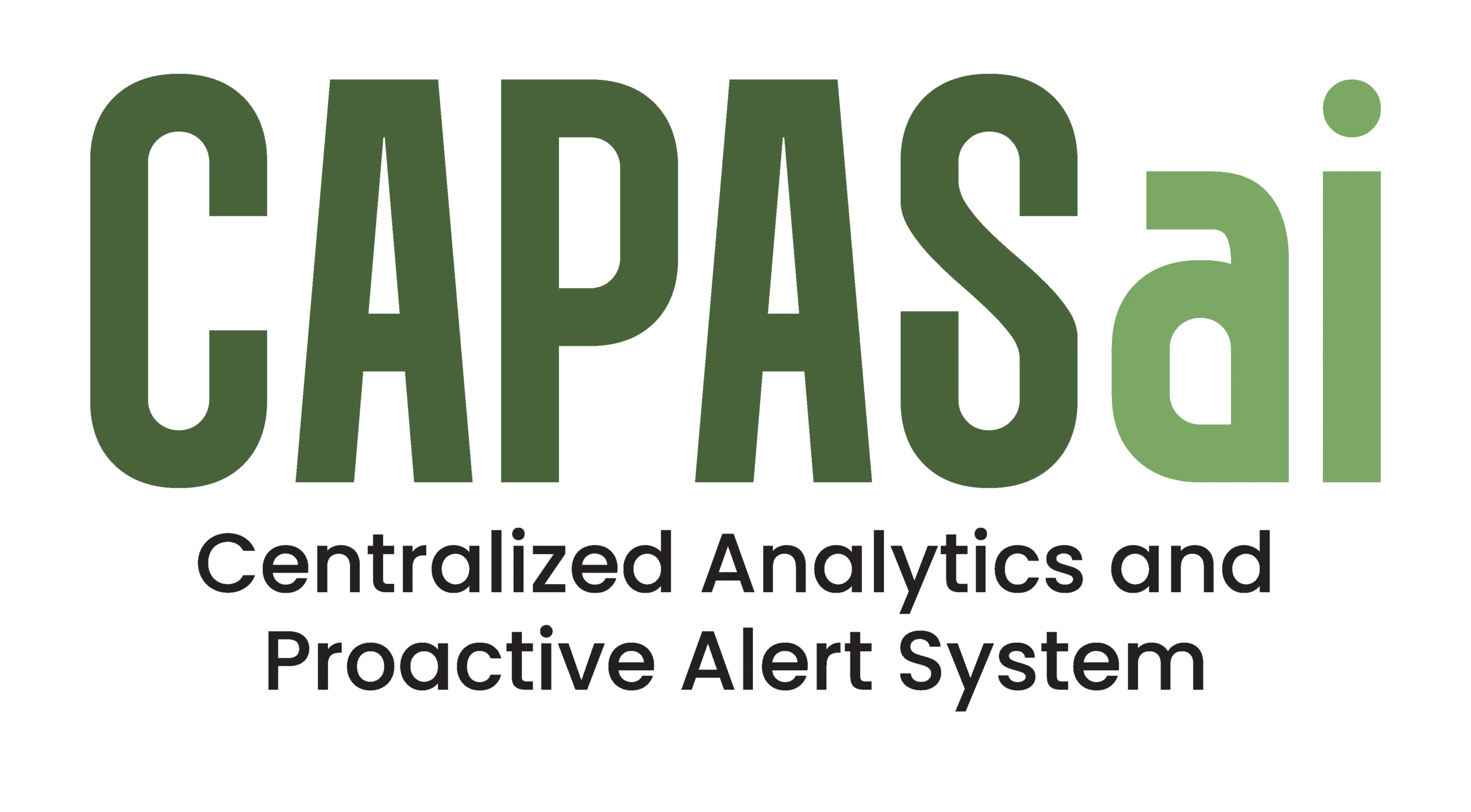
In Kochi, municipal operations often have to work around a city shaped by waterways, dense urban neighbourhoods, commercial areas, transport corridors, and intense monsoon conditions. A drain can become a public concern after heavy rainfall, waste accumulation can quickly affect a busy locality, and a delayed field response can lead to repeated citizen complaints. For Kochi Municipal Corporation, the opportunity with AI is to identify these operational patterns earlier and connect field activity with measurable service outcomes.
The Opportunity Is In Connecting Existing Information
Kochi Municipal Corporation already operates through a growing digital service environment, including citizen reporting, waste-management monitoring, septage services, and online civic services. AI can add value by analysing information generated through these processes rather than creating an entirely separate layer of administration.
AI based SOP analytics can examine work orders, inspection records, service requests, collection records, corrective actions, and completion data against defined procedures.
Instead of asking only whether a task was completed, analytics can investigate:
- How long did the process take?
- Where did exceptions occur?
- Which issues required repeated intervention?
- Which corrective actions remained unresolved?
- Are similar problems recurring in particular operational areas?
This provides management with a stronger basis for deciding where process changes are needed.
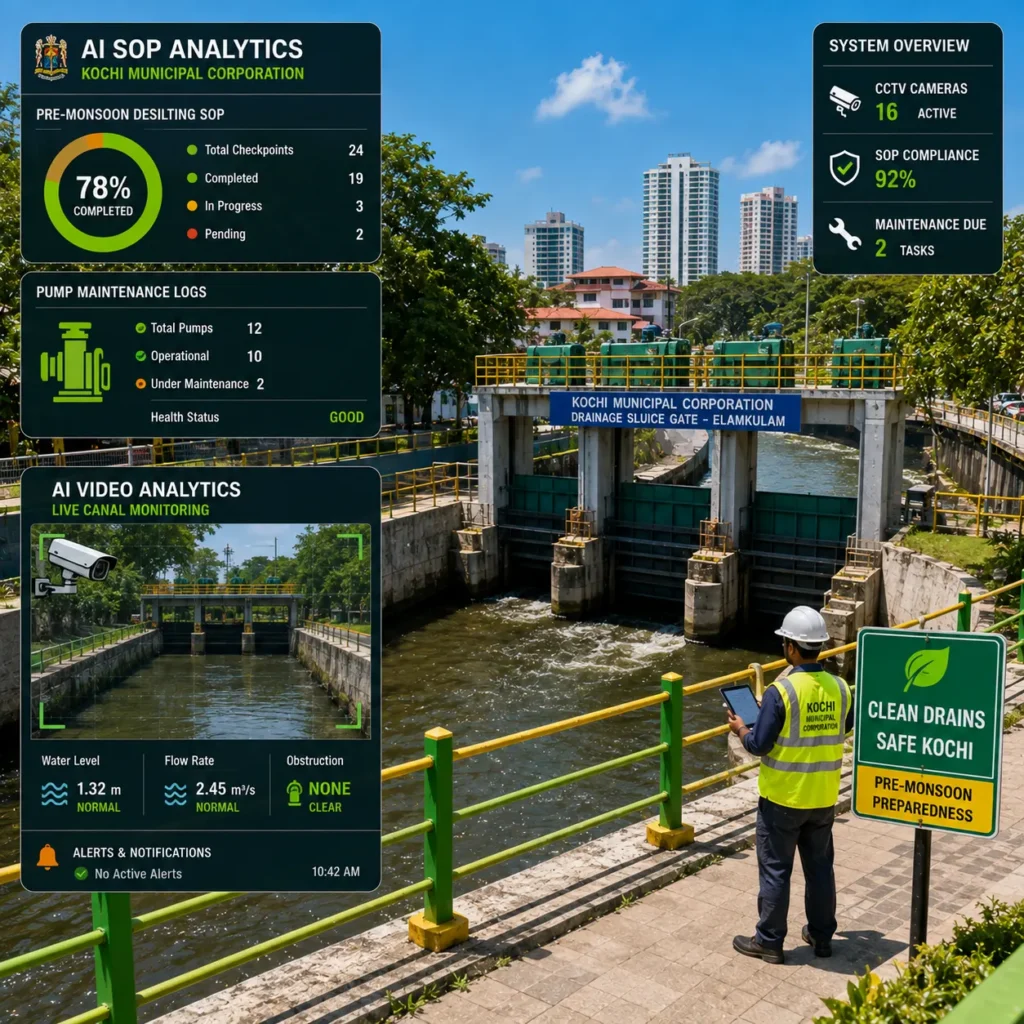
Making Citizen Complaints More Actionable
A complaint is often the visible end of a longer operational problem. If residents repeatedly report waste accumulation, drainage concerns, or sanitation issues from the same locality, simply closing each complaint may not address the underlying cause.
SOP analytics can examine the journey from complaint registration to assignment, inspection, field action, escalation, and closure. It can identify stages where delays repeatedly occur.
For example, a recurring waste-related complaint might reflect a collection scheduling issue, vehicle availability, route constraints, or incomplete field verification. The analytical value comes from identifying the pattern rather than treating every complaint as an independent case.
Linking Recurrence With Corrective Action
Analytics can also compare complaints before and after an intervention. If the same category of issue continues after corrective action, the Corporation has evidence that the original response may not have addressed the underlying cause.
This creates a stronger foundation for operational review.
Video Analytics For Kochi's Physical Environment
Video analytics can address a different question: what is actually happening at a monitored location?
Suitable camera feeds around municipal facilities, roads, waste-handling locations, public spaces, drainage-related areas, or controlled premises can potentially be analysed for predefined visual events.
Possible applications include detecting:
- Waste accumulation at designated locations.
- Unauthorised access to restricted municipal premises.
- Obstructions around selected operational areas.
- Pedestrian or vehicle activity in defined risk zones.
- Unusual activity requiring field verification.
The objective is not to replace field officers. Instead, video analytics can reduce the amount of routine visual monitoring required and help teams prioritise locations that need attention
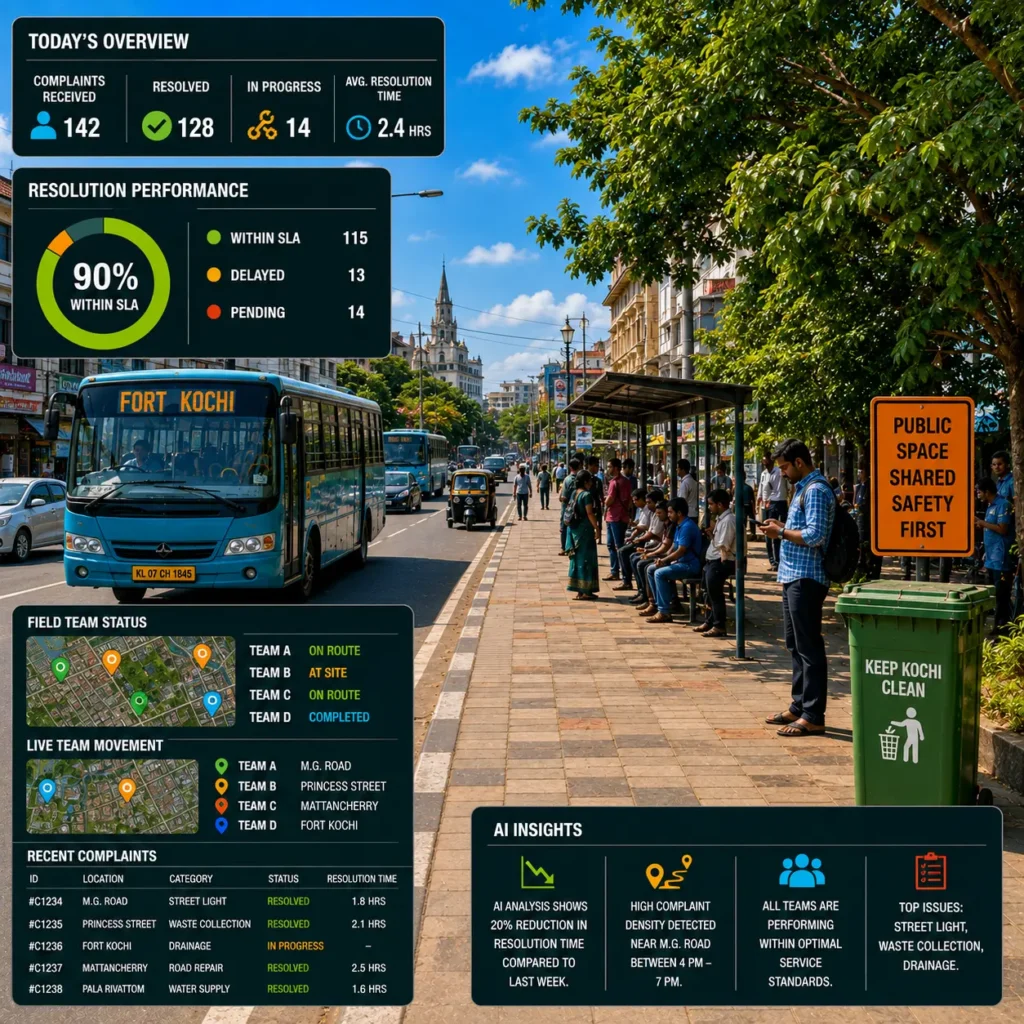
A Monsoon-Ready Operational Model
Kochi’s drainage environment creates a particularly relevant use case for AI because drainage performance depends on maintenance before adverse weather as well as response during incidents.
SOP analytics could evaluate whether scheduled inspections, cleaning activities, maintenance actions, and follow-up procedures are completed within defined timelines.
Video analytics can complement these records at selected locations by identifying visible conditions such as obstruction, unusual accumulation, or activity around drainage infrastructure.
The combination can help answer a more useful management question: is a recurring drainage problem caused by inadequate maintenance, a delayed response, an external obstruction, or another operational factor?
Engineering and field teams would remain responsible for determining the actual cause and required intervention.
Strengthening Waste And Septage Operations
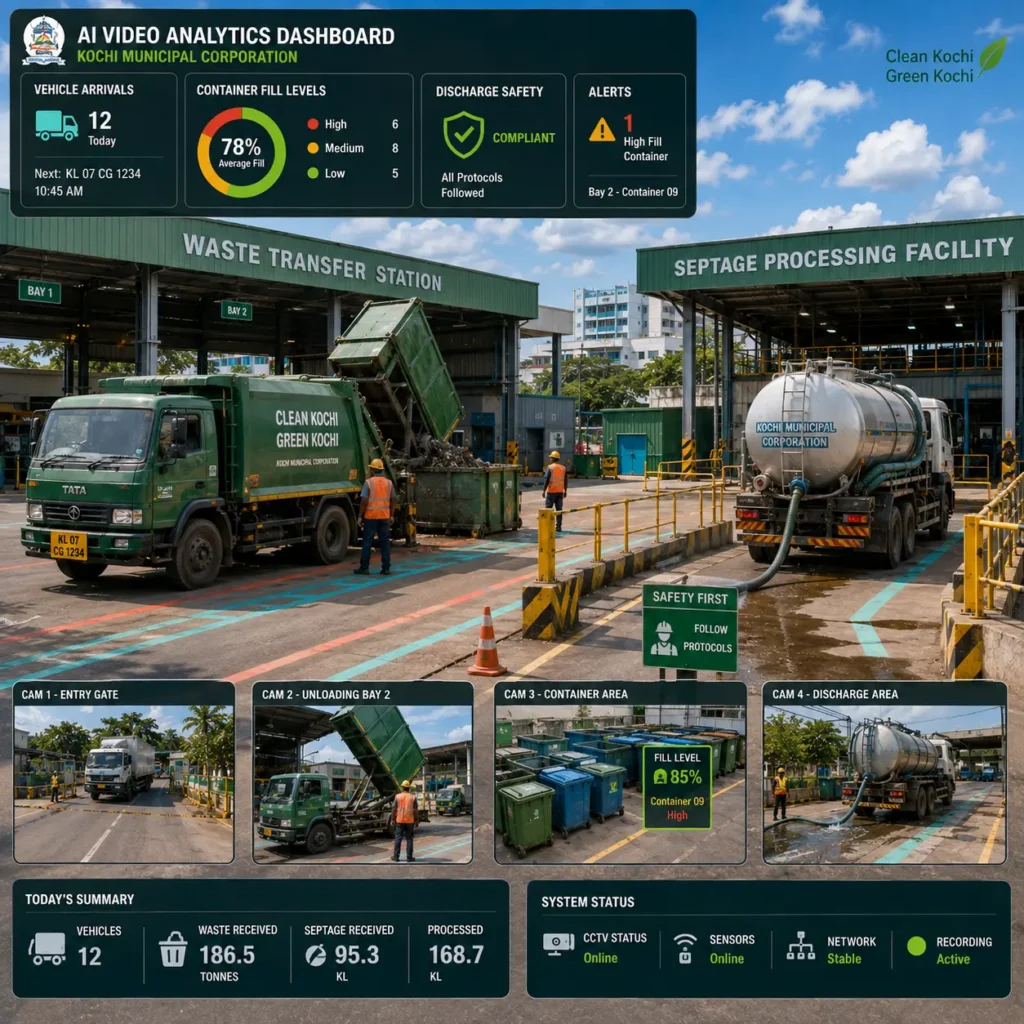
Waste and septage services involve multiple steps that must remain traceable. SOP analytics can examine collection scheduling, vehicle-related records, service completion, payment or booking information, inspection activities, and corrective actions where suitable data is available.
Video analytics can support selected facilities and collection environments by identifying defined access, movement, or accumulation events.
For septage operations, analytics could also help review whether operational records align with defined collection and discharge procedures. The goal is better process visibility, not automated judgement of individual operators.
A Management Layer For Continuous Improvement
The greatest value emerges when analytics becomes part of regular management review.
Kochi Municipal Corporation could use AI findings to identify a recurring operational problem, examine supporting evidence, introduce a corrective measure, and then track whether the problem decreases.
Success could be assessed through measures such as:
- Fewer repeated service complaints.
- Faster completion of corrective actions.
- Improved SOP compliance.
- Reduced recurrence of identified field issues.
- Faster investigation of selected incidents.
- Better allocation of field resources.
Before wider deployment, the Corporation should define data access, retention, privacy, cybersecurity, alert escalation, and human-review requirements.
FAQs
It can analyse municipal workflow records to identify recurring deviations, delays, unresolved actions, and process stages that require management attention.
Yes. At suitable monitored locations, it can identify predefined visual conditions such as accumulation, restricted access, or unusual activity for human verification.
It can help analyse maintenance and inspection procedures while video analytics can provide additional visibility at selected locations. Engineering teams would still determine the appropriate intervention.
Yes. SOP analytics can examine the complete complaint-handling process and identify recurring delays, repeat complaints, or corrective actions that do not appear to resolve the underlying issue.
A focused pilot around a measurable issue such as recurring waste complaints, drainage maintenance, septage operations, or municipal-facility monitoring would provide a practical basis for evaluating AI's operational value.