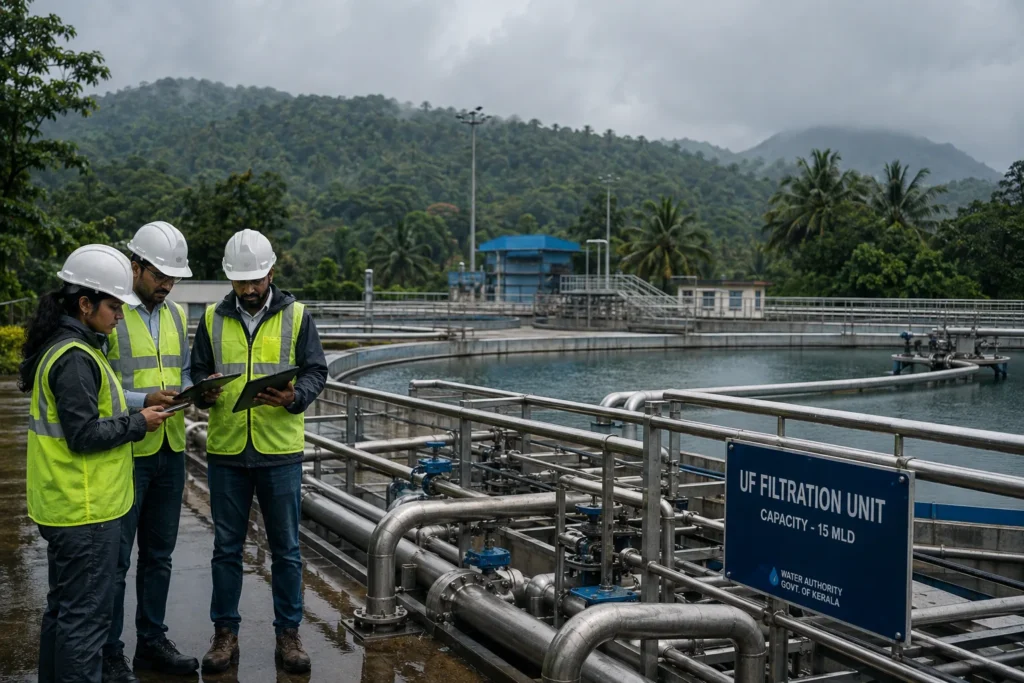
A water utility in Kerala operates under conditions that can change quickly. Heavy monsoon rainfall, terrain variations, ageing infrastructure, pumping requirements, treatment operations, and dispersed distribution networks can all influence service reliability. For Kerala Water Authority, maintaining continuity therefore depends not only on repairing failures but also on recognising operational signals before they become larger disruptions. AI based SOP analytics and video analytics can provide additional intelligence for managing these challenges.
Think In Terms Of Asset Risk, Not Just Activities
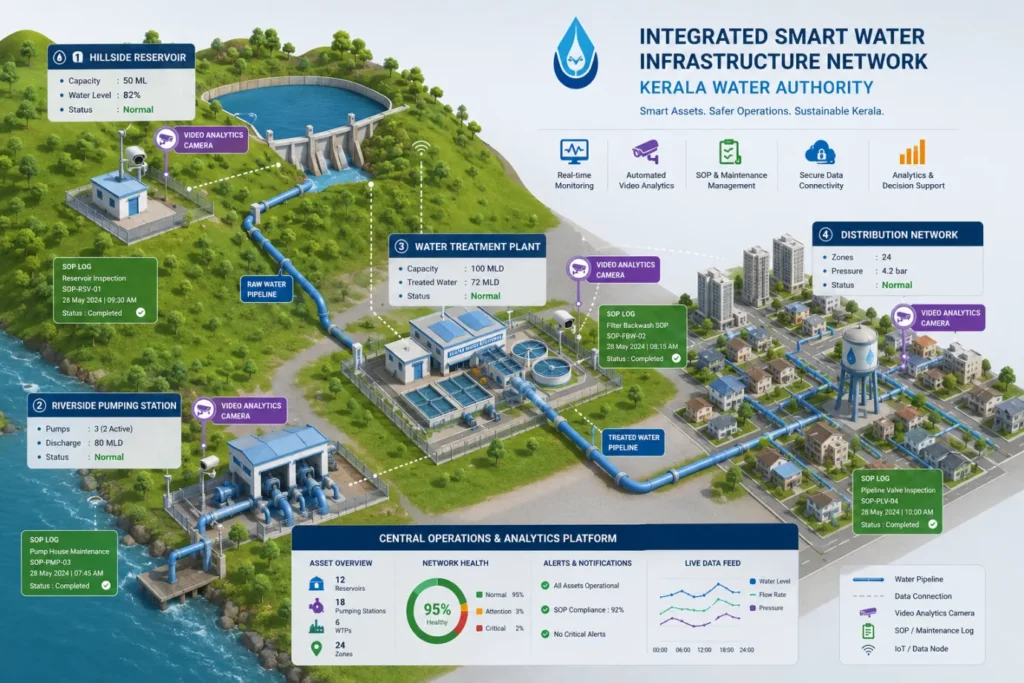
For KWA, AI adoption can be organised around the infrastructure that keeps water services running. Treatment plants, pumping stations, reservoirs, transmission systems, distribution facilities, and field maintenance operations each have different procedures and failure risks.
AI based SOP analytics can examine whether critical procedures are being completed as intended and identify patterns in operational records.
Relevant information may include:
- Equipment inspection records
- Preventive maintenance schedules
- Work orders and closure records
- Breakdown reports
- Water-treatment operating logs
- Field complaints
- Corrective-action records
- Safety and inspection checklists
The objective is to identify assets, processes, or locations where repeated exceptions suggest a need for intervention.
From Repeated Faults To Preventive Decisions
A recurring maintenance issue may not be caused by the same problem every time. It could reflect delayed inspection, inadequate maintenance intervals, equipment availability, difficult site access, or inconsistent execution of a procedure.
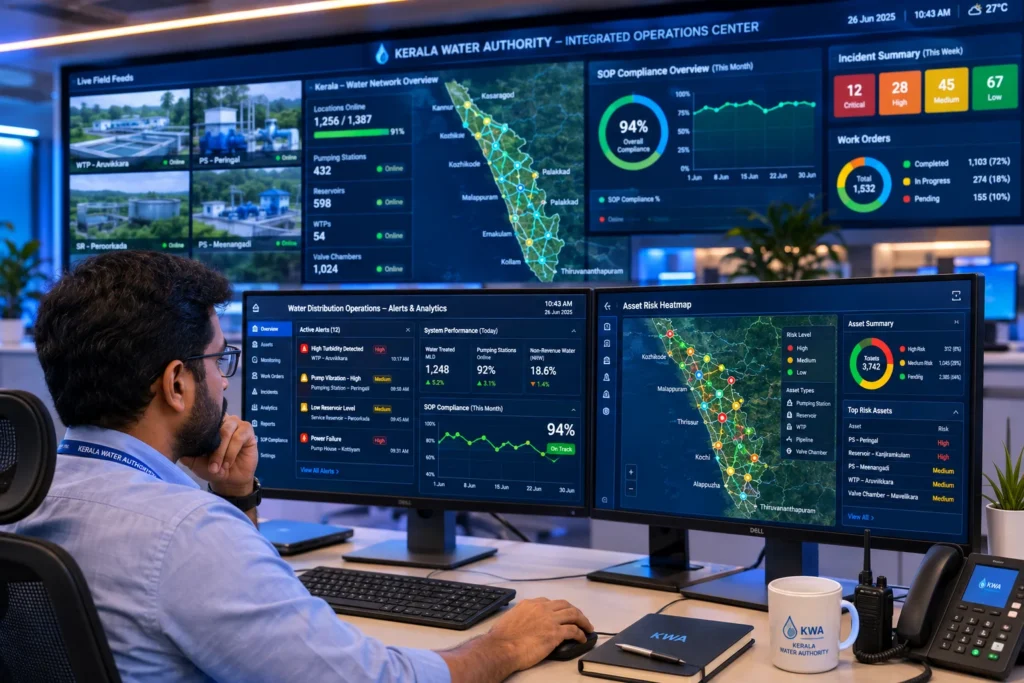
Analytics can compare these patterns across facilities, asset categories, locations, and operating periods. This gives engineers a stronger basis for deciding whether to change maintenance schedules, revise procedures, improve training, or investigate a particular asset.
Video Analytics For Distributed Water Infrastructure
KWA’s infrastructure is spread across urban, rural, coastal, and hilly environments. Human teams cannot continuously observe every operational location, particularly facilities that require controlled access or periodic inspection.
Video analytics can provide event-based visibility at suitable treatment plants, pumping stations, reservoirs, intake facilities, maintenance locations, and other monitored sites.
Potential applications include detecting unauthorised entry, identifying people entering restricted areas, monitoring vehicle movement within facility premises, and supporting safety monitoring around equipment and work zones.
Rather than requiring staff to watch every camera feed, analytics can highlight predefined events for human review.
A Monsoon-Focused Use Case
Kerala’s rainfall patterns make preparedness especially important for water infrastructure. Heavy rain can affect access to facilities, electrical and pumping arrangements, surrounding terrain, and field maintenance activities.
SOP analytics can help KWA assess whether seasonal inspection and preparedness procedures have been completed within defined timelines. It can identify recurring delays or incomplete actions across facilities.
Video analytics can provide supporting visibility at selected locations where physical conditions can be observed through suitable cameras. For example, it may help identify unauthorised access, unusual activity around facility entrances, or conditions requiring field verification.
AI should not independently determine whether a facility is safe or operationally ready. Engineering teams should make that assessment using analytical findings alongside technical information.
Using Service Complaints As Infrastructure Signals
Customer complaints can become more valuable when viewed alongside asset and maintenance data.
If a locality repeatedly experiences supply interruptions or other service issues, SOP analytics can examine the associated inspection history, work orders, corrective actions, and response timelines.
Patterns may reveal that the same issue is being addressed repeatedly without resolving its underlying cause. Alternatively, a cluster of complaints may coincide with particular assets, operating periods, or maintenance conditions.
Prioritising Field Work
Not every maintenance exception requires the same level of attention. Analytics can help rank issues according to recurrence, asset importance, service impact, and operational history.
A frequently recurring issue at a critical pumping facility, for example, may warrant earlier engineering review than an isolated low-impact exception.
Build The Programme Around Measurable Problems
KWA can begin with a focused pilot rather than attempting to analyse every facility simultaneously. A suitable starting point could involve preventive maintenance, seasonal preparedness, restricted-area monitoring, recurring service complaints, or incident investigation.
The pilot should establish a baseline and measure outcomes such as:
- Reduction in repeated SOP deviations.
- Faster closure of corrective actions.
- Improved preventive-maintenance compliance.
- Reduced recurrence of selected service complaints.
- Faster investigation of incidents.
- Better relevance of video alerts.
For Kerala Water Authority, AI based SOP analytics and video analytics can become practical tools for connecting asset information, field conditions, and operational procedures. The value lies not in automating every decision, but in helping KWA identify recurring risks earlier, direct technical attention more effectively, and strengthen the reliability of essential water services.
FAQs
It can track defined inspection and preparedness procedures, identify incomplete actions, and highlight recurring delays across facilities before periods of heavy rainfall.
It can track defined inspection and preparedness procedures, identify incomplete actions, and highlight recurring delays across facilities before periods of heavy rainfall.
Yes. Where suitable cameras are available, it can support monitoring of defined events such as restricted-area access, personnel movement, and selected safety conditions.
It can support prioritisation by identifying recurring exceptions and combining them with factors such as asset importance, service impact, and maintenance history.
A focused pilot involving a measurable problem—such as preventive maintenance, monsoon preparedness, facility security, or recurring service disruptions—can provide a practical basis for evaluating wider deployment