For Greater Chennai Corporation, municipal operations can change dramatically with the weather. A blocked storm water drain, accumulated waste, road obstruction, or delayed field response can become a much larger problem during heavy rainfall. At the same time, routine services such as waste collection, road maintenance, public health, and vehicle operations must continue every day. This makes operational readiness as important as day-to-day service delivery. AI based SOP analytics and video analytics can help GCC identify weak points before they become recurring service problems.
Making Municipal Readiness Measurable
GCC already operates across several departments with defined procedures for activities such as solid waste management, road maintenance, storm water drainage, public health, and vehicle management. The challenge is ensuring that these procedures are consistently executed across a large urban area.
AI based SOP analytics can examine operational records against predefined procedures and identify where execution differs from expectations.
Instead of relying only on periodic inspections, GCC could analyse:
- Completion of scheduled drain desilting activities.
- Vehicle inspection and maintenance records.
- Waste collection and transportation procedures.
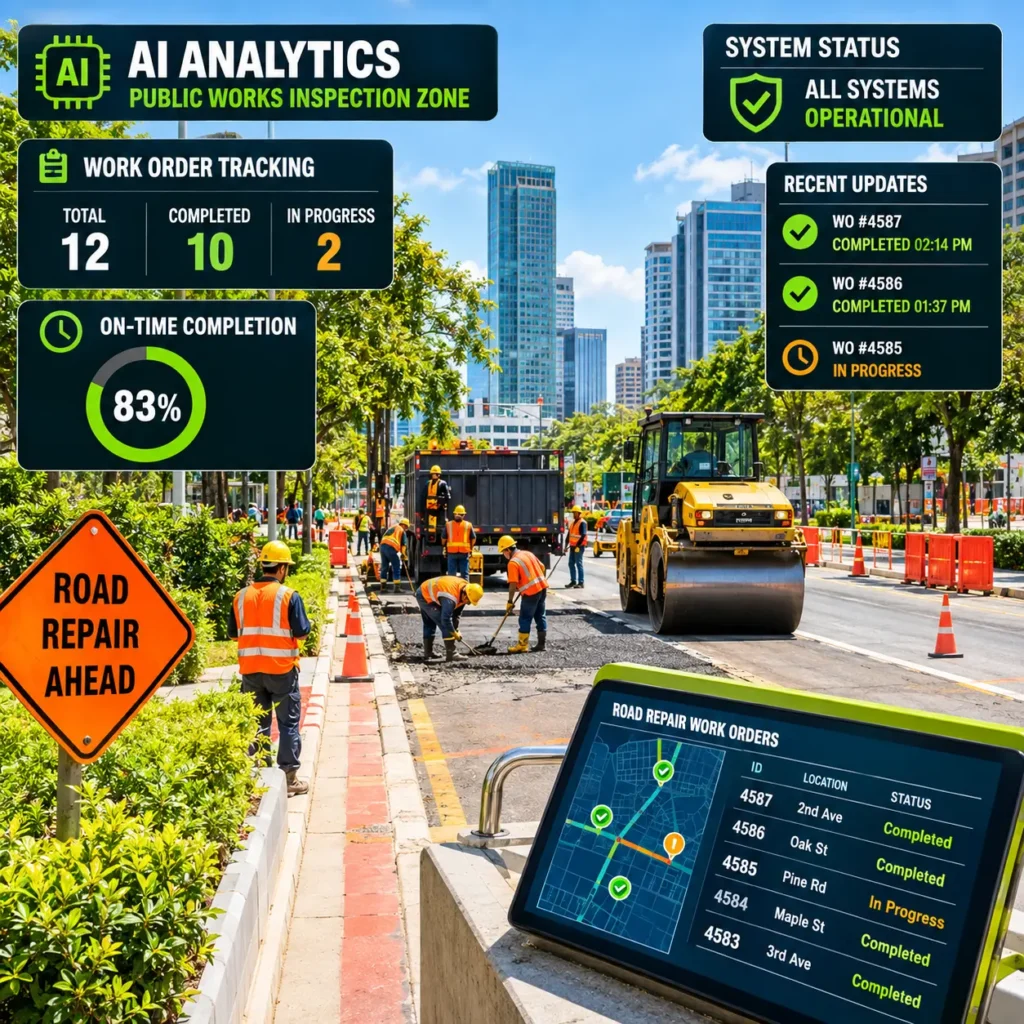
- Response and closure of road-related complaints.
- Completion of corrective actions.
- Recurring exceptions across zones or field teams.
Using Historical Patterns To Improve Preparedness
The real value of analytics emerges when historical operational information is used to anticipate recurring problems. If certain activities repeatedly experience delays before or during periods of heavy rainfall, GCC can investigate whether the cause involves equipment availability, scheduling, manpower, contractor coordination, or incomplete preparatory work.
SOP analytics can therefore support preparedness reviews well before an operational issue becomes a public complaint.
Video Analytics For Field-Level Visibility
Written records describe what a team was expected to do. Video analytics can provide another perspective on what is physically happening in monitored locations.
GCC manages a wide range of public environments, including roads, drains, waste-handling areas, municipal facilities, and traffic-sensitive locations. Suitable camera feeds can potentially be analysed for defined visual conditions.
Possible applications include detecting:
- Waste accumulation at monitored locations.
- Vehicles or objects obstructing designated areas.
- Unauthorised access to restricted municipal facilities.
- Pedestrian or vehicle movement in selected work zones.
- Activity around drainage or infrastructure locations requiring attention.
A Strong Use Case In Storm Water Management
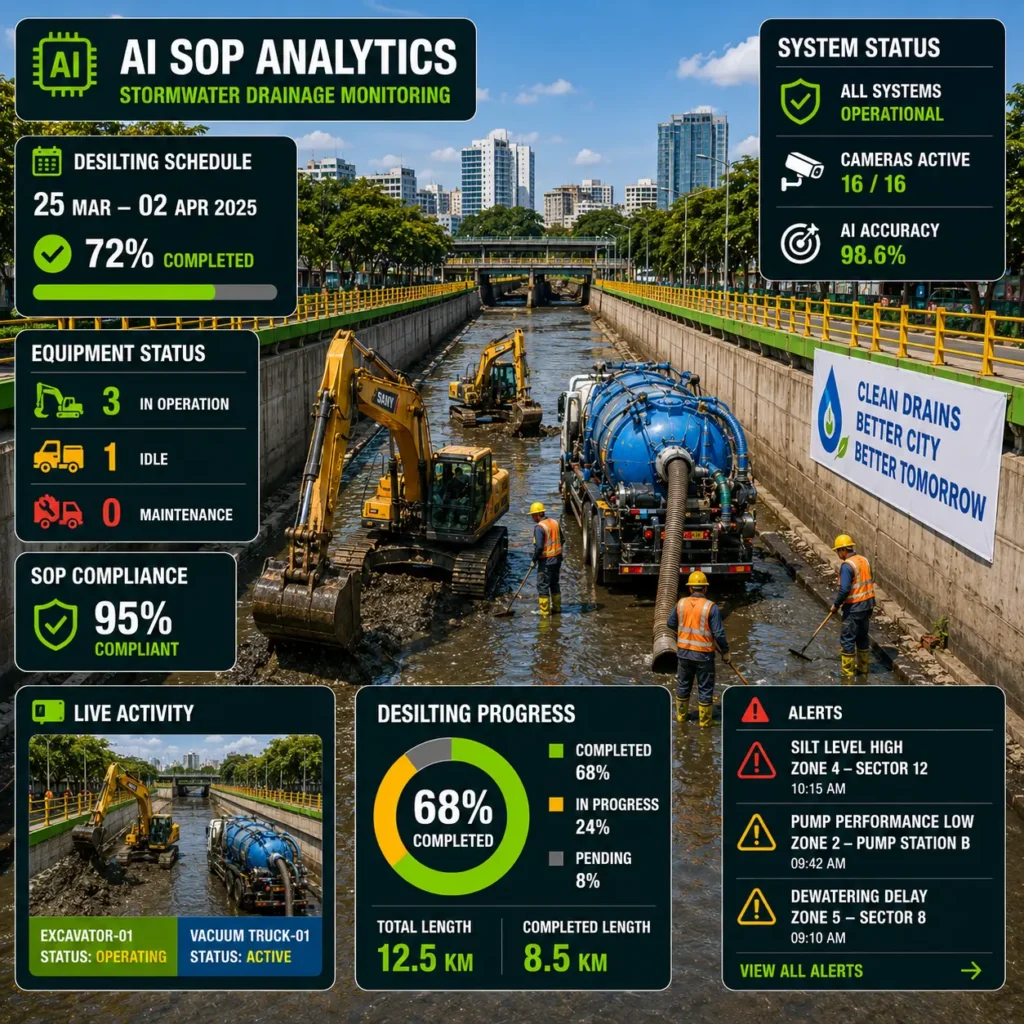
Chennai’s flat terrain and vulnerability to water stagnation make storm water management a particularly relevant operational area. GCC carries out drain and canal maintenance, including periodic desilting.
AI can support this work in two complementary ways.
SOP analytics can examine whether scheduled maintenance activities are completed according to defined procedures and whether recurring exceptions occur in particular zones, assets, or work cycles.
Video analytics, where suitable cameras are available, can help identify visible conditions such as obstruction near drainage infrastructure, accumulated material at monitored locations, or activity around designated maintenance areas.
The technology should not be expected to determine flooding risk by itself. Instead, it can provide additional evidence for engineering and field teams responsible for assessing conditions.
Improving Waste Management Through Exception Detection
Solid waste management creates another opportunity because collection, transportation, transfer, and processing involve repeated activities across the city.
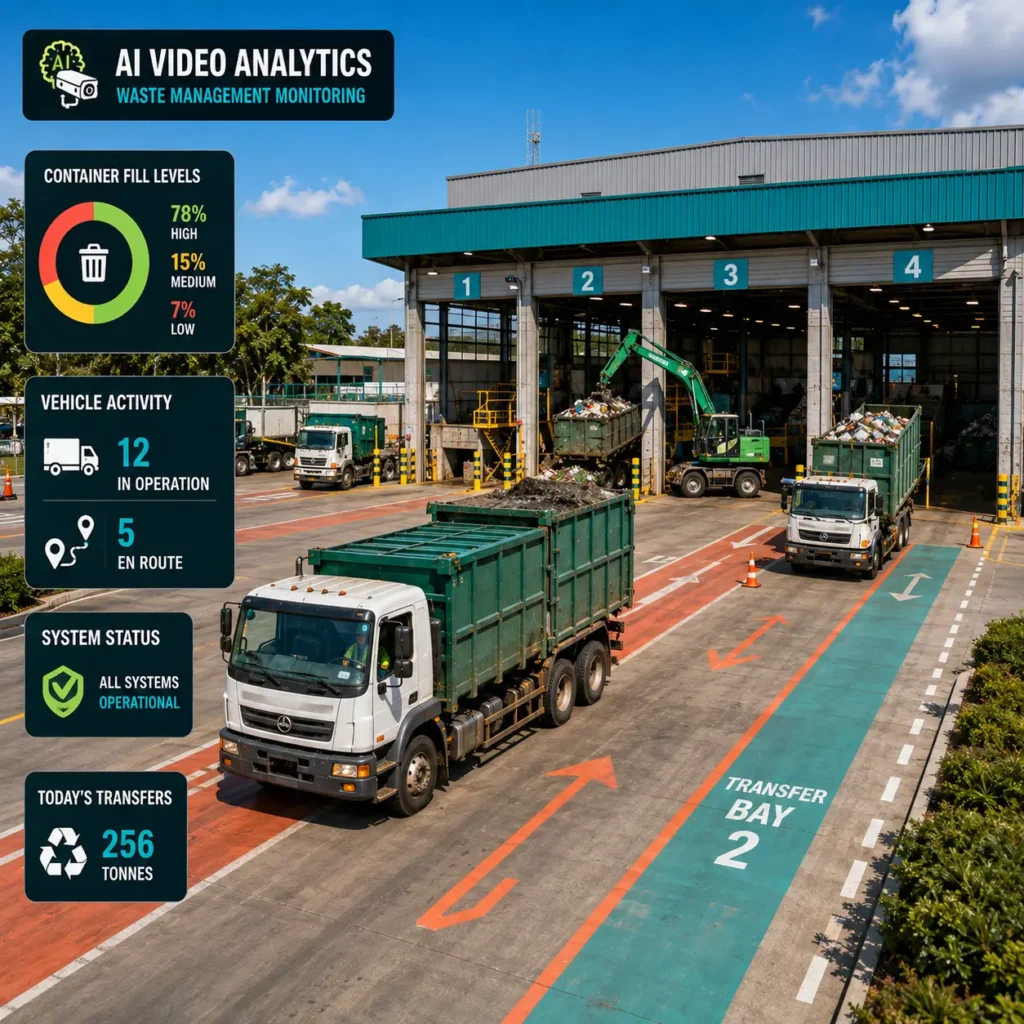
SOP analytics can identify recurring failures in collection schedules, vehicle-related procedures, reporting, or complaint resolution. If a particular area repeatedly generates non-lifting complaints, analytics can help determine whether the pattern is associated with timing, route execution, vehicle availability, or another operational factor.
Video analytics can complement this by detecting defined conditions at selected waste collection points. This could help distinguish locations where accumulation is recurring from isolated events and support more targeted deployment of field resources.
Connecting Citizen Complaints With Operational Evidence
GCC receives public complaints covering services such as roads, sanitation, street lighting, and other municipal functions. A complaint provides an important signal, but it does not always explain why the issue occurred.
AI based SOP analytics can examine the workflow after a complaint is registered: assignment, inspection, action, escalation, completion, and closure.
Video evidence, where available and appropriate, can provide additional context about the physical condition of a location.
Together, these capabilities can help GCC identify recurring service failures rather than simply closing individual complaints. Management can then address the underlying process instead of repeatedly responding to the same category of issue.
Measuring Municipal AI By Service Outcomes
GCC should evaluate AI through outcomes that matter to residents and operational teams.
Useful measures could include:
- Faster response to defined municipal events.
- Fewer repeated SOP deviations.
- Improved completion of scheduled maintenance.
- Reduced recurrence of unresolved complaints.
- Faster incident investigation.
- Better utilisation of field resources.
Any deployment should also include human validation, access controls, data-retention rules, cybersecurity safeguards, and appropriate privacy protections.
For Greater Chennai Corporation, the strongest opportunity is to use AI as an operational intelligence layer connecting procedures, field conditions, and service outcomes. Rather than adding another monitoring system, GCC can use analytics to identify where municipal processes need attention and provide teams with better evidence for timely action.
FAQs
It can identify recurring gaps in scheduled maintenance, inspections, desilting, equipment readiness, and other preparatory procedures so that teams can address weaknesses earlier.
At suitable monitored locations, it can potentially identify predefined visual conditions associated with waste accumulation and generate alerts for human verification.
Yes. SOP analytics can examine assignment, response, escalation, completion, and closure patterns to identify recurring delays or process weaknesses.
It can provide additional visibility into selected monitored locations by identifying predefined conditions such as obstructions or activity around infrastructure, while engineering teams retain responsibility for assessment
A focused pilot around one measurable challenge, such as drain maintenance, waste accumulation, or complaint resolution, can establish a baseline and demonstrate operational value before wider deployment