AI video analytics for Garden Reach Shipbuilders can support safety monitoring, SOP compliance, and security across shipbuilding and defence manufacturing facilities.The National Highways Authority of India (NHAI) is responsible for a large and complex ecosystem involving highway construction, operation and maintenance, tolling, traffic management, road-user safety, contractors, concessionaires, emergency response, and roadside infrastructure.
Across such a network, safety conditions can change within minutes. A vehicle may stop on a high-speed carriageway, workers may enter an active maintenance zone, debris may appear on a road, or traffic may move through an area where temporary restrictions are in place.
AI-based SOP analytics and video analytics can help NHAI monitor these situations more consistently and provide actionable information to highway operators.
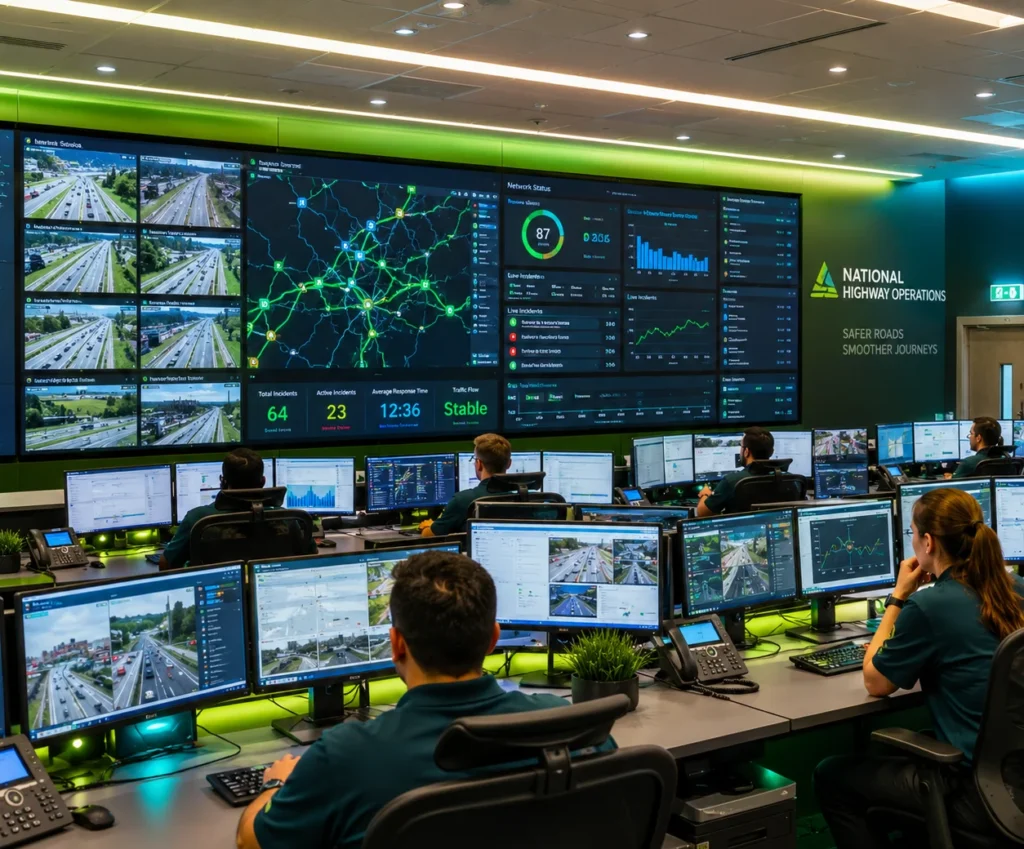
AI Along The Highway Lifecycle
The most useful way to consider these technologies for NHAI is according to the different stages of highway operations.
Highway Activity | Potential AI Application | Operational Value |
Construction | PPE and work-zone monitoring | Improve contractor safety |
Road Maintenance | Worker and vehicle monitoring | Protect maintenance crews |
Highway Operations | Stopped-vehicle detection | Faster incident response |
Toll Facilities | Lane and traffic monitoring | Improve operational visibility |
Interchanges | Wrong-way and unusual movement detection | Support road safety |
Emergency Management | Incident and congestion detection | Faster intervention |
This approach allows NHAI to apply analytics where visual information can directly support a defined operational or safety response.
Making Work-Zone SOPs Visible
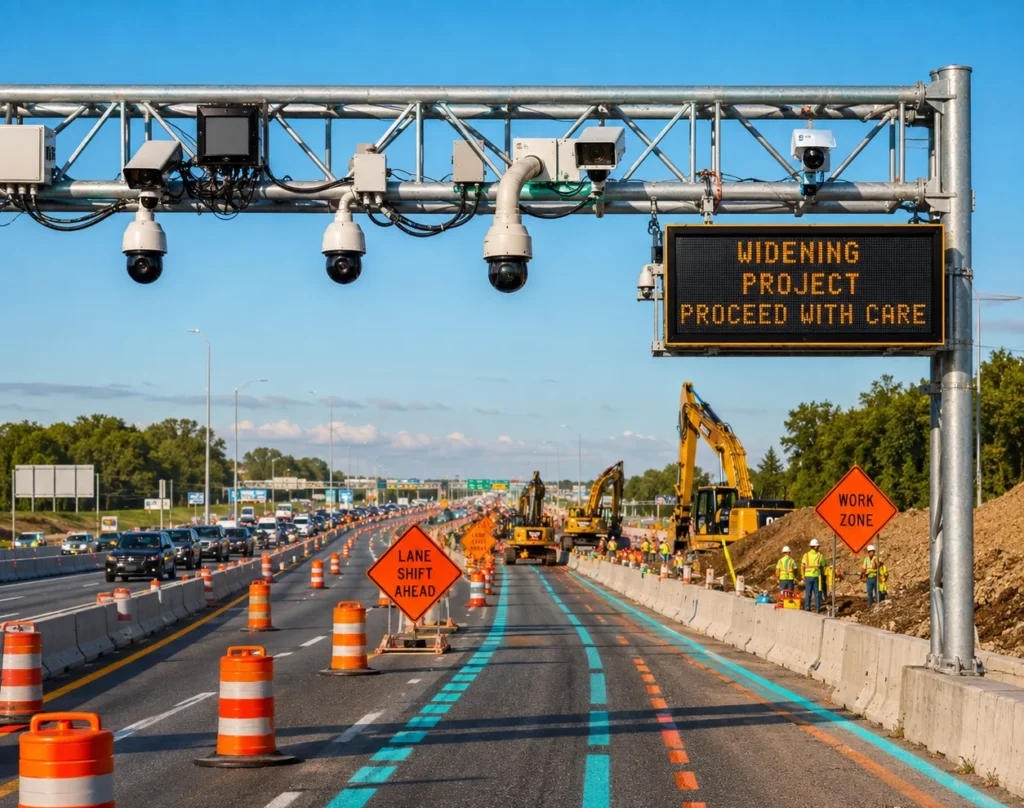
Highway maintenance and construction frequently take place alongside live traffic. This creates a particularly important role for SOP analytics.
An AI system can monitor selected work zones for conditions such as:
- Workers without required PPE
- Personnel entering defined traffic areas
- Vehicles entering restricted sections
- Missing or displaced safety barriers
- Unauthorised movement around construction equipment
- Obstructions within designated work areas
The system can alert supervisors when a predefined condition is detected.
This can strengthen contractor monitoring because safety compliance can be observed continuously at selected locations rather than only during periodic inspections.
Video Analytics For Road-User Safety
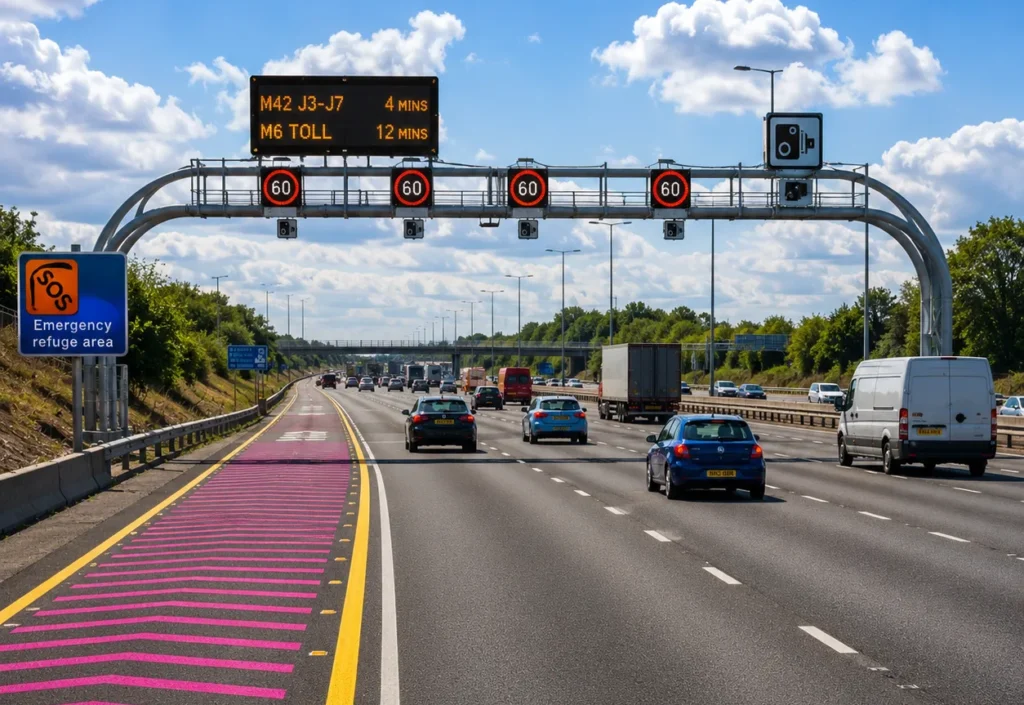
Highway CCTV footage contains information about traffic conditions that can be difficult to process manually at scale.
Computer vision can identify events such as:
- Stopped or abandoned vehicles
- Wrong-way movement
- Vehicles travelling in restricted areas
- Pedestrians on controlled-access roads
- Congestion build-up
- Objects or debris on the carriageway
- Unusual traffic behaviour
- Incidents around interchanges and ramps
These detections can help control-room personnel focus on locations where intervention may be required.
The purpose is not to make an automated judgement about every road event. Instead, AI can act as an early-warning mechanism that helps operators investigate potentially important situations faster.
A Strong Use Case: Maintenance Zones
Road maintenance presents a particularly suitable application for SOP analytics because activities are governed by defined procedures and involve predictable safety requirements.
Consider resurfacing or repair work taking place on an active highway. Cameras can monitor the work zone and identify whether workers, vehicles, or equipment move outside defined boundaries.
If the analytics platform is connected with the maintenance schedule, the system can also distinguish planned activity from unexpected conditions.
This creates a useful connection between the written maintenance plan and what is actually occurring on the highway.
Supporting Incident Management
Video analytics can also contribute after an incident has occurred.
When a breakdown, collision, obstruction, or traffic disruption is reported, operators often need to establish what happened and how the situation developed. Event-based video search can help authorised personnel locate relevant footage more quickly.
AI can assist with identifying:
- Approximate time of the event
- Vehicles involved
- Traffic movement before the incident
- Lane conditions
- Secondary congestion
- Presence of pedestrians or roadside personnel
This information can support incident investigation and operational review without requiring personnel to manually examine extensive recordings.
Connecting AI With Highway Data
Video analytics becomes considerably more useful when combined with other highway information.
NHAI could potentially connect visual events with:
- Traffic sensors
- Electronic tolling information
- Vehicle detection systems
- Weather information
- Emergency-response systems
- Roadside equipment
- Maintenance schedules
- Highway control-room platforms
For example, a camera may detect a stopped vehicle. Additional information can help determine whether the vehicle is in an emergency bay, blocking a traffic lane, or located in an area where immediate assistance may be required.
This contextual approach can help reduce unnecessary alerts and prioritise genuine operational events.
Improving Contractor And Concessionaire Oversight
Highway projects involve multiple contractors, concessionaires, maintenance teams, and service providers. Ensuring consistent compliance across these stakeholders can be challenging.
AI analytics can provide objective information about selected safety conditions at monitored project locations.
If repeated violations occur at one construction site, NHAI can use the recorded data to examine whether corrective action, additional training, improved signage, or stronger site controls are necessary.
Analytics can therefore supplement inspections and reporting rather than replacing contractual monitoring mechanisms.
Challenges That NHAI Should Account For
Highway environments are visually demanding. Cameras may need to operate during daylight, darkness, rain, fog, glare, dust, heavy traffic, and changing road configurations.
AI performance can also be affected by:
- Poor camera positioning
- Occlusion from large vehicles
- Low-light conditions
- Weather-related visibility
- Temporary construction arrangements
- High traffic density
- Network connectivity
Models should therefore be tested using real highway conditions before being deployed for critical alerts.
Measuring The Value Of AI Analytics
NHAI can assess the effectiveness of these systems through operational indicators rather than the number of cameras connected.
Useful measures include:
- Work-zone SOP violations
- Worker PPE compliance
- Incident detection time
- Response time to stopped vehicles
- Wrong-way events identified
- False-alert percentage
- Time required for video investigation
- Repeated contractor safety violations
- Corrective-action closure time
For NHAI, the strongest application of AI-based SOP analytics and video analytics is not simply surveillance at scale. It is the ability to convert highway imagery into timely operational information, helping teams identify safety deviations, respond to road incidents, and understand recurring risks across a large and constantly changing network.
Frequently Asked Questions
Yes. Computer vision can identify vehicles that remain stationary in monitored lanes or designated areas and generate alerts for operator review.
It can monitor selected work-zone requirements such as PPE, personnel boundaries, equipment areas, and restricted movement, helping supervisors identify deviations.
Yes. With suitable camera positioning and traffic-direction rules, video analytics can identify vehicles moving against the expected direction and raise an alert.
Yes. Maintenance zones are suitable for monitoring because work activities, restricted areas, personnel movement, and safety requirements can be defined in advance.
No. AI should help operators identify potentially important events faster. Human teams should verify alerts, assess the road situation, coordinate response, and make operational decisions.