The Central Reserve Police Force (CRPF) operates across a wide range of environments, including camps, administrative establishments, training facilities, logistics locations, public-security deployments, and other operational settings. Personnel may work in demanding conditions where safety, discipline, access control, equipment handling, and adherence to established procedures are important.
AI-based SOP analytics and video analytics can support CRPF by providing an additional layer of monitoring for clearly defined safety, security, and procedural conditions. The purpose is not to automate operational decisions, but to help authorised personnel identify situations that deserve attention.
From Surveillance To Procedure Monitoring
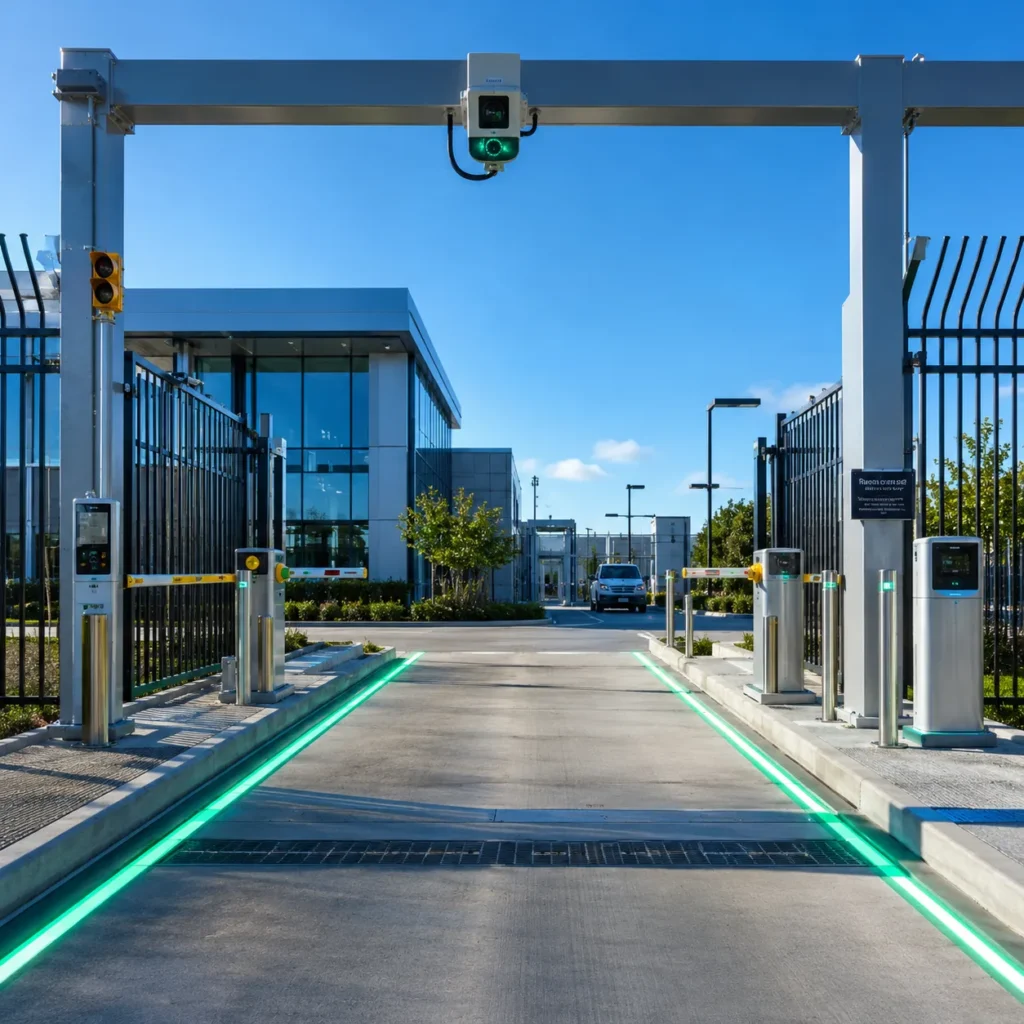
Conventional CCTV primarily provides recorded visibility. AI-based video analytics can add event detection by identifying predefined visual conditions.
For CRPF, suitable applications can include:
- PPE compliance in designated work areas
- Entry into restricted premises
- Personnel movement in controlled zones
- Vehicle movement within authorised areas
- Unusual gatherings or activity
- Obstructions in designated access routes
- Safety-zone violations
- Camera obstruction or tampering
These capabilities can help reduce the burden of continuously monitoring multiple video feeds while keeping personnel responsible for assessing alerts
Supporting Safety Around Equipment And Vehicles
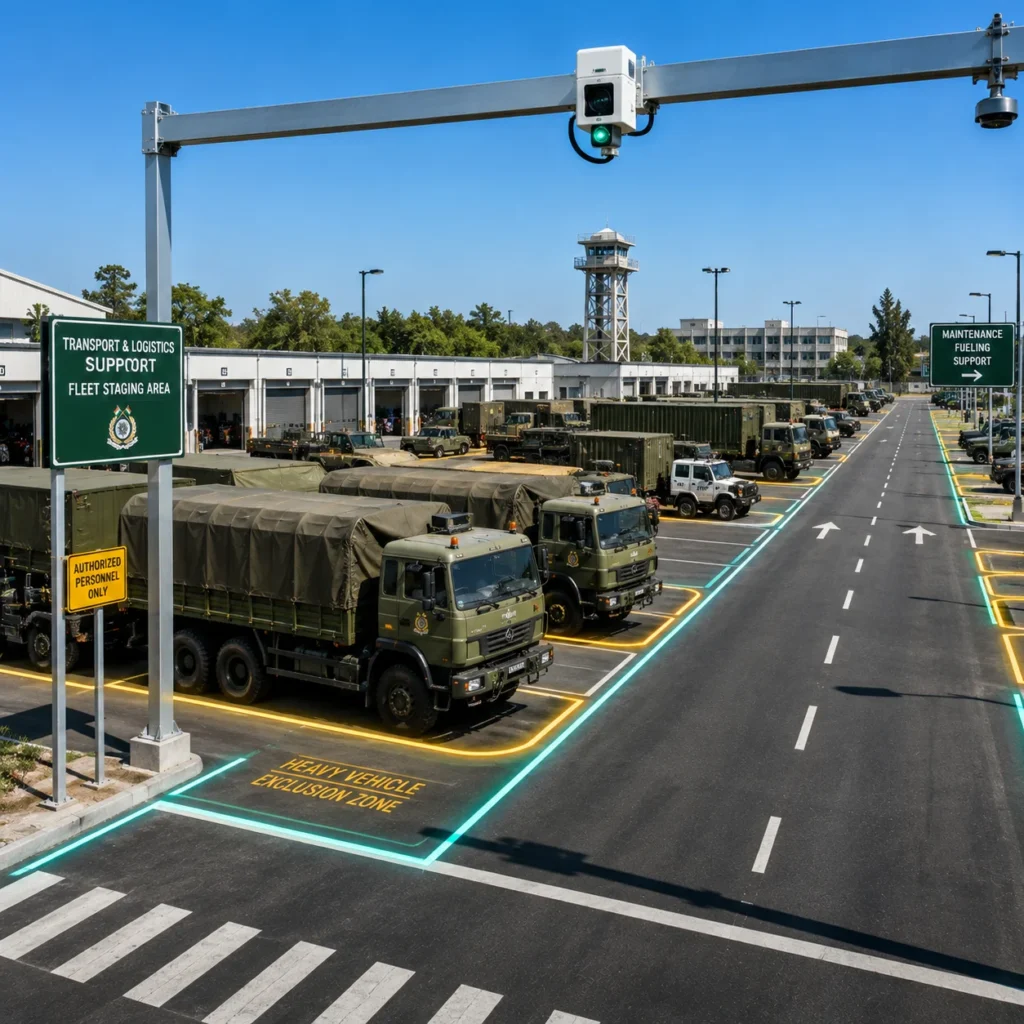
CRPF facilities can involve transport vehicles, generators, maintenance equipment, workshops, storage areas, and other supporting infrastructure. Worker-equipment interaction can create avoidable risks when multiple activities occur simultaneously.
AI-based video analytics can monitor predefined equipment zones and identify personnel entering areas where access is restricted during specific activities.
Potential applications include:
Operational Area | AI Monitoring | Potential Benefit |
Workshops | PPE and equipment zones | Workplace safety |
Vehicle Areas | Person-vehicle interaction | Reduce exposure |
Stores | Restricted access | Asset protection |
Camps | Controlled-area movement | Security support |
Facilities | Obstruction detection | Better preparedness |
These applications can complement physical safeguards, supervision, inspections, and established safety procedures.
Training Centres And Camps
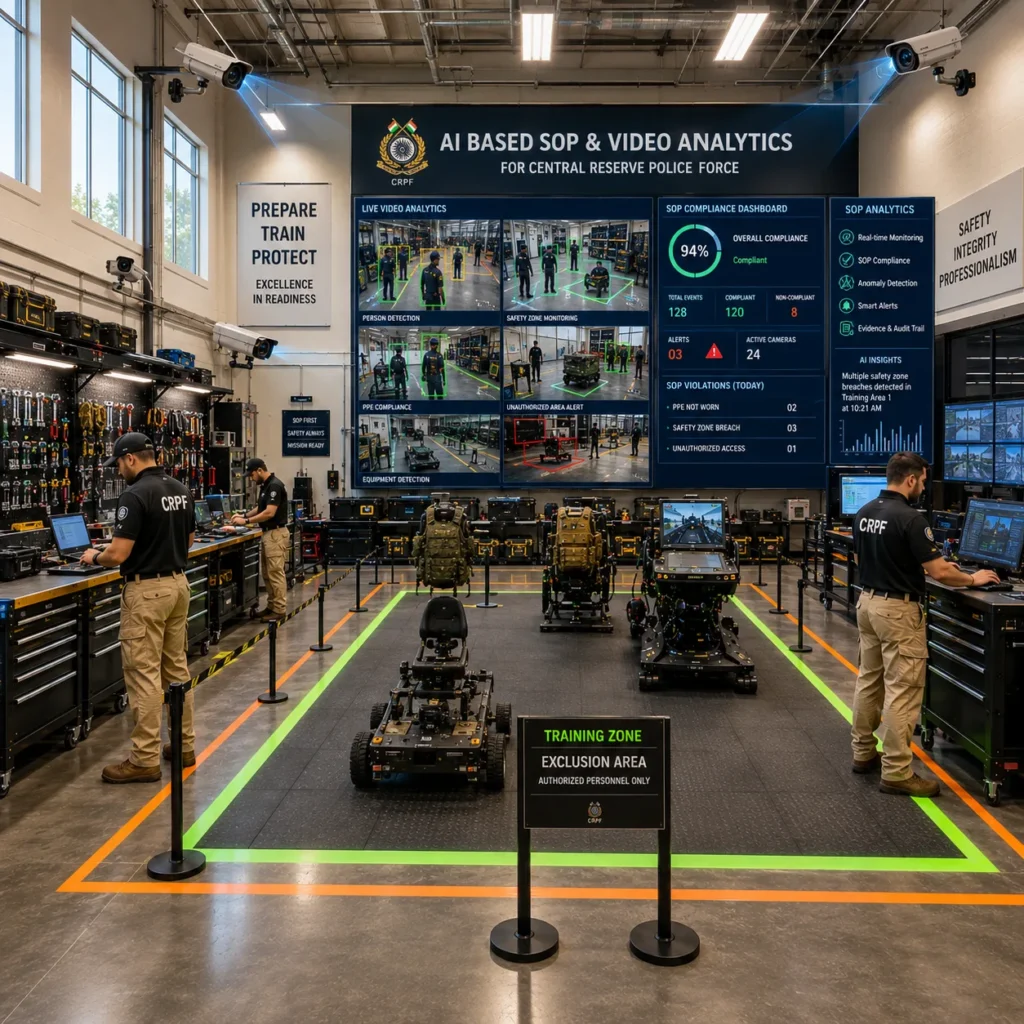
Training facilities provide a structured environment where SOP analytics can be particularly useful. Personnel may participate in physical training, equipment handling, maintenance, administrative activities, and movement through designated areas.
AI can support selected visual requirements such as PPE, controlled access, restricted-area movement, and safe positioning around equipment.
For example, if a particular training or maintenance area requires personnel to remain within designated boundaries, video analytics can identify movement outside those boundaries and notify the responsible supervisor.
The system should focus only on observable requirements and should not attempt to evaluate tactical performance or make operational judgements.
Improving Access Management
CRPF facilities can contain areas with different levels of access. Video analytics can provide an additional visual layer by identifying movement into predefined restricted zones.
The strongest implementation would combine video events with existing authorisation information where appropriate.
For example, a person entering a controlled area may be an authorised employee, maintenance worker, or visitor. If access information confirms the activity, the event may require no further action. An unexplained entry can instead be prioritised for verification.
This contextual approach can reduce unnecessary alerts and help personnel focus on events that genuinely require attention.
Using AI For Procedural Compliance
SOP analytics can be valuable when a procedure contains a clearly observable condition.
Potential examples include:
- Required protective equipment
- Designated access routes
- Restricted work areas
- Controlled vehicle movement
- Equipment exclusion zones
- Emergency-route clearance
- Selected facility housekeeping requirements
The purpose is to make selected procedures continuously observable rather than relying exclusively on periodic checks.
At the same time, CRPF should retain human responsibility for interpreting circumstances and deciding whether a deviation actually represents a violation or requires corrective action.
Learning From Recurring Events
AI analytics can provide value beyond individual alerts. When events are recorded and analysed over time, recurring patterns may become visible.
Repeated entry into a restricted area could indicate unclear signage, inconvenient access arrangements, or inadequate physical separation. Frequent PPE alerts could point towards training, supervision, or equipment-availability issues.
Similarly, recurring vehicle-person interaction in one location may indicate that traffic arrangements or facility design need review.
Video Analytics For Incident Review
AI can also assist after an incident has occurred.
Instead of manually reviewing lengthy recordings, authorised personnel can use event-based searches to locate relevant footage according to time, location, movement, or predefined categories.
This can support reviews involving:
- Workplace safety incidents
- Unauthorised access
- Vehicle-related events
- Equipment incidents
- Facility security concerns
- Procedural deviations
A Secure And Controlled Implementation
Because CRPF operates in a sensitive security environment, AI analytics should be deployed with strong information-security controls.
Important considerations include:
- Role-based access to video
- Secure and segmented networks
- Data-retention controls
- Authentication and encryption
- Audit trails
- Controlled system integration
- Cybersecurity testing
- Protection of sensitive footage
- Human validation of important alerts
AI models should also be tested for accuracy and false alerts under actual site conditions before being connected to important workflows.
Measuring The Value Of AI
CRPF can assess the effectiveness of an AI analytics programme through practical indicators rather than the number of cameras connected.
Useful measures include:
- Reduction in recurring SOP deviations
- PPE compliance
- Restricted-area events
- Worker-equipment proximity incidents
- Alert response time
- False-positive percentage
- Incident investigation time
- Corrective-action closure
Manual CCTV review effort
Frequently Asked Questions
Yes. It can monitor selected visual requirements such as PPE, restricted areas, equipment zones, and designated movement conditions
It can identify predefined access violations, unusual activity, restricted-area movement, and camera tampering for review by authorised personnel
Yes. In suitable locations, video analytics can identify predefined proximity or movement conditions and alert responsible personnel.
Potentially. Combining video detections with authorisation information can provide additional context and help prioritise events.