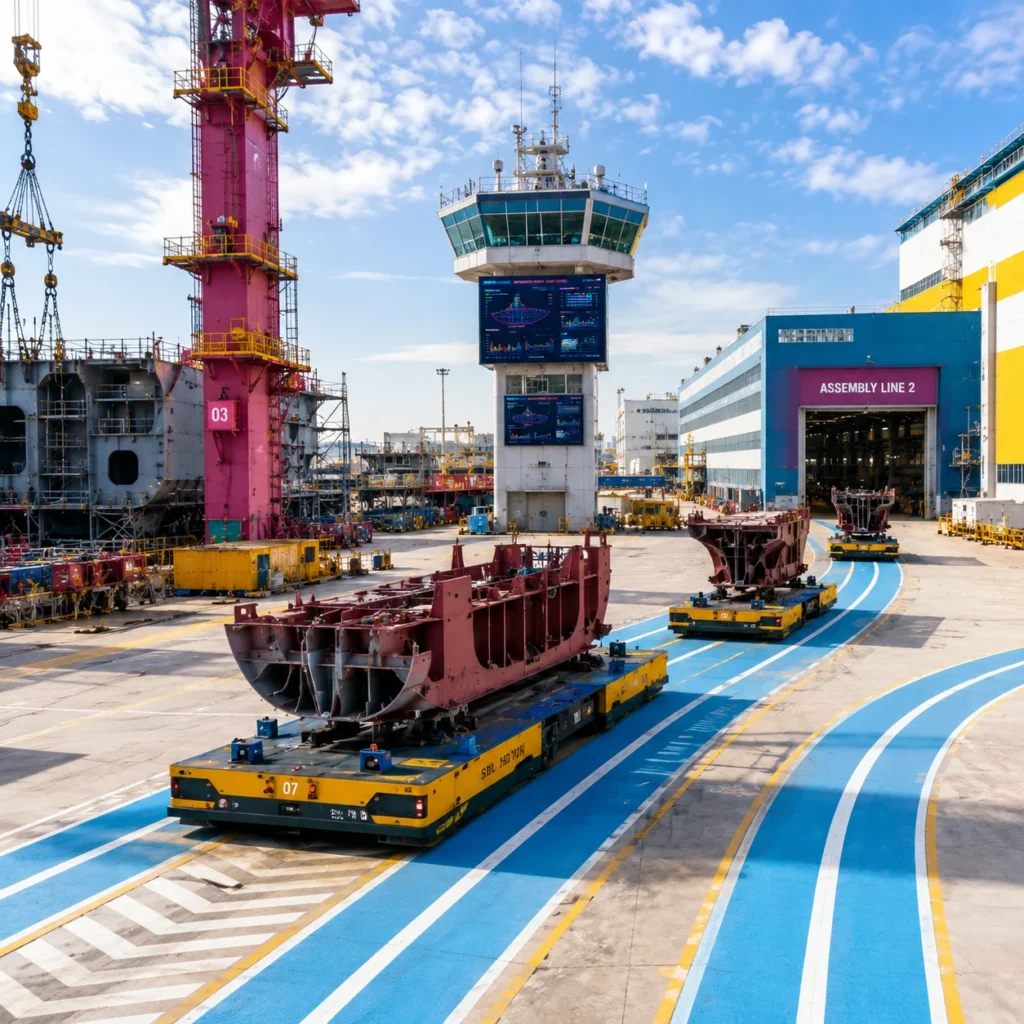
AI video analytics for Cochin Shipyard can support safety monitoring, SOP compliance, and security across shipbuilding facilities. AI-powered video analytics helps identify safety violations, monitor restricted areas, and improve operational visibility using CCTV infrastructure. A crane may be moving a heavy component in one area while welding, fabrication, vessel repair, material transportation, and contractor activities are taking place elsewhere. At Cochin Shipyard Limited (CSL), this complexity is combined with defence shipbuilding, commercial vessels, ship repair, and offshore-related activities.
That makes continuous safety observation difficult to achieve through manual supervision alone. AI-based SOP analytics and video analytics can provide CSL with an additional layer of visibility, helping teams identify specific safety and operational conditions while work is underway.
CSL already operates a formal health and safety management system certified to ISO 45001:2018 and uses Hazard Identification and Risk Assessment (HIRA) to evaluate routine and non-routine activities. Its recent reporting also highlights proactive HSE governance, safety training, contractor evaluation, and digital initiatives. This creates a suitable environment for applying AI to selected safety procedures.
Three Areas Where AI Can Strengthen CSL Operations
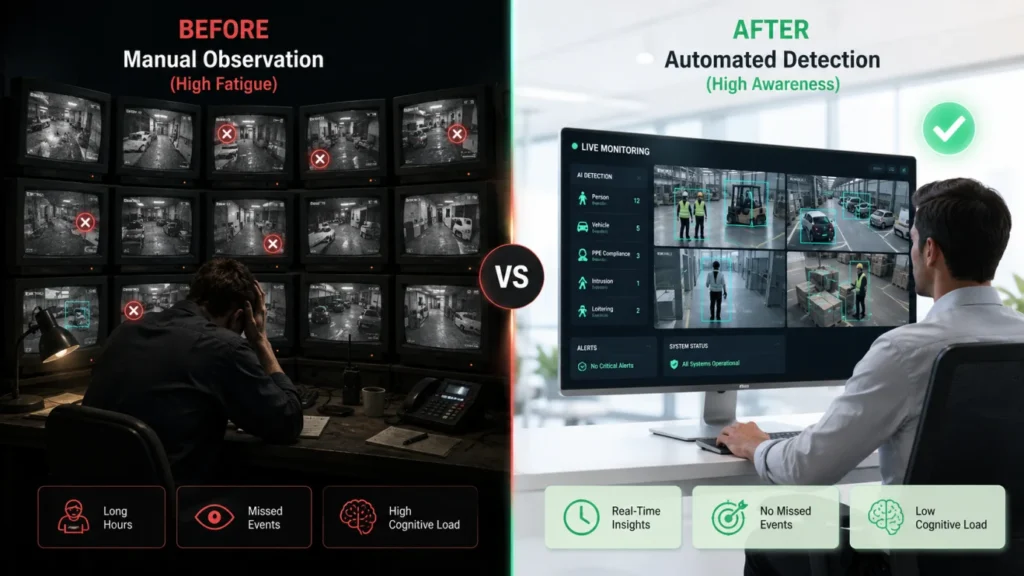
Rather than treating AI video analytics as a general-purpose surveillance solution, CSL can focus on three practical outcomes: preventing unsafe interactions, improving procedural compliance, and strengthening situational awareness.
Preventing Worker-Equipment Conflicts
Shipbuilding involves cranes, forklifts, trucks, lifting equipment, and large components. A worker entering the operating path of equipment can create an immediate hazard.
Computer vision can monitor predefined exclusion zones and identify people entering areas where their presence may be unsafe. Alerts can be prioritised according to equipment status and location.
Monitoring Safety-Critical Procedures
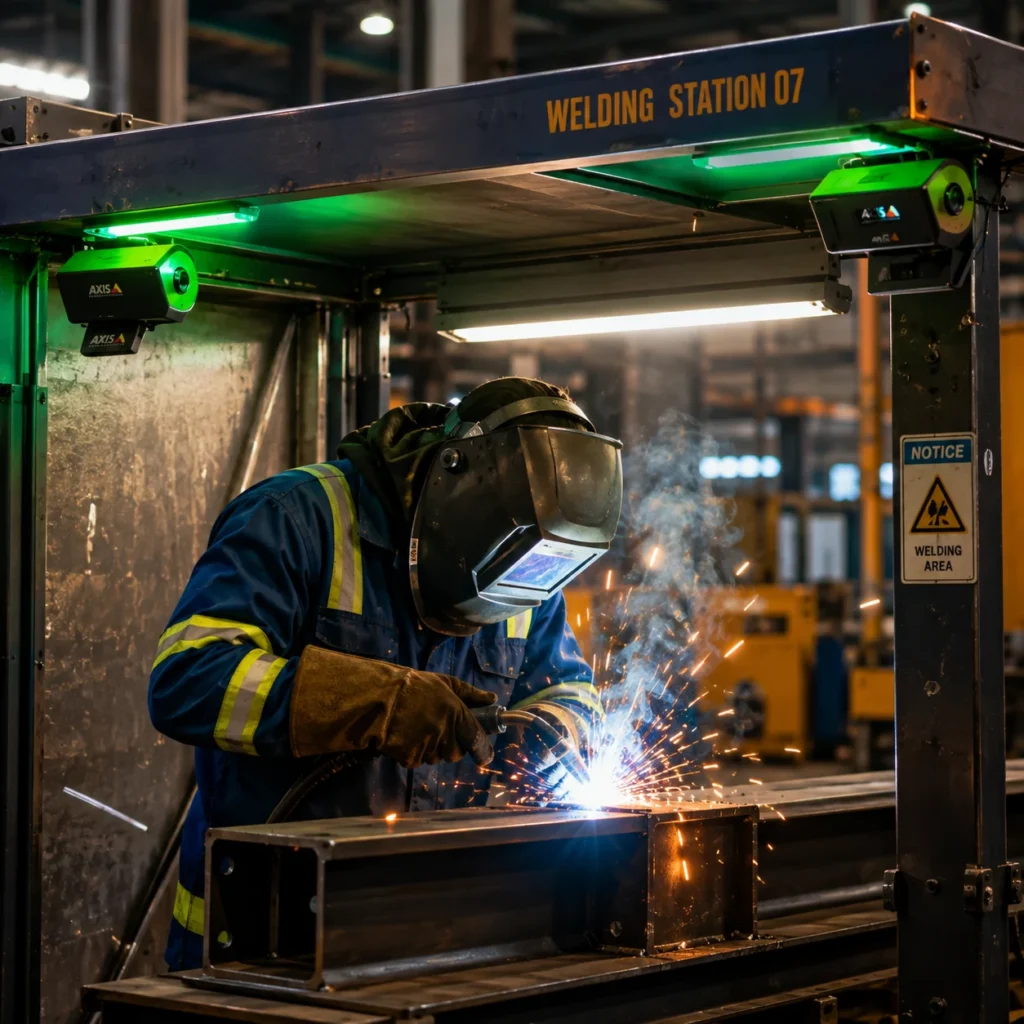
Some SOP requirements are visually observable. AI can check selected conditions such as PPE usage, access restrictions, safe positioning, and designated work zones.
This allows CSL to identify recurring deviations without requiring supervisors to manually observe every activity.
Improving Situational Awareness
Large shipyard facilities contain numerous simultaneous activities. Video analytics can identify unusual gatherings, unexpected movement, blocked pathways, or other predefined events and bring them to the attention of control-room or safety personnel.
Video Analytics For Dynamic Work Areas
One challenge in shipbuilding is that workspaces are not always permanent. Temporary barriers, scaffolding, equipment, ship sections, containers, and work platforms can change the visual environment.
AI models therefore need to be trained and validated for CSL’s actual operating conditions.
Potential applications include:
- Detecting workers without required PPE
- Monitoring defined crane pathways
- Identifying people inside temporary exclusion zones
- Detecting unauthorised access
- Monitoring vehicle and pedestrian movement
- Identifying obstructions in designated routes
- Detecting unusual gatherings
- Identifying camera obstruction or tampering
Making Alerts More Useful
The quality of an AI system depends not only on what it detects, but also on how the organisation responds.
A video alert should contain enough context for the responsible person to understand what happened. Location, camera identification, time, event type, and relevant equipment status can help determine the urgency.
Connecting AI With CSL’s Existing Digital Environment
Video analytics can potentially exchange information with:
- Access-control systems
- Crane and lifting equipment data
- Maintenance systems
- Safety-management applications
- Vehicle monitoring systems
- Production information
- Control-room platforms
Such integration can improve the relevance of alerts and help CSL avoid creating a separate technology system that operates independently from existing workflows.
AI For Contractor And Workforce Safety
Shipyards often involve employees, contractors, subcontractors, vendors, and visitors working within the same environment. Maintaining consistent safety standards across these groups can be challenging.
AI analytics can support objective monitoring of selected requirements without relying entirely on periodic inspections.
What CSL Should Consider Before Deployment
AI performance in a shipyard cannot be judged only from controlled demonstrations. Actual deployment should account for welding glare, changing daylight, rain, dust, large structures blocking camera views, moving vessels, temporary work zones, and crowded areas.
CSL should therefore assess:
- Existing camera coverage and image quality
- Network and computing requirements
- Suitable camera locations
- False-alert tolerance
- Cybersecurity controls
- Data retention requirements
- Human review procedures
- Integration with existing systems
How Success Can Be Evaluated
CSL can measure the value of AI analytics through operational indicators rather than the number of cameras or alerts produced.
Relevant measures include:
- PPE compliance trends
- Number of recurring SOP deviations
- Crane-zone violations
- Worker-vehicle proximity events
- Safety-alert response time
- False-positive percentage
- Incident investigation time
- Corrective-action closure rate
- Manual surveillance workload
Frequently Asked Questions
Yes, but the models must be validated against changing work zones, lighting, vessel structures, equipment movement, and other conditions specific to CSL's facilities.
Crane operations, material handling, ship repair areas, fabrication zones, vehicle movement, restricted areas, and selected PPE requirements are potential candidates because many relevant conditions can be visually defined.
Yes. AI can provide additional monitoring of selected safety requirements across contractor work areas and generate data that can complement CSL's existing safety-management and contractor-evaluation processes.
Potentially. Combining camera events with equipment-status information can provide better context and help distinguish routine activity from situations requiring immediate attention.