A state civil supplies corporation operates under a very different pressure from a conventional warehouse business. Foodgrains, essential commodities, packaging materials, vehicles, storage facilities, distribution centres, and fair price shop networks must work together so that supplies reach citizens in the right quantity and condition. A small procedural gap in receiving, storage, stock reconciliation, or dispatch can become a larger distribution problem. AI based SOP analytics and video analytics can help civil supplies corporations strengthen control across this chain.
The Stock Ledger Is Only Part Of The Story
Inventory records can show what was received, issued, or remaining in stock. They do not always explain what happened between those transactions.
AI based SOP analytics can examine the procedures surrounding procurement, receiving, weighing, quality inspection, stacking, storage, stock verification, dispatch, vehicle loading, and distribution. It can compare expected process steps with available operational records and identify recurring exceptions.
This can help management detect patterns such as:
- Repeated delays between receiving and stock entry.
- Frequent discrepancies during physical verification.
- Unresolved stock-related corrective actions.
- Delays in dispatch documentation.
- Repeated exceptions at particular warehouses or distribution points.
The objective is not to treat every discrepancy as misconduct. Analytics should help determine whether the pattern points to a process weakness, documentation issue, operational constraint, or another cause.
Where The Supply Chain Becomes Vulnerable
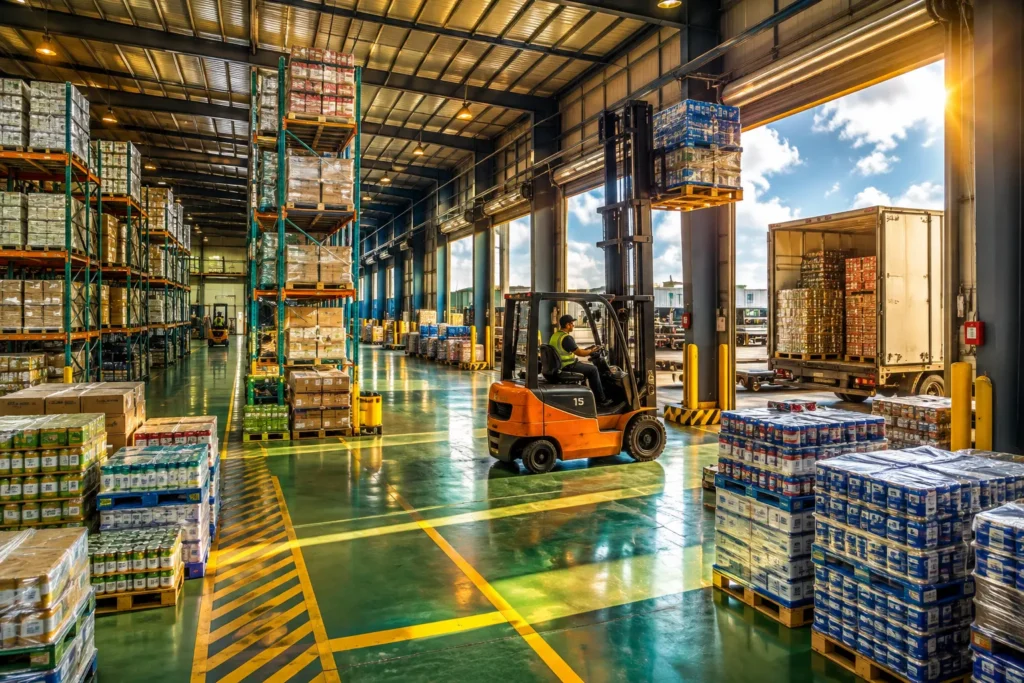
Civil supplies operations involve several handoffs. Goods move from suppliers to warehouses and from warehouses toward distribution channels. Every handoff introduces opportunities for delay, documentation errors, handling issues, or reconciliation gaps.
SOP analytics can examine these transitions rather than looking at each department independently.
For instance, if receiving procedures are completed on time but stock reconciliation repeatedly shows discrepancies later, the corporation can investigate the intermediate stages. If dispatch is consistently delayed after stock becomes available, the issue may lie in vehicle scheduling, documentation, loading capacity, or another operational constraint.
This type of analysis helps management focus on the point where a process is actually weakening.
Video Analytics For Warehouses And Distribution Facilities
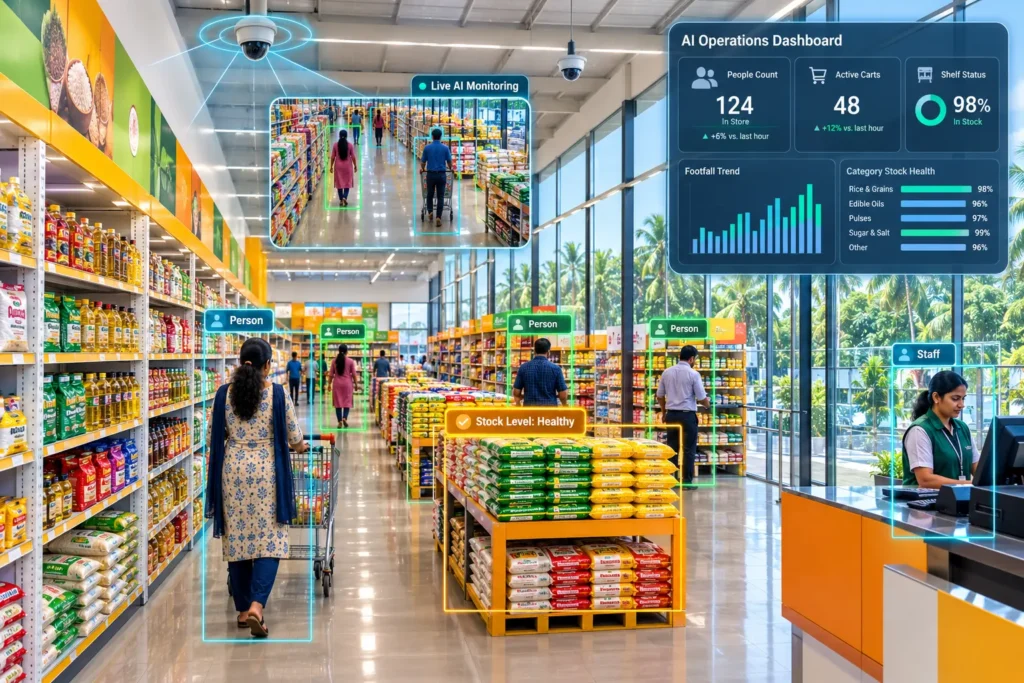
Warehouses and distribution centres are physical environments where activities happen continuously. Video analytics can add another layer of visibility to suitable camera systems.
Instead of relying on staff to monitor every feed, AI can be configured to identify predefined events for review.
Potential applications include:
- Monitoring unauthorised entry into storage areas.
- Detecting people entering restricted warehouse zones.
- Observing vehicle movement around loading areas.
- Identifying prolonged or unusual activity in designated operational zones.
- Supporting investigation of loading, unloading, or stock-handling incidents.
The exact applications should depend on camera placement, image quality, lighting, operating conditions, and the specific purpose of the monitoring system.
Protecting Storage Quality Through Better Process Visibility
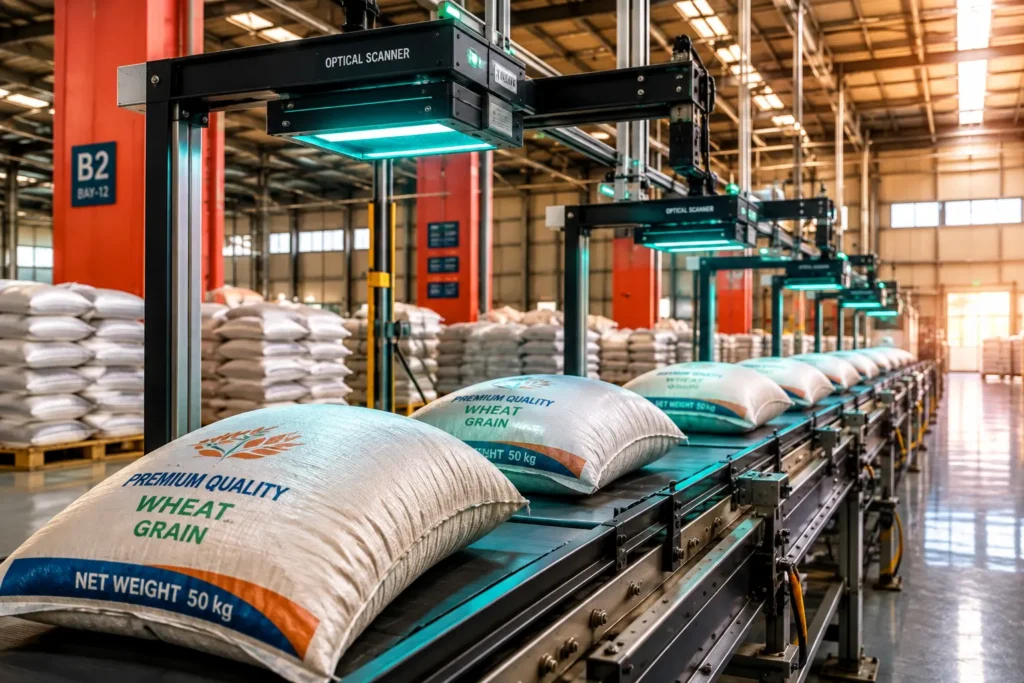
Storage conditions are particularly important for commodities that can deteriorate through moisture, pests, poor handling, or unsuitable environmental conditions.
SOP analytics can examine whether scheduled inspections, cleaning procedures, stock rotation, pest-control activities, equipment checks, and corrective actions are completed within defined timelines.
Video analytics can provide supporting visibility around storage and handling areas. It may help identify access events, activity around designated zones, or other observable conditions that warrant inspection.
AI should not be expected to determine commodity quality from ordinary surveillance footage. Quality assessment should remain based on appropriate inspection, testing, and technical procedures.
Connecting Warehouse Events With Distribution Performance
The value of analytics increases when warehouse information is connected to downstream distribution.
Suppose a corporation observes repeated shortages or delays at certain distribution points. SOP analytics can examine the preceding dispatch records, stock availability, loading procedures, vehicle movements, and reconciliation processes.
Video evidence from appropriate loading or storage locations can provide additional context when an operational incident requires investigation.
Using AI For Better Exception Management
A civil supplies corporation may generate a large number of routine transactions. Reviewing every event with equal attention is inefficient.
AI can help classify exceptions according to factors such as frequency, operational impact, location, commodity category, or recurrence. Management can then prioritise issues that show persistent patterns.
Building A Responsible Implementation Model
A practical pilot could focus on one warehouse network, storage process, or distribution workflow. The corporation could establish baseline measures such as stock reconciliation accuracy, receiving-to-entry time, dispatch delays, inspection completion, corrective-action closure, or incident investigation time.
Video analytics should be evaluated for alert accuracy and usefulness under real warehouse conditions. SOP analytics should be tested against actual records to ensure that identified exceptions are meaningful.
Data access, retention, cybersecurity, auditability, privacy, and human review should be defined before expansion.
For state civil supplies corporations, AI based SOP analytics and video analytics can strengthen the connection between inventory control and physical operations. The objective is not simply tighter surveillance. It is better visibility into where supply processes deviate, why recurring exceptions occur, and where operational teams can intervene before small weaknesses affect the wider distribution network.
FAQs
It can identify recurring gaps in receiving, inspection, storage, stock verification, dispatch, and corrective-action procedures.
Yes. It can support defined security and operational monitoring use cases such as restricted-area access, loading-zone activity, and selected warehouse incidents.
It can identify recurring patterns in stock and process records and help locate relevant operational events for investigation. Human teams should determine the actual cause.
SOP analytics can track inspection, cleaning, pest-control, stock rotation, and related procedures. Video analytics can provide additional visibility around physical storage areas.
A warehouse or distribution workflow with measurable challenges in stock reconciliation, dispatch, inspection compliance, or incident investigation provides a practical starting point.