The Central Industrial Security Force (CISF) protects critical infrastructure and provides security services across airports, industrial establishments, public-sector facilities, ports, power installations, government buildings, and other important locations. Such environments combine controlled access, large workforces, visitors, vehicles, equipment, and continuously changing operational conditions.
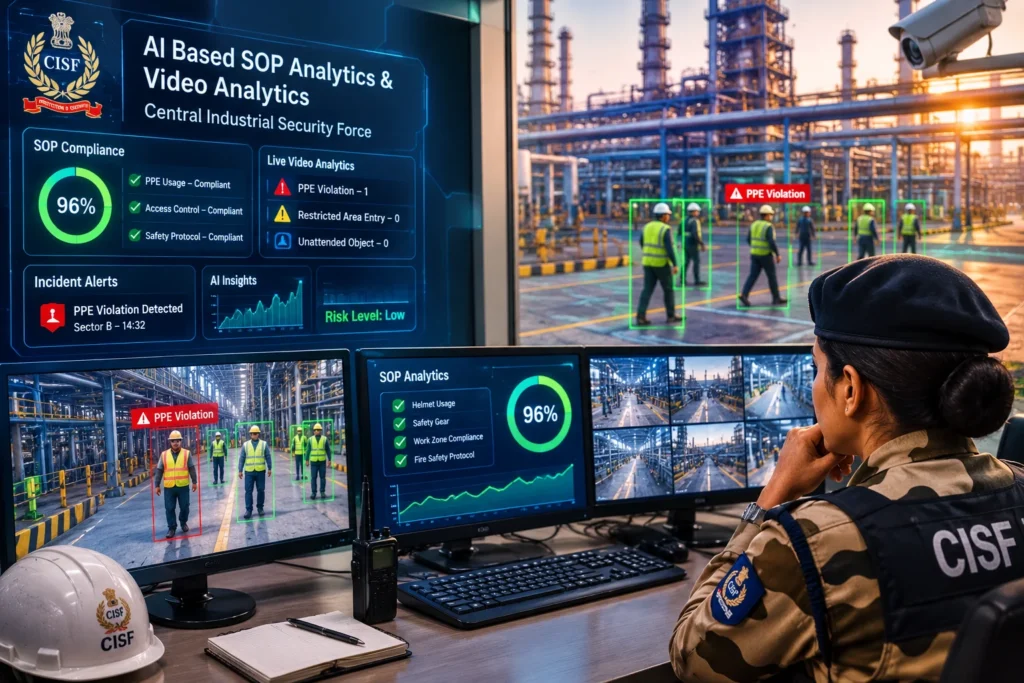
For CISF, AI-based SOP analytics and video analytics can strengthen existing surveillance and supervision by identifying predefined safety, access, and facility-management events. The purpose should be to support security personnel with better information rather than replace professional judgement or established security procedures.
Airport And Passenger-Facing Environments
CISF’s role at airports creates a different requirement from industrial sites. Passenger areas contain high volumes of routine movement, making continuous manual observation challenging.
Video analytics can assist with predefined conditions such as unusual crowd concentration, unattended objects, movement into restricted areas, or other events that require assessment
Industrial And Critical-Facility Monitoring
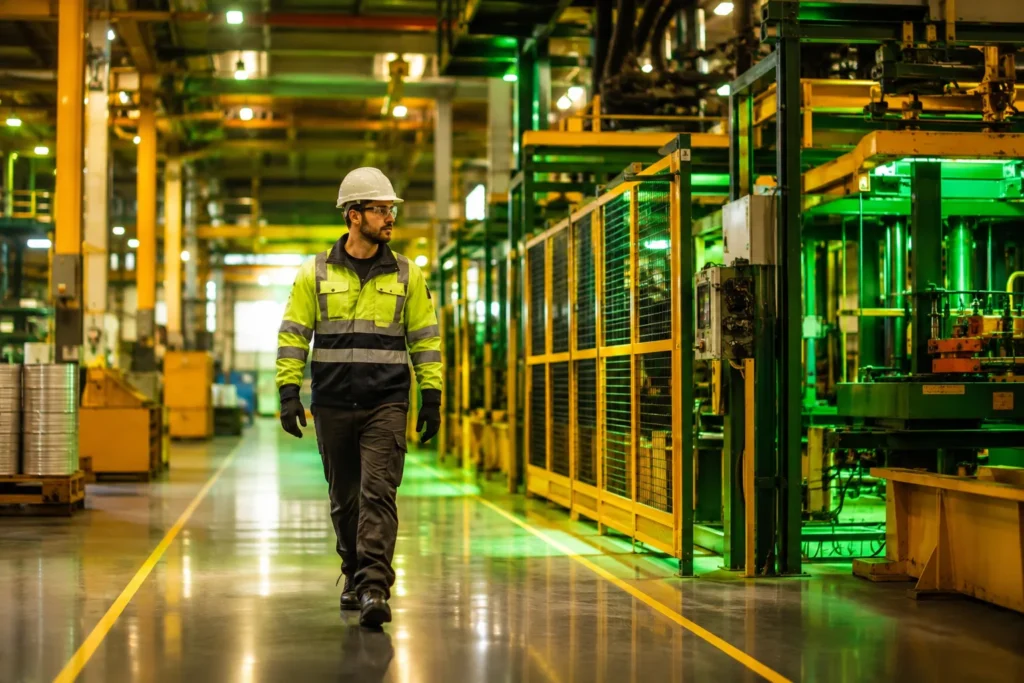
Industrial establishments present opportunities for analytics focused on safety and controlled access.
Personnel may work around machinery, vehicles, storage areas, maintenance equipment, and restricted facilities. Video analytics can monitor predefined zones and identify conditions such as personnel entering equipment areas or vehicles moving through controlled sections.
When combined with relevant operational information, these alerts can become more useful.
For example, an individual entering a controlled maintenance area may be authorised because scheduled work is underway. The same event outside authorised activity may require verification.
Connecting Video Events With Access Information
A key limitation of standalone video analytics is that cameras can identify movement but cannot always determine whether that movement is authorised.
CISF deployments can potentially become more effective when video events are considered alongside:
- Access-control information
- Visitor authorisation
- Maintenance schedules
- Facility operating status
- Vehicle permissions
- Work authorisations
This contextual approach can help reduce unnecessary alerts and allow security personnel to focus on events that warrant investigation.
The integration should be designed carefully, with appropriate permissions and cybersecurity controls.
Using AI For Incident Review
Video analytics can also reduce the effort required to investigate incidents after they occur.
Instead of manually reviewing lengthy recordings, authorised personnel can search for relevant footage using time, location, movement, vehicle presence, or predefined event categories.
This can support reviews involving:
- Access-control incidents
- Workplace safety events
- Vehicle-related occurrences
- Facility security concerns
- Unattended objects
- Procedural deviations
AI-assisted search does not replace formal investigation. It helps investigators locate potentially relevant material more efficiently.
Learning From Repeated Events
Repeated detections can provide information about weaknesses in facilities or procedures.
For example, recurring access violations at one location may indicate that physical access arrangements need review. Frequent worker-equipment proximity events may suggest that traffic routes or workspace design should be reconsidered.
Similarly, repeated PPE deviations could indicate gaps in training, supervision, or equipment availability.
This allows CISF and relevant facility management teams to look beyond individual incidents and identify recurring conditions that may benefit from corrective action.
Security And Governance Must Come First
Because CISF operates in sensitive environments, AI video analytics should be implemented with strong governance.
Important considerations include:
- Role-based access
- Secure network architecture
- Controlled data retention
- Authentication and encryption
- Audit trails
- Cybersecurity testing
- Protection of sensitive footage
- Controlled system integration
- Human verification of significant alerts
Models should also be tested in realistic conditions, including different lighting, crowd densities, camera obstruction, weather conditions, and changing facility layouts.
Measuring The Value Of AI Analytics
The success of deployment should be measured through outcomes rather than the number of cameras or alerts.
Relevant indicators include:
- Reduction in recurring SOP deviations
- PPE compliance
- Restricted-area events
- Worker-equipment proximity incidents
- Alert response time
- False-positive rate
- Incident investigation time
- Corrective-action closure
- Manual CCTV review effort
For CISF, AI-based SOP analytics and video analytics can complement existing security, safety, access-control, and surveillance processes. A carefully governed deployment can improve situational awareness across appropriate facilities while keeping security personnel responsible for verification, interpretation, and final decisions.
Frequently Asked Questions
Yes. It can monitor selected visual requirements such as PPE, restricted areas, equipment zones, access conditions, and defined safety procedures.
It can identify predefined conditions such as unusual crowding, unattended objects, restricted-area entry, and other events requiring assessment by authorised personnel.
Potentially. Combining video events with access information can provide context and help distinguish authorised activity from events requiring verification.
Yes. AI-assisted search can help authorised investigators locate relevant footage more quickly using time, location, movement, or predefined event characteristics