The Border Security Force (BSF) operates across diverse environments where personnel may work at border outposts, administrative facilities, training centres, logistics locations, transport areas, and other controlled premises. These environments require disciplined adherence to procedures, reliable facility security, personnel safety, and continuous situational awareness.
AI-based SOP analytics and video analytics can support BSF by adding an intelligent monitoring layer to existing surveillance infrastructure. Rather than replacing personnel or operational procedures, AI can identify predefined visual conditions and bring relevant events to the attention of authorised teams.
SOP Analytics For Daily BSF Operations
SOPs become particularly useful for AI when their requirements can be translated into visible conditions.
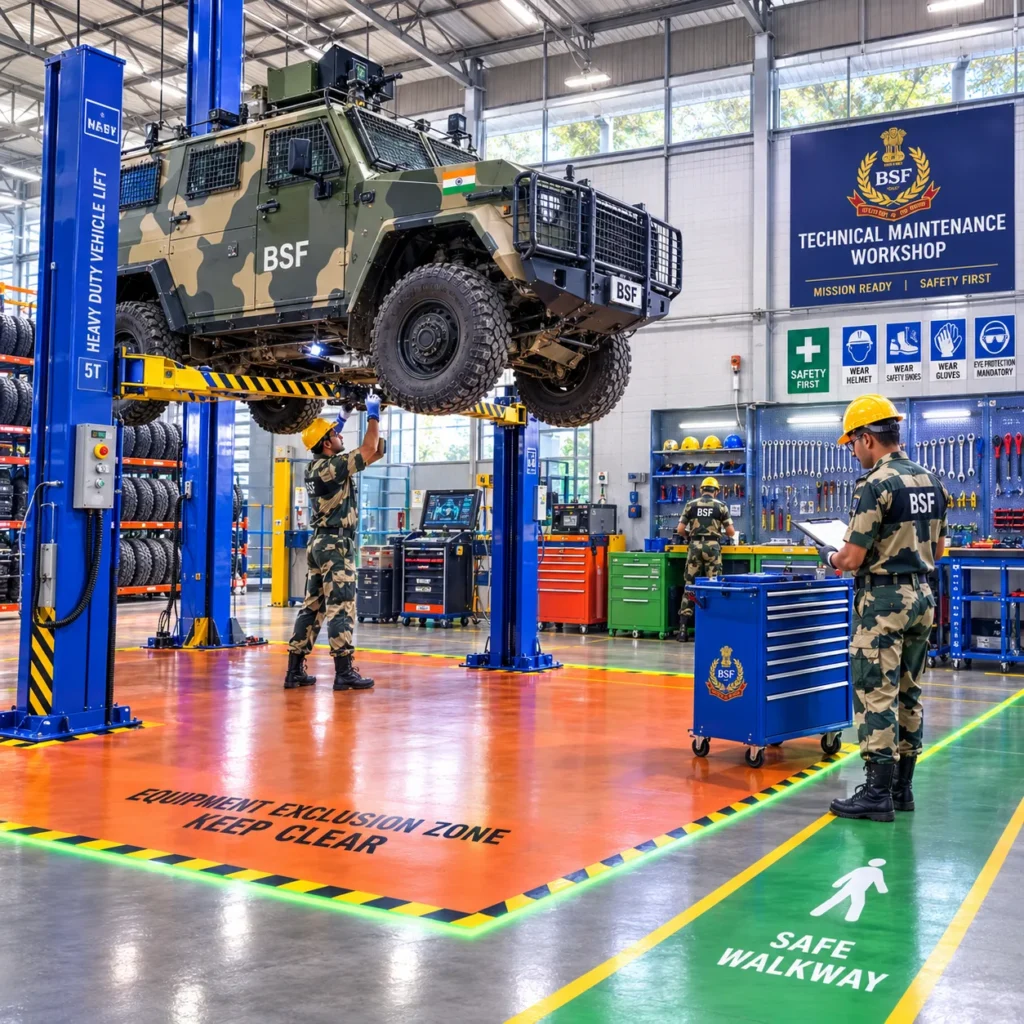
For example, a controlled facility may require personnel to wear specified protective equipment in a workshop or remain outside an equipment zone during particular activities. Video analytics can monitor those conditions and flag potential deviations.
Possible applications include:
Operational Area | AI-Based Monitoring | Potential Benefit |
Workshops | PPE and equipment-zone detection | Workplace safety |
Vehicle Areas | Person-vehicle interaction | Safer movement |
Stores | Restricted access | Asset protection |
Training Facilities | Controlled-zone monitoring | Procedural compliance |
Administrative Premises | Access monitoring | Facility security |
The system should not attempt to interpret complex operational decisions. Its role is to identify observable conditions for qualified personnel to assess.
Training Centres Can Provide A Structured Environment
Training facilities can be suitable locations for introducing SOP analytics because activities and designated areas are generally more structured than in open environments.
AI can support monitoring of selected requirements involving PPE, controlled access, equipment zones, and movement within designated areas.
If repeated deviations are detected, BSF teams can investigate whether the underlying cause relates to training, supervision, signage, facility layout, or procedure design.
This makes analytics useful not only for identifying individual events but also for understanding recurring patterns.
Moving From Passive Surveillance To Event-Based Monitoring
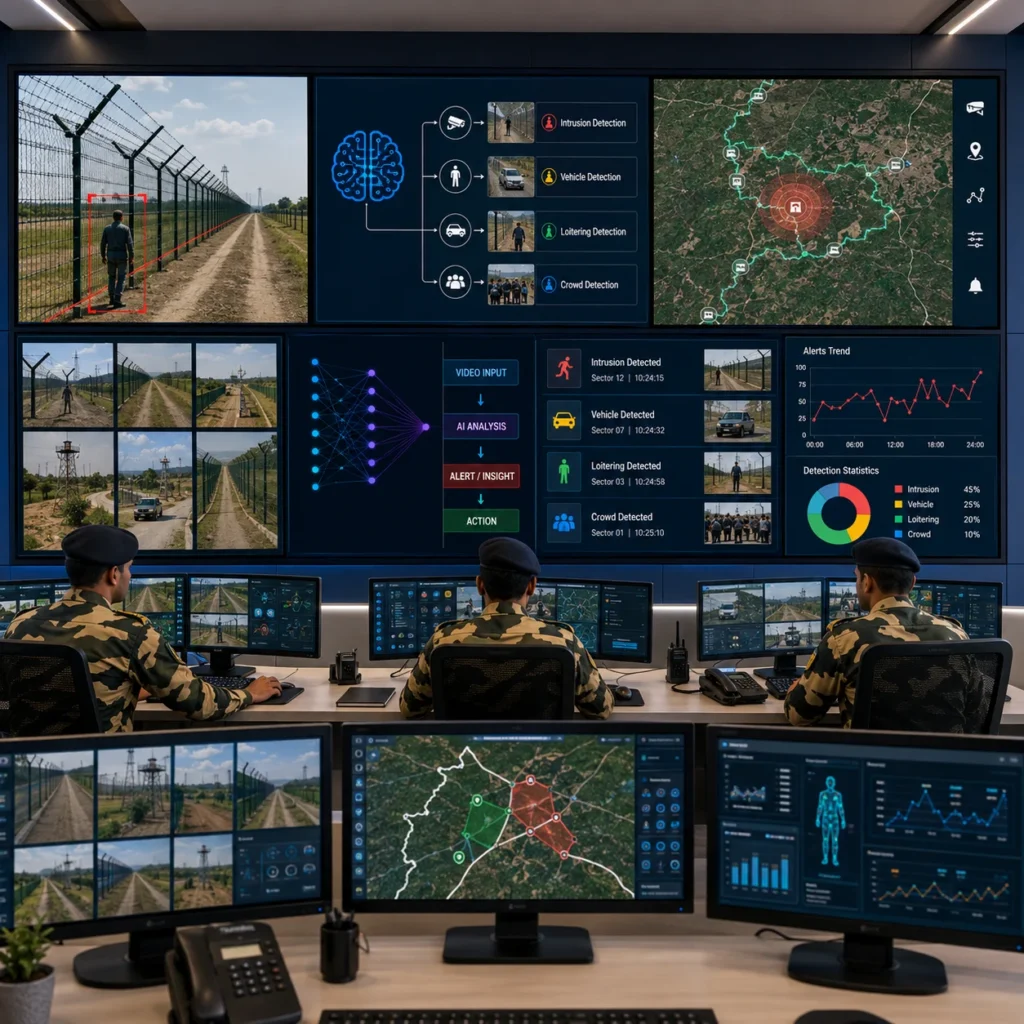
Conventional CCTV provides valuable recordings, but continuously watching numerous feeds can place a significant burden on personnel. AI can assist by detecting specific events that match predefined rules.
Potential applications within appropriate controlled environments include:
- Entry into restricted areas
- PPE compliance in designated work locations
- Personnel movement around equipment
- Vehicle movement within controlled premises
- Unusual gatherings or activity
- Obstructions on designated routes
- Camera obstruction or tampering
- Safety-zone violations
The focus should remain on clearly defined situations where an alert has an established response.
Strengthening Safety Around Vehicles And Equipment
BSF facilities may include workshops, transport areas, generators, maintenance equipment, storage facilities, and other operational assets. Personnel and vehicles can sometimes operate within overlapping spaces.
Video analytics can monitor predefined zones and identify potentially unsafe worker-vehicle interaction or personnel entering areas designated for equipment operations.
Such alerts can help supervisors intervene when necessary and can also contribute to later safety reviews.
The technology should complement physical barriers, signage, supervision, training, and established safety controls rather than replace them.
Using Context To Improve Security Alerts
A video detection does not necessarily represent a security violation.
For example, an individual entering a restricted facility may be authorised personnel carrying out scheduled duties. A vehicle inside a controlled area may be expected because maintenance or logistics activity is taking place.
BSF could potentially improve alert prioritisation by associating video events with relevant operational information such as:
- Access permissions
- Duty schedules
- Work authorisations
- Maintenance activities
- Vehicle records
- Facility status
Video Analytics For Incident Investigation
AI can also support BSF after an incident has occurred. Reviewing lengthy recordings manually can be time-consuming, particularly when several cameras cover the same facility.
AI-assisted search can help authorised personnel locate relevant footage based on time, location, movement, or predefined event categories.
This may support internal reviews of workplace incidents, unauthorised access, vehicle-related events, facility-security concerns, or procedural deviations.
The resulting information can help establish the sequence of events and support appropriate investigation processes.
Learning From Repeated Deviations
The long-term value of SOP analytics comes from identifying patterns.
If personnel repeatedly enter a particular restricted area, the issue may relate to unclear access routes or inadequate physical separation. Recurrent PPE alerts may point towards training, supervision, or equipment availability.
Similarly, repeated vehicle-person interaction in one facility could indicate that traffic movement or site layout needs review.
Aggregated analytics can therefore provide management teams with an additional evidence base for improving procedures and workplace arrangements.
Security, Privacy And System Governance
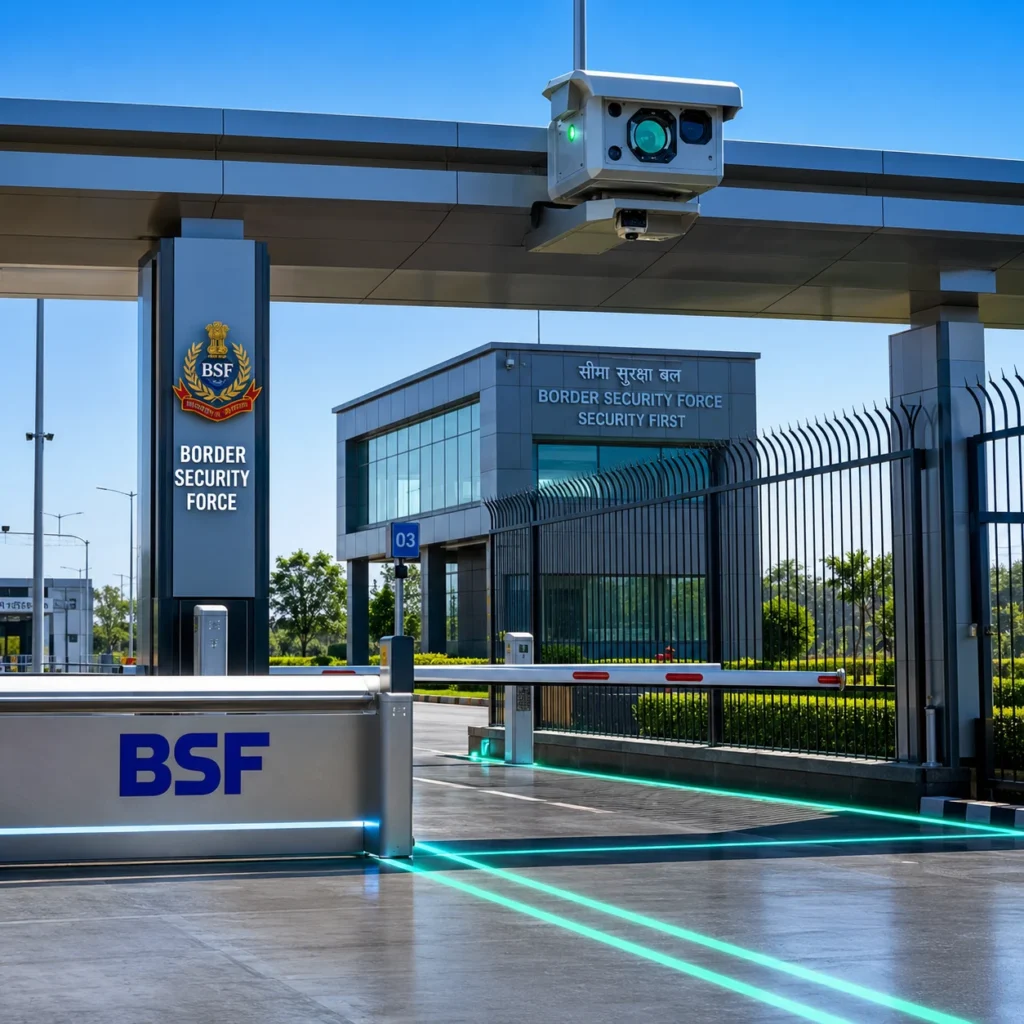
Because BSF operates in a sensitive security environment, AI video analytics should be implemented with strong governance and cybersecurity controls.
Important considerations include:
- Role-based access
- Secure network architecture
- Controlled data retention
- Authentication and encryption
- Audit trails
- Cybersecurity testing
- Protection of sensitive footage
- Controlled system integration
- Human validation of significant alerts
Measuring The Operational Impact
The effectiveness of AI analytics should be assessed through practical outcomes rather than the number of cameras or alerts generated.
Useful indicators include:
- Reduction in recurring SOP deviations
- PPE compliance
- Restricted-area events
- Worker-equipment proximity incidents
- Alert response time
- False-positive rate
- Incident investigation time
- Corrective-action closure
- Manual CCTV review effort
Frequently Asked Questions
It can identify predefined access violations, unusual activity, restricted-area movement, and camera tampering for review by authorised personnel.
Yes. In suitable controlled locations, video analytics can identify predefined proximity or movement conditions and generate alerts for responsible teams.
Yes. In suitable controlled locations, video analytics can identify predefined proximity or movement conditions and generate alerts for responsible teams.