AI video analytics for BEML can support SOP compliance, workplace safety, and security across industrial manufacturing and engineering facilities. AI-powered video analytics can help identify safety violations, monitor restricted areas, and improve operational visibility using CCTV infrastructure. Its manufacturing facilities involve heavy equipment, fabrication, assembly, machining, material handling, testing, vehicle movement, and specialised production activities. These environments require close adherence to safety procedures and operational controls.
For BEML, AI-based SOP analytics and video analytics can provide a practical way to strengthen workplace safety, process compliance, security, and operational visibility. The opportunity is particularly relevant as BEML has been actively exploring AI applications including safety monitoring, predictive maintenance, and other digital use cases. The company has also identified secure, in-house AI infrastructure as important because of the confidentiality requirements associated with defence and strategic operations.
The BEML Environment And Its AI Opportunities
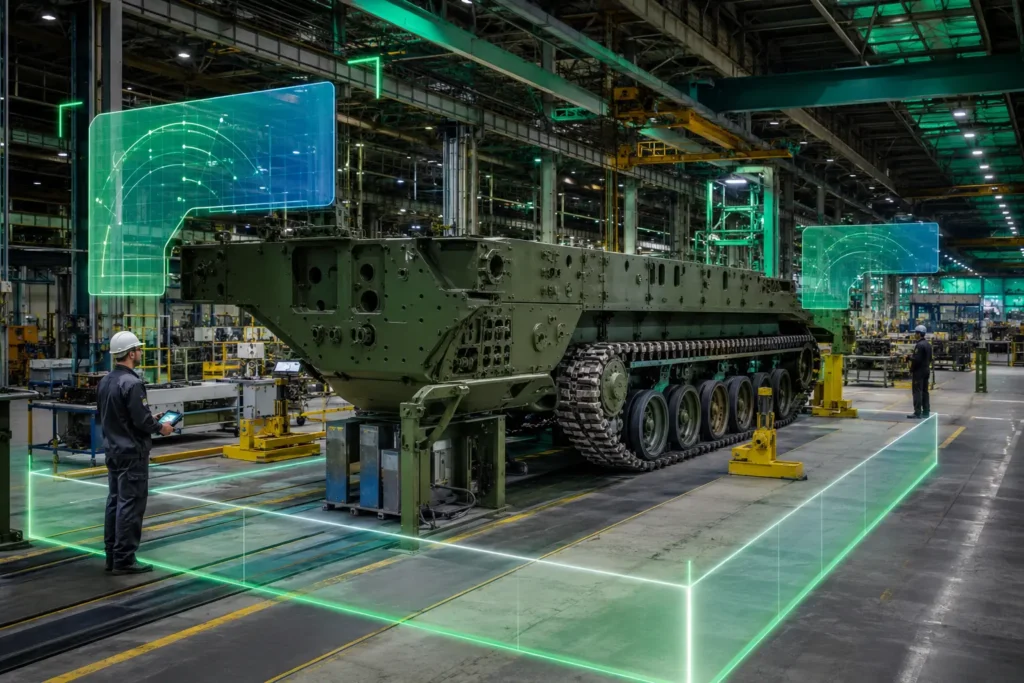
Unlike a single-purpose manufacturing organisation, BEML operates across several business environments. This means AI analytics should not follow one standard use case across every facility.
A construction-equipment plant may require monitoring of heavy machinery and material movement, while a defence manufacturing facility may place greater emphasis on restricted access and controlled production areas. Rail and metro manufacturing may require attention to large-component handling, assembly zones, vehicle movement, and worker safety.
This creates several potential application areas:
- PPE compliance
- Restricted-area monitoring
- Worker-equipment proximity
- Crane and lifting-zone safety
- Vehicle and pedestrian movement
- Material-handling activities
- Housekeeping and obstruction detection
- Access and perimeter monitoring
The objective should be to identify situations where AI can provide reliable information that leads to a defined human response.
How SOP Analytics Can Work On The Shop Floor
An SOP describes how a particular activity should be performed. AI-based SOP analytics can convert selected, observable parts of those procedures into digital rules.
For example, where an SOP requires workers to remain outside a designated crane operating zone, computer vision can monitor the area and identify when a person enters it. Similarly, an AI system can check whether required PPE is present before or during a defined activity.
SOP Area | What AI Can Observe | Possible Action |
PPE | Helmet, vest and other required equipment | Alert supervisor |
Crane Operations | Personnel inside exclusion zones | Immediate warning |
Material Handling | People or vehicles in defined areas | Intervention |
Vehicle Movement | Pedestrian-vehicle proximity | Safety alert |
Restricted Access | Unauthorised presence | Security notification |
Housekeeping | Selected obstructions | Inspection request |
Not every SOP can be assessed visually. BEML should prioritise procedures where the required condition is clearly observable and where an alert can lead to a specific action.
Combining Video With Plant Information
Video analytics can become more useful when combined with other industrial information.
BEML could potentially connect AI-generated events with equipment status, access-control systems, maintenance records, production information, safety applications, and facility-management platforms.
Video Analytics Across BEML’s Three Business Areas
Defence And Aerospace
BEML’s defence-related operations involve sensitive manufacturing environments where physical security and workplace safety can overlap. Video analytics can monitor authorised access, restricted zones, perimeter activity, material movement, and selected safety conditions.
Because these facilities may handle sensitive information and equipment, analytics should operate within secure networks with strict access controls and appropriate data-retention policies.
Mining And Construction Equipment
Heavy machinery manufacturing creates opportunities for monitoring cranes, forklifts, workers, vehicles, loading areas, and assembly zones. AI can identify unsafe proximity or movement within predefined equipment zones.
Video analytics can also support investigations by helping supervisors locate relevant events without manually reviewing hours of footage.
Rail And Metro Manufacturing
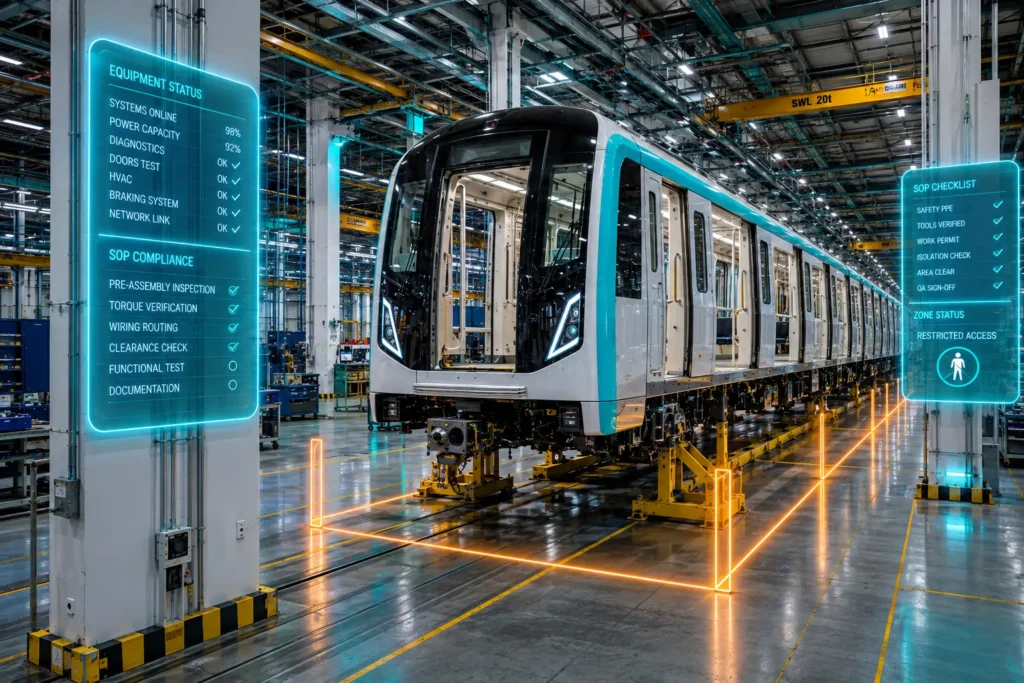
Large components, rolling stock, lifting equipment, assembly operations, and vehicle movement create different monitoring requirements. AI can support PPE compliance, controlled access, material-handling safety, and pedestrian movement around large assemblies.
Measuring The Impact
BEML can assess the effectiveness of AI-based SOP and video analytics through measurable safety and operational indicators.
Relevant KPIs include:
- Reduction in repeated SOP deviations
- PPE compliance
- Worker-equipment proximity events
- Restricted-area violations
- Safety-alert response time
- False-positive rate
- Incident investigation time
- Corrective-action closure time
- Manual surveillance workload
A Secure And Phased Deployment
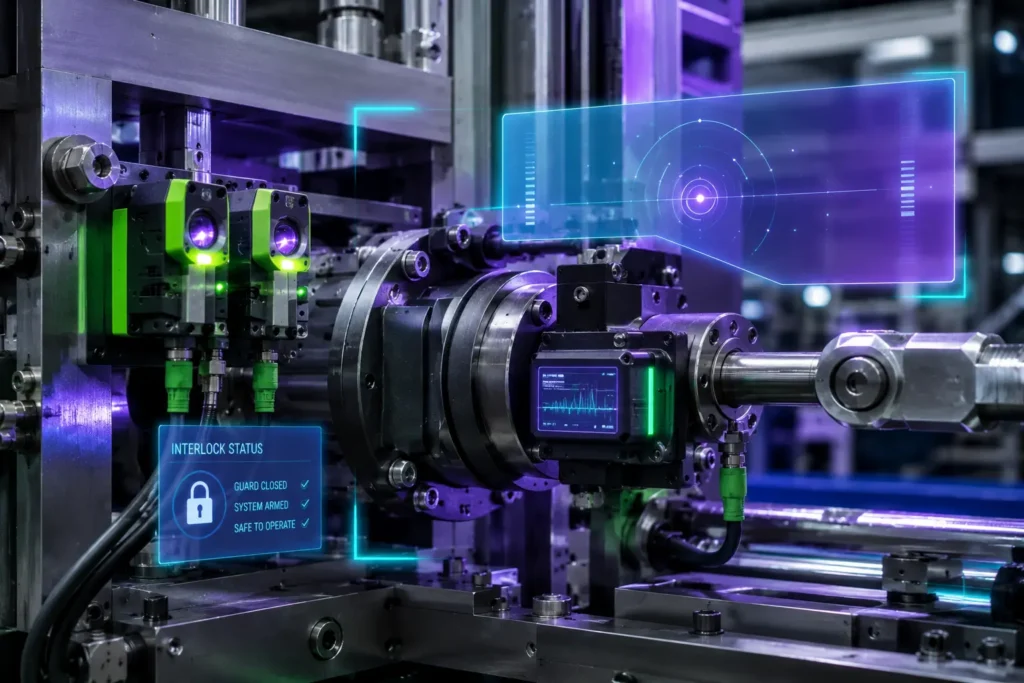
BEML’s defence and strategic activities make cybersecurity an important part of any AI video analytics programme. Recent discussions around BEML’s digital transformation have highlighted challenges involving secure AI deployment, cybersecurity, computing resources, and specialist AI skills.
Phase One: Select Critical SOPs
Identify high-risk procedures that can be reliably monitored through cameras or sensors.
Phase Two: Test Site Conditions
Evaluate cameras, connectivity, lighting, computing capacity, and environmental factors such as glare, dust, obstruction, and changing illumination.
Phase Three: Establish Response Workflows
Assign responsibility for each alert category and define escalation and corrective-action procedures.
Phase Four: Expand Proven Applications
Scale applications only after measuring detection accuracy, false-alert rates, response times, and operational value.
Frequently Asked Questions
It is an AI-enabled system that compares selected observable workplace activities with predefined safety or operating procedures and identifies potential deviations.
It can monitor selected areas for PPE violations, restricted access, unsafe worker-equipment proximity, vehicle movement, and other predefined conditions that require attention.
Yes. The underlying technology can support defence, mining and construction equipment, and rail and metro manufacturing, but the detection rules should be customised for each operating environment
Yes. Connecting video events with equipment status, access information, maintenance systems, or other plant data can provide additional context and help prioritise alerts.