A municipal corporation serving Bengaluru has to manage problems that can change from one street to the next. A waste collection point may require attention while a roadwork complaint is being investigated elsewhere, a storm water drain needs inspection, and a public facility requires maintenance. The challenge for Bruhat Bengaluru Mahanagara Palike (BBMP) is therefore not simply knowing that work is happening, but understanding whether processes are being followed consistently and whether field conditions match what operational records indicate.
A Ward-Level View Of AI Opportunities
For BBMP, the most useful AI strategy can begin at the level where municipal work actually happens: the ward and field operation. Instead of deploying one broad analytics model across every department, different AI applications can be aligned with specific municipal functions.
This approach allows AI based SOP analytics to examine the administrative side of service delivery while video analytics provides additional visibility into physical environments.
The combination can support departments responsible for roads, solid waste, storm water drains, health, parks, markets, public facilities, and other civic services.
Solid Waste Management: Measuring Execution, Not Just Collection
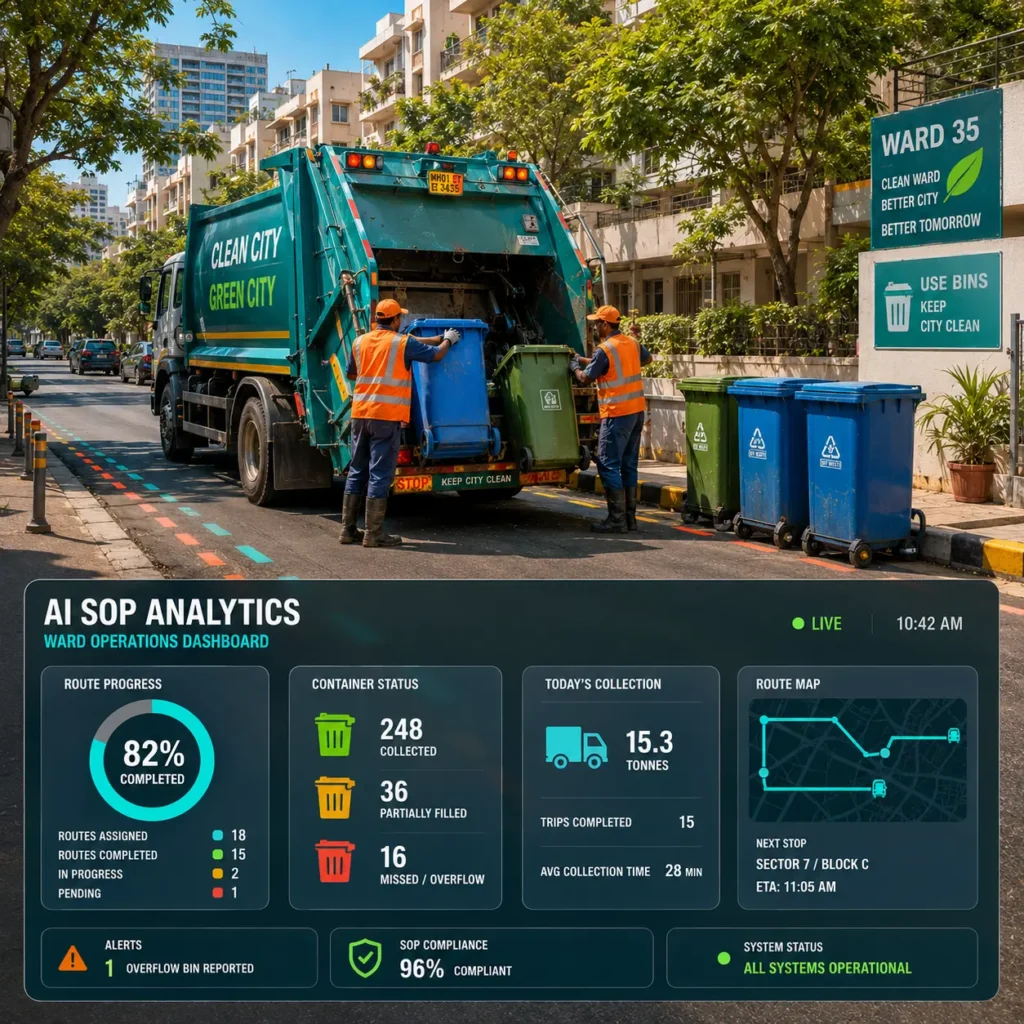
Waste management involves repeated activities that lend themselves to process analytics. SOP analytics can examine whether collection schedules, vehicle procedures, segregation requirements, transfer activities, inspection routines, and reporting steps are being completed as defined.
The more valuable question is where recurring exceptions occur.
For example, analytics could identify whether missed collection reports are concentrated around particular routes, time periods, vehicle categories, or operational teams. Repeated patterns can then be investigated to determine whether the cause involves scheduling, vehicle availability, route constraints, staffing, or process execution.
Video analytics can complement this by monitoring suitable collection points, transfer areas, or municipal facilities for predefined visual conditions such as accumulation, unauthorised access, or activity requiring field verification.
Roads And Storm Water Drains: Bringing Field Evidence Into The Process
Road and drainage work presents a different challenge because conditions can change quickly. An inspection report may describe a location at one point in time, while subsequent traffic, rainfall, construction, or obstruction can alter the situation.
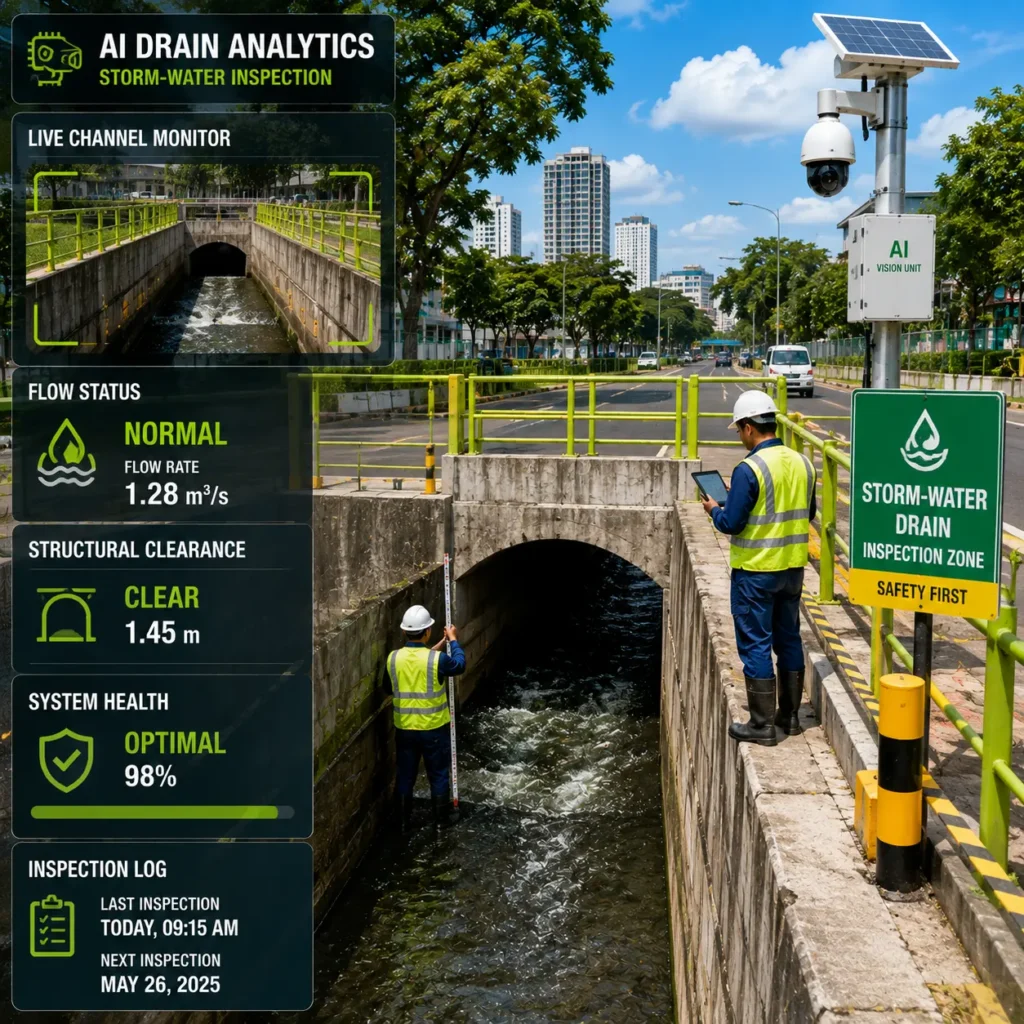
AI based SOP analytics can evaluate whether required inspections, work orders, approvals, completion checks, and corrective actions are being completed within defined procedures.
Video analytics can provide supporting visibility at selected locations. Depending on camera coverage, it could help identify defined conditions around work zones, road obstructions, restricted areas, or drainage infrastructure.
.
Public Health And Municipal Facilities
BBMP’s operational environment also includes public health facilities and civic buildings where safety, hygiene, access control, and maintenance procedures matter.
SOP analytics can examine inspection schedules, cleaning procedures, maintenance records, corrective actions, and service requests. Repeated exceptions can reveal where procedures are not translating into consistent execution.
Video analytics may support selected facility-level use cases such as monitoring restricted access, identifying unusual movement in controlled areas, or supporting incident investigations.
Parks, Markets And Public Spaces
Public spaces require a different analytical approach because activity varies by time, location, and usage pattern.
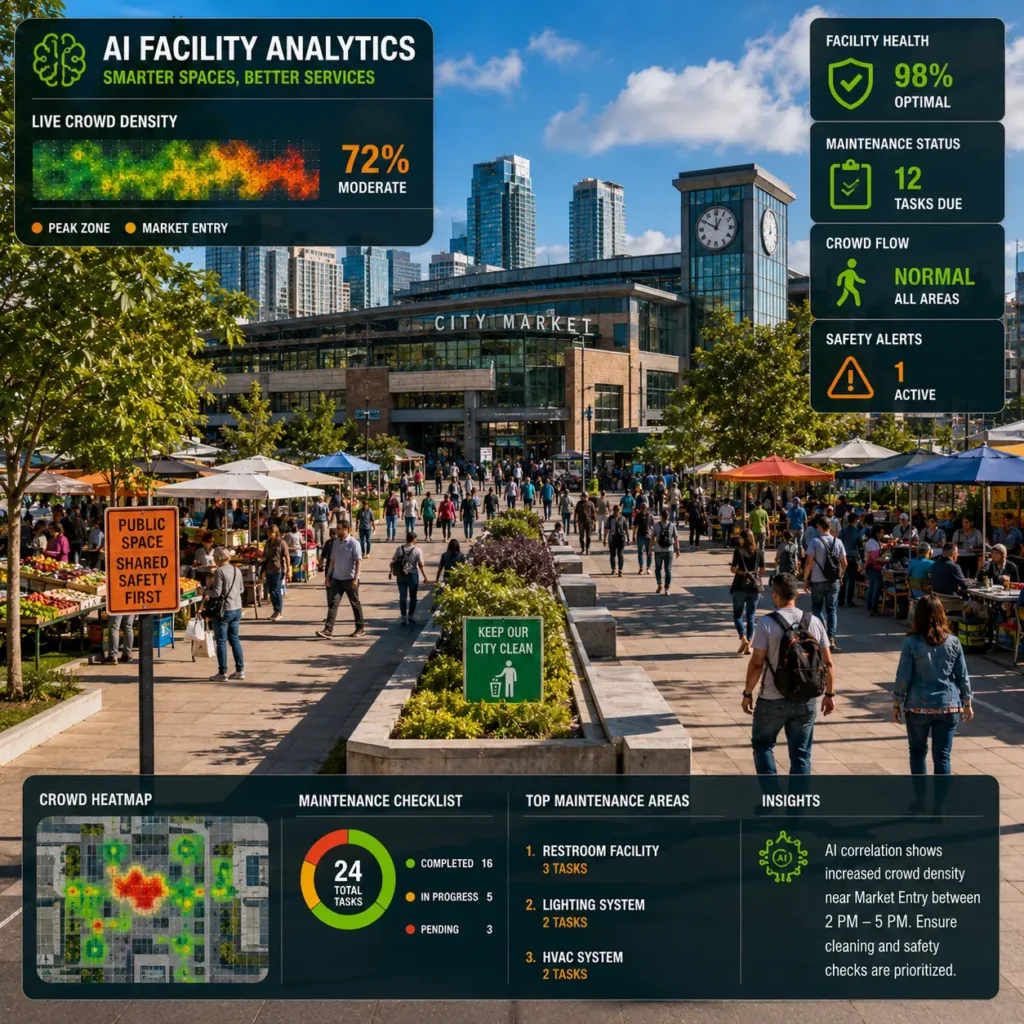
At markets or busy civic areas, video analytics could help identify defined conditions such as overcrowding in designated areas, obstruction of access routes, or unauthorised entry into restricted operational spaces.
For parks and public facilities, analytics could support monitoring of access points, maintenance-related conditions, or selected safety events.
SOP analytics can then examine whether inspections, cleaning, maintenance, and corrective actions are being completed as expected.
Turning Repeated Complaints Into Process Intelligence
Citizen complaints can become particularly valuable when they are connected with operational data.
If the same category of complaint repeatedly comes from a particular area, SOP analytics can examine what happened after each complaint: assignment, inspection, field action, escalation, closure, and any subsequent recurrence.
Video evidence, where available and appropriate, can provide additional context about the physical environment.
This enables BBMP to distinguish between isolated service requests and recurring process problems. A repeated complaint may indicate that the original corrective action was incomplete, the underlying cause was not addressed, or the responsible workflow needs redesign.
Designing AI Around Accountability
AI should make municipal management more informed, not create another layer of automated reporting.
A BBMP pilot could begin with one operational problem and establish measurable indicators such as:
- Reduction in recurring SOP deviations.
- Faster completion of corrective actions.
- Improved inspection compliance.
- Faster investigation of selected incidents.
- Reduced recurrence of specific service complaints.
- More relevant video alerts.
Human review should remain part of the process. Access permissions, data retention, cybersecurity, privacy safeguards, alert escalation, and model-performance checks should be defined before wider deployment.
For Bruhat Bengaluru Mahanagara Palike, the opportunity lies in connecting the procedure, the field condition, and the service outcome. AI based SOP analytics can reveal where municipal processes repeatedly fall short, while video analytics can add contextual visibility to physical operations. Together, they can support more consistent execution and evidence-based improvement across Bengaluru’s civic services.
FAQs
It can identify recurring deviations in inspections, maintenance, waste management, complaint handling, and other defined workflows, helping managers focus on persistent process weaknesses
Yes. At suitable monitored locations, it can identify predefined visual conditions such as waste accumulation, restricted-area access, or unusual activity for human verification.
Yes. SOP analytics can examine the history of assignments and corrective actions, while relevant video evidence can provide additional context where suitable camera coverage exists.
It can support monitoring of selected locations for defined visual conditions, such as obstructions or activity around designated work areas, while engineers and field officials remain responsible for assessment.