
Manufacturing organizations are under constant pressure to improve productivity, maintain quality standards, reduce operational waste, and respond quickly to changing market demands. While modern factories have invested heavily in automation and digital technologies, many shop floors still struggle with limited visibility into day-to-day operations.
Production delays, process deviations, quality inconsistencies, safety concerns, and inefficient resource utilization often remain hidden until they impact performance. As manufacturing environments become more complex, traditional monitoring methods are no longer sufficient to provide the real-time insights needed for effective decision-making.
This challenge is driving the rise of AI-powered shop floor intelligence, a new approach that combines operational visibility, data analysis, and real-time monitoring to help manufacturers improve performance and maintain operational control.
What Is Shop Floor Intelligence?
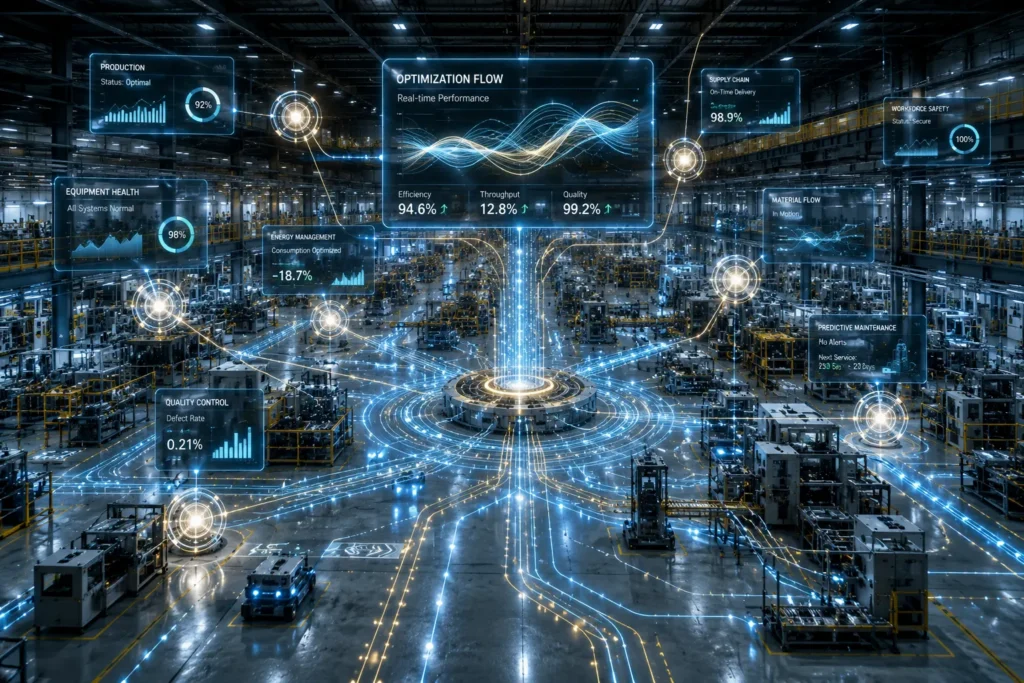
Shop floor intelligence refers to the ability to continuously monitor, analyze, and understand activities occurring across manufacturing operations.
It helps organizations gain visibility into:
- Production workflows
- Equipment performance
- Process adherence
- Workforce activities
- Material movement
- Quality control processes
- Safety compliance
Rather than relying solely on historical reports, manufacturers can access real-time insights that support faster and more informed decisions.
Why Traditional Shop Floor Monitoring Falls Short
Many manufacturing facilities still depend on manual supervision, periodic inspections, and retrospective reporting.
While these methods provide useful information, they often create operational blind spots.
Common challenges include:
Limited Real-Time Visibility
Supervisors cannot monitor every production line, workstation, or process simultaneously.
Delayed Issue Detection
Problems are often identified only after they have affected productivity or quality.
Inconsistent Process Execution
Variations in workflow execution can occur across shifts, departments, and facilities.
Reactive Decision-Making
Organizations frequently respond to issues after they occur rather than preventing them beforehand.
These limitations make it difficult to achieve consistent operational excellence.
The Role Of Computer Vision In Modern Manufacturing
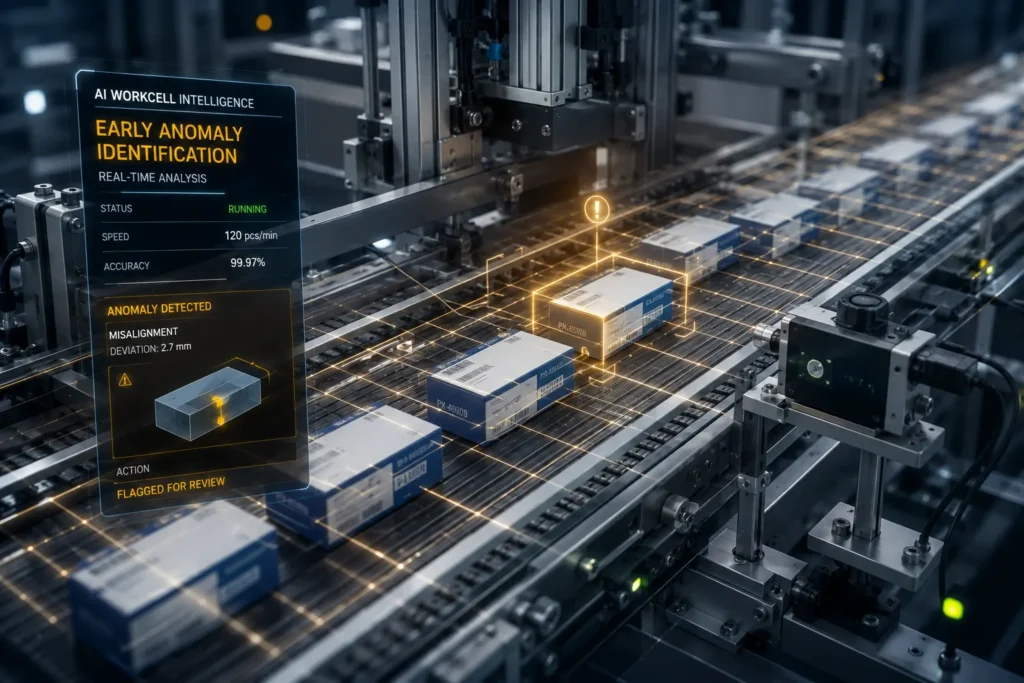
Computer vision is becoming one of the most important technologies supporting shop floor intelligence.
By analyzing visual information from cameras and monitoring systems, computer vision can help manufacturers:
- Verify process adherence
- Detect operational deviations
- Monitor production activities
- Identify safety risks
- Improve quality control
- Support compliance initiatives
This creates a new level of visibility into physical operations that traditional systems often cannot provide.
Compare Traditional Manufacturing Oversight And AI-Powered Shop Floor Intelligence
Traditional Oversight | AI-Powered Shop Floor Intelligence |
Periodic inspections | Continuous monitoring |
Manual observations | Automated intelligence |
Historical reporting | Real-time visibility |
Reactive responses | Proactive intervention |
Limited operational awareness | Enterprise-wide visibility |
Delayed issue detection | Early anomaly identification |
This shift is helping manufacturers create smarter, more responsive operations.
How AI Is Transforming The Shop Floor
AI enables manufacturers to move from reactive operations to proactive operational management.
By continuously analyzing operational activities, AI can identify patterns, detect anomalies, and generate actionable insights in real time.
Continuous Operational Monitoring
AI provides ongoing visibility into production activities, helping organizations identify issues as they emerge.
Early Detection Of Process Deviations
Small process variations can be identified before they affect quality, output, or compliance.
Faster Decision Support
Real-time intelligence enables managers to respond quickly to operational challenges.
Improved Resource Utilization
AI helps organizations optimize workflows, equipment usage, and workforce productivity.
Building The Factory Of The Future
The next industrial revolution is not defined solely by automation. It is defined by intelligence. Manufacturers need the ability to understand what is happening across their operations in real time and act on that information quickly.
AI-powered shop floor intelligence provides the visibility, awareness, and decision support needed to improve operational performance, reduce risk, and support continuous improvement. Organizations that embrace intelligent monitoring and real-time operational insights will be better positioned to build resilient, efficient, and future-ready manufacturing environments.
How CAPASai Supports Shop Floor Intelligence
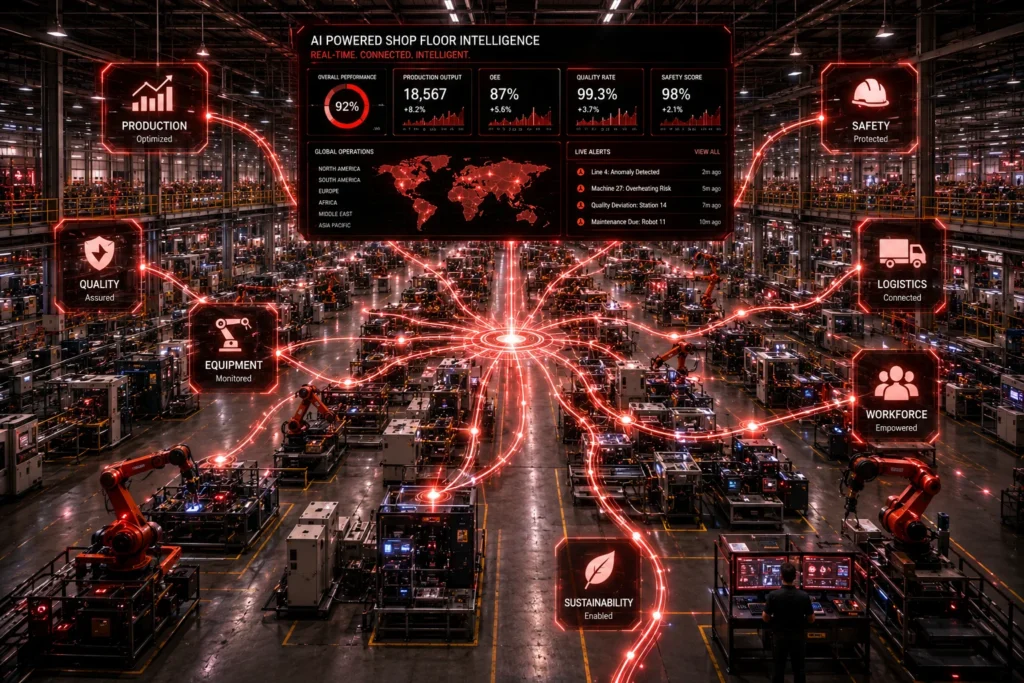
CAPASai helps manufacturers strengthen shop floor intelligence through AI-powered video analytics, real-time monitoring, remote visibility, and intelligent alerts. By providing continuous insight into production activities, process adherence, safety compliance, and operational performance, CAPASai enables organizations to improve efficiency, identify issues early, and maintain greater control over manufacturing operations.