For years, organizations viewed CCTV systems primarily as security tools. Cameras were installed to deter theft, investigate incidents, and provide recorded evidence when something went wrong. The technology served an important purpose, but its role was largely passive. Cameras captured events, while people remained responsible for finding, reviewing, and interpreting what happened.
Today, that expectation is changing.
As enterprises face increasing pressure to improve efficiency, maintain compliance, and standardize operations across multiple locations, businesses are beginning to ask more from their existing infrastructure. Instead of simply recording activities, organizations want systems that can help ensure processes are being followed correctly in real time.
This shift is transforming CCTV from a surveillance tool into a process assurance platform.
When Recording Is No Longer Enough
Traditional CCTV systems excel at capturing footage. The challenge begins after the recording is created.
A manufacturing process may deviate from established procedures. A safety protocol may be skipped. A retail operation may fail to meet service standards. A warehouse workflow may become inefficient.
In many cases, the evidence exists on camera. However, discovering the issue often depends on someone reviewing footage later, sometimes hours or even days after the event occurred.
For organizations managing multiple facilities, relying solely on manual video review creates significant operational limitations.
The question is no longer whether an event was recorded.
The question is whether the organization can identify and address the issue before it affects performance.
The Emergence of Process Assurance
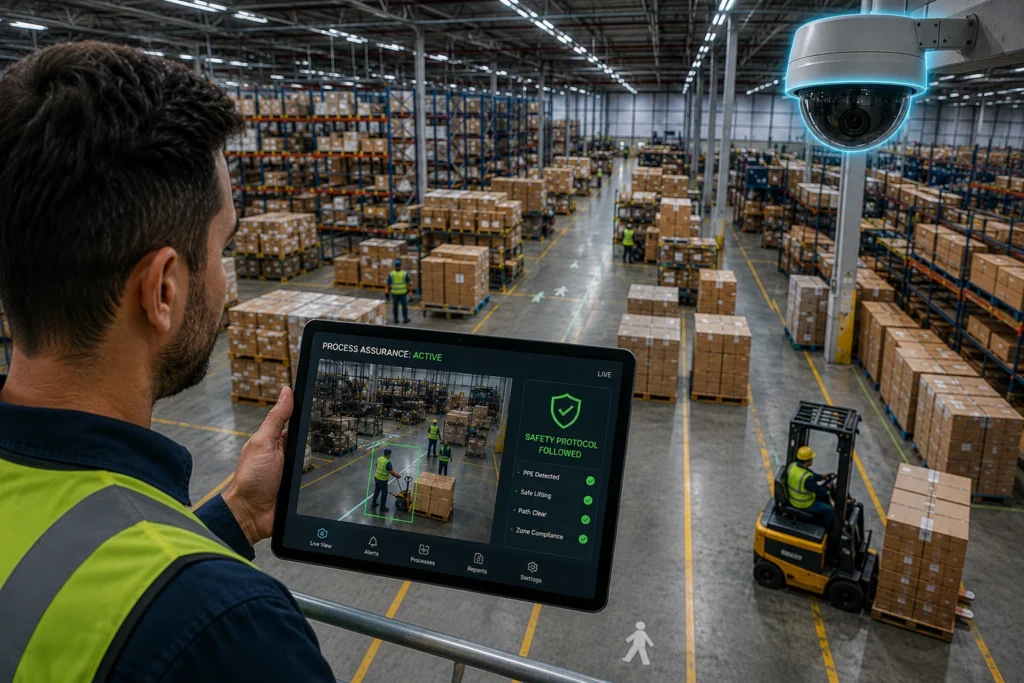
Process assurance focuses on verifying that operational activities are occurring according to established standards, policies, and procedures.
Unlike traditional monitoring, process assurance is not primarily concerned with what happened in the past. It focuses on current events.
The objective is to continuously validate that critical operational processes are being executed correctly.
Examples include:
- Safety procedure adherence
- Operational compliance verification
- Workflow consistency
- Service quality monitoring
- Restricted area enforcement
- Equipment usage compliance
This approach enables organizations to move beyond incident investigation and toward operational improvement.
Why AI Is Accelerating This Shift
The volume of video data generated by modern enterprises makes continuous manual review impractical.
Artificial Intelligence changes this dynamic by analyzing visual information automatically and identifying events that require attention.
Rather than expecting managers to watch hundreds of video feeds, AI systems can continuously evaluate operational activities and highlight specific deviations, risks, or anomalies.
This allows organizations to focus their resources on corrective action rather than constant observation.
The value is not in collecting more footage.
The value is in extracting operational intelligence from footage that already exists.
What AI-Powered Process Assurance Looks Like
Organizations adopting this approach are using video analytics to support a wide range of operational objectives.
Instead of relying on periodic inspections, they gain continuous oversight of critical processes.
Benefits often include:
- Faster identification of process deviations
- Improved operational consistency
- Enhanced compliance management
- Reduced manual review effort
- Earlier detection of operational risks
- Greater accountability across locations
The result is a more proactive approach to operational control.
How CAPASai Enables Process Assurance
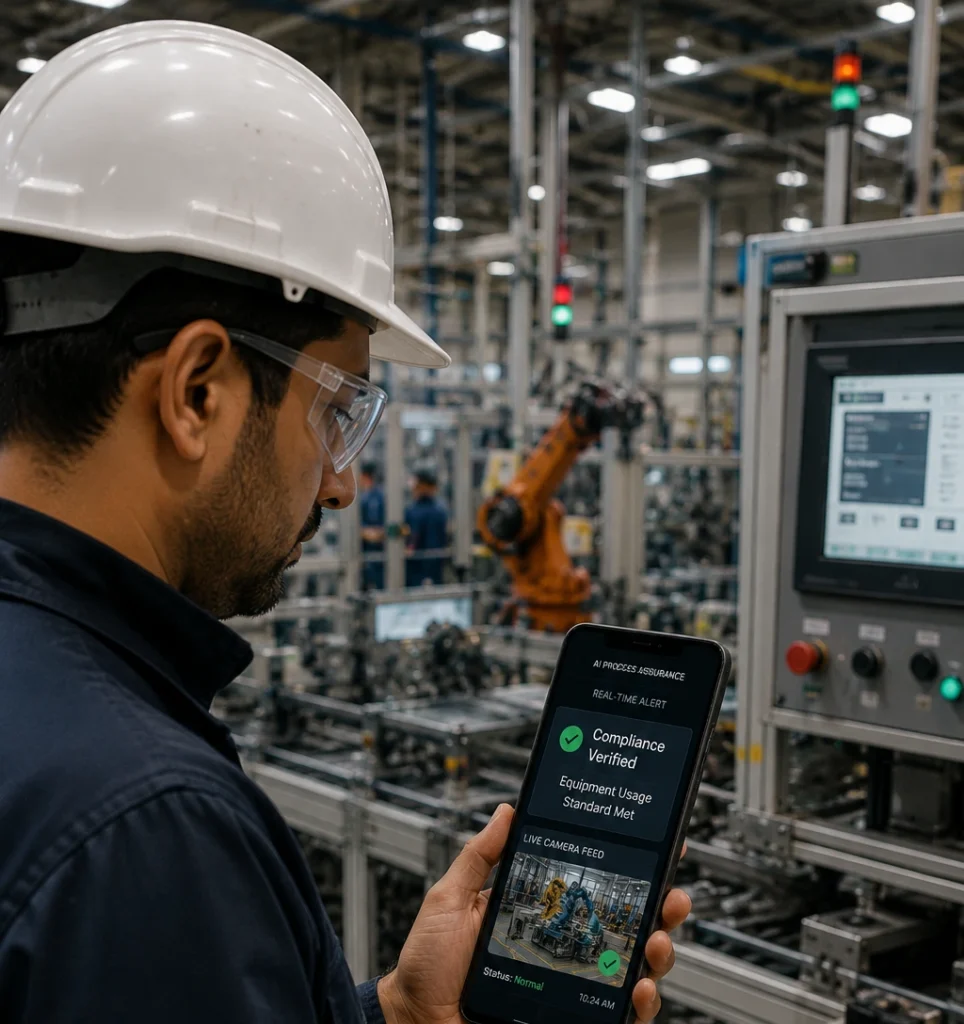
CAPASai assists businesses in converting their current CCTV infrastructure into an AI-driven process assurance system.
Using advanced video analytics, real-time alerts, and remote monitoring capabilities, CAPASai can help identify operational deviations, monitor compliance requirements, and provide timely visibility into activities occurring across multiple locations.
Rather than using cameras solely for retrospective investigations, organizations can leverage CAPASai to support continuous process verification and operational improvement.
This allows teams to focus on managing outcomes rather than searching through recorded footage.
A New Role for Enterprise Cameras
The future of CCTV is unlikely to be defined by recording quality alone.
Its value will increasingly be measured by the operational insights it can provide.
As organizations continue pursuing higher levels of efficiency, compliance, and consistency, AI-powered process assurance is becoming an important part of modern operational strategy.
The evolution from monitoring to assurance represents more than a technology upgrade. It reflects a broader shift in how enterprises use information to improve performance, reduce risk, and maintain operational standards at scale.