Operational excellence has become increasingly dependent on visibility. Across industries, enterprises generate enormous amounts of visual data every day through CCTV systems, production environments, warehouses, retail stores, healthcare facilities, transportation hubs, and critical infrastructure. Yet a significant portion of this information remains underutilized because traditional monitoring approaches rely heavily on manual observation and retrospective investigations rather than real-time intelligence. AI-Powered Enterprise Compliance addresses this challenge by transforming visual data into actionable insights, enabling real-time monitoring, automated compliance verification, and proactive decision-making across enterprise operations.
For business leaders responsible for compliance, operational performance, and risk management, the challenge is no longer collecting visual data. Converting such data into useful insights is the difficult part. As organizations expand across multiple locations, maintaining consistent standards, identifying operational deviations, and ensuring regulatory compliance become increasingly complex. Manual monitoring methods often struggle to keep pace with the scale and speed of modern enterprise operations.
The Growing Gap Between Visibility And Action
Many enterprises have invested substantially in surveillance infrastructure, but recording events and understanding events are fundamentally different capabilities. Conventional monitoring systems typically capture incidents after they occur, requiring teams to review footage manually to determine what happened.
This approach creates several operational challenges:
- Delayed incident detection
- Inconsistent compliance monitoring
- High dependence on human supervision
- Limited visibility across multiple locations
- Increased operational risk
- Difficulty identifying patterns and trends
Whether in manufacturing plants, retail chains, healthcare facilities, or logistics centers, delayed awareness can result in financial losses, compliance violations, safety incidents, and reduced operational efficiency.
Why Traditional Oversight Models Are Under Pressure
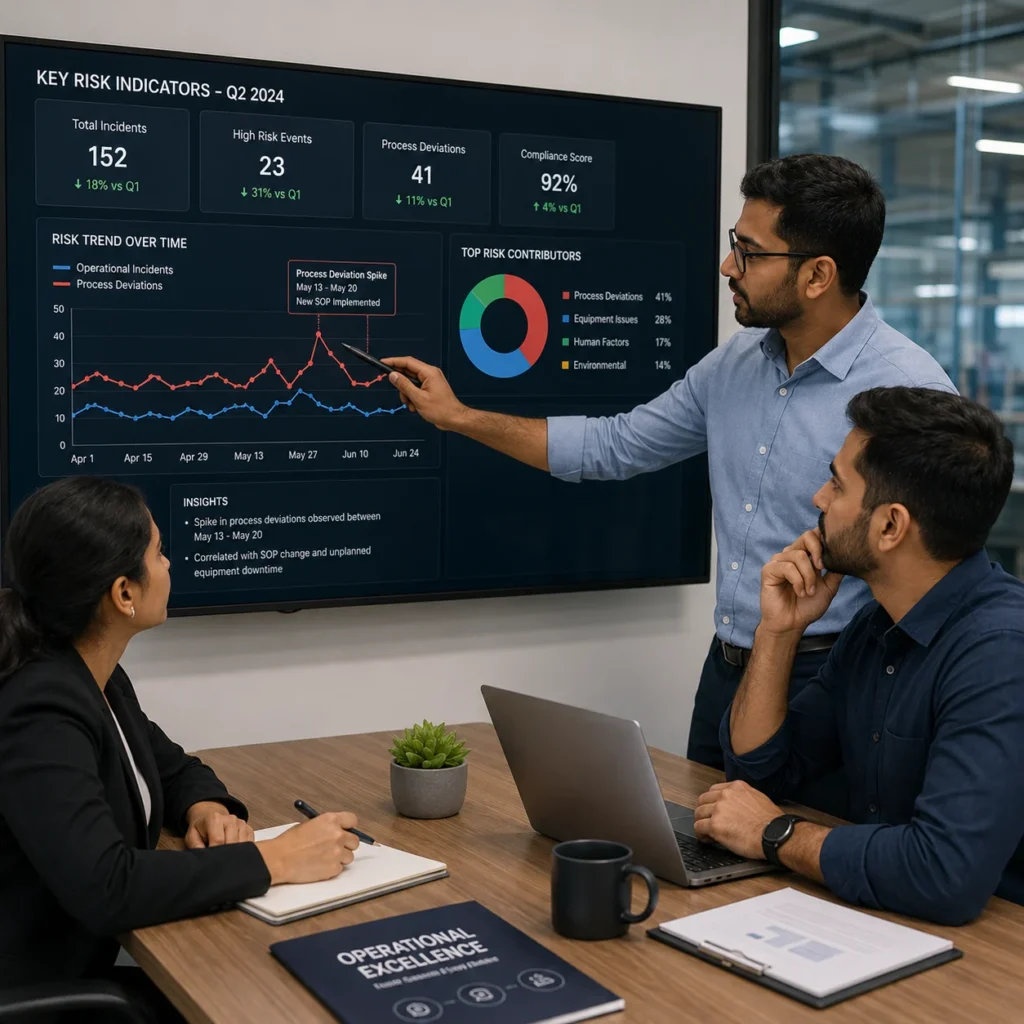
Enterprise environments today operate at a level of complexity that manual processes were never designed to handle. A regional manager may oversee dozens of facilities, each with unique workflows, operational requirements, and compliance obligations. Monitoring every activity through human observation alone is often impractical.
The growing demand for real-time decision-making has pushed organizations to rethink how operational intelligence is generated. Rather than relying solely on personnel to identify issues, businesses are increasingly exploring technologies capable of continuously analyzing operational environments and highlighting exceptions automatically.
This shift has accelerated interest in computer vision as a strategic business capability rather than simply a technology initiative.
From Observation To Operational Intelligence
Computer vision enables systems to interpret and analyze visual information from cameras and video streams. Instead of merely recording activity, computer vision can identify patterns, detect anomalies, recognize objects, monitor processes, and generate actionable alerts.
Its impact extends across numerous enterprise functions:
Compliance Monitoring
Organizations can automatically verify adherence to operational procedures, safety protocols, and regulatory requirements without relying entirely on periodic inspections.
Workplace Safety
Computer vision can help identify unsafe behaviors, restricted-area violations, missing protective equipment, and potential hazards before incidents escalate.
Process Optimization
By analyzing operational workflows, businesses can uncover inefficiencies, bottlenecks, and process deviations that may affect productivity.
Asset And Infrastructure Monitoring
Facilities can continuously monitor equipment conditions, infrastructure utilization, and operational activities in real time.
Customer Experience Management
Retailers, hospitality providers, and service organizations can gain visibility into customer interactions, queue management, service delivery, and facility utilization.
Compare Traditional Monitoring And Computer Vision
Operational Area | Traditional Monitoring | Computer Vision Approach |
Incident Detection | Reactive | Real-Time |
Compliance Audits | Periodic Reviews | Continuous Monitoring |
Multi-Site Visibility | Limited | Centralized Visibility |
Operational Insights | Manual Analysis | Automated Intelligence |
Resource Requirements | Labor Intensive | Scalable Monitoring |
The comparison highlights why enterprises are increasingly viewing computer vision as an operational intelligence platform rather than merely a surveillance enhancement.
Industry Applications Driving Adoption
Computer vision is delivering measurable value across multiple sectors.
Retail Chains And Quick Service Restaurants
Organizations use visual intelligence to monitor store operations, improve service consistency, identify process deviations, and maintain brand standards across locations.
Manufacturing And Pharmaceuticals
Facilities leverage computer vision to support quality assurance, monitor production activities, verify compliance procedures, and strengthen workplace safety.
Healthcare And Hospitals
Healthcare providers use intelligent monitoring to improve operational workflows, enhance patient safety, and support regulatory compliance requirements.
Transportation And Fleet Operations
Computer vision assists in monitoring vehicle activities, loading procedures, driver behavior, and operational efficiency across distributed networks.
Smart Cities And Public Infrastructure
Authorities utilize visual analytics to enhance situational awareness, infrastructure management, public safety, and resource optimization.
Building A Compliance-Centric Operating Model
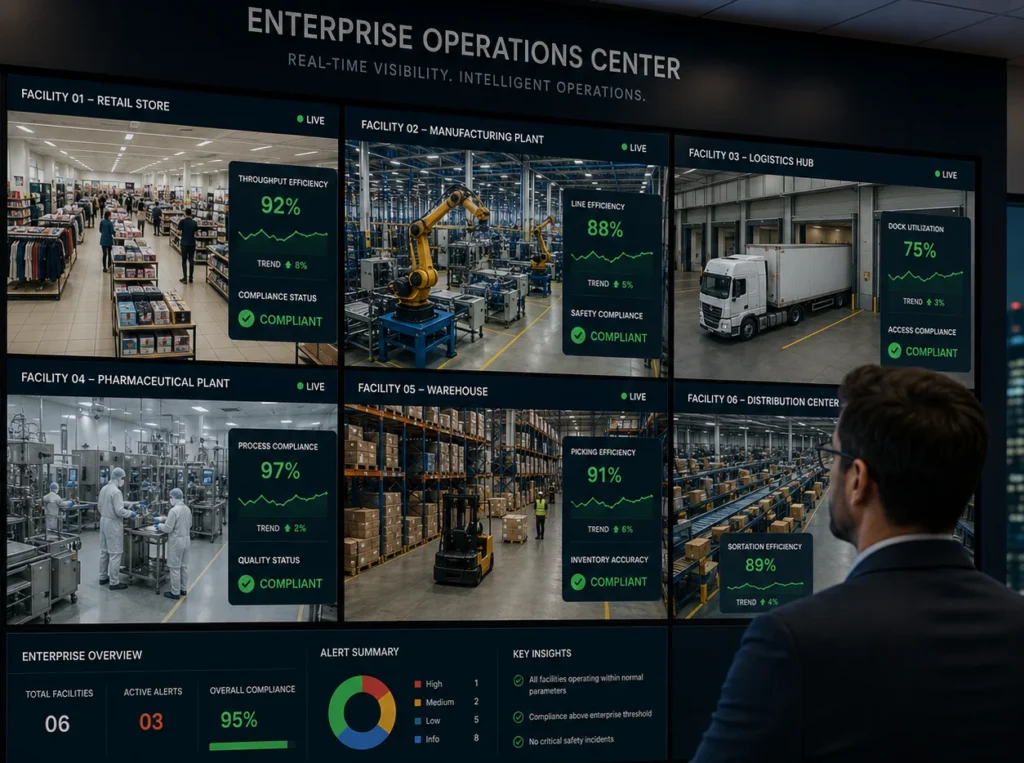
Compliance is no longer limited to periodic audits and documentation reviews. Modern enterprises increasingly require continuous verification that operational standards are being followed consistently.
Computer vision supports this transition by creating a layer of automated oversight capable of identifying deviations as they occur. This enables organizations to move from reactive correction toward proactive prevention.
The ability to detect issues early can help reduce compliance risks, improve accountability, and create stronger governance frameworks across distributed operations.
The Strategic Role Of CAPASai
As enterprises seek greater operational visibility and compliance assurance, technologies that transform visual data into actionable intelligence are becoming increasingly important. CAPASai supports this evolution through AI-powered video analytics, remote monitoring capabilities, and real-time alerting mechanisms that help organizations gain deeper visibility into operational environments. Rather than replacing human decision-making, such platforms enable teams to focus on higher-value actions by surfacing critical events and operational exceptions when they matter most.