Why Enterprises Are Moving Beyond Standalone Technologies
For years, organizations adopted new technologies one at a time.
A facility might install sensors to monitor equipment. Operations teams might deploy cameras to improve visibility. Business units could invest in analytics software to improve reporting and decision-making. Each initiative delivered value within its own domain, yet most technologies continued to operate independently.
As enterprises became more digital, a new challenge emerged. Valuable information was being generated everywhere, but it rarely interacted across systems. Sensors understood machines. Cameras observed environments. Software analyzed business data. Each technology provided a partial perspective of reality.
Modern enterprises are increasingly recognizing that the greatest value does not come from individual technologies. It comes from connecting them.
Three Technologies, Three Different Perspectives
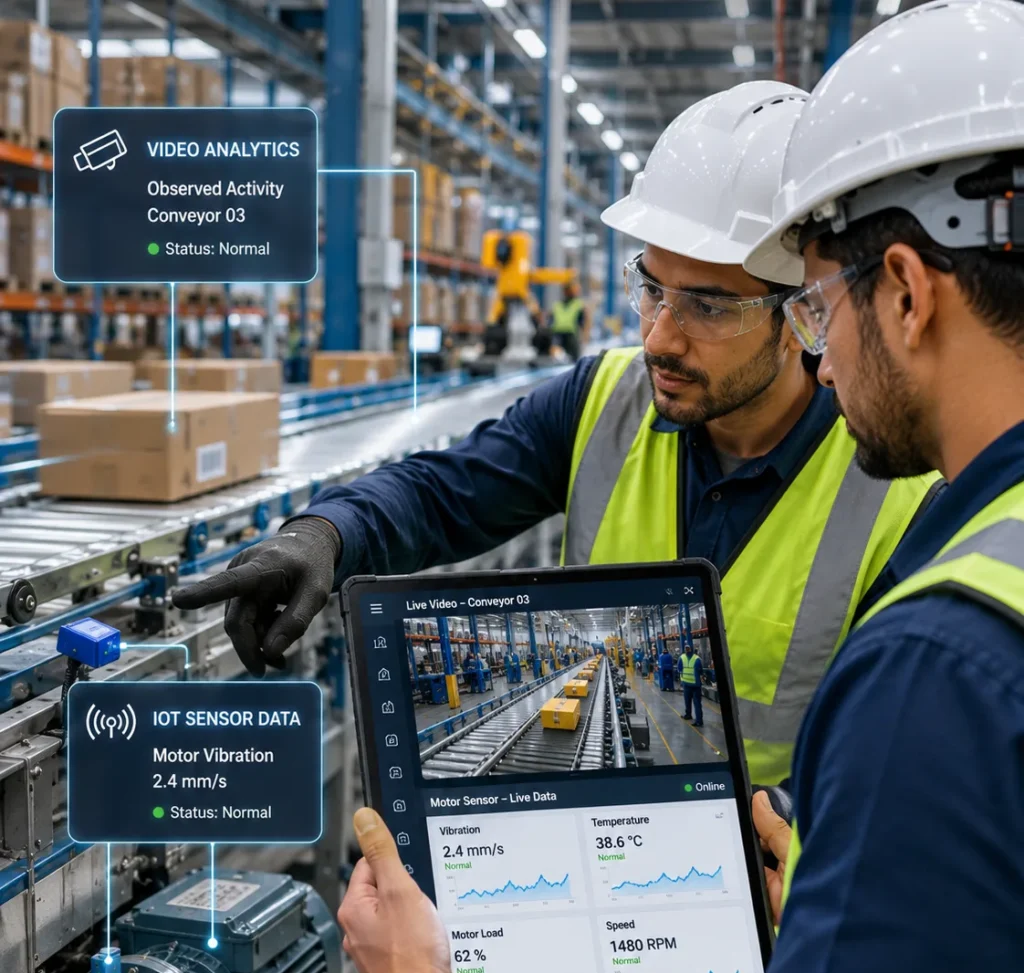
Every operational environment generates information in multiple forms. AI, IoT, and video analytics each contribute a unique perspective.
IoT Understands Conditions
IoT devices capture measurements from the physical world. Temperature, vibration, pressure, occupancy, energy consumption, and equipment performance can all be tracked continuously through connected sensors.
These devices help organizations understand environmental and operational conditions, often generating thousands of data points throughout the day.
However, sensors can only measure what they are specifically designed to detect.
Video Analytics Understands Activity
Unlike sensors, video analytics observes movement, interactions, workflows, and operational events.
A camera can capture how people move through a facility, how assets are utilized, how inventory flows through a warehouse, or how activity changes during different periods of the day.
While sensors describe conditions, video helps reveal behavior.
AI Creates Meaning
Collecting information is no longer the challenge for most enterprises.
The greater challenge is interpretation.
Artificial intelligence helps organizations identify patterns, uncover relationships, and generate insights from large volumes of information that would otherwise remain disconnected.
Rather than acting as another data source, AI functions as the layer that helps explain what the information means.
What Happens When These Technologies Work Together?
The true transformation begins when these technologies stop operating independently.
Instead of generating separate streams of information, they begin contributing to a broader understanding of enterprise operations.
Technology | Primary Contribution |
IoT | Environmental and equipment conditions |
Video Analytics | Activity and operational behavior |
AI | Insight generation and pattern recognition |
Individually, each technology answers a different question.
Together, they provide a richer picture of how operations actually function.
From Isolated Events To Operational Narratives
A sensor may detect increased equipment vibration.
A camera may observe unusual movement around a production area.
AI may identify that similar patterns have appeared before specific operational disruptions.
Viewed independently, these events appear unrelated.
Viewed together, they form a meaningful operational narrative.
This ability to connect context across technologies is becoming increasingly valuable as organizations scale operations across multiple facilities and business functions.
The Rise Of Connected Enterprise Intelligence
The next stage of enterprise technology is not defined by deploying more systems. It is defined by enabling technologies to work together more effectively.
Creating A Shared Understanding Of Operations
When information remains isolated, teams often make decisions using only a fraction of the available context.
Connected intelligence environments help bridge this gap by combining physical observations, operational measurements, and analytical insights into a more complete understanding of business activity.
This improves coordination across departments while reducing dependence on fragmented information sources.
Why Integration Is Becoming A Competitive Advantage
Organizations today generate more information than at any point in history. Competitive advantage increasingly depends on the ability to connect that information in meaningful ways.The convergence of AI, IoT, and video analytics represents a shift from technology deployment toward intelligence creation. Instead of simply collecting data, enterprises can begin transforming information into understanding and understanding into action.
Building The Enterprise Of Connected Insights
The most significant technology trend in modern operations may not be a single innovation. It may be the ability to combine multiple innovations into a unified ecosystem.
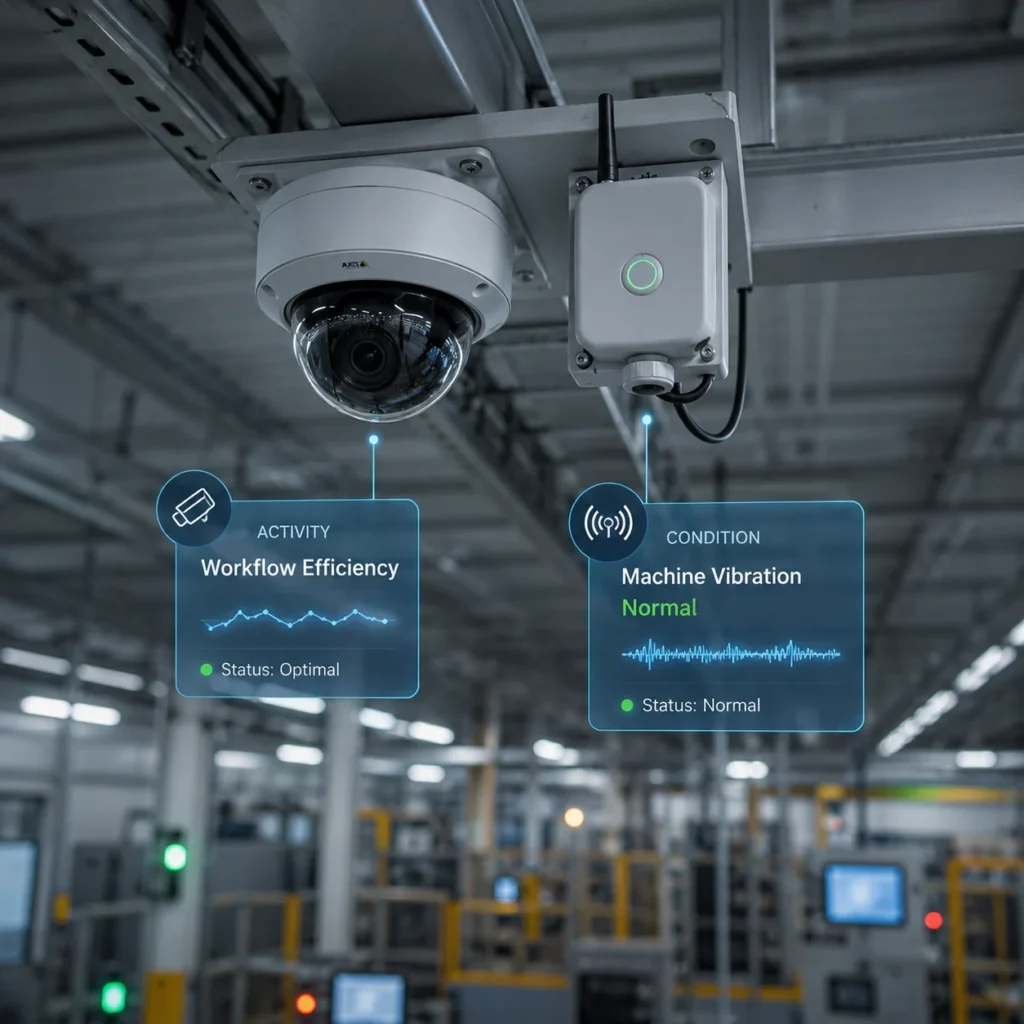
CAPASai supports this evolution through AI-powered video analytics that complements existing digital infrastructure and operational technologies. By helping organizations transform visual observations into actionable intelligence, CAPASai contributes to a broader ecosystem where information from multiple sources can work together to support better business decisions.
The future of enterprise operations is unlikely to be driven by isolated technologies. It will be shaped by how effectively those technologies collaborate.