The Growing Challenge of Managing Multi-Site Operations
Organizations operating across multiple locations face increasing pressure to maintain consistent performance, compliance, safety, and customer experience. Whether managing retail chains, restaurants, manufacturing facilities, healthcare networks, banking branches, educational institutions, or logistics centers, ensuring operational excellence across geographically dispersed sites is becoming more complex. AI-Driven Operational Excellence empowers organizations to transform this challenge into a competitive advantage by leveraging real-time intelligence, automated monitoring, and data-driven decision-making. By analyzing operational activities across locations, AI helps businesses identify inefficiencies, detect compliance gaps, improve safety standards, and maintain consistent execution of processes, enabling scalable growth while reducing operational risk.
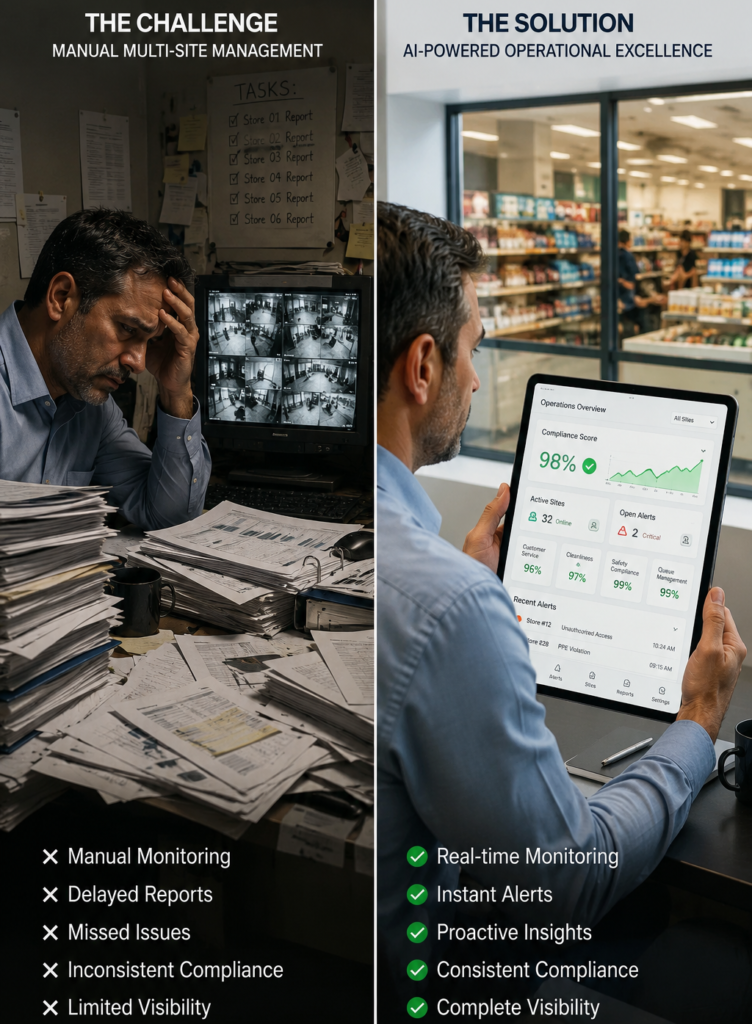
As businesses expand, visibility often decreases. Leaders may struggle to identify operational gaps, monitor compliance consistently, and respond quickly to emerging issues. Traditional management approaches that rely on manual supervision, periodic audits, and delayed reporting can create blind spots that impact productivity, profitability, and customer satisfaction.
Why Operational Excellence Becomes Difficult at Scale
Multi-site enterprises frequently encounter challenges such as:
- Inconsistent process execution across locations
- Delayed identification of operational issues
- Limited real-time visibility into site activities
- Rising labor and supervision costs
- Compliance and safety violations
- Difficulty comparing performance between locations
- Slow response to incidents and disruptions
Without timely insights, organizations often discover problems only after they have already affected operations, revenue, or customer experience.
How AI Is Changing Operational Management
Artificial Intelligence is transforming the way organizations monitor, manage, and optimize operations across multiple sites. Instead of relying solely on human observation and periodic reviews, AI enables continuous analysis of operational activities, helping organizations identify trends, detect deviations, and improve decision-making.
AI-powered operational intelligence can process large volumes of data in real time, providing leaders with greater visibility into what is happening across locations. This allows organizations to move from reactive management to proactive operational improvement.
Key capabilities include:
- Real-time monitoring
- Automated anomaly detection
- Compliance tracking
- Operational performance analysis
- Predictive insights
- Instant alert generation
- Centralized visibility across locations
Compare Traditional Multi-Site Management and AI-Driven Operations
Area | Traditional Approach | AI-Driven Approach |
Monitoring | Manual supervision | Continuous automated monitoring |
Issue Detection | Reactive | Real-time identification |
Compliance Management | Periodic audits | Ongoing automated verification |
Decision Making | Historical reporting | Data-driven insights |
Multi-Site Visibility | Limited | Centralized visibility |
Response Time | Delayed | Immediate alerts |
Scalability | Resource intensive | Highly scalable |
Organizations increasingly compare these approaches when seeking ways to improve efficiency while maintaining operational consistency.
The Role of AI in Operational Excellence
AI supports operational excellence by helping organizations standardize processes, improve accountability, and identify improvement opportunities across multiple facilities.
Enhanced Operational Visibility
One of the biggest barriers to operational excellence is the lack of visibility across distributed locations. AI enables centralized monitoring and reporting, allowing decision-makers to understand operational performance from a single view.
Faster Issue Resolution
AI can detect unusual activities, process deviations, or operational bottlenecks as they occur. Early detection enables faster corrective action and minimizes disruptions.
Improved Compliance Management
Organizations operating in regulated industries must maintain consistent compliance standards. AI helps identify non-compliant activities and supports continuous monitoring rather than relying solely on periodic inspections.
Better Resource Utilization
AI-generated insights help organizations allocate resources more effectively, reduce inefficiencies, and improve workforce productivity.
How CAPASai Supports Multi-Site Operational Excellence
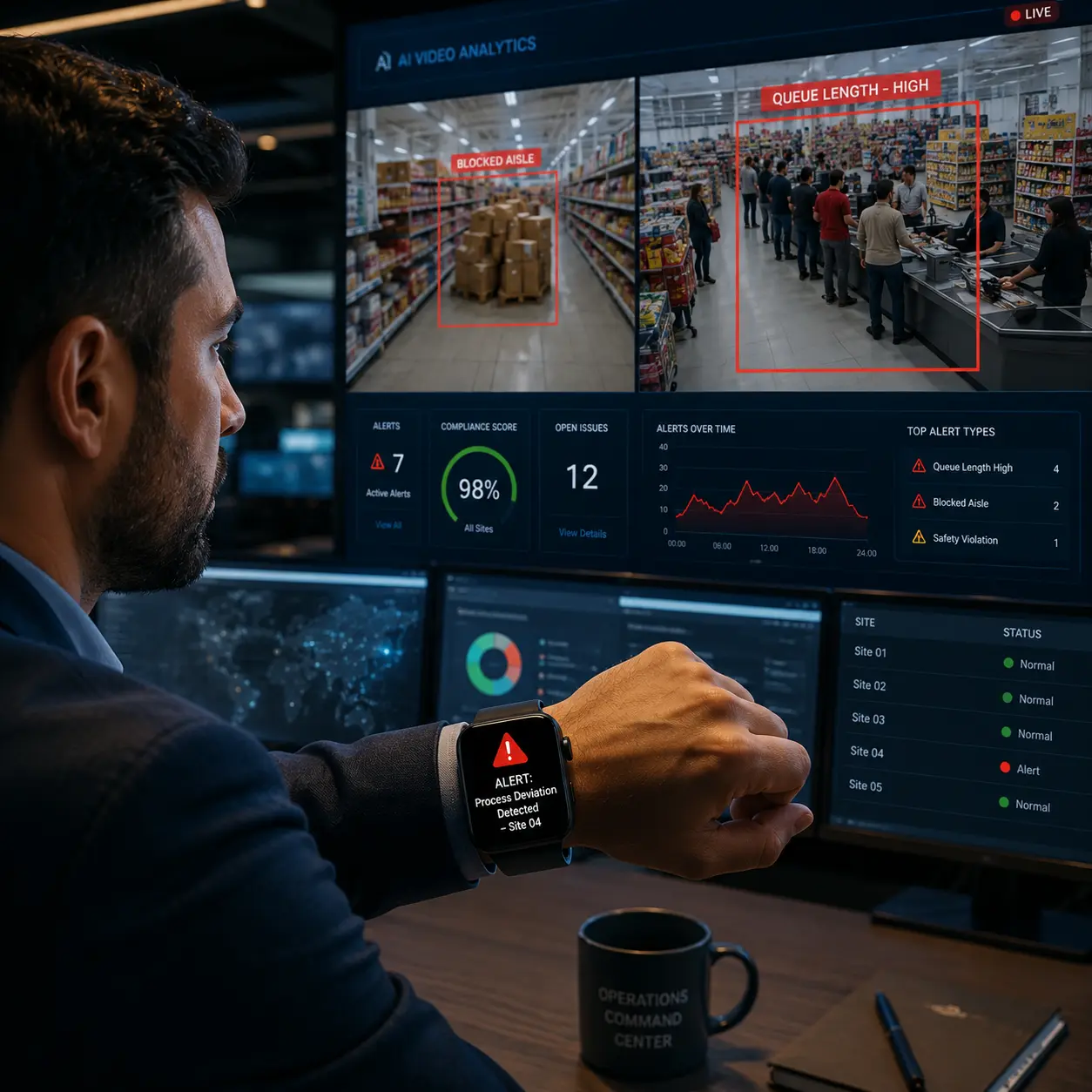
CAPASai helps enterprises transform existing CCTV infrastructure into an intelligent operational monitoring system. Through the integration of AI-powered video analytics, remote monitoring, and real-time alerts, CAPASai facilitates the acquisition of actionable information across many locations.
Instead of simply recording events, CAPASai helps identify operational deviations, compliance issues, safety concerns, and process violations as they happen. This allows organizations to respond quickly and maintain consistent standards across sites.
CAPASai can support operational excellence initiatives in:
- Retail chains
- Quick service restaurants
- Manufacturing plants
- Pharmaceutical facilities
- Banking and financial institutions
- Healthcare and hospitals
- Educational campuses
- Logistics and fulfillment centers
- Hospitality operations
- Smart city infrastructure
Business Benefits of AI-Powered Operational Excellence
Organizations implementing AI-driven operational monitoring often seek benefits such as:
- Greater operational consistency
- Improved compliance performance
- Reduced manual supervision requirements
- Faster incident response
- Better decision-making through data-driven insights
- Enhanced safety and security oversight
- Improved customer experience
- Increased operational efficiency
As enterprises continue expanding across regions and markets, AI is becoming an important tool for maintaining control and visibility without proportionally increasing management overhead.
The Future of Multi-Site Operations
Operational excellence is no longer achieved through periodic reviews and manual oversight alone. Modern enterprises require continuous visibility, rapid response capabilities, and actionable intelligence to remain competitive.
AI is helping organizations create more resilient, efficient, and scalable operating models by providing real-time insights into daily operations. As technology continues to evolve, AI-powered operational intelligence is expected to become a fundamental component of enterprise management strategies.