Why Audit Trails Are Essential for Modern Enterprise Governance
Organizations across pharmaceuticals, manufacturing, healthcare, banking, retail, logistics, food processing, education, and critical infrastructure are facing increasing pressure to demonstrate compliance, accountability, and operational transparency. Regulatory requirements, internal policies, quality standards, and risk management initiatives all depend on the ability to verify what happened, when it happened, and who was involved.
Traditional audit trails often rely on manual reports, spreadsheets, paper-based logs, supervisor observations, and fragmented documentation. While these methods provide records of activities, they may lack real-time visibility, objective evidence, and comprehensive operational context.
As enterprises seek stronger governance frameworks, many are adopting AI-powered video analytics to create automated, evidence-based audit trails using existing CCTV infrastructure
Challenges with Traditional Audit Trail Management
Many organizations struggle with:
- Incomplete incident documentation
- Manual record keeping
- Delayed investigations
- Human reporting errors
- Limited operational visibility
- Difficulty tracking compliance activities
- Time-consuming audits
- Challenges managing multiple locations
Without reliable audit evidence, organizations may face longer investigations, compliance risks, and increased operational uncertainty.
How CAPASai Strengthens Enterprise Governance
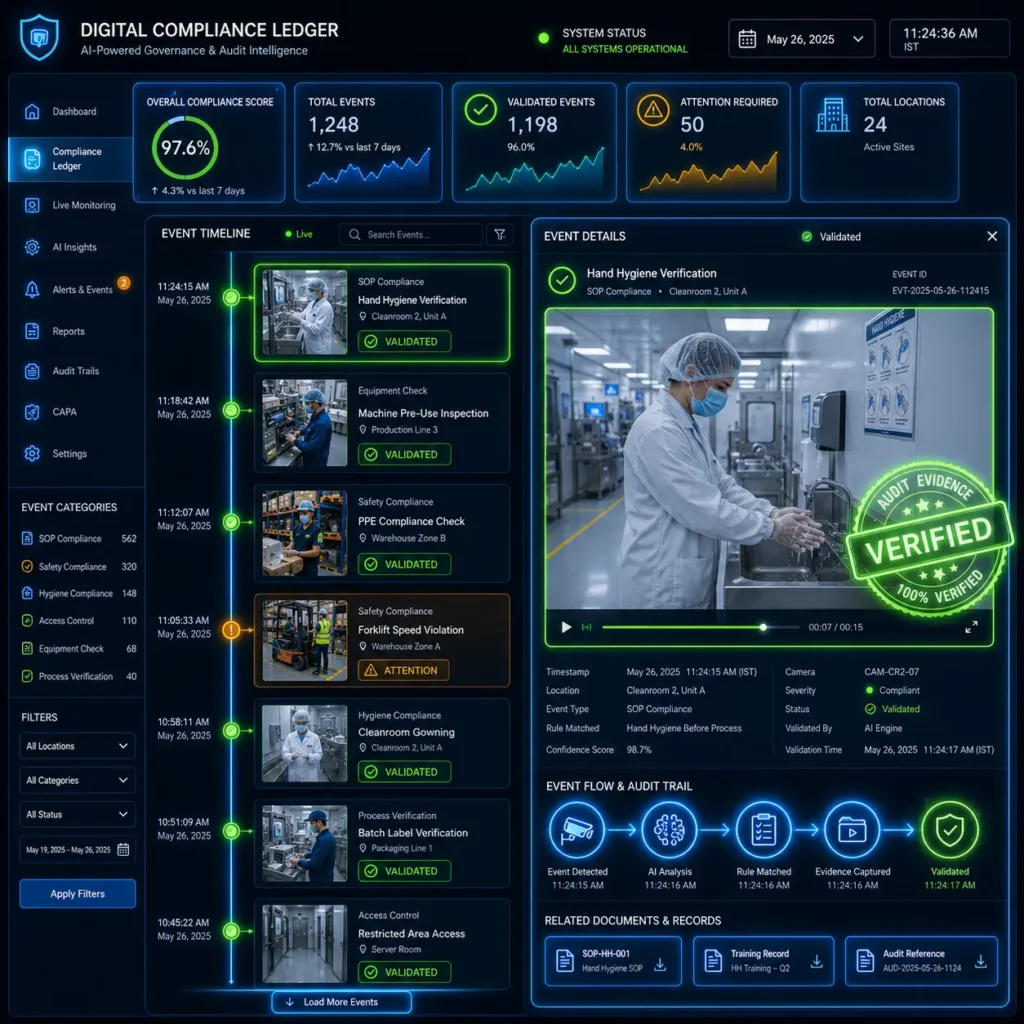
CAPASai combines AI-powered video analytics, remote monitoring, and real-time alerting to help organizations generate automated audit trails directly from operational activities captured through CCTV systems.
Instead of functioning as passive recording devices, CCTV cameras become intelligent sources of operational evidence that continuously document compliance events, safety activities, process verification, and operational exceptions.
CAPASai helps organizations:
- Create automated audit trails
- Improve compliance visibility
- Support evidence-based investigations
- Strengthen governance programs
- Reduce manual auditing efforts
- Improve operational accountability
- Enhance regulatory readiness
What Are AI-Driven Audit Trails?
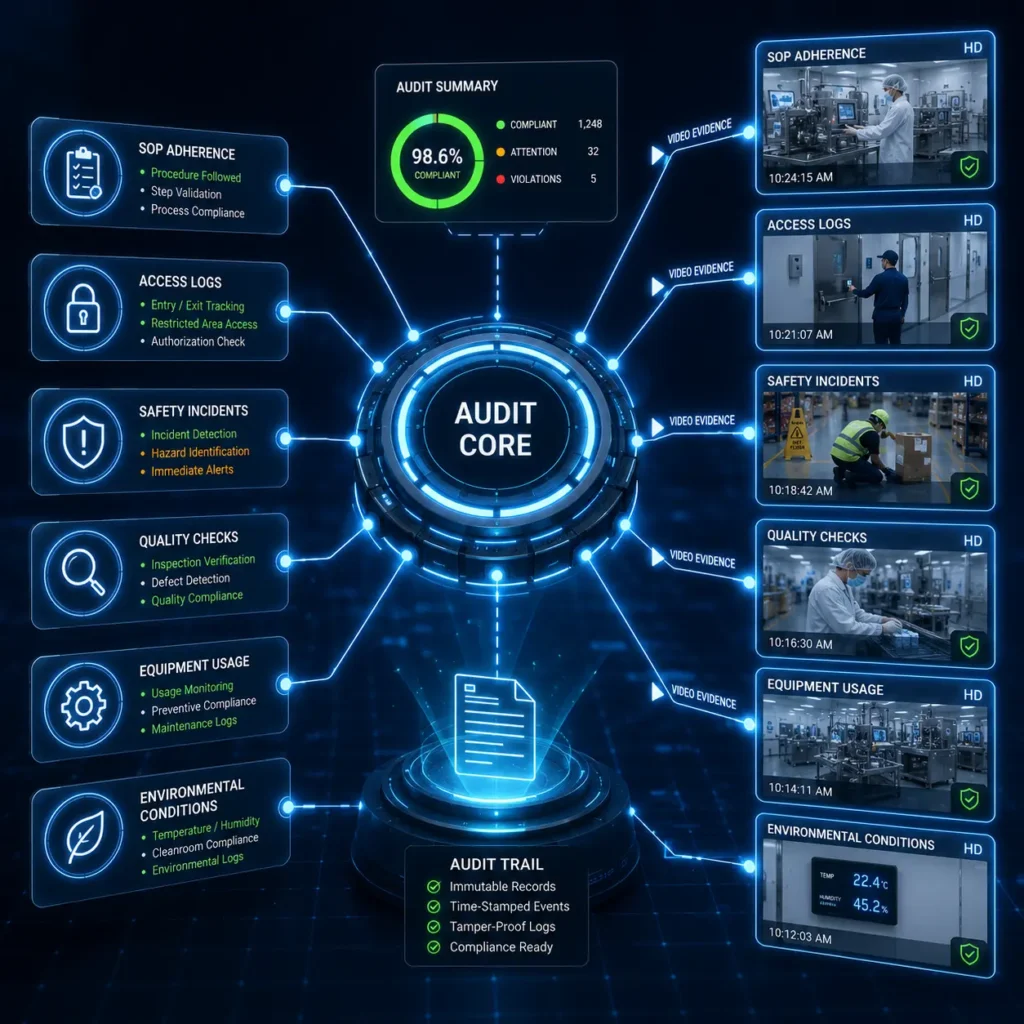
AI-driven audit trails are digitally generated records that automatically document operational activities, compliance events, process deviations, and workplace incidents.
Unlike traditional logs that rely on manual input, AI continuously analyzes video streams and creates searchable records that include:
- Event timestamps
- Location information
- Video evidence
- Incident snapshots
- Compliance status
- Operational context
- Investigation records
This provides organizations with a more accurate and reliable record of operational activities.
How AI Video Analytics Creates Audit Trails
Compliance Verification
Automatically document SOP adherence, safety compliance, hygiene protocols, and operational procedures.
Incident Documentation
Capture video evidence associated with safety incidents, operational deviations, and compliance events.
Access Control Records
Track entry and exit activities in restricted or sensitive areas.
Workplace Safety Monitoring
Record PPE compliance, safety violations, and hazardous behavior observations.
Process Validation
Verify that critical operational workflows are executed according to established requirements.
Operational Exception Tracking
Identify and document deviations that require investigation or corrective action
Traditional Audit Trails vs AI-Driven Audit Trails
Traditional Audit Trails | AI-Driven Audit Trails |
Manual documentation | Automated evidence generation |
Paper-based records | Digital audit records |
Limited operational context | Video-supported evidence |
Reactive investigations | Real-time documentation |
Human-dependent reporting | AI-assisted monitoring |
Fragmented records | Centralized audit repository |
This allows organizations to move from static record keeping to continuous operational accountability.
Industry Applications
Pharmaceutical Manufacturing
Monitor GMP compliance, cleanroom activities, hygiene procedures, and quality-critical operations.
Manufacturing Plants
Document safety compliance, SOP adherence, production workflows, and operational deviations.
Banking and Financial Services
Maintain records of restricted-area access, operational procedures, and security-related activities.
Healthcare Facilities
Verify hygiene compliance, patient safety procedures, and controlled-area monitoring.
Retail Chains and Quick Service Restaurants
Track operational consistency, safety procedures, and compliance activities across locations.
Logistics and Warehousing
Monitor material handling, forklift safety, loading operations, and warehouse compliance requirements.
Benefits of AI-Powered Audit Trails
Improved Audit Readiness
Maintain continuously updated evidence and compliance records.
Faster Investigations
Access searchable video evidence linked to specific events and timestamps.
Enhanced Governance
Improve oversight across departments, facilities, and operational processes.
Better Compliance Management
Support regulatory requirements and internal compliance programs.
Reduced Administrative Work
Minimize manual reporting and documentation efforts.
Increased Accountability
Create objective records of operational activities and compliance events.
Supporting CAPA and Continuous Improvement
AI-generated audit trails provide valuable insights for Corrective and Preventive Action (CAPA) initiatives.
Root Cause Analysis
Review objective video evidence to determine why incidents or deviations occurred.
Corrective Actions
Address operational gaps with accurate supporting evidence.
Preventive Actions
Identify recurring trends before they become larger compliance or safety concerns.
Continuous Improvement
Use operational intelligence to strengthen governance, quality, and compliance programs