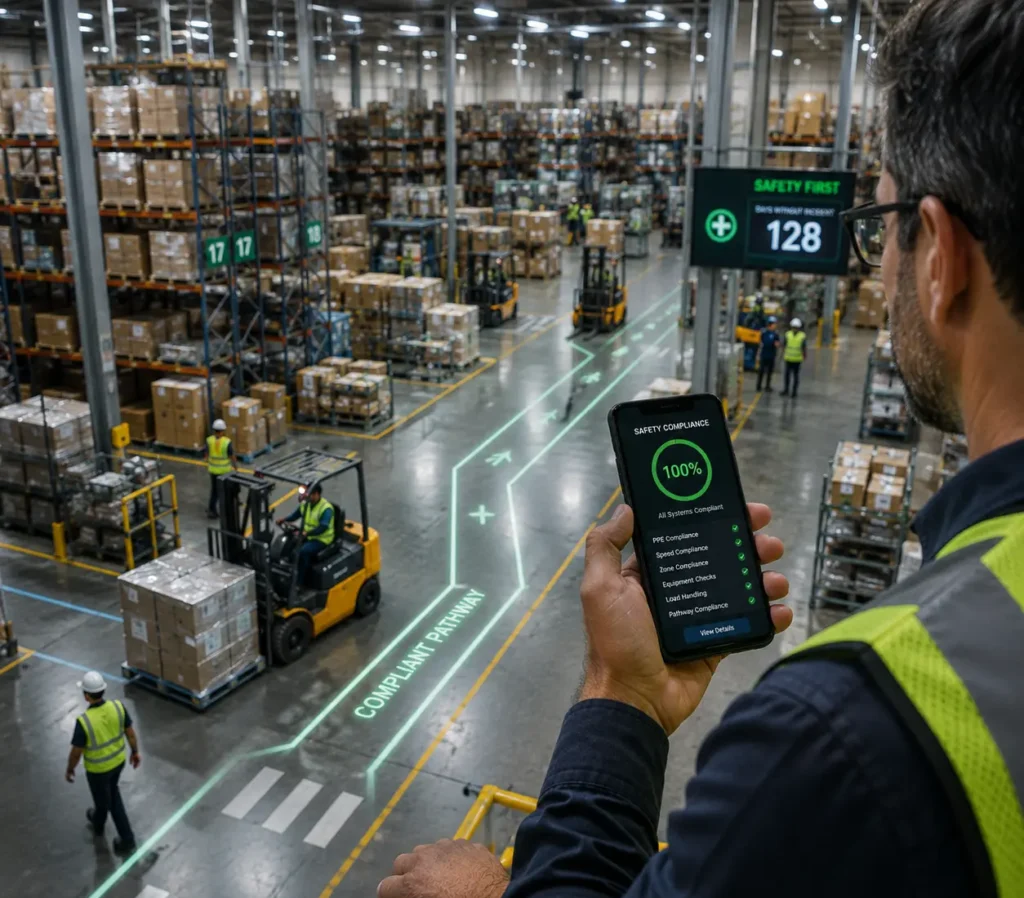
A warehouse can have hundreds of cameras. A manufacturing plant may monitor every production line. A retail chain can generate thousands of hours of video footage each week.
Yet despite having more cameras than ever before, many organizations still struggle with the same question: if an operational problem occurs right now, who will notice it?
This question is driving a major shift in how enterprises think about surveillance. Cameras are no longer expected to simply record events. Increasingly, businesses want them to help identify issues, highlight risks, and support operational decision-making in real time.
This demand is accelerating the adoption of AI Beyond Traditional CCTV. Instead of functioning as passive recording devices, modern AI-powered video analytics systems can continuously monitor operations, detect anomalies, identify compliance violations, and generate actionable alerts as events happen.
The result is the emergence of a new concept: the digital supervisor. By leveraging AI Beyond Traditional CCTV, organizations can transform their camera networks into intelligent operational monitoring systems that provide real-time visibility, faster response times, and proactive risk management across the enterprise.
When Recording Becomes a Liability
Traditional CCTV systems were designed for documentation. Their primary purpose was to capture footage that could be reviewed later if an incident occurred.
For security investigations, this approach remains valuable. However, modern enterprises face challenges that extend far beyond security.
A customer queue grows unexpectedly. A safety procedure is ignored. A production workflow deviates from standard practice. Unauthorised access to a restricted location.
In many cases, the footage exists. The problem is that nobody knows something is wrong until much later.
Organizations often assume visibility improves as more cameras are installed. In reality, visibility only improves when critical events are identified at the moment they occur.
The Limits of Human Observation
A supervisor can monitor a section of a facility. A regional manager can review reports from multiple sites. An operations team can periodically check camera feeds.
But no human can continuously watch hundreds of screens while simultaneously managing daily responsibilities.
As businesses expand across locations, the gap between what is happening and what management can realistically observe becomes wider.
This creates operational blind spots that affect:
- Compliance management
- Safety oversight
- Process consistency
- Customer experience
- Workforce productivity
- Incident response
Lack of effort is not the problem. It is the simple reality that human attention does not scale as fast as enterprise operations.
The Emergence of the Digital Supervisor
The digital supervisor is not a replacement for managers. It is a new operational layer that helps organizations monitor activities continuously and prioritize what requires attention.
Instead of asking teams to watch everything, AI systems focus attention on specific events, behaviors, and operational conditions.
The role of a digital supervisor includes:
- Detecting unusual activities
- Identifying process deviations
- Monitoring compliance requirements
- Generating real-time alerts
- Supporting operational decision-making
- Providing continuous visibility across locations
Rather than increasing the number of people involved in supervision, organizations can improve the quality and speed of oversight.
Why Enterprises Are Adopting This Model
The shift toward digital supervision is being driven by business necessity.
Modern operations generate more information than management teams can manually process. At the same time, organizations are expected to maintain higher standards for safety, compliance, efficiency, and customer service.
This has created demand for systems capable of transforming video data into operational intelligence. This is where AI Beyond Traditional CCTV is delivering significant value. Rather than simply storing footage for later review, AI-powered systems continuously analyze live video streams to identify patterns, detect risks, and provide actionable insights in real time.
The most successful businesses are focused on a more important issue instead of asking, “What happened?”
They are asking, “What needs attention right now?”
AI Beyond Traditional CCTV enables organizations to answer that question by automatically highlighting operational issues, safety concerns, compliance violations, and workflow disruptions as they occur. This allows teams to respond faster, reduce risk, and improve operational performance.
That distinction is changing how operational oversight is performed across industries. Instead of relying on reactive investigations, enterprises are increasingly adopting AI Beyond Traditional CCTV to create proactive, data-driven operations supported by continuous monitoring and intelligent decision-making.
The Emergence of the Digital Supervisor
The digital supervisor is not a replacement for managers. It is a new operational layer that helps organizations monitor activities continuously and prioritize what requires attention.
Instead of asking teams to watch everything, AI systems focus attention on specific events, behaviors, and operational conditions.
The role of a digital supervisor includes:
- Detecting unusual activities
- Identifying process deviations
- Monitoring compliance requirements
- Generating real-time alerts
- Supporting operational decision-making
- Providing continuous visibility across locations
Rather than increasing the number of people involved in supervision, organizations can improve the quality and speed of oversight.
How CAPASai Supports Digital Supervision
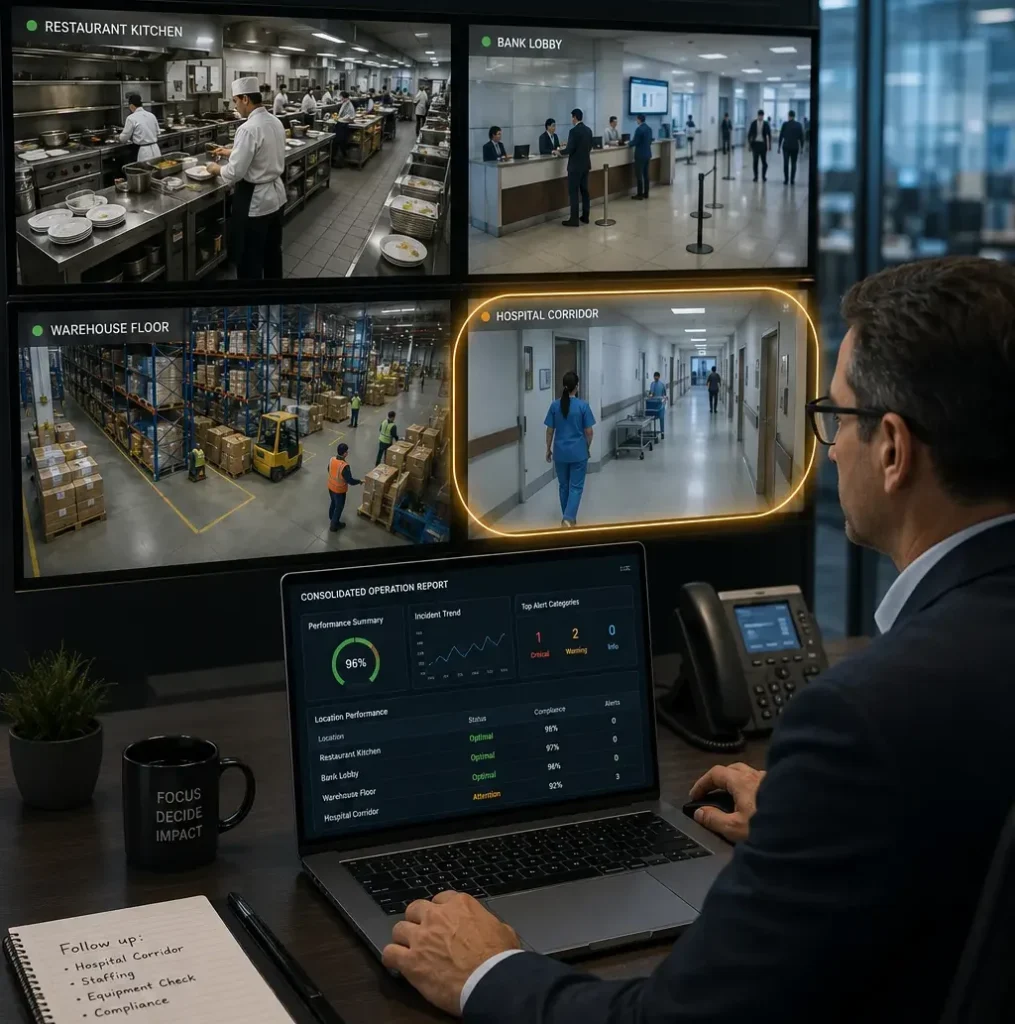
CAPASai helps organizations transform existing CCTV infrastructure into an intelligent operational monitoring platform.
Using AI-powered video analytics, real-time alerts, and remote monitoring capabilities, CAPASai can identify operational events, process deviations, compliance concerns, and safety issues as they occur.
Instead of relying solely on manual reviews of recorded footage, teams gain access to timely insights that support faster responses and better operational control.
This makes it possible for businesses to increase awareness across several sites without correspondingly adding more supervisory resources.
Beyond Surveillance: The Next Phase of Operational Management
The future of enterprise monitoring is unlikely to be defined by more cameras alone.
What matters is the ability to extract meaningful intelligence from the information already being collected.
The digital supervisor represents a shift from passive observation to active operational awareness. It allows organizations to focus less on reviewing the past and more on managing the present.
As operational complexity continues to grow, businesses that adopt this approach may gain a significant advantage in visibility, responsiveness, and consistency.