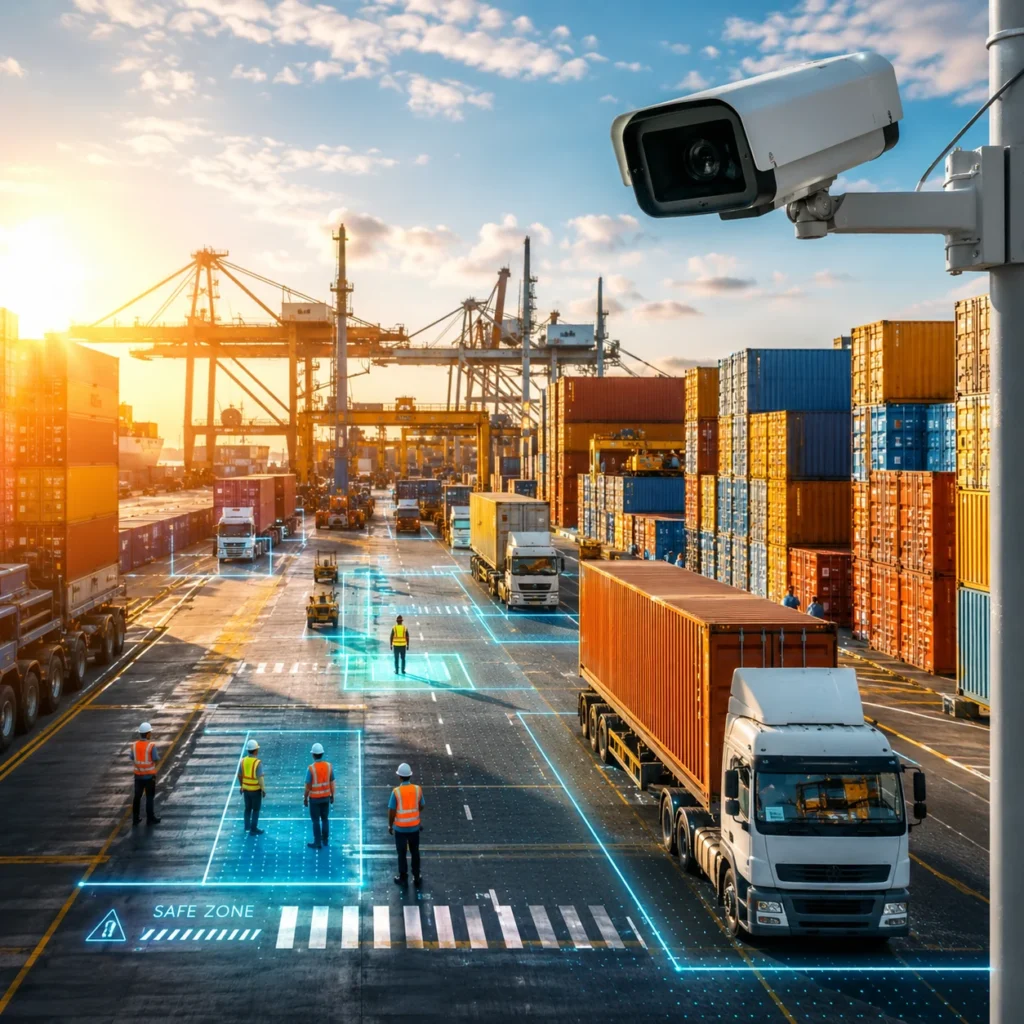
A modern port is a moving workplace. Ships arrive and depart, cargo is transferred, vehicles circulate through yards, maintenance teams work around heavy equipment, and security personnel manage multiple access points. For Visakhapatnam Port Authority, maintaining safe coordination across these activities requires continuous awareness of what is happening across operational zones.
AI-based SOP analytics and video analytics can strengthen this visibility by converting selected CCTV feeds into event-based intelligence. Instead of relying only on manual observation or reviewing footage after an incident, authorised teams can receive alerts when predefined safety, security, or procedural conditions occur.
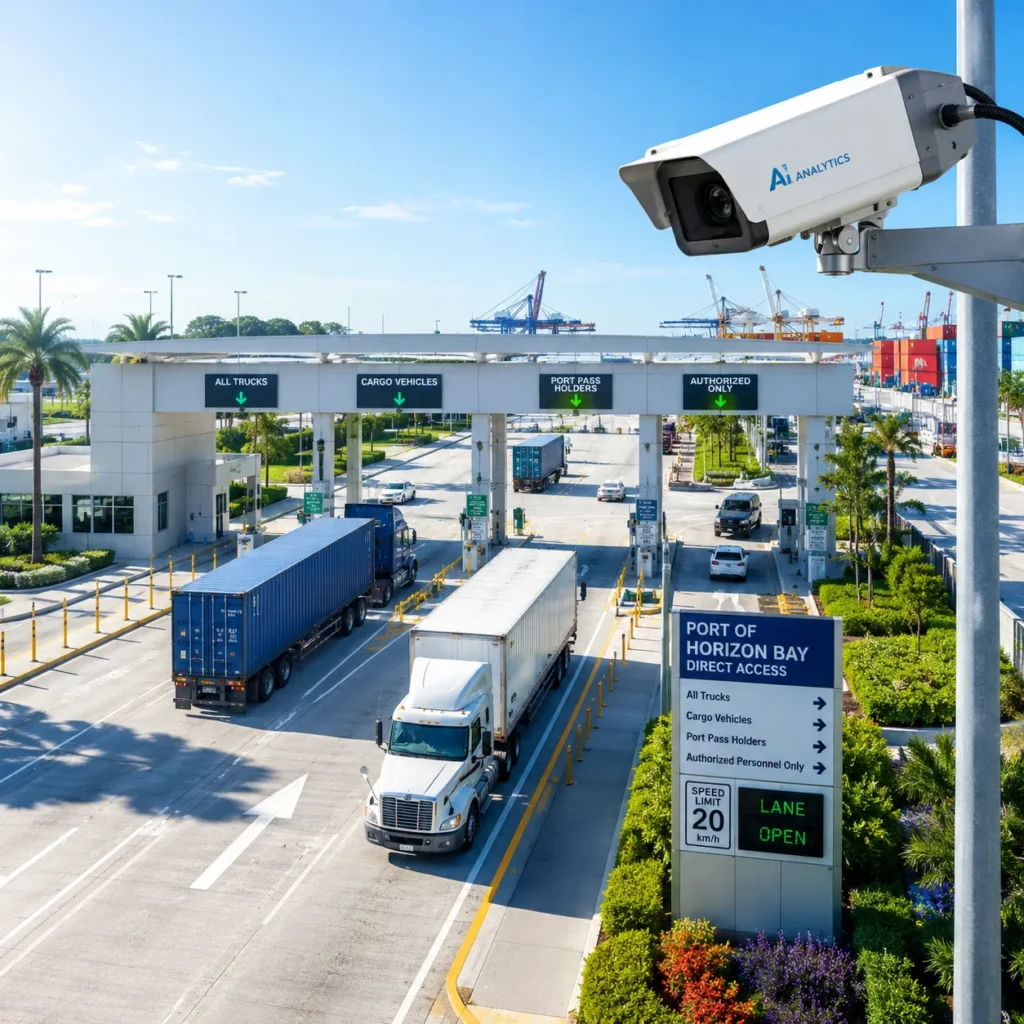
A Use-Case Matrix For Port Operations
Operational Function | Video Analytics Application | Possible Outcome |
Cargo Handling | Equipment-zone monitoring | Reduced worker exposure |
Yard Operations | Vehicle-person detection | Safer traffic movement |
Workshops | PPE and SOP monitoring | Better procedural compliance |
Gates | Access and vehicle analysis | Improved control |
Storage Areas | Restricted-zone detection | Security support |
Maintenance | Work-area monitoring | Faster intervention |
This allows analytics to be configured according to the actual activity taking place in each part of the port.
Cargo Handling: Watching The Interaction, Not Just The Equipment
Cargo operations can bring workers, cranes, trucks, and other machinery into close proximity. A conventional camera records these interactions, while AI can identify predefined situations that may require attention.
For example, a virtual boundary can be established around a selected equipment operating zone. If a person enters that area during a monitored activity, the system can generate an alert.
Similarly, analytics can identify selected worker-vehicle proximity conditions or visible PPE deviations.
The purpose is not to determine whether a cargo operation has been performed correctly in every technical respect. AI identifies the visual condition; trained personnel determine its significance.
Yard Traffic: Finding Recurring Conflict Points
Port yards can experience continuous movement of trucks, cargo-handling equipment, workers, and service vehicles. Video analytics can provide information about recurring traffic interactions rather than simply responding to individual events.
If worker-vehicle proximity alerts repeatedly occur at one location, Visakhapatnam Port Authority can investigate whether the problem relates to route design, signage, physical separation, scheduling, or supervision.
This creates an opportunity to use video data for preventive improvements rather than treating every alert as an isolated event.
What Should Be Visible Across A Port?
The first step is not installing more cameras. It is deciding which operational conditions are important enough to monitor continuously.
For Visakhapatnam Port Authority, these can include:
- Personnel entering equipment exclusion zones
- Worker-vehicle proximity
- PPE compliance in designated areas
- Unauthorised access
- Obstructed operational routes
- Unusual movement around controlled facilities
- Unsafe positioning around cargo-handling equipment
- Camera obstruction or tampering
Each detection should be connected to a clear response so that AI produces useful information rather than unnecessary alerts.
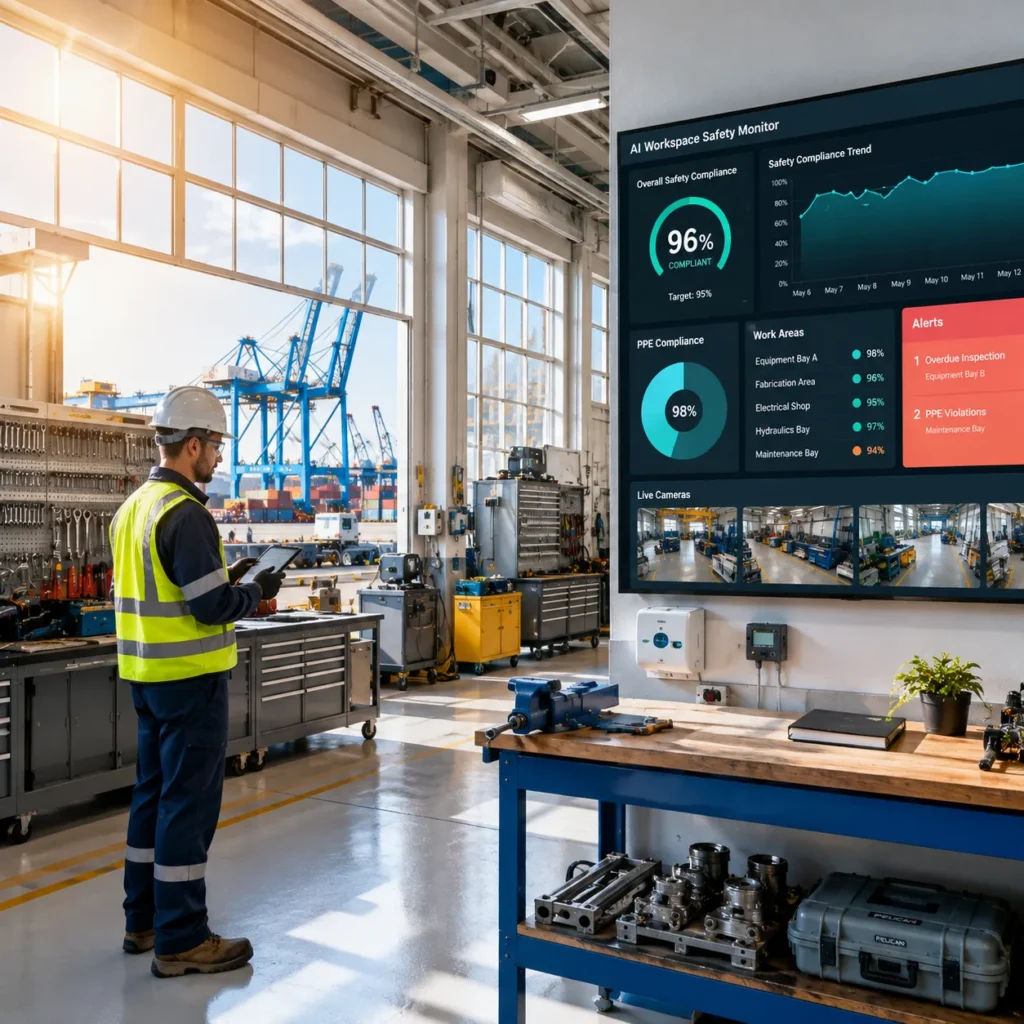
SOP Analytics For Workshops And Maintenance
Maintenance activities involve their own set of safety procedures. Some requirements can be translated into visual rules that AI can monitor.
Suitable examples include:
- Required visible PPE
- Restricted maintenance zones
- Personnel near operating equipment
- Designated work boundaries
- Clear access routes
- Controlled entry into maintenance facilities
An alert can prompt a supervisor to verify the situation. It should not automatically be treated as proof of an SOP violation because the person may have an authorised reason for being in that location.
Security Becomes More Context-Aware
Port security involves employees, contractors, visitors, vehicles, cargo, and controlled infrastructure. A person crossing a restricted boundary is potentially important, but the detection alone does not explain why the person is there.
Video analytics can become more useful when associated with authorised operational information, such as:
- Access permissions
- Visitor records
- Work permits
- Vehicle authorisations
- Maintenance schedules
- Equipment activity
For example, a technician entering a restricted maintenance area during an approved work period may represent normal activity. The same movement without corresponding authorisation can be prioritised for verification.
From Surveillance To Incident Reconstruction
AI can also reduce the effort required after an event.
Following a safety incident, access-control issue, cargo-related occurrence, or equipment event, authorised personnel may need to examine footage from multiple cameras. AI-assisted search can help locate relevant recordings using time, location, movement, vehicle presence, or predefined event characteristics.
This can help establish the sequence of events more efficiently.
More importantly, historical analytics can reveal whether similar events have occurred repeatedly, giving safety and operations teams evidence for corrective action.
Port Conditions Must Shape The Technology
Video analytics at a port cannot be evaluated only under ideal conditions. Large open spaces, changing cargo stacks, rain, glare, dust, night operations, moving machinery, and camera obstruction can influence detection quality.
Before wider deployment, Visakhapatnam Port Authority should evaluate:
- Camera positioning and coverage
- Day and night performance
- Weather-related visibility
- Network reliability
- False-positive rates
- Detection accuracy
- Data-retention requirements
- Cybersecurity
- Access controls
Pilot deployments can establish which use cases perform reliably enough for operational use.
A Practical Performance Scorecard
The effectiveness of AI should be demonstrated through measurable improvements.
Possible indicators include:
- Reduction in recurring SOP deviations
- PPE compliance
- Restricted-zone events
- Worker-equipment proximity incidents
- Vehicle-related safety events
- Alert response time
- False-positive rate
- Incident investigation time
- Corrective-action closure
Frequently Asked Questions
Yes. It can monitor selected visual requirements involving PPE, equipment exclusion zones, worker positioning, restricted areas, and vehicle-person interaction.
It can identify predefined worker-vehicle proximity conditions, restricted movement, obstructions, and other events that may require safety intervention.
Yes. Suitable applications include PPE monitoring, maintenance-zone access, equipment proximity, and designated work-area monitoring.
Potentially. Linking video events with access, visitor, vehicle, or work-authorisation information can provide context and improve alert prioritisation
No. AI provides automated monitoring and event prioritisation. Trained personnel should verify alerts, understand the operational context, and make final safety, security, and operational decisions.